


Thank you! Your submission has been received!
Oops! Something went wrong while submitting the form.
January 17, 2026

Discontinuous measurement techniques in Applied Behavior Analysis (ABA) are transforming how practitioners assess and interpret behaviors. These innovative methods offer insights that traditional approaches often miss. By utilizing strategies such as:
professionals can collect vital data that informs effective interventions and enhances learning outcomes.
However, a pressing question arises: how can practitioners ensure the accuracy and reliability of these measurements while navigating their inherent limitations? This article delves into ten impactful examples of discontinuous measurement, equipping readers with the knowledge to optimize their ABA practices and improve therapeutic results.
Are you ready to elevate your understanding of these techniques? Let's explore how they can revolutionize your approach to behavior analysis.
is a pivotal observation method in , and it serves as a by meticulously evaluating whether an action occurs throughout an entire predetermined interval. Imagine a 10-minute observation divided into 1-minute segments; the observer notes an occurrence only if the action is sustained for the full minute. This technique proves particularly effective for measuring behaviors that require prolonged attention, such as maintaining focus on a task or remaining engaged in an activity.
By emphasizing the duration of engagement rather than mere frequency, , as demonstrated in the , offers invaluable insights into skill acquisition and . However, it’s crucial to acknowledge challenges like observer bias and the necessity for continuous observation, which can affect the accuracy of the data collected. Technological advancements have significantly enhanced data gathering in ABA therapy, bolstering the reliability of this method.
In educational settings, serves as a , as tracking can inform and improve learning outcomes. As ABA therapy evolves, integrating into practice ensures that information gathering remains thorough and evidence-based, ultimately facilitating the development of . Notably, this approach provides a cautious assessment of positive actions, counting only full-interval successes, which is vital for precise data interpretation.
Are you ready to enhance your understanding of behavioral measurement? Embrace to ensure your interventions are .

stands as a pivotal technique in evaluating actions within defined timeframes. Imagine observing a classroom for just 10 minutes, divided into 1-minute intervals. If an action occurs at any moment during that minute, the observer marks an 'X.' This method shines particularly for , like talking out of turn or fidgeting, providing a snapshot of occurrences as demonstrated in a , without the need for continuous observation.
However, it’s crucial to recognize that PIR may sometimes overestimate the actual duration of actions, potentially skewing data interpretation. Despite this, the technique of proves invaluable for identifying trends over time, enabling timely interventions. Recent trends indicate a growing adoption of PIR in , where it empowers educators to efficiently .
The integration of has significantly enhanced the accuracy of PIR, reducing human error and improving data quality. Furthermore, outlining target actions before employing PIR is essential. This practice ensures consistency and clarity in data collection, ultimately leading to more tailored to individual needs.
Are you ready to leverage the power of PIR in your educational environment? By adopting this technique, you can gain deeper insights into student behavior and foster a more engaging learning atmosphere.

(MTS) is a powerful technique that captures whether an action occurs precisely at the end of a designated time period. Imagine observing a behavior over five minutes, divided into 30-second segments. At the conclusion of each interval, the observer notes if the behavior is present. This method shines when it comes to rare or brief actions, allowing for without the burden of constant monitoring. MTS offers a quick snapshot of , making it versatile across various settings, from classrooms to therapy sessions.
Recent advancements in MTS techniques have significantly improved its role in . For example, electronic now facilitate real-time synchronization and analysis, reducing human error and boosting accuracy. These innovations empower therapists to adjust interventions promptly based on the data collected, ensuring therapy remains responsive to each individual's progress. Research indicates that MTS is particularly beneficial for tracking erratic or infrequent behaviors, providing practitioners with valuable insights without the fatigue of continuous observation.
The benefits of MTS extend beyond mere efficiency; it also aids in identifying behavioral trends over time. By focusing on specific intervals, therapists can gain a deeper understanding of the context and frequency of behaviors, leading to more informed . In summary, emerges as an invaluable tool for analysts, especially for those working with clients who exhibit less frequent actions.

serves as a powerful tool in evaluating group conduct through a , specifically using . This method allows observers to capture using a by noting how many individuals are involved in a at predetermined intervals. For instance, a teacher can utilize PLACHECK to assess how many students remain on-task during a reading activity.
Why is this important? In , PLACHECK provides a quick overview of , which is a that enables educators to identify when interventions are necessary to . By implementing this method, teachers can ensure that every student is actively involved, .
Consider the impact of knowing exactly when your students are engaged. With PLACHECK, you gain insights that can , making it easier to adapt strategies that resonate with your students. This method not only streamlines the observation process but also empowers educators to make informed decisions that enhance overall classroom dynamics.

play a vital role in , offering practical applications across various scenarios. For instance, allows a BCBA to effectively assess a child's engagement during structured play sessions, ensuring the child remains focused throughout the activity. However, it’s essential to recognize that WIR often underestimates conduct patterns, making it particularly suitable for examining actions intended to be enhanced.
In classroom settings, serves as a valuable tool for tracking instances of off-task conduct during lessons. This enables educators to pinpoint when students require additional support. Yet, it’s important to note that , necessitating careful interpretation of the data.
is especially useful during group activities, allowing practitioners to gauge overall participation levels efficiently. Additionally, PLACHECK can be employed to monitor engagement during collaborative projects, counting the number of students engaged in an activity at the end of an interval. This provides valuable insights into group dynamics.
These applications underscore the versatility and effectiveness of in enhancing , ultimately contributing to improved outcomes in ABA therapy. Striving for a 90% or greater consensus in research standards is crucial to ensure the precision of these collection methods. Are you ready to elevate your ABA practices with these techniques?
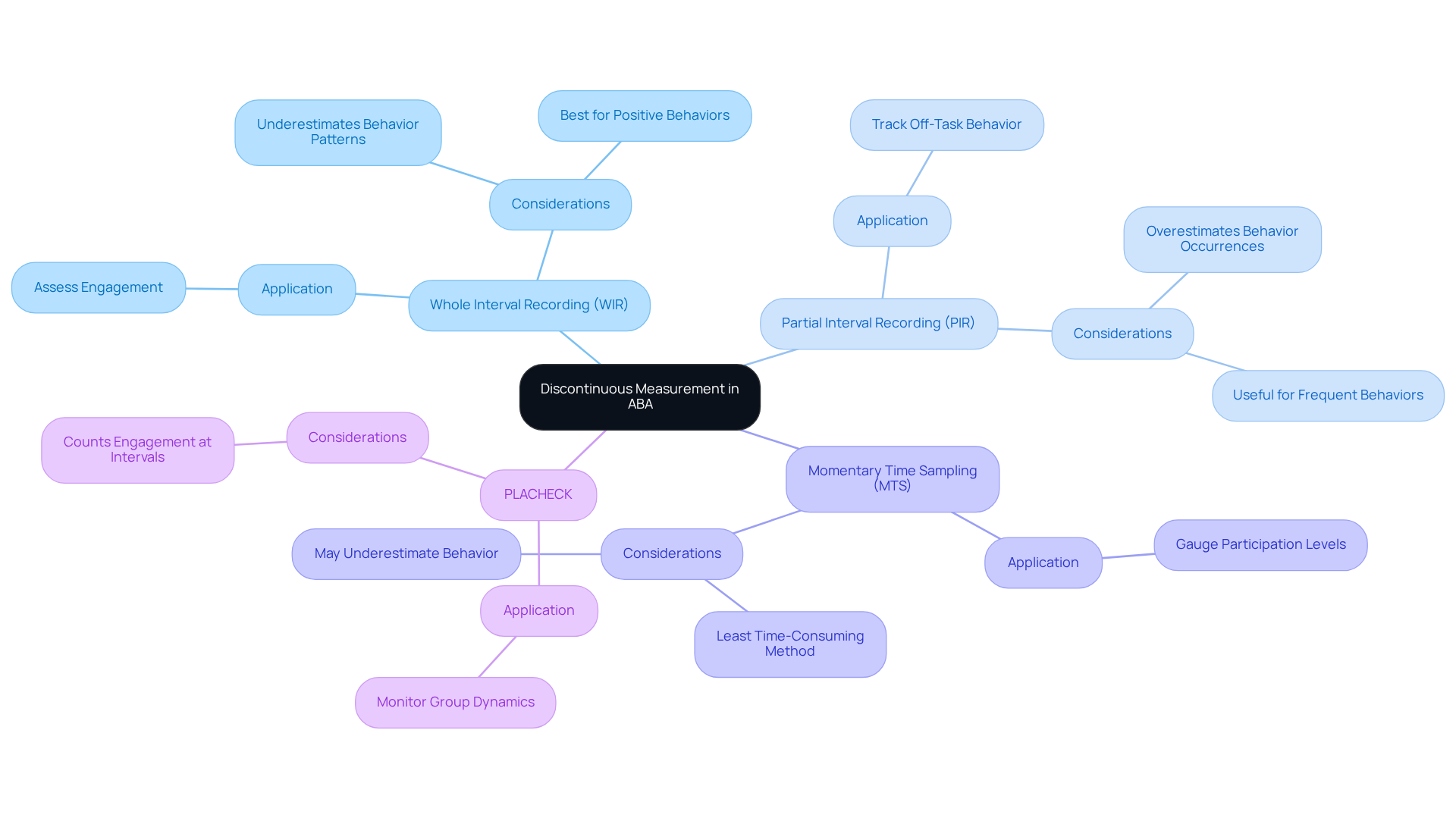
An example of discontinuous measurement in ABA demonstrates significant advantages in , particularly in enhancing time efficiency and reducing . These methods, such as the , allow practitioners to gather information without the need for continuous observation, making them especially beneficial in dynamic environments like classrooms or clinics.
For example, a is , which allows therapists to while providing a general overview without overwhelming the observer. This approach not only conserves resources but also facilitates the tracking of that might be challenging to monitor continuously.
Moreover, of activity patterns over extended periods. By sampling behaviors at predetermined intervals, practitioners can gain insights that inform , ultimately enhancing the effectiveness of ABA therapy. Research shows that well-planned discontinuous measurement can accurately guide clinical decisions, ensuring that interventions are tailored to meet individual needs. This not only improves the quality of assessments but also helps practitioners manage their workload effectively, reducing the risk of , which can significantly affect data reliability.
Overall, the strategic use of techniques is essential for optimizing and achieving successful therapeutic outcomes. Are you ready to enhance your ? Consider how these techniques can transform your approach and lead to better results.

offer benefits, yet they come with significant challenges that practitioners must navigate. One primary concern is the potential for inaccuracies in measuring activity frequency and duration. For instance, that occur briefly, resulting in an underestimation of actual occurrences. Conversely, if the action is present for only a fraction of the duration, as it registers a 'yes' if the action happens at any moment during that time.
Consider a case study involving for hand flapping. An RBT documented the action if it occurred at any point during ten one-minute segments. This example illustrates the difficulty of . These techniques often struggle to encompass the complete context of actions, leading to insufficient information and misunderstandings.
Current challenges include the need for . Shorter intervals can yield more precise information but are more challenging to implement. As noted by Above and Beyond Therapy, a can be a more effective option when resources are limited. However, practitioners should consider incorporating alongside discontinuous methods. This approach can provide a more comprehensive insight into and ensure the reliability of information.

Selecting the right in is not just important; it’s essential for effective . Have you considered how the nature of the conduct, the context of observation, and the specific goals of your intervention influence your choice? For example, serves as a when actions require sustained engagement, promoting continuous participation. However, it may underestimate the frequency of actions since the action must last for the entire duration to be counted.
On the other hand, a like is ideal for high-frequency actions that occur often throughout a session. This method allows practitioners to capture instances of the activity, although it may lead to an overestimation of occurrences. (MTS) is a method that serves as a , providing quick snapshots of infrequent behaviors at predetermined intervals, but it too can overestimate or underestimate actual behavior frequency. PLACHECK stands out for assessing group dynamics in settings where constant observation isn’t feasible.
Moreover, achieving an of 80% or greater is typically regarded as satisfactory for ensuring the reliability of information-gathering techniques. By thoughtfully evaluating these factors, practitioners can ensure that their selected measurement method aligns with their objectives and produces significant, actionable information. Are you ready to enhance your and improve your interventions?

Technology significantly enhances the in therapy. Did you know that the demand for is skyrocketing? This surge underscores the need for efficient tools that streamline information gathering. Different software programs and digital resources simplify this process, allowing professionals to set timers for periods and log actions effortlessly.
For instance, mobile applications like MITA and Proloquo2Go support by reminding users to observe actions at specified intervals. This ensures prompt and precise information collection, which is crucial in . Furthermore, simplify the analysis of gathered data, enabling efficient monitoring of .
also play a vital role. They assist practitioners by illustrating patterns in behavior, facilitating the extraction of insights, and enabling informed decisions based on real-time information. However, challenges such as high costs and user acceptance can hinder the implementation of these technologies.
By adopting these technological advancements while being aware of potential obstacles, ABA practitioners can achieve more efficient and accurate information gathering processes. This ultimately enhances the effectiveness of therapy. Are you ready to embrace these innovations and elevate your practice?

Did you know that the is projected to soar by 22% from 2020 to 2030? This staggering statistic highlights the increasing demand for BCBAs, making it crucial for professionals in the field to master the . Proficiency in these methods not only enhances but also positions BCBAs as invaluable assets in various settings, including educational institutions, healthcare facilities, and private practices.
By showcasing expertise in , BCBAs can effectively differentiate themselves in a competitive job market. As demand for their skills surges, standing out becomes essential. Platforms like play a pivotal role in connecting BCBAs with and career aspirations. Have you considered how your current hiring challenges could be addressed through such a platform?
Submitting resumes for personalized assessments on allows BCBAs to benefit from advanced . This ensures they are matched with roles that suit their expertise and preferences, ultimately fostering professional development in the dynamic field of . Don't miss out on the chance to elevate your career-explore the opportunities available through today!

The demand for skilled Board Certified Behavior Analysts (BCBAs) is skyrocketing, making effective recruitment more crucial than ever. Discontinuous measurement techniques in Applied Behavior Analysis (ABA) are essential tools that enhance the effectiveness of behavioral interventions. By employing methods such as:
practitioners can gather valuable data that informs intervention strategies. These techniques not only optimize data collection but also adapt to the specific needs of various environments, making them indispensable for professionals in the field.
Have you considered how these techniques can elevate your practice? Throughout the article, we explored the advantages and limitations of each method. Whole Interval Recording emphasizes sustained engagement, while Partial Interval Recording captures high-frequency behaviors, albeit with potential overestimations. Momentary Time Sampling provides quick insights into infrequent actions, and PLACHECK assesses group dynamics effectively. Choosing the right method based on the context and goals of the intervention is vital, highlighting the need for careful consideration in practice.
Ultimately, integrating these discontinuous measurement techniques into ABA practice can lead to more informed decision-making, improved intervention outcomes, and enhanced learning experiences for individuals. As the demand for BCBAs continues to rise, mastering these methods not only strengthens professional expertise but also paves the way for career advancement. Embracing these innovative approaches will undoubtedly transform ABA practices, ensuring they remain effective and data-driven in meeting the needs of those they serve.
Are you ready to take your recruitment strategy to the next level? Consider using Hire ABA to connect with top talent in the field. With our platform, you can streamline your hiring process and ensure you have the best professionals on your team.
What is Whole Interval Recording in ABA?
Whole Interval Recording is an observation method in Applied Behavior Analysis (ABA) that evaluates whether an action occurs throughout an entire predetermined interval. For example, during a 10-minute observation divided into 1-minute segments, the observer notes an occurrence only if the action is sustained for the full minute.
What types of behaviors is Whole Interval Recording effective in measuring?
Whole Interval Recording is particularly effective for measuring behaviors that require prolonged attention, such as maintaining focus on a task or remaining engaged in an activity.
What are the advantages of using Whole Interval Recording?
This method emphasizes the duration of engagement rather than mere frequency, providing valuable insights into skill acquisition and behavioral progress.
What challenges are associated with Whole Interval Recording?
Challenges include observer bias and the necessity for continuous observation, which can affect the accuracy of the data collected.
How has technology impacted Whole Interval Recording in ABA therapy?
Technological advancements have enhanced data gathering in ABA therapy, improving the reliability of Whole Interval Recording.
What is Partial Interval Recording in ABA?
Partial Interval Recording (PIR) is a technique that evaluates actions within defined timeframes. An observer marks an occurrence if the action happens at any moment during a designated interval.
When is Partial Interval Recording particularly useful?
PIR is particularly useful for high-frequency behaviors, such as talking out of turn or fidgeting, as it provides a snapshot of occurrences without the need for constant observation.
What are the potential drawbacks of Partial Interval Recording?
PIR may sometimes overestimate the actual duration of actions, which can skew data interpretation.
How has technology improved Partial Interval Recording?
Recent advancements in electronic information gathering have enhanced the accuracy of PIR by reducing human error and improving data quality.
What is Momentary Time Sampling in ABA?
Momentary Time Sampling (MTS) is a technique that captures whether an action occurs precisely at the end of a designated time period, allowing for effective data collection without constant monitoring.
What types of behaviors is Momentary Time Sampling best suited for?
MTS is particularly beneficial for tracking rare or brief actions, providing a quick snapshot of behavior patterns.
How has technology influenced Momentary Time Sampling?
Electronic data collection tools have improved MTS by facilitating real-time synchronization and analysis, reducing human error, and boosting accuracy.
What are the overall benefits of using Momentary Time Sampling?
MTS aids in identifying behavioral trends over time and allows therapists to make informed treatment decisions based on specific intervals, enhancing the responsiveness of therapy.
Our expert recruitment strategies and AI-driven sourcing ensure that you receive top-notch candidates quickly, without compromising on quality. Whether you’re looking for BCBAs, Clinical Directors, or RBTs, we’ve got you covered.


