


Thank you! Your submission has been received!
Oops! Something went wrong while submitting the form.
December 27, 2025

In the field of behavior modification, the Differential Reinforcement of High Rates (DRH) emerges as a compelling strategy that can significantly boost engagement and participation across diverse settings. By rewarding individuals for demonstrating desired behaviors at or above a set rate, practitioners not only encourage compliance but also cultivate confidence and motivation. Yet, implementing DRH techniques can present unique challenges that demand careful navigation.
How can educators, therapists, and families effectively leverage the potential of DRH while overcoming these hurdles? This article delves into ten impactful examples of DRH strategies, providing insights into their successful application in classrooms, therapy sessions, and home environments. Additionally, we will address the ethical considerations and technological advancements that can enhance these efforts, ensuring a comprehensive understanding of DRH's role in behavior modification.
To effectively implement the , practitioners must prioritize reinforcing actions that occur at or above a predetermined rate. Consider this: how often do you see students actively participating in class? A teacher, for instance, might reward a student for raising their hand multiple times to answer questions. This method not only but also in the student’s abilities.
Are you ready to transform your approach to reinforcement? Embrace the and witness the positive changes in participation and confidence levels. The time to act is now.

To effectively implement the in classrooms, educators should establish clear . For instance, requiring students to contribute to discussions a specific number of times each class can significantly enhance engagement. Imagine a system where students earn points for each contribution, with rewards for reaching set thresholds. This approach not only but also fosters with the material.
Consider the impact: when students are motivated to participate, they are more likely to absorb and understand the content. By creating an environment where contributions are recognized and rewarded, educators can cultivate a and collaboration.
Are you ready to transform your ? Implementing such strategies can serve as a of a more interactive and enriching learning experience for all students.

In a compelling case study centered on youth with autism, therapists utilized the to markedly enhance . By reinforcing children for initiating conversations or responding to peers at least three times during a session, therapists noted a significant uptick in social engagement. For example, Child Two achieved a remarkable 79% engagement rate during embedded social conditions, with subsequent intervals reflecting a 61% engagement rate. further bolstered these interactions, illustrating how the can be tailored to meet individual needs while nurturing .
Research underscores that youths engaged in frequently exhibit . Notably, studies reveal a mean increase in from 70 to 91.25 in the experimental group compared to the control group following . This method not only but also fosters a deeper understanding of social norms, ultimately leading to improved interpersonal relationships for individuals with autism.
However, implementing the necessitates , such as maintaining consistency across various settings and adjusting incentive criteria based on the child's progress. Regular monitoring and timely adjustments to are crucial to ensure sustained progress and optimal outcomes. Are you ready to explore how these insights can transform your approach to supporting youth with autism?

The integration of technology is crucial in enhancing the implementation of strategies such as the . Did you know that over 70% of analysts now use for tracking modifications? This statistic underscores the growing significance of tools like and BehaviorSnap. These empower practitioners to monitor frequency and provide real-time feedback to both clients and therapists, facilitating comprehensive .
With these tools, to can be made based on individual progress. As Mal Postings aptly states, "mobile is now part of the fabric - every day in everybody’s life. So if you’re not looking at , then you’re not really looking at all solutions." This highlights the necessity of embracing in our practices.
Moreover, virtual platforms support , making it easier to implement strategies such as the across diverse settings. The advantages of these extend beyond mere tracking; they foster increased involvement and cooperation between practitioners and clients. This collaboration ultimately leads to more effective modification outcomes.
Are you ready to enhance your practice with these innovative solutions? Embrace the future of and consider how integrating technology can transform your approach.


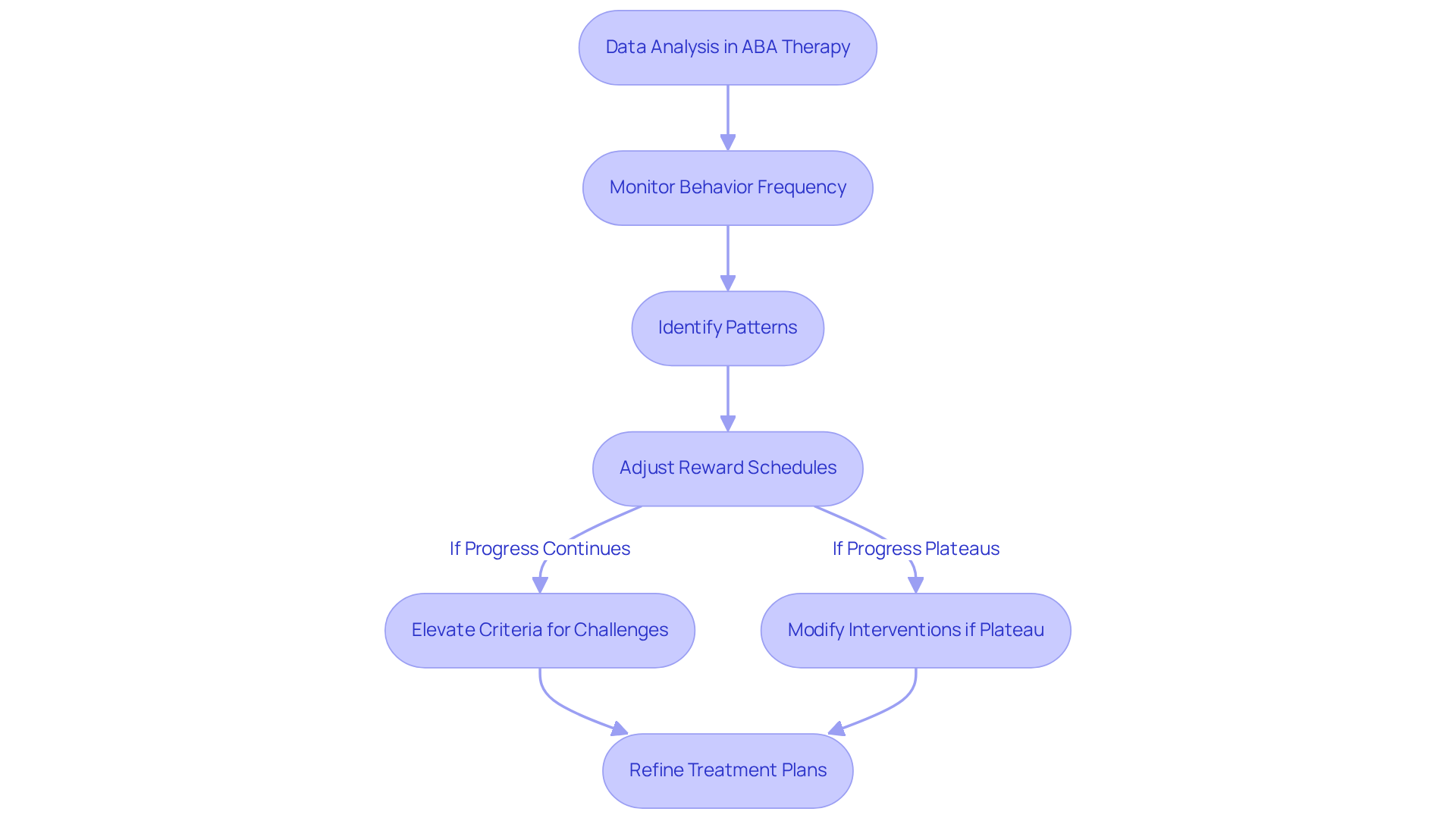
is crucial for the effectiveness of the in . Did you know that can significantly enhance therapy outcomes? By closely monitoring behavior frequency through techniques like frequency recording and ABC charts, practitioners can identify patterns and make informed adjustments to .
For instance, when a young learner consistently meets the established criteria in a drh aba example, practitioners may elevate these criteria to provide additional challenges, fostering further development. Conversely, if a young person's progress plateaus, can reveal the need for . Research shows that individuals receiving often experience substantial improvements in , boasting an impressive in treating autism spectrum disorder.
This not only refines treatment plans but also ensures that interventions remain aligned with the evolving needs of the individual. As Ralph Moller states, 'A personalized treatment plan takes into account the unique needs and preferences of the individual, allowing for tailored interventions that are most effective for their specific challenges.'
Are you ready to enhance your practices with data-driven insights? Embrace the power of analysis to transform your approach and achieve remarkable outcomes.
Families can effectively implement (DRH) techniques at home by establishing . Consider this: when parents reinforce their children for completing chores or homework on time, they can offer rewards like extra playtime or a favorite snack. This method not only motivates young individuals but also fosters a sense of achievement.
Consistency is key. Parents should monitor the frequency of these desired actions and provide timely support to encourage their continuation. , . This underscores the critical role of in cultivating healthy self-esteem.
By weaving strategies from the into daily routines, families can create an environment that promotes positive behavior and strengthens overall family dynamics. Think about it: as families and societies are interconnected, applying these strategies not only benefits individual youth but also enhances the welfare of the broader community.
Addressing within family dynamics is crucial, as these factors can undermine the effectiveness of the . By , families can profoundly influence their children's development and relationships.

Implementing the can indeed present challenges, particularly when it comes to ensuring that occur at the right frequency. How can practitioners effectively navigate these obstacles? By gradually adjusting reinforcement criteria and providing , they can foster success.
For instance, if a child struggles to meet the , a practitioner might consider temporarily lowering expectations. This approach not only builds confidence but also sets the stage for gradually increasing those expectations again. Regular communication with clients and caregivers is crucial in this process. It allows practitioners to address any concerns and adapt strategies as needed, ensuring a tailored approach that meets individual needs.
In the ever-evolving landscape of , understanding these dynamics is essential. Are you ready to enhance your practice and improve ? Embrace these strategies to ensure effective implementation of the .

When implementing Differential Reinforcement of High Rates (DRH) strategies, must take center stage. Are you aware of the or foster a reliance on rewards? is crucial. This alignment with set by professional organizations not only builds trust but also enhances the effectiveness of the strategies employed.
Cultural differences in the perception of encouragement cannot be overlooked. Practitioners should adapt their approaches to respect these variations, ensuring that their methods resonate with diverse backgrounds. Recent emphasize the importance of . They highlight the necessity for that mitigate the risk of dependency on certain actions.
is essential. By valuing these perspectives, practitioners can deepen their understanding and promote acceptance within their practices. As analysts concentrate on and responsible decision-making, they can significantly enhance the effectiveness of strategies like the , ultimately fostering positive outcomes.
Are you ready to elevate your practice by prioritizing in your interventions?

Did you know that the is skyrocketing? For those looking to specialize in strategies such as the , connecting with can open doors to valuable .
offers a comprehensive range of specifically tailored for professionals in . This ensures that candidates can find positions that not only align with their expertise but also resonate with their career aspirations. Imagine having access to personalized where our team evaluates your experience and career goals to optimize job matching.
By utilizing advanced job fit scoring, we pinpoint opportunities that match your skills, preferences, and desired locations. But that’s not all - also provides essential resources for professional development, networking, and mentorship. This support empowers BCBAs to while contributing to the growth of effective behavior modification practices.
Are you ready to take the next step in your career? Connect with Hire ABA today and discover how we can help you navigate the evolving landscape of .

Implementing Differential Reinforcement of High Rates (DRH) strategies represents a pivotal approach to behavior modification, highlighting the necessity of encouraging and rewarding positive behaviors. By effectively employing techniques such as positive reinforcement, educators, therapists, and families can create environments that foster engagement, confidence, and social skills. This, in turn, enhances the quality of interactions and learning experiences.
Throughout this article, we explored various aspects of DRH implementation. From classroom strategies designed to boost student participation to case studies showcasing significant improvements in social interactions for individuals with autism, the evidence is compelling. The integration of technology has emerged as a vital component, allowing practitioners to monitor progress and make data-driven decisions that optimize outcomes. Moreover, ethical considerations were underscored, emphasizing the importance of responsible practices that respect cultural differences and promote transparency with clients.
The insights presented here highlight the profound impact that DRH strategies can have, not only on individual behavior but also on the dynamics within families and educational settings. Embracing these techniques can lead to substantial advancements in behavior management and social skills development. As practitioners and families seek to enhance their approaches, the call to action is unmistakable: prioritize the implementation of DRH strategies to cultivate a supportive and empowering environment for all involved.
What is the main focus of implementing DRH with positive reinforcement techniques?
The main focus is to reinforce actions that occur at or above a predetermined rate, such as rewarding students for actively participating in class, which encourages participation and builds confidence.
What are some examples of positive reinforcement techniques?
Positive reinforcement techniques include verbal praise, tokens, or privileges, which can motivate individuals to engage in desired behaviors more frequently.
How can educators use DRH to increase student participation in class?
Educators can establish clear participation goals, such as requiring students to contribute a specific number of times during discussions and implementing a points system with rewards for reaching set thresholds.
What impact does motivating students to participate have on their learning?
Motivated students are more likely to absorb and understand the content, fostering critical thinking and active engagement with the material.
How was DRH applied in a case study involving youth with autism?
Therapists reinforced children for initiating conversations or responding to peers multiple times during sessions, resulting in significant improvements in social engagement and skills.
What were the results of the case study on DRH interventions for youth with autism?
The study noted a mean increase in social skills scores from 70 to 91.25 in the experimental group compared to the control group, indicating enhanced communication and understanding of social norms.
What challenges are associated with implementing DRH interventions?
Challenges include maintaining consistency across different settings and adjusting incentive criteria based on the child's progress, requiring regular monitoring and adjustments to ensure optimal outcomes.
Our expert recruitment strategies and AI-driven sourcing ensure that you receive top-notch candidates quickly, without compromising on quality. Whether you’re looking for BCBAs, Clinical Directors, or RBTs, we’ve got you covered.


