


Thank you! Your submission has been received!
Oops! Something went wrong while submitting the form.
November 27, 2025

The landscape of Applied Behavior Analysis (ABA) is evolving rapidly. Did you know that the demand for Board Certified Behavior Analysts (BCBAs) is at an all-time high? This surge reflects the diverse needs of clients seeking effective behavioral interventions. As professionals in this field strive to enhance their skills and maintain their certification, understanding the essential Continuing Education Units (CEUs) becomes crucial.
This article explores the ten vital BACB CEUs that every BCBA should be aware of. These educational opportunities not only fulfill certification requirements but also significantly improve practice effectiveness. With the stakes higher than ever, how can BCBAs ensure they are equipped with the knowledge and skills to thrive in this competitive environment? By prioritizing their continuing education, BCBAs can stay ahead of the curve and better serve their clients.
The demand for Board Certified Behavior Analysts (BCBAs) is on the rise, with job opportunities expanding rapidly in the field of Applied Behavior Analysis therapy. Hire ABA is dedicated to connecting these qualified professionals with premier job openings, streamlining the hiring process to ensure that their expertise aligns with the right roles.
Are you struggling to find the perfect candidate for your organization? With Hire ABA, you can simplify your recruitment efforts. Our tailored resume evaluations allow behavior analysts to submit their resumes for review, where our experienced team assesses their qualifications and career goals. This personalized approach ensures that candidates are well-prepared to meet your needs.
Utilizing advanced job fit scoring, we identify opportunities that match candidates' skills, preferences, and desired locations. This means you can trust that the professionals we connect you with are not only qualified but also genuinely interested in the roles available.
As the demand for BCBAs continues to grow, Hire ABA stands out as an essential resource for job seekers and employers alike. Let us help you navigate this swiftly expanding field and find the right talent to elevate your organization. Take action today and discover how Hire ABA can transform your hiring process.

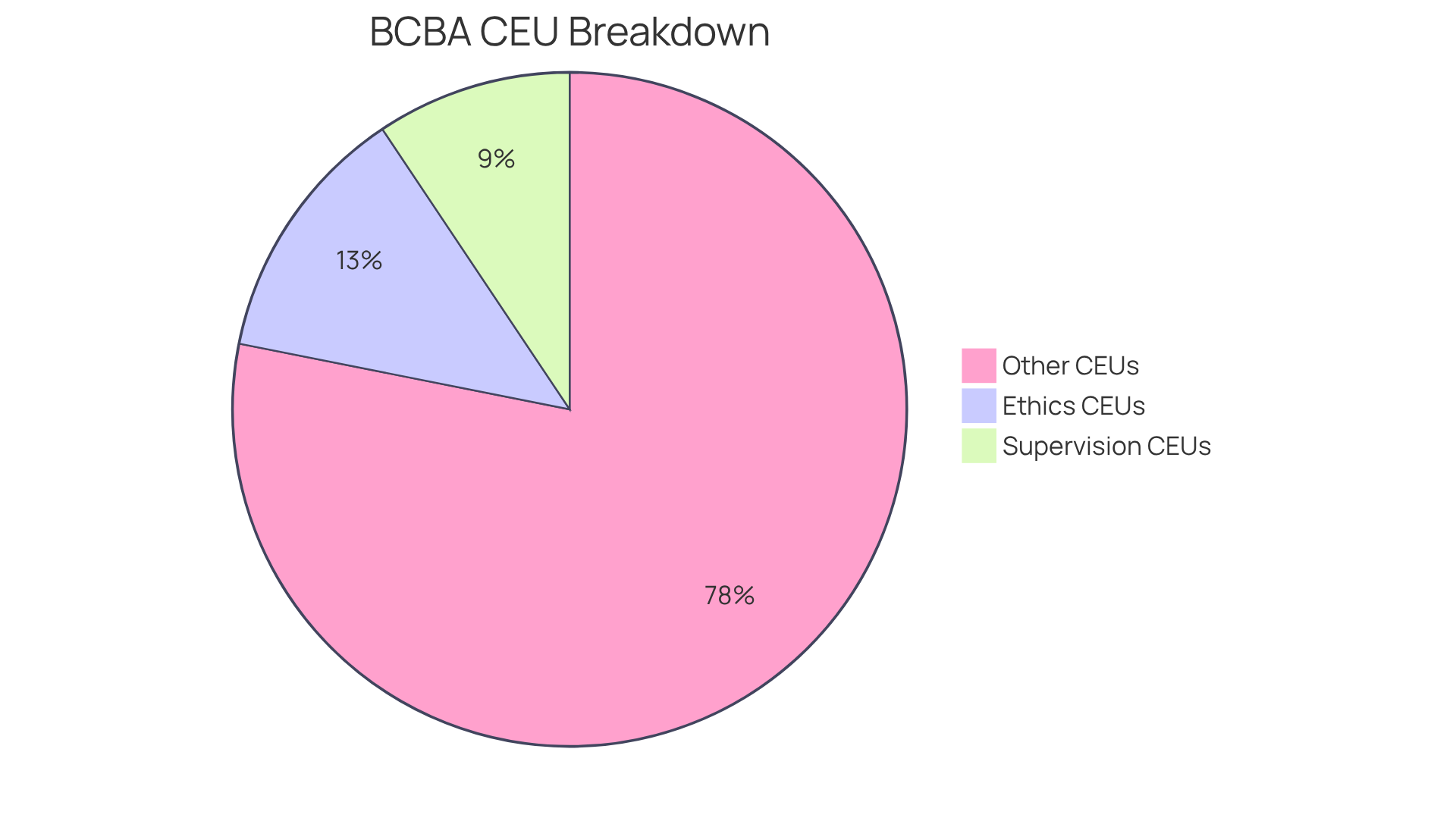
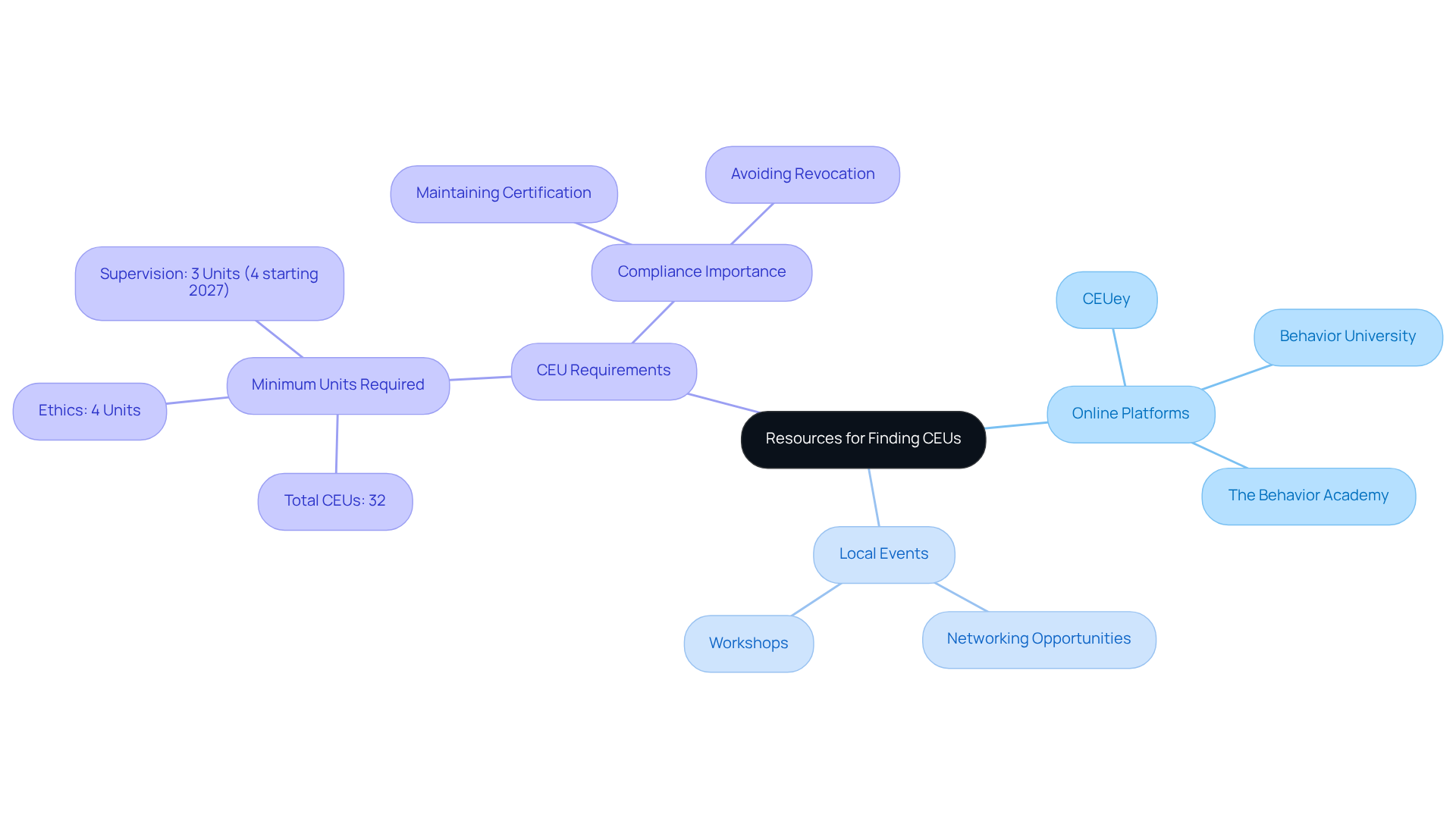
The demand for Board Certified Behavior Analysts (BCBAs) is on the rise, making it essential for professionals in the field to stay current with their credentials. The Certification Board for Analysts (BACB) mandates that Board Certified Professionals complete 32 BACB CEUs every two years to retain their certification. This requirement includes a minimum of:
Understanding these requirements is crucial for behavior analysts. Adhering to them not only protects their certification but also enhances the quality of services they provide. In fact, around 80% of behavior analysts successfully meet the BACB CEUs requirements, showcasing their commitment to ongoing development and ethical standards. Have you considered how your hiring practices align with these standards?
Recent changes in BACB regulations, including the stipulation that coursework for BCBA certification must be completed within the last 10 years, further highlight the importance of staying updated with educational practices. As the BACB states, BACB CEUs are essential for maintaining certification as a BCBA and ensuring ongoing professional development in applied behavior analysis. This ensures that certified analysts possess the most current knowledge and skills in Applied Behavior Analysis (ABA).
Are you ready to ensure that your team is equipped with the best talent? Hire ABA can help you navigate the hiring landscape, connecting you with qualified professionals who meet these rigorous standards.
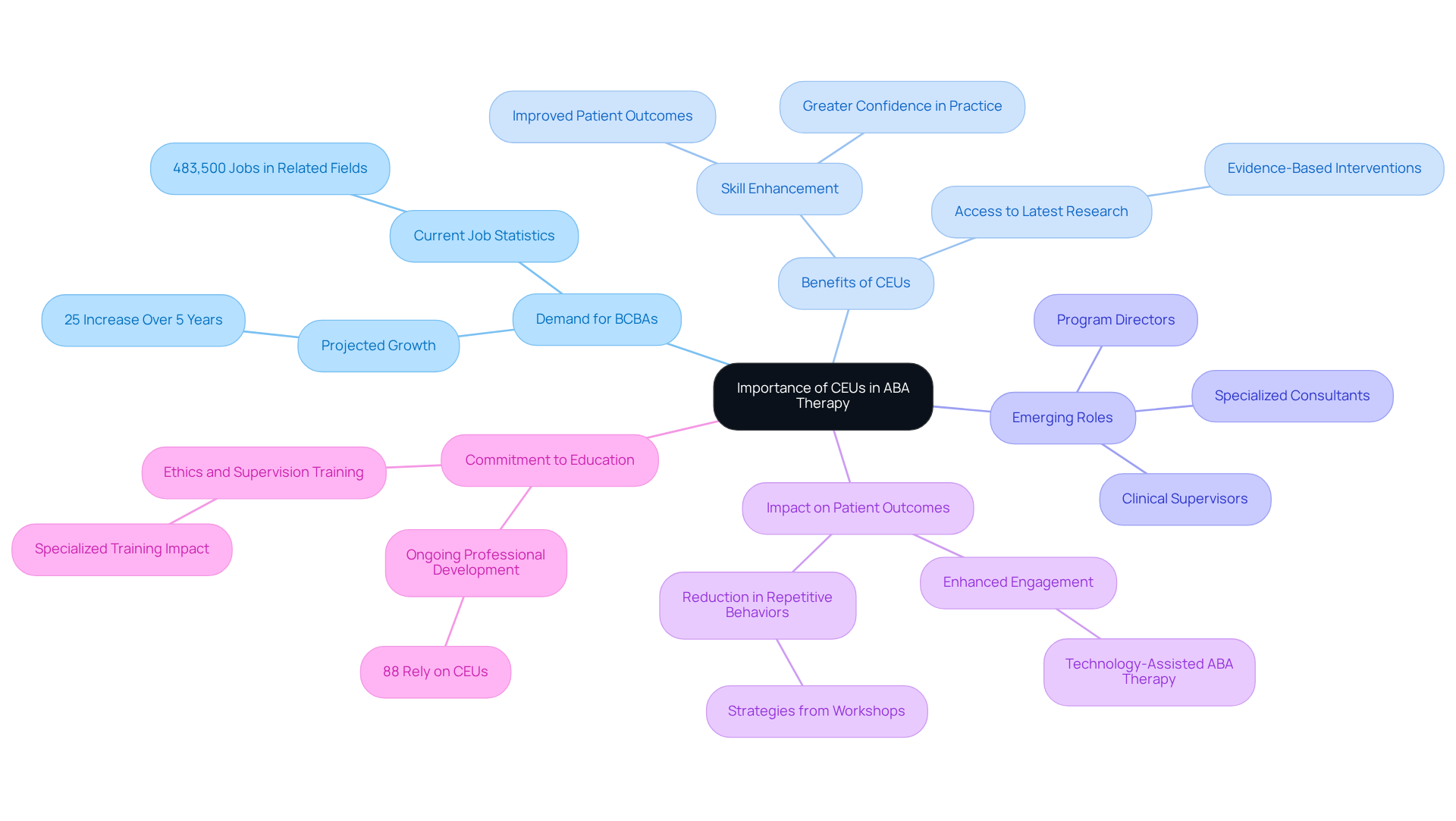
Did you know that the demand for Board Certified Behavior Analysts (BCBAs) is projected to rise by 25% over the next five years? This surge highlights the critical need for BACB CEUs in the field of Applied Behavior Analysis (ABA) therapy. BACB CEUs are not just a requirement for certification; they are essential for BCBAs to remain informed about the latest research, techniques, and ethical standards. By participating in BACB CEUs, behavior analysts not only enhance their skills but also significantly improve patient outcomes. Those who actively seek out these educational opportunities report greater confidence in their practice and a stronger ability to implement evidence-based interventions effectively.
As the ABA therapy field expands, new roles such as clinical supervisors, program directors, and specialized consultants are emerging, often with higher salaries and flexible working conditions. Research shows that behavior analysts who participate in BACB CEUs are better equipped to meet the diverse needs of their clients. For example, a systematic review found that analysts attending workshops and webinars developed improved strategies for managing repetitive behaviors in children with autism, leading to notable reductions in these behaviors and enhanced overall functioning. Furthermore, a striking 88% of BCBAs rely on BACB CEUs as their primary source for professional development, underscoring the importance of high-quality educational resources in shaping effective practices.
Real-world examples further illustrate the impact of CEUs on patient outcomes. Analysts who completed specialized training in ethics and supervision reported significant improvements in navigating complex client situations, fostering a more ethical and supportive therapeutic environment. Additionally, recent research on technology-assisted ABA therapy indicates that those who participate in CEUs focused on technological advancements can enhance engagement and effectiveness in their interventions.
Ultimately, a commitment to ongoing education through BACB CEUs not only enhances the professional credibility of behavior analysts but also plays a vital role in delivering high-quality care to clients. This dedication transforms lives through effective ABA therapy. As the market continues to grow, those who stay informed and pursue BACB CEUs will be well-positioned to seize new opportunities. Are you ready to elevate your practice and meet the rising demand for BCBAs?
Behavior analysts can earn BACB CEUs through various formats, including workshops, online courses, webinars, and conferences. Did you know that the demand for Board Certified Behavior Analysts (BCBAs) is on the rise? This underscores the importance of staying current in the field. BACB CEUs are categorized into three primary types: ethics, supervision, and general learning. Each category serves a distinct purpose, ensuring that behavior analysts receive a comprehensive education that meets the requirements for BACB CEUs.
Consider the benefits of engaging in these educational opportunities:
In conclusion, prioritizing BACB CEUs is essential for behavior analysts. It not only fulfills BACB requirements but also strengthens the overall quality of care provided. Take action today by exploring available workshops and courses that can help you and your team stay ahead in this evolving field.

To successfully acquire continuing education units, BCBAs must follow these essential steps:
Identify Requirements: Understand the continuing education unit requirements specific to your certification cycle. This mandates 32 units every two years, including four in ethics and three in supervision for those in supervisory roles. Remember, credits obtained from the 8-hour supervision training are recognized solely as supervision credits.
Research courses that provide BACB CEUs: Choose accredited courses or events that offer the necessary continuing education units, ensuring they are recognized by the Behavior Analyst Certification Board (BACB). Notably, 58% of large providers offer educational support for advancement, which can be a valuable resource.
Register and Complete Assignments: Register for the chosen courses and fulfill any required assignments or attendance criteria.
Collect and Submit Certificates: Gather certificates of completion and submit them to the BACB for tracking. Maintaining accurate records is crucial for compliance.
Regularly Review Progress: Consistently review your CEU progress to ensure adherence to certification requirements. Many practitioners wait until the final months before recertification to fulfill their BACB CEUs, which leads to increased stress and limited options.
As one BCBA noted, "Planning ahead for continuing education units not only lessens stress but also creates more opportunities for learning." By implementing these strategies and regularly checking the BACB site for updated CEU requirements, board-certified behavior analysts can effectively manage their continuing education and maintain their certification.

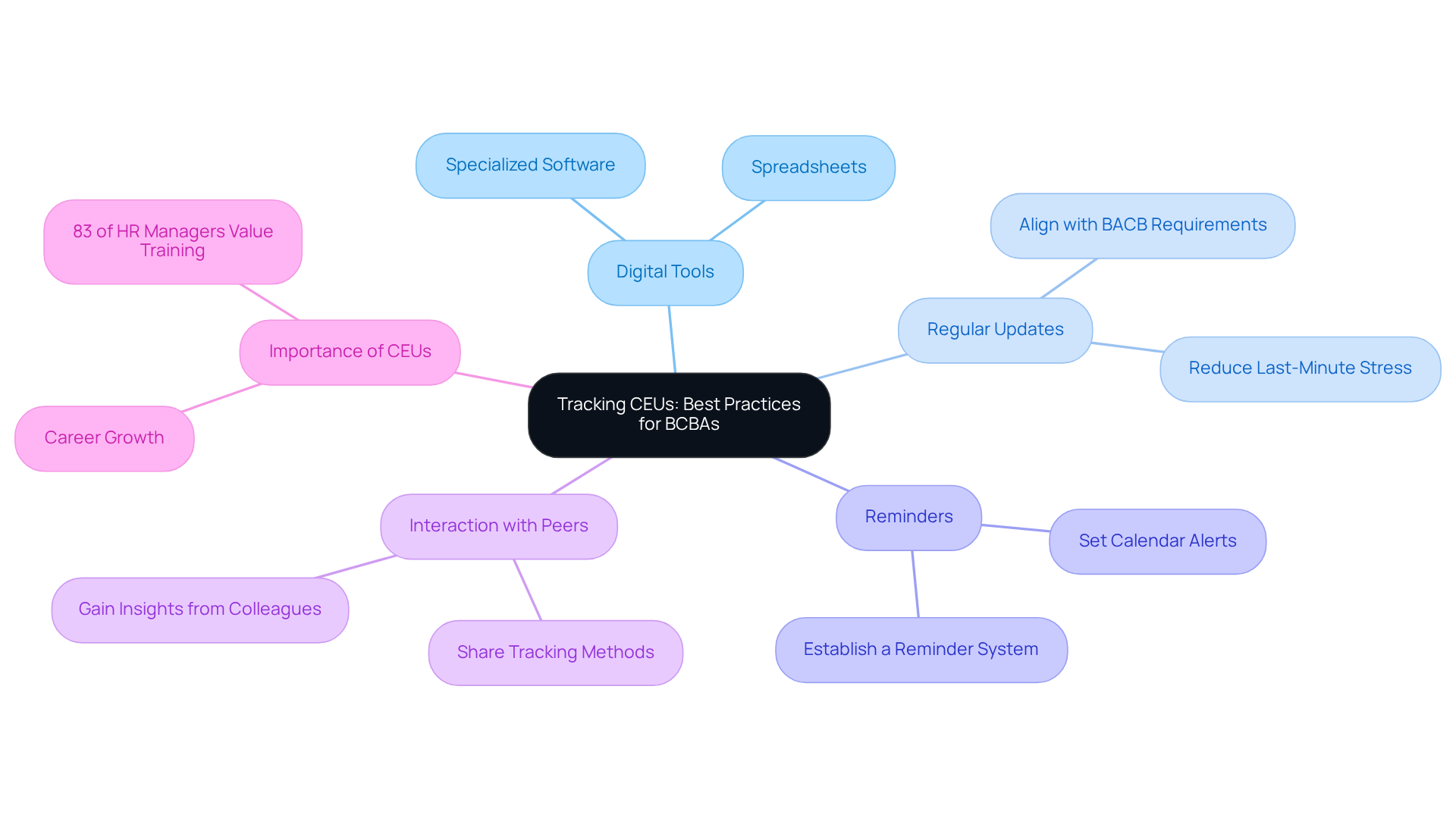
To effectively manage their BACB CEUs, behavior analysts must adopt best practices that include utilizing digital tools or spreadsheets to meticulously log completed courses, dates, and BACB CEU credits. Did you know that BCBA job growth is anticipated to rise by over 20% in the next eight years? This statistic underscores the importance of staying ahead in your career through continuous professional development.
Regular updates to this information, aligned with BACB requirements, can significantly reduce the stress associated with last-minute preparations before recertification deadlines. Establishing reminders for course completion and submission not only encourages accountability but also guarantees that behavior analysts remain proactive in their career growth.
Digital tools, such as specialized software designed for tracking continuing education credits, can streamline this process, allowing practitioners to monitor their progress effortlessly. Interacting with other certified behavior analysts can also offer insights into effective tracking methods and tools that enhance compliance and organization.
Moreover, the Bureau of Labor Statistics highlights the necessity of maintaining accurate records and pursuing continuous education. In fact, 83% of HR managers believe that training is advantageous for attracting employees. This emphasizes the importance of BACB CEUs in enhancing employability and career opportunities for board-certified behavior analysts.
Are you ready to take charge of your professional development? Start implementing these strategies today to ensure your success in the evolving landscape of behavior analysis.
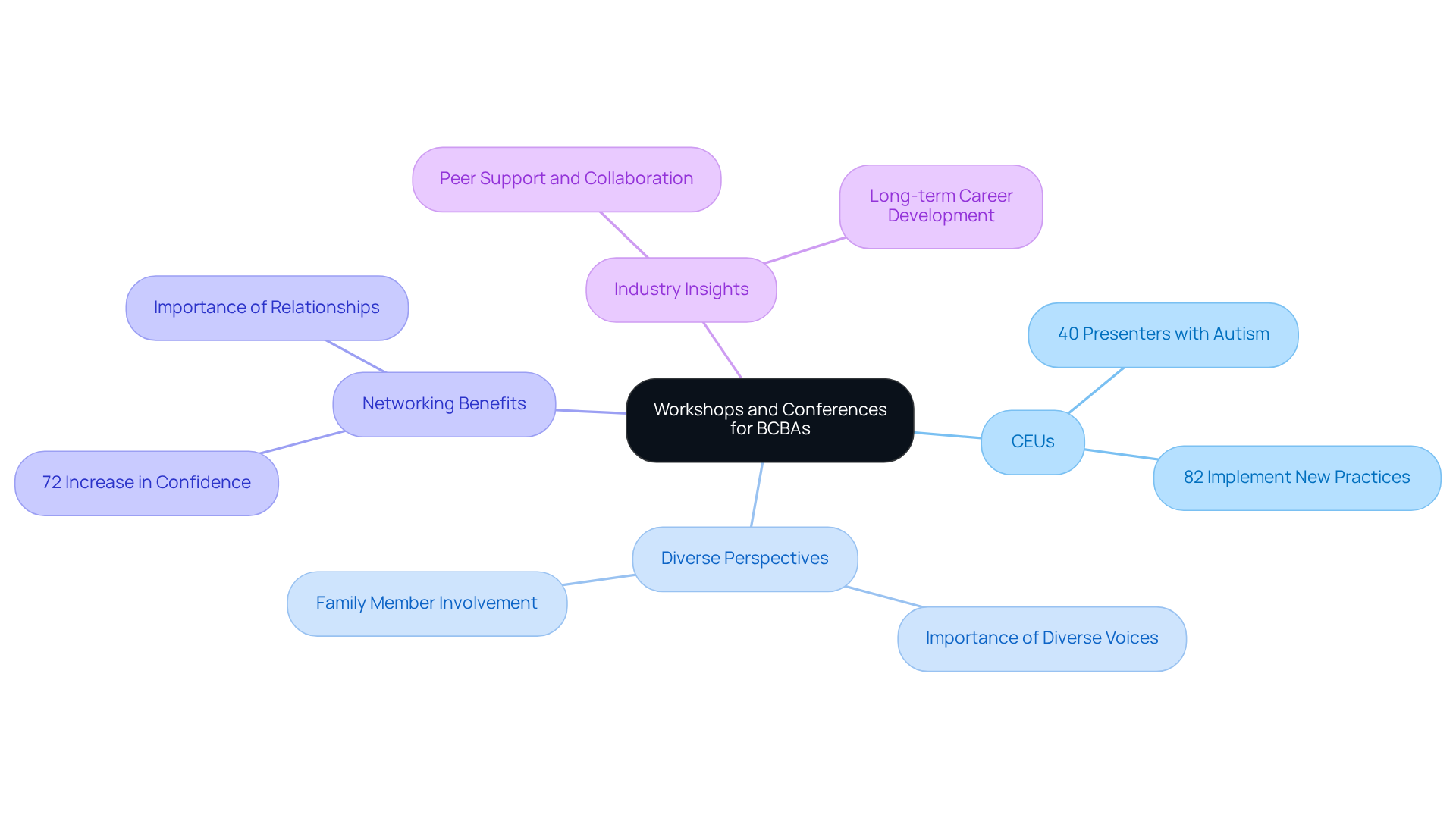
Workshops and conferences are essential for Board Certified Behavior Analysts (BCBAs) seeking to enhance their skills and earn BACB CEUs. Did you know that 40% of presenters at these events are individuals with autism or family members? This statistic underscores the importance of diverse perspectives in shaping effective practices. At events like the Autism Society National Conference, which attracts over 1,200 participants from all 50 states, BCBAs can connect with peers and industry leaders, exchanging ideas that can significantly improve their practice.
Networking at these conferences is not just beneficial; it’s crucial for career development. Research shows that attendees who actively engage with their peers report a remarkable 72% increase in confidence when applying research-based practices. This collaborative environment allows behavior analysts to refine their expertise and develop personalized treatment plans tailored to their clients' unique needs. Furthermore, 82% of practitioners implement at least one new evidence-based practice within six months of attending autism conferences, highlighting the tangible impact these events have on professional growth.
Industry leaders emphasize that the true value of networking lies in cultivating genuine relationships rather than seeking immediate gains. One speaker noted, "Networking is about making the right connections, focusing on relationships built on trust, generosity, and authenticity." Bob Burg also points out that successful networkers prioritize the needs of others. These insights reveal that workshops and conferences not only facilitate BACB CEUs learning but also foster a supportive community that can significantly influence a BCBA's career trajectory. As Allison Dunn aptly states, consistency in networking is key to long-term success.
Board Certified Analysts must recognize that continuing education unit (CEU) requirements can differ significantly from state to state. Did you know that while the Behavior Analyst Certification Board (BACB) mandates a minimum of 32 BACB CEUs every two years, including specific ethics and supervision topics, many states impose additional regulations? This discrepancy underscores the importance of staying informed.
For instance, some states may require Board Certified Behavior Analysts to complete extra hours or focus on particular subjects relevant to local practices. Recent surveys reveal that a significant percentage of Board Certified Behavior Analysts are unaware of these state-specific CEU regulations. This highlights the critical need for vigilance in this area.
To ensure compliance, behavior analysts should actively consult their state licensing board or regulatory agency. These organizations provide detailed information on any additional CEU requirements that may apply. For example, states like California and Florida have unique mandates regarding BACB CEUs that go beyond BACB standards. Practitioners must stay informed about local regulations to maintain their certification.
Resources such as state board websites and professional associations can be invaluable for behavior analysts navigating these requirements effectively. By staying proactive and informed, BCBAs can uphold the ethical standards of their profession and ensure their continued success.

Misconceptions about Continuing Education Units (CEUs) are widespread, particularly the belief that all units hold the same value or that online courses are inherently less effective than face-to-face training. In reality, bacb ceus must meet specific criteria established by the Behavior Analyst Certification Board (BACB) to be considered valid. Many online courses are not only accredited but also provide high-quality content that aligns with these standards.
Consider this: the demand for Board Certified Behavior Analysts (BCBAs) surged by 23% from 2021 to 2022. This statistic underscores the importance of ongoing education in a rapidly expanding field. Many behavior analysts prefer online courses due to their flexibility and accessibility, allowing them to balance professional development with personal commitments. Furthermore, behavior analysts are required to complete at least 32 bacb ceus every two years to maintain their certification.
Real-world examples illustrate that board-certified behavior analysts who engage in bacb ceus report enhanced skills and knowledge relevant to their practice. By understanding these nuances, behavior analysts can make informed decisions about their continuing education, ensuring they select bacb ceus that genuinely contribute to their professional growth. Are you ready to elevate your expertise and meet the demands of this evolving field? Choose accredited online courses that empower your career.

BCBAs have a wealth of resources at their disposal for sourcing BACB CEUs. Did you know that the demand for BCBAs is on the rise? The Certification Analyst Board (BACB) maintains a list of authorized continuing education providers, which serves as a crucial starting point for professionals in the field. Additionally, platforms like CEUey, Behavior University, and The Behavior Academy offer a variety of accredited courses, including BACB CEUs, that can be accessed conveniently from anywhere, making it easier than ever to stay current.
Behavior analysts are required to complete at least 32 BACB CEUs every two years. This includes at least four units focused on ethical standards and three units for supervision if they hold supervisory positions. Local ABA chapters frequently organize events and workshops that also qualify for CEUs, providing valuable networking opportunities alongside educational benefits. Have you considered how these local events could enhance your professional connections?
Many behavior analysts have expressed their gratitude for these platforms, noting that the flexibility of online courses enables them to balance their professional and personal commitments while advancing their careers. For instance, one BCBA remarked on the ease of integrating CEU learning into their busy schedule through these online offerings. This flexibility is essential in today’s fast-paced environment.
Furthermore, with the new ACE Provider Handbook scheduled to take effect on July 1, 2026, it’s crucial for behavior analysts to stay informed about upcoming changes in CEU requirements. By leveraging these resources, BCBAs can effectively meet their BACB CEUs and remain at the forefront of the evolving field of Applied Behavior Analysis. Are you ready to take the next step in your professional development?
Staying current with BACB CEUs isn’t just a requirement for Board Certified Behavior Analysts (BCBAs); it’s a vital commitment to professional excellence and effective client care. Did you know that the demand for BCBAs is skyrocketing? As the landscape of Applied Behavior Analysis evolves, the necessity for ongoing education becomes increasingly clear. Engaging in CEUs empowers BCBAs to enhance their skills, stay informed about the latest research, and ultimately deliver higher quality services to their clients.
Throughout this article, we explored key insights, including the specific BACB CEU requirements, the importance of ethics and supervision training, and the various avenues available for obtaining these credits. Real-world examples highlighted how CEUs contribute to improved patient outcomes and career advancement opportunities. Moreover, we emphasized the significance of networking through workshops and conferences, showcasing how collaboration within the community can lead to professional growth and innovative practices.
In conclusion, the commitment to continuing education through BACB CEUs is essential for BCBAs looking to thrive in a competitive job market and provide the best possible care to their clients. Are you actively seeking out educational opportunities? By staying informed about regulatory changes, behavior analysts can not only fulfill their certification requirements but also position themselves as leaders in the field. It’s imperative for BCBAs to take proactive steps in their professional development journey-exploring available resources, attending workshops, and engaging with peers-to ensure they remain at the forefront of this dynamic and impactful profession.
What is Hire ABA and what does it offer?
Hire ABA is a service dedicated to connecting Board Certified Behavior Analysts (BCBAs) with job opportunities in the field of Applied Behavior Analysis therapy. It streamlines the hiring process by providing tailored resume evaluations and advanced job fit scoring to match candidates with suitable roles.
How does Hire ABA assist organizations in finding candidates?
Hire ABA simplifies recruitment by allowing behavior analysts to submit their resumes for review. Their experienced team assesses the qualifications and career goals of candidates, ensuring they are well-prepared to meet the specific needs of organizations.
What are the BACB CEU requirements for BCBAs?
The BACB requires Board Certified Behavior Analysts to complete 32 Continuing Education Units (CEUs) every two years to maintain their certification. This includes a minimum of 4 CEUs focused on ethics and 3 CEUs in supervision for those overseeing trainees or Registered Behavior Technicians (RBTs).
Why are BACB CEUs important for behavior analysts?
BACB CEUs are essential for maintaining certification and enhancing the quality of services provided by behavior analysts. They help professionals stay updated on the latest research, techniques, and ethical standards, which ultimately improves patient outcomes.
How does participation in BACB CEUs impact behavior analysts' practice?
Behavior analysts who actively participate in BACB CEUs report greater confidence in their practice and improved ability to implement evidence-based interventions. They are better equipped to meet diverse client needs and manage complex situations effectively.
What recent changes have been made to BACB regulations?
Recent changes include a requirement that coursework for BCBA certification must be completed within the last 10 years, emphasizing the importance of staying current with educational practices in the field.
What is the projected demand for BCBAs in the coming years?
The demand for Board Certified Behavior Analysts is projected to rise by 25% over the next five years, highlighting the growing need for qualified professionals in Applied Behavior Analysis therapy.
How can Hire ABA help organizations ensure they have qualified talent?
Hire ABA connects organizations with qualified professionals who meet BACB's rigorous standards, helping them navigate the hiring landscape and find the right talent to elevate their services.
Our expert recruitment strategies and AI-driven sourcing ensure that you receive top-notch candidates quickly, without compromising on quality. Whether you’re looking for BCBAs, Clinical Directors, or RBTs, we’ve got you covered.


