


Thank you! Your submission has been received!
Oops! Something went wrong while submitting the form.
November 25, 2025

The landscape of Applied Behavior Analysis is witnessing a remarkable transformation, with a projected surge in demand for Board Certified Behavior Analysts (BCBAs) in the coming years. This growing need presents both challenges and opportunities for professionals in the field. To remain competitive and compliant, BCBAs must adeptly navigate a complex web of recertification requirements, including the completion of 32 Continuing Education Units (CEUs) every two years.
This article delves into the essential requirements for BCBA recertification, exploring the nuances of CEU categories and the critical importance of ethical training. Are you prepared to tackle these challenges and secure your professional future? Strategic planning is key to meeting these obligations effectively.
As the demand for BCBAs rises, understanding these requirements becomes crucial for your career advancement. Let's explore how you can stay ahead in this evolving landscape.
Did you know that [the demand for Board Certified Behavior Analysts (BCBAs) is projected to surge significantly](https://skillbuildersaba.com/blog/the-rate-of-job-growth-for-bcbas) in the coming years? At Hire ABA, we are dedicated to connecting these highly sought-after professionals with [premier job opportunities in the field of Applied Behavior Analysis therapy](https://stepaheadaba.com/blog/the-rate-of-job-growth-for-bcbas).
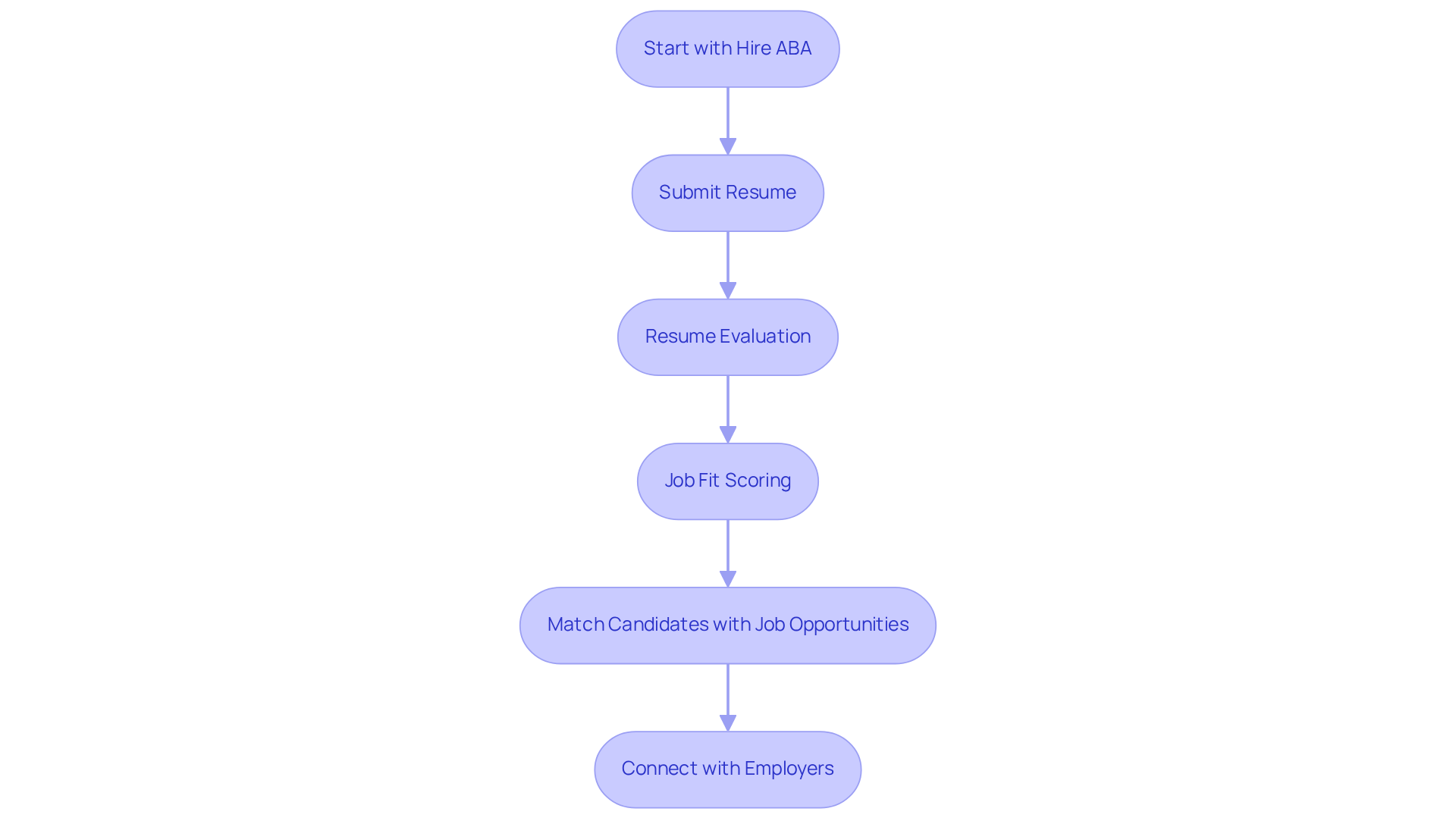
Navigating the recruitment landscape can be challenging. That’s where Hire ABA steps in. We simplify the hiring process, ensuring that qualified behavior analysts find positions that align with their skills and career aspirations. Our tailored resume evaluations allow BCBAs to submit their resumes for a thorough review, where our expert team assesses their experience and professional goals.
But we don’t stop there. By leveraging advanced job fit scoring, we pinpoint opportunities that perfectly match candidates’ skills, preferences, and desired locations. This platform not only streamlines the job matching process but also empowers behavior analysts to advance their careers by providing access to a diverse array of job listings tailored to their unique interests.
Are you facing challenges in finding the right candidates? Consider how Hire ABA can transform your recruitment strategy. With our expertise and commitment to excellence, we ensure that you connect with the . Don’t miss out on the opportunity to enhance your team with qualified professionals. Join us at Hire ABA and take the first step towards a successful hiring experience.
In 2024, the demand for behavior analysts surged by over 300%. This staggering statistic underscores the critical need for Board Certified Behavior Analysts (BCBAs) to stay updated with evolving practices in the field. To fulfill the [BCBA recertification requirements](https://hireaba.today), BCBAs are required to complete 32 Continuing Education Units (CEUs) every two years. This requirement is not just a formality; it ensures that certified behavior analysts remain at the forefront of the latest practices and developments in behavior analysis.
Understanding the is essential for BCBAs, as they form the foundation of their professional development and compliance with the Behavior Analyst Certification Board (BACB) standards. As part of their ongoing education obligations, BCBAs must incorporate a minimum of:
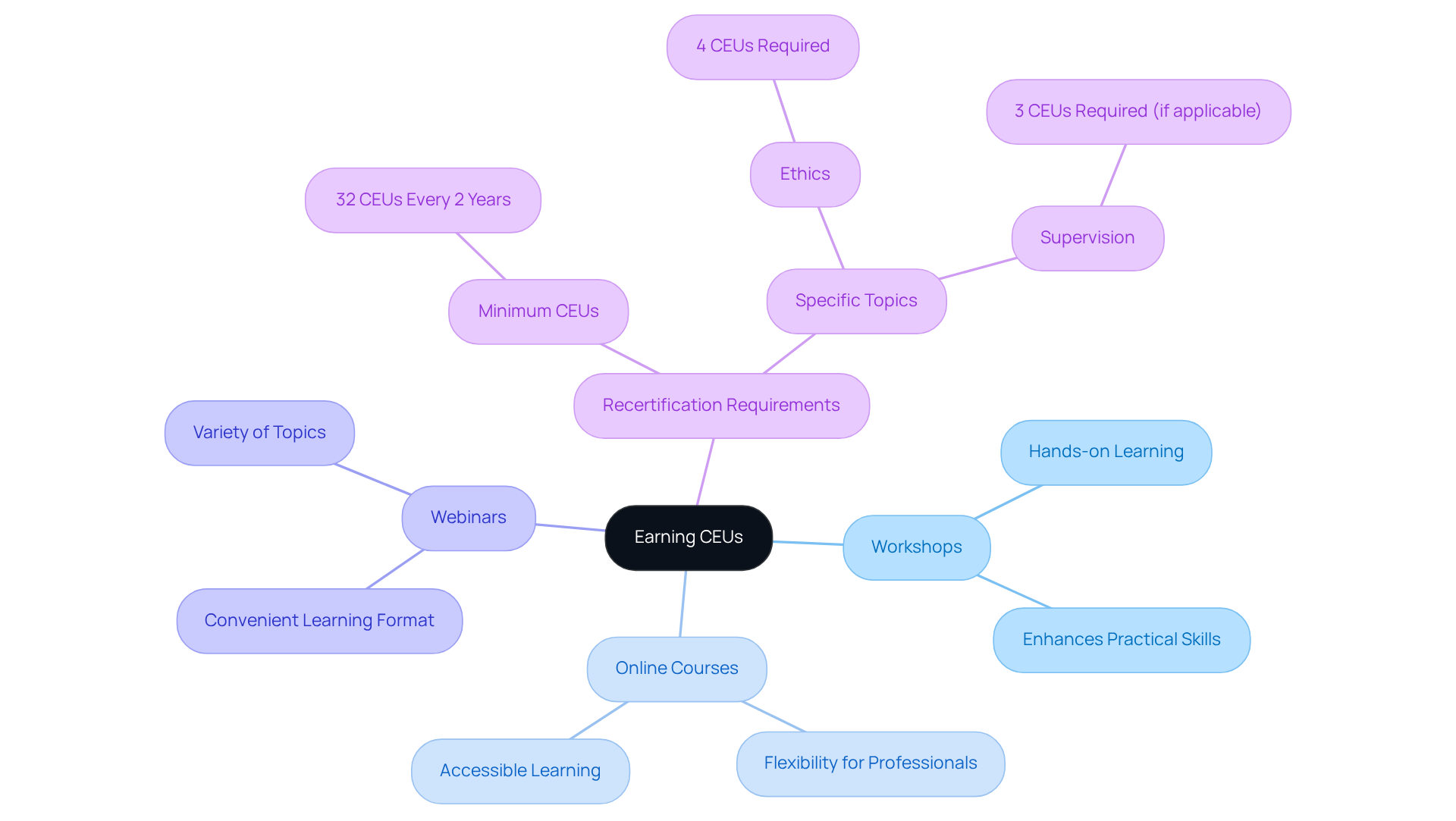
CEUs can be obtained through various channels, including college classes, approved workshops, and webinars, allowing behavior analysts to tailor their educational experiences to their specific interests and needs.
The impact of CEUs on career development is profound. A case study revealed that BCBAs who actively engage in CEU activities report enhanced skills and improved service delivery. The BACB emphasizes that effective CEU management is not merely a regulatory obligation but a strategic tool for career advancement. As the BACB states, "The key to successful CEU management lies in treating it as an ongoing process rather than a biennial obligation." By prioritizing systematic professional development, behavior analysts can better position themselves to seize emerging opportunities in the field.
As the landscape of behavior analysis continues to evolve, the necessity for CEUs ensures that practitioners are equipped with the knowledge and skills needed to provide high-quality services. Therefore, comprehending and meeting the BCBA recertification requirements is essential for behavior analysts to retain their certification and advance their careers. Are you ready to take the next step in your professional journey? Embrace the importance of continuing education and position yourself for success.

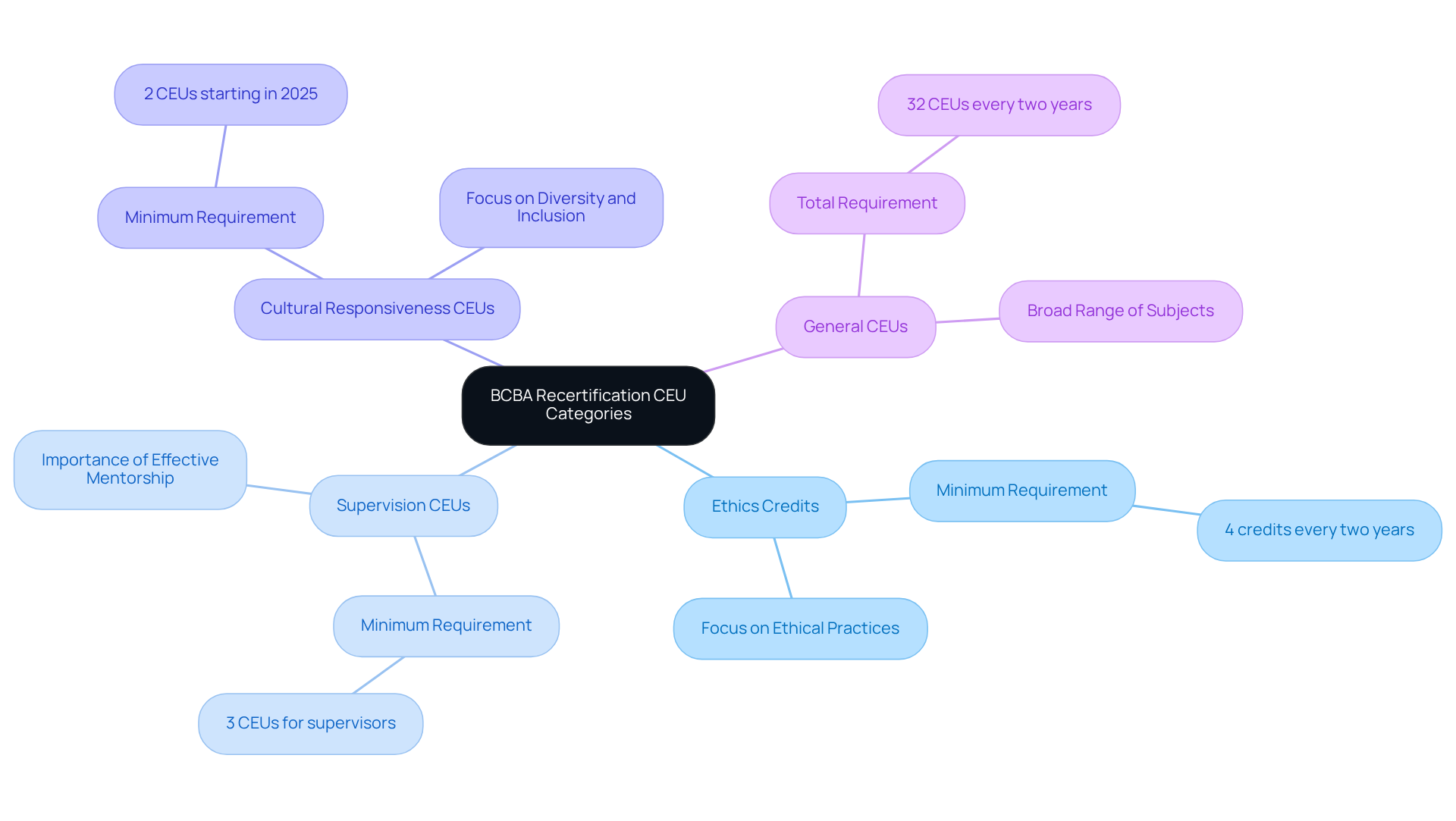
To maintain their certification, Board Certified Behavior Analysts (BCBAs) must fulfill the by earning Continuing Education Credits (CEUs) from specific categories, each designed to enhance their professional competence. Did you know that BCBAs are in high demand? This makes understanding [BCBA recertification requirements](https://hireaba.today) crucial for advancing one's career.
The primary categories include:
Statistics indicate that adhering to the BCBA recertification requirements is essential for career growth, as BCBAs are mandated to complete a total of 32 units every two years. Effective CEU programs, such as those offered by BACB-authorized providers, include online workshops, webinars, and industry conferences, providing flexible options for busy professionals.
Moreover, audits in 2025 will be stricter, necessitating record-keeping for 7 years, which emphasizes the importance of maintaining accurate CEU records. The Certificant Gateway serves as a valuable resource for tracking CEUs and submitting bcba recertification requirements. By engaging in various learning opportunities, behavior analysts can ensure they meet the bcba recertification requirements while enhancing their skills and knowledge in the evolving field of behavior analysis.
Are you ready to take the next step in your professional development? Explore the available CEU options today!
To meet the BCBA recertification requirements, Board Certified Behavior Analysts (BCBAs) are required to complete at least four Continuing Education Units (CEUs) focused on ethics during each recertification period. This is not just a formality; it’s a critical component of professional practice. These CEUs delve into essential topics such as:
Why is this requirement so vital? Because it ensures that behavior analysts make decisions grounded in ethical principles.
Adhering to these standards enhances the quality of care provided to clients and fosters trust and accountability within the therapeutic relationship. Research shows that practitioners who engage in comprehensive ethics training report improved compliance with ethical guidelines. This commitment leads to better outcomes for clients. For example, a recent survey revealed that behavior analysts who participated in ethics training demonstrated a remarkable 30% increase in adherence to ethical standards.
Real-world examples further illustrate this point. When behavior analysts prioritize , they are better equipped to navigate complex situations, uphold client rights, and maintain the integrity of their practice. As Mack S. Costello aptly notes, "Ethical oversight through BACB reporting procedures reinforces accountability in behavior analysis services." This statement underscores the importance of ongoing ethics education to fulfill BCBA recertification requirements.
Are you ready to elevate your practice? Embrace the necessity of ethics training and ensure that your decision-making processes are not only compliant but exemplary.

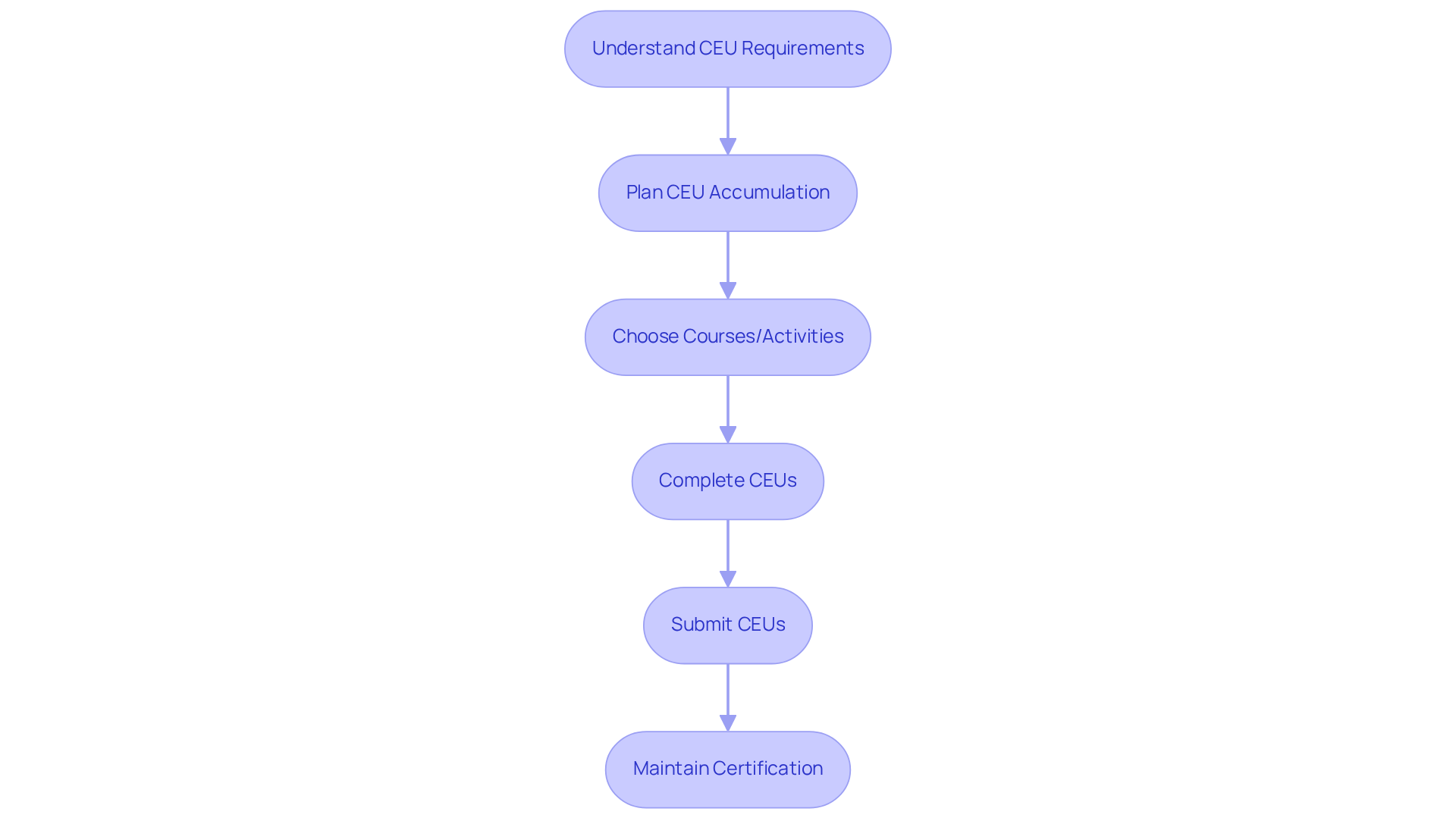
Board Certified Behavior Analysts (BCBAs) are facing an increasing demand, with a remarkable 68% growth in certifications from 2020 to 2025. To fulfill the BCBA recertification requirements, BCBAs must complete 32 Continuing Education Units (CEUs) within a two-year period, including four units in ethics and three in supervision if applicable. The deadline for these CEUs typically coincides with the end of the BCBA recertification requirements period.
To avoid the stress of last-minute compliance, it’s essential for behavior analysts to start accumulating CEUs early in the cycle. This proactive approach not only alleviates pressure but also allows professionals to choose courses and activities that align with their career goals and interests. Statistics show that many BCBAs rush to complete their CEUs as deadlines loom, often resulting in less-than-ideal educational choices.
By planning ahead, behavior analysts can explore a variety of resources, such as workshops, online courses, and seminars, ensuring they effectively meet the BCBA recertification requirements. As one BCBA noted, "Beginning early with continuing education units enables me to interact with material that genuinely improves my practice, rather than merely ticking off boxes as the deadline approaches."
Additionally, it’s important to note that the Behavior Analyst Certification Board (BACB) has eliminated the requirement for a Diversity, Equity, and Inclusion (DEI) CEU category as of March 2025, which may influence planning strategies. To optimize their , behavior analysts are encouraged to investigate various accredited providers and consider integrating CEUs into their ongoing professional development activities.
Are you ready to take charge of your continuing education? Start planning today to ensure you meet your CEU requirements with confidence.
Neglecting to complete the necessary Continuing Education Units (CEUs) can lead to serious consequences related to the [BCBA recertification requirements](https://hireaba.today) for Board Certified Behavior Analysts (BCBAs). Did you know that failing to complete CEUs results in the expiration of certification? This lapse not only makes BCBAs unrecognized as certified professionals but also severely hinders their employment prospects. Many employers prioritize candidates with active certifications, making it crucial to stay compliant.
Moreover, the Behavior Analyst Certification Board (BACB) may impose disciplinary actions on BCBAs who do not adhere to the BCBA recertification requirements. This underscores the necessity of remaining current in continuing education. As Michael P. Kranak noted, "Supervision is essential within applied behavior analysis," highlighting the importance of adherence to uphold professional standards.
The ramifications extend beyond immediate job opportunities; an expired certification can tarnish a BCBA's professional reputation, complicating efforts to regain standing in the field. In fact, approximately 25% of licensees fail an audit in a given cycle, prompting increased scrutiny from the board and further complicating the path to reinstatement. Additionally, late fees for non-compliance can range from $50 to $200, adding financial strain to the consequences of expired certifications.
Thus, maintaining compliance with the BCBA recertification requirements is not only a regulatory obligation but also a critical factor in sustaining a successful career in applied behavior analysis. To avoid these pitfalls, behavior analysts should regularly and set reminders for upcoming deadlines. Are you prepared to take action and ensure your certification remains active?

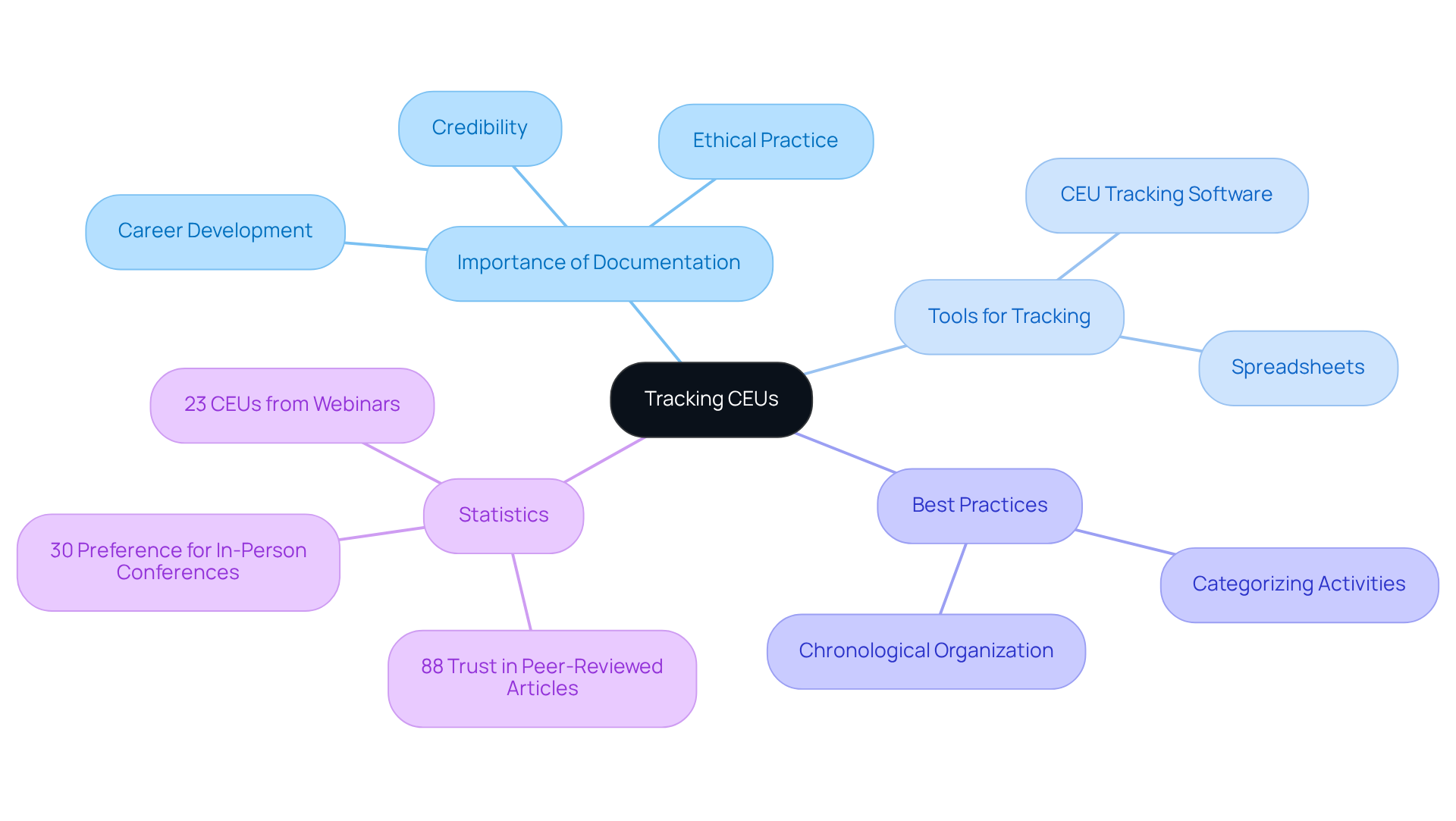
To effectively monitor Continuing Education Units (CEUs), Board Certified Behavior Analysts (BCBAs) must prioritize thorough documentation of all completed courses and activities. Did you know that 88% of professionals trust peer-reviewed journal articles as their primary source of information? This statistic underscores the critical need for credible documentation practices in our field.
Utilizing digital tools, such as , can streamline this process significantly. Simple spreadsheets also serve as effective alternatives. Each entry should include essential details:
Regular updates to this documentation are not just beneficial; they are essential. They help behavior analysts stay organized and ensure readiness for any audits conducted by the Behavior Analyst Certification Board (BACB).
Moreover, many behavior analysts emphasize that thorough documentation reflects their commitment to ethical practice and career development. Erin Mayberry, a Board Certified Behavior Analyst, aptly stated, "Obtaining continuing education units isn’t just about fulfilling a requirement; it’s a demonstration of your commitment to lifelong learning, ethical practice, and providing the highest quality in ABA therapy."
Best practices for CEU documentation include categorizing activities into restricted and unrestricted types. It’s crucial to ensure that at least 60% of hours are dedicated to unrestricted activities, such as assessments and plan design. Additionally, maintaining a chronological organization of records facilitates quick access during audits, reinforcing accountability and compliance with BACB standards.
By adopting these strategies, behavior analysts can enhance their career growth and efficiently meet BCBA recertification requirements. Notably, the highest proportion of CEUs acquired was through webinars (23%), indicating a preferred method for obtaining these units among behavior analysts. Given that many costs associated with CEUs are borne by individuals, with employers typically reimbursing under $51, it’s vital for behavior analysts to be aware of their documentation practices to bolster their career development.
The demand for Board Certified Behavior Analysts (BCBAs) is skyrocketing, with job growth expected to exceed 20% in the coming years. This surge underscores the importance of staying current in the field through the [BCBA recertification requirements](https://research.com/careers/ceu-requirements-for-board-certified-behavior-analyst-bcba) and Continuing Education Units (CEUs). BCBAs can meet their CEU requirements through various avenues, such as:
Accredited organizations offer specialized CEU opportunities tailored for behavior analysts, ensuring that the content adheres to industry standards.
Workshops provide that enhance practical skills, while online courses offer the flexibility that busy professionals need. Have you considered how presenting at conferences or conducting research can also qualify for CEUs? These activities not only fulfill educational requirements but also allow BCBAs to contribute meaningfully to the field.
To meet the BCBA recertification requirements, BCBAs must complete a minimum of 32 CEUs every two years, which includes:
Engaging in these activities not only helps meet CEU requirements but also fosters career development and ethical practice in behavior analysis. Additionally, the average cost of CEU expenses reported by respondents ranges from $101 to $150, a figure that should be factored into annual professional budgets.
As the landscape of behavior analysis evolves, remaining up-to-date through accredited CEU opportunities is essential for preserving a competitive edge. Are you ready to take the next step in your professional journey? Consider how [Hire ABA](https://hireaba.today) can assist you in navigating your hiring challenges and ensuring you have the best talent in your organization.
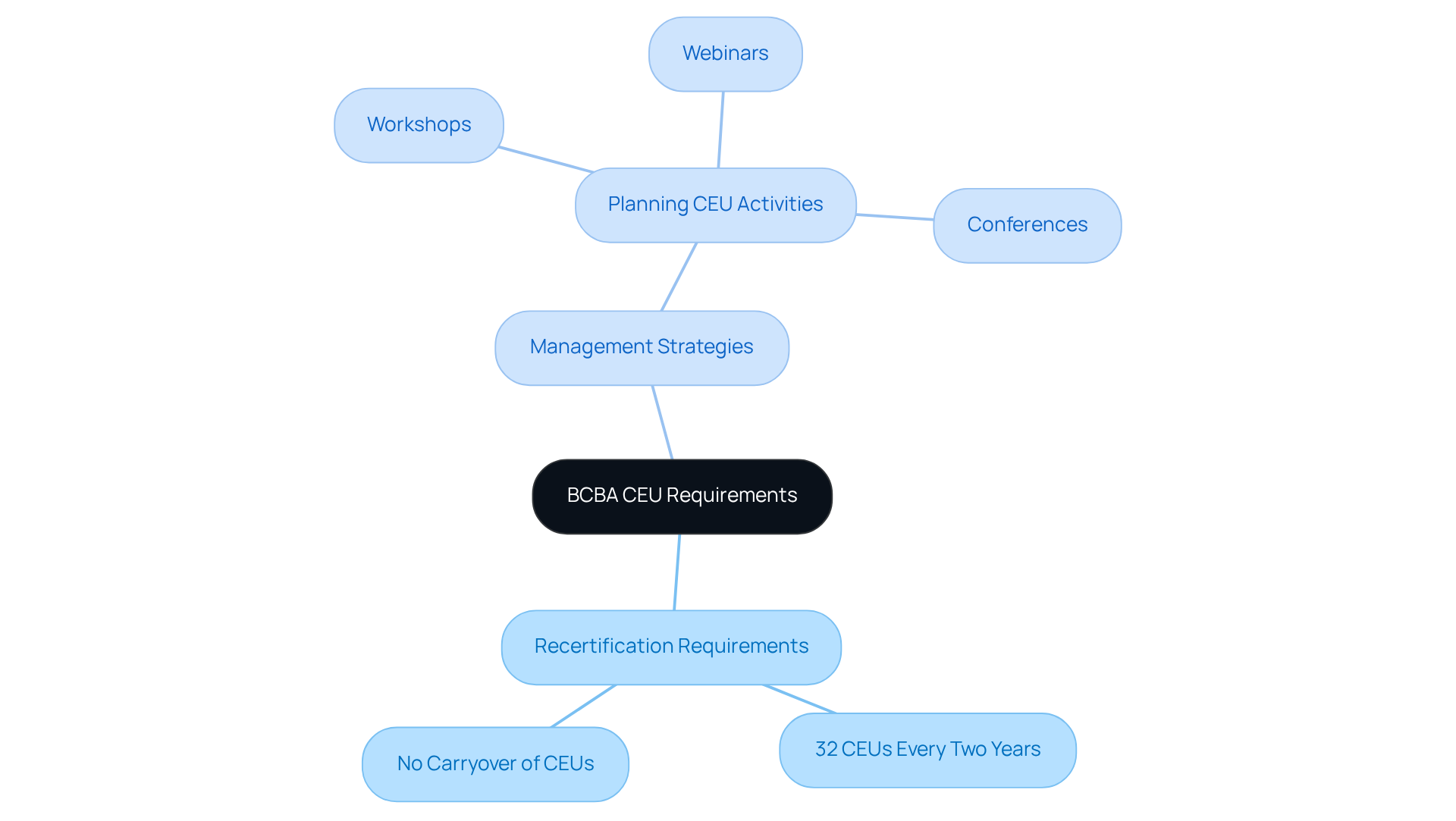
Board Certified Behavior Analysts (BCBAs) face a critical requirement: they cannot transfer surplus Continuing Education Units (CEUs) from one certification cycle to another. The [BCBA recertification requirements](https://hireaba.today) state that all CEUs must be earned within the current two-year cycle, mandating that BCBAs complete 32 CEUs every two years for recertification. This policy underscores the importance of strategic planning and timely fulfillment of BCBA recertification requirements, encouraging BCBAs to engage in continuous learning throughout their certification period instead of waiting until the deadline approaches. According to the Behavior Analyst Certification Board, the BCBA recertification requirements specify that CEUs must be earned within the specific two-year recertification cycle and cannot be carried over to subsequent cycles.
To effectively , many BCBAs find success by outlining their CEU activities at the start of the cycle. For example, a BCBA might create a plan that includes:
This proactive strategy not only ensures compliance with BACB regulations but also enhances their expertise in the field. Furthermore, understanding the implications of BCBA recertification requirements is vital; failing to meet these requirements can hinder professional development and limit opportunities for career advancement.
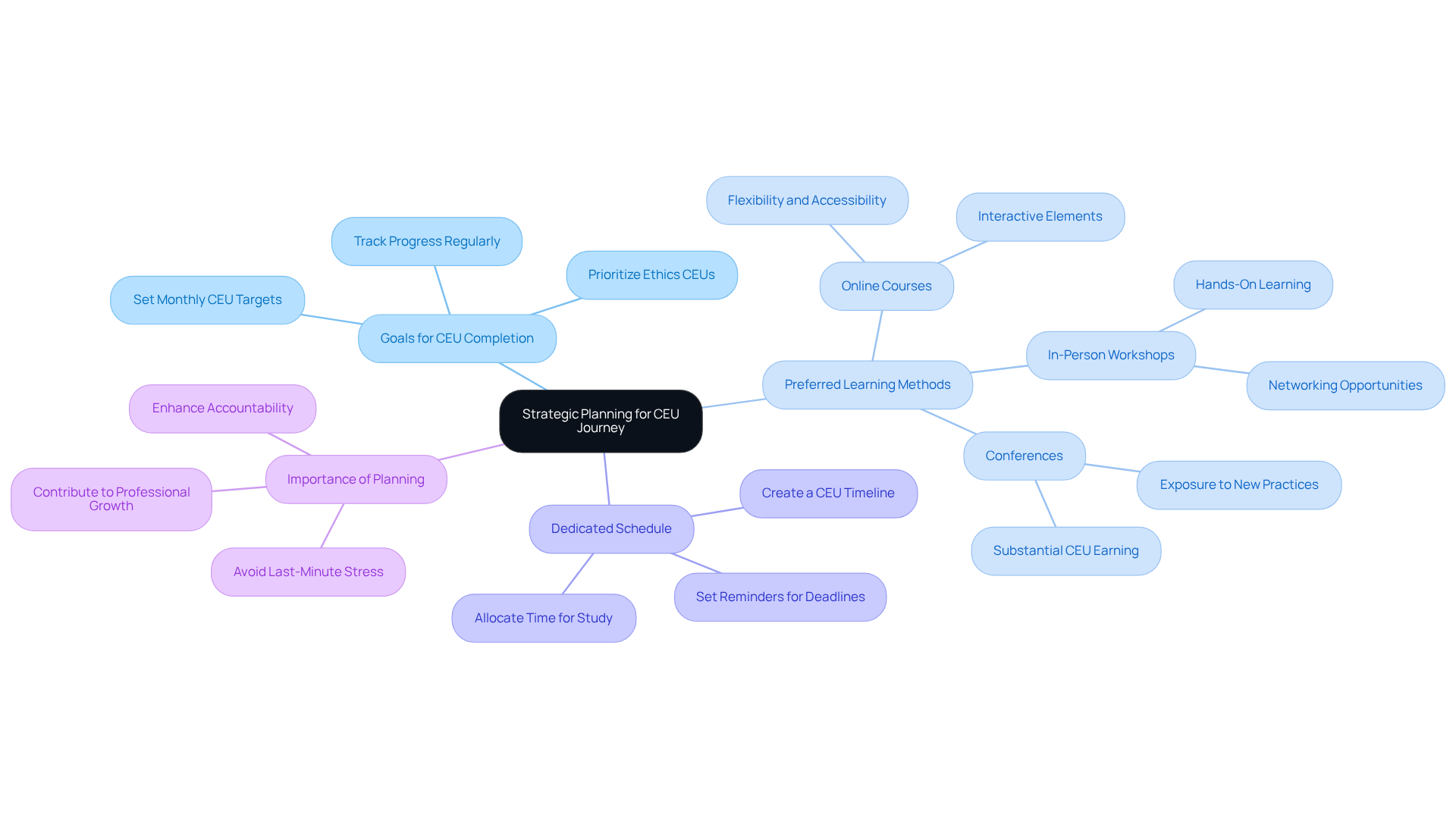
To navigate the CEU journey effectively, behavior analysts must develop a at the outset of their certification cycle. Did you know that the demand for Board Certified Behavior Analysts (BCBAs) is projected to increase by 25% by 2026? This statistic underscores the importance of proactive planning in your professional development.
A well-crafted plan should encompass specific goals for CEU completion, preferred learning methods, and a dedicated schedule for professional development activities. Remember, the [BCBA recertification requirements](https://hireaba.today) state that behavior analysts are required to fulfill a minimum of 32 continuing education units every two years, including at least four focused on ethical standards. This requirement highlights the necessity of strategic planning for continuing education management.
By breaking down the 32 CEUs into manageable monthly goals, you can maintain steady progress and avoid the stress of last-minute efforts. Successful behavior analysts often emphasize the significance of setting clear objectives. This practice not only enhances accountability but also boosts completion rates. For instance, one BCBA shared how creating a detailed timeline for CEU activities allowed them to balance work commitments while ensuring compliance with BCBA recertification requirements.
This proactive approach fosters a sense of accomplishment and contributes to ongoing professional growth and improved client outcomes. As Tom Landry wisely noted, "Setting a goal is not the main thing. It is deciding how you will go about achieving it and staying with that plan."
Given the projected increase in demand for BCBAs, effective planning is essential for adhering to the BCBA recertification requirements and advancing in this growing field. Are you ready to take charge of your CEU journey and ensure your continued success?
The journey to maintaining Board Certified Behavior Analyst (BCBA) certification is not just a formality; it’s a vital commitment to professional excellence and ethical practice. Did you know that the demand for BCBAs is skyrocketing? Understanding the intricacies of the BCBA recertification requirements, including the necessity of completing 32 Continuing Education Units (CEUs) every two years, is crucial for ensuring compliance and advancing your career in the rapidly evolving field of Applied Behavior Analysis.
Throughout this article, we’ve highlighted key insights, such as the specific CEU categories - ethics, supervision, cultural responsiveness, and general education - that BCBAs must navigate. The importance of strategic planning and timely CEU accumulation cannot be overstated. Avoiding the pitfalls of non-compliance is essential, as it can lead to severe professional consequences. Furthermore, ethical training is significant in enhancing client outcomes and fostering trust in therapeutic relationships.
Ultimately, taking a proactive approach to meeting BCBA recertification requirements not only safeguards your certification but also positions you for career advancement in a competitive job market. By prioritizing continuous education and ethical standards, you can enhance your practice and contribute meaningfully to the field. Embrace the journey of lifelong learning and take control of your professional development - your future as a Board Certified Behavior Analyst depends on it.
What is Hire ABA and what services does it offer?
Hire ABA is a platform dedicated to connecting Board Certified Behavior Analysts (BCBAs) with job opportunities in Applied Behavior Analysis therapy. It simplifies the hiring process by offering tailored resume evaluations and advanced job fit scoring to match candidates with suitable positions.
How does Hire ABA assist BCBAs in finding jobs?
Hire ABA assists BCBAs by evaluating their resumes to align their skills and career aspirations with job opportunities. The platform uses advanced job fit scoring to identify positions that match candidates' preferences and desired locations.
What is the requirement for BCBA recertification in terms of Continuing Education Units (CEUs)?
BCBAs are required to complete 32 CEUs every two years for recertification. This includes a minimum of four CEUs in Ethics and three CEUs in Supervision.
What are the different categories of CEUs that BCBAs must complete?
The categories of CEUs include: - Ethics Credits: Minimum of 4 credits every two years. - Supervision Continuing Education Units: Minimum of 3 CEUs for those who supervise others. - Cultural Responsiveness Continuing Education Units: Starting in 2025, a minimum of 2 units is required. - General Continuing Education Units: Various subjects relevant to behavior analysis.
Why are CEUs important for BCBAs?
CEUs are essential for BCBAs to stay updated with evolving practices in the field, enhance their skills, and fulfill recertification requirements. Engaging in CEUs is also a strategic tool for career advancement.
How can BCBAs obtain CEUs?
BCBAs can obtain CEUs through college classes, approved workshops, webinars, and other educational opportunities that align with their professional interests and needs.
What changes are expected in the BCBA recertification process starting in 2025?
Starting in 2025, BCBAs will need to complete CEUs in cultural responsiveness, and audits will be stricter, requiring record-keeping for seven years.
How can BCBAs track their CEUs and recertification requirements?
BCBAs can use the Certificant Gateway to track their CEUs and submit their recertification requirements, ensuring they maintain accurate records of their continuing education activities.
Our expert recruitment strategies and AI-driven sourcing ensure that you receive top-notch candidates quickly, without compromising on quality. Whether you’re looking for BCBAs, Clinical Directors, or RBTs, we’ve got you covered.


