


Thank you! Your submission has been received!
Oops! Something went wrong while submitting the form.
February 23, 2026

The demand for Board Certified Behavior Analysts (BCBAs) is skyrocketing, with a growing need for skilled professionals in the field of Applied Behavior Analysis (ABA). Understanding the intricacies of behavior is essential for BCBAs striving to enhance therapeutic outcomes. By utilizing functional analysis examples, BCBAs can uncover the underlying triggers and patterns of behavior, leading to more effective interventions tailored to individual needs.
But as the demand for skilled BCBAs continues to rise, how can practitioners ensure they are equipped with the right tools and strategies to navigate the complexities of behavior analysis? This article delves into ten essential functional analysis examples that illuminate key concepts and methodologies. These insights are invaluable for BCBAs looking to refine their practice and improve outcomes for those they serve.
Are you facing challenges in hiring the right talent for your ABA practice? Consider how the right recruitment strategies can make a difference. With the right tools at your disposal, you can enhance your team's effectiveness and ultimately improve the lives of your clients. Let's explore these functional analysis examples together.
The ABC Model serves as a cornerstone in Applied Behavior Analysis (ABA), breaking down actions into three key components: Antecedents (A), Behaviors (B), and Consequences (C). This framework empowers Board Certified Behavior Analysts (BCBAs) to identify the triggers of behaviors, the behaviors themselves, and the outcomes that either reinforce or diminish those behaviors.
Consider a scenario where a child throws tantrums (Behavior) when asked to complete homework (Antecedent). If the child receives attention (Consequence) after the tantrum, the BCBA can develop strategies to modify either the antecedent or the consequence, effectively reducing the likelihood of future tantrums.
Recent studies underscore the effectiveness of this model, revealing that a comprehensive understanding of these elements can lead to more tailored and effective interventions, ultimately enhancing therapeutic outcomes for individuals with Autism Spectrum Disorder (ASD). By systematically analyzing antecedents, behaviors, and consequences, BCBAs can refine their approaches, ensuring that interventions are not only evidence-based but also customized to meet the unique needs of each individual.
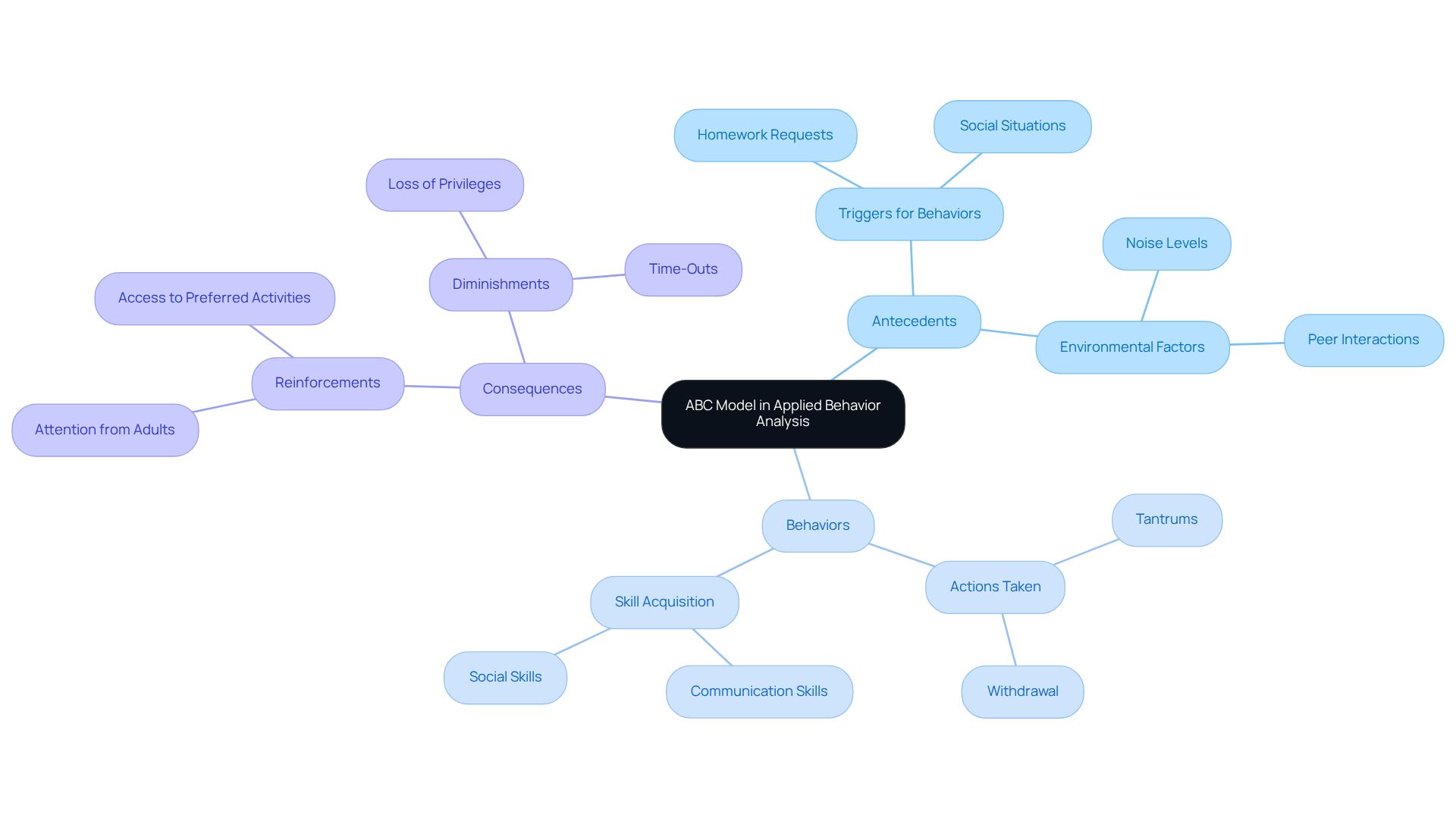
Escape actions occur when individuals engage in activities to avoid unpleasant tasks or situations. Consider this: a young person might refuse to finish homework due to anxiety. This scenario highlights the importance of functional analysis examples, which involve observing the context in which these actions arise. By pinpointing specific triggers - like the difficulty of the task - and the resulting responses, such as tantrums or withdrawal, Board Certified Behavior Analysts (BCBAs) can develop strategies that gradually increase task engagement while minimizing avoidance behaviors.
Have you ever faced challenges in hiring qualified BCBAs? Understanding the dynamics of escape actions can be crucial in addressing these issues. By leveraging insights from functional analysis examples, you can create a supportive environment that encourages task completion and reduces anxiety for both clients and staff.
Incorporating effective strategies not only enhances engagement but also fosters a more productive atmosphere. This is where Hire ABA comes into play. With a proven track record in recruitment, Hire ABA connects you with skilled professionals who understand the nuances of behavioral analysis. Don't let hiring challenges hold you back - take action today and explore how Hire ABA can streamline your recruitment process.

Social interactions significantly shape actions, particularly among young individuals. Did you know that the demand for Board Certified Behavior Analysts (BCBAs) is on the rise? These professionals can effectively analyze peer dynamics to understand their influence on behaviors, both positively and negatively. For instance, a young person might resort to aggressive actions to attract peer attention, leading to further conduct issues. Research shows that children surrounded by pro-social peers are more inclined to engage in acts of kindness and community service, underscoring the importance of positive peer influence.
Dr. Jose Toledo emphasizes, "Peer influence refers to the impact that individuals within a similar age group have on each other’s thoughts and attitudes." Furthermore, consider this: 30% of people report feeling more depressed when their friends exhibit negativity. This statistic highlights the mental health implications of negative peer influence. By evaluating these interactions, behavior specialists can devise targeted interventions that foster healthy peer relationships and mitigate unhelpful patterns.
What strategies can be employed?
Such interventions not only enhance social skills but also contribute to a supportive community atmosphere, ultimately leading to improved behavioral outcomes. Are you ready to explore how these insights can transform your approach to hiring BCBAs? Engage with Hire ABA to find the right professionals who can make a difference.

Sensory processing plays a crucial role in how individuals perceive and respond to sensory information from their environment. Did you know that the demand for Board Certified Behavior Analysts (BCBAs) is on the rise? These professionals are essential in performing sensory processing analyses, including functional analysis examples, to identify how specific stimuli, like loud noises or bright lights, impact behavior.
For example, a recent study involving 83 neurodiverse individuals found that 3 percent exhibited sensory over-responsivity (SOR), which can lead to significant behavioral challenges. In a noisy classroom, a child may become agitated due to overwhelming auditory stimuli. By pinpointing these sensory triggers, behavior analysts can implement tailored interventions, such as providing noise-canceling headphones or scheduling sensory breaks, creating supportive environments that foster learning.
These strategies not only help clients manage their responses but also enhance their overall engagement and learning experiences. Current trends in sensory processing analysis highlight the necessity of understanding how environmental stimuli affect behavior, as illustrated by functional analysis examples. Early childhood sensory experiences are strongly linked to later clinical and behavioral outcomes, paving the way for more effective ABA therapy practices.
Are you facing challenges in hiring qualified BCBAs? Consider how Hire ABA can streamline your recruitment process and connect you with the right professionals to support your needs. With the right team in place, you can ensure that your clients receive the best possible care.

Effective communication is vital in ABA therapy. Did you know that 90% of all communication occurs through body language? This statistic underscores the critical role of non-verbal cues in understanding clients' needs. Board Certified Behavior Analysts (BCBAs) must skillfully analyze both verbal and non-verbal signals. For instance, a young person may not verbally express discomfort but might cross their arms or avoid eye contact. Recognizing these subtle cues is essential, as they often reveal emotions and needs that words cannot convey.
By being attuned to these signals, BCBAs can implement targeted strategies that promote functional analysis examples in communication. Techniques such as using visual aids or teaching alternative communication methods can significantly enhance client interactions. Recent studies indicate that effective communication strategies not only boost engagement but also foster a supportive atmosphere where young individuals feel understood and empowered to express themselves.
However, challenges remain. Only 15% of insured youths referred for ABA-based behavioral health treatment received 80% or more of the recommended treatment hours. This highlights the urgent need for improved access to effective communication strategies in therapy. Moreover, early intervention is crucial in ABA therapy, as it lays the groundwork for successful outcomes.
This holistic approach to communication emphasizes the importance of both verbal and non-verbal elements in achieving positive results for children in ABA. Are you facing challenges in hiring qualified BCBAs? Consider how Hire ABA can help you connect with the right professionals to enhance your practice.

Reinforcement stands as a cornerstone principle in Applied Behavior Analysis (ABA), significantly enhancing the likelihood of preferred actions. Behavior analysts must meticulously evaluate both positive and negative reinforcers. For example, offering praise - an instance of positive reinforcement - upon task completion not only encourages the behavior but also fosters a positive learning environment. Conversely, the removal of an unpleasant task, a form of negative reinforcement, can effectively bolster compliance. By discerning which reinforcers yield the most significant impact for each individual, behavior analysts can customize their interventions, ultimately maximizing positive outcomes.
Are you facing challenges in identifying the most effective reinforcement strategies for your clients? Understanding these dynamics is crucial for successful behavior modification. With the right approach, you can ensure that your interventions are not just effective but also tailored to meet the unique needs of each individual.

Organized routines play a crucial role in fostering predictability, which significantly influences behavior, especially in individuals with autism. Did you know that the demand for Board Certified Behavior Analysts (BCBAs) is on the rise? These professionals conduct comprehensive analyses, including functional analysis examples, to understand how consistent routines impact their clients. For instance, children often flourish in environments where changes are clearly defined and expectations are communicated effectively.
Visual schedules can be particularly beneficial, providing young individuals with visual cues that help them anticipate changes and transitions. By implementing structured routines, BCBAs can notably reduce anxiety and enhance compliance, leading to improved behavioral outcomes. Recent studies reveal that children who adhere to predictable schedules experience less stress and are more engaged in learning activities. In fact, those with consistent daily routines report lower anxiety levels compared to their peers with unpredictable schedules.
This trend underscores the importance of functional analysis examples in routine conduct analysis within ABA therapy, as it not only aids in emotional regulation but also promotes the development of essential skills in children. Skinner's theories on operant conditioning further emphasize the significance of predictability in shaping behavior, reinforcing the necessity for structured routines in therapeutic settings.
Are you facing challenges in hiring qualified BCBAs? Consider how Hire ABA can streamline your recruitment process, ensuring you find the right professionals to support your clients effectively.

Maladaptive actions significantly impede a person's ability to adapt to their environment. This reality underscores the critical role of Board Certified Behavior Analysts (BCBAs) in conducting thorough assessments to identify underlying patterns and triggers. For example, when a young person exhibits self-harming behaviors in response to feeling overwhelmed, it signals an urgent need for intervention.
Consider this: recent research highlights that 8% of children aged 3-17 are currently diagnosed with conduct disorders, while 18% of adolescents reported experiencing symptoms of depression in the past two weeks. Understanding these behavioral patterns is not just beneficial; it’s essential for developing effective strategies. Interventions may include teaching alternative coping mechanisms, such as deep breathing exercises or utilizing fidget tools, which can replace maladaptive actions with healthier, adaptive responses.
As Laura McKowen insightfully states, "all the things we do, every maladaptive action or pattern we possess, is the result of a coping mechanism we learned in order to keep us alive or help us survive." By focusing on these strategies, behavior analysts can significantly improve emotional and behavioral outcomes for young individuals, fostering resilience and adaptability.
Are you facing challenges in hiring qualified BCBAs? Consider how Hire ABA can streamline your recruitment process and connect you with the right professionals to enhance your team's effectiveness.

Data-driven analysis is essential for effective ABA practice, particularly in the context of functional analysis examples during functional assessments. Did you know that the demand for Board Certified Behavior Analysts (BCBAs) is on the rise? To meet this need, BCBAs must employ quantitative measures, such as frequency counts and duration measures, to systematically evaluate behaviors. For example, monitoring the frequency of a child's tantrums can serve as functional analysis examples that reveal behavioral patterns informing tailored intervention strategies.
Recent studies show that early and consistent use of quantitative measures leads to significant improvements in treatment outcomes. Children demonstrate marked progress in communication and adaptive skills when these methods are applied. Furthermore, collaboration with caregivers is crucial in refining treatment plans and enhancing therapy effectiveness. Are you currently involving caregivers in your process? By leveraging data and engaging caregivers, behavior analysts can make informed, evidence-based decisions that boost therapy effectiveness and ultimately improve client outcomes.
Ethical considerations in data collection must also be prioritized. It’s vital to ensure that practices respect and protect client confidentiality. By focusing on these aspects, BCBAs can enhance their practice and contribute to better outcomes for their clients.

Incorporating technology into functional analysis examples significantly enhances the evaluation process for Board Certified Behavior Analysts (BCBAs). Recent advancements in mobile applications and data collection tools allow BCBAs to gather and analyze data with remarkable efficiency. For example, mobile applications facilitate real-time documentation of actions, providing immediate insights into patterns and triggers that inform treatment strategies.
Studies show that these digital tools not only streamline assessments but also boost accuracy, with some apps achieving up to 90% accuracy in identifying behavioral patterns. Notable functional analysis examples include the Mobilyze app, which analyzes online behavior patterns, along with various applications designed for tracking daily habits.
However, behavior analysts must exercise caution when implementing these technologies. Concerns about data breaches and cyberattacks are valid and should not be overlooked. By leveraging these technological advancements, including the potential of AI tools for diagnosis and treatment planning, BCBAs can enhance their practice. This ensures that interventions are data-driven and tailored to the unique needs of each client.
Are you ready to embrace these innovations in your practice? The future of behavioral analysis is here, and it’s time to take action.

The demand for Board Certified Behavior Analysts (BCBAs) is skyrocketing, highlighting the urgent need for effective recruitment strategies. As the landscape of ABA therapy evolves, utilizing platforms like Hire ABA can streamline the hiring process, ensuring that practitioners are equipped with the necessary skills to implement vital functional analysis techniques.
By dissecting behaviors into their fundamental components - antecedents, behaviors, and consequences - BCBAs can craft personalized interventions tailored to the unique needs of individuals, especially those with Autism Spectrum Disorder. This tailored approach not only enhances engagement but also fosters a supportive atmosphere conducive to learning and growth.
Consider the impact of understanding escape behaviors, social interactions, sensory processing, communication cues, and reinforcement strategies. Each of these aspects plays a critical role in shaping effective ABA therapy. For instance, recognizing the influence of peer dynamics on behavior or the necessity of structured routines can significantly improve intervention efficacy. Moreover, the integration of technology into functional assessments offers promising advancements, enabling more accurate and efficient data collection that informs treatment plans.
As the demand for qualified BCBAs continues to rise, it’s essential to prioritize effective hiring practices and ongoing professional development. Are you facing challenges in finding the right candidates? Engaging with Hire ABA can help you overcome these hurdles, ensuring that your team is well-equipped to deliver impactful therapy.
Embracing these insights not only enriches the practice of ABA therapy but also empowers individuals to achieve meaningful, positive changes in their lives. Take action today - partner with Hire ABA and elevate your recruitment process to meet the growing needs of the field.
What is the ABC Model in Applied Behavior Analysis (ABA)?
The ABC Model in ABA breaks down actions into three components: Antecedents (A), Behaviors (B), and Consequences (C). It helps Board Certified Behavior Analysts (BCBAs) identify triggers of behaviors, the behaviors themselves, and the outcomes that reinforce or diminish those behaviors.
How can the ABC Model be applied in a real-life scenario?
For example, if a child throws tantrums (Behavior) when asked to complete homework (Antecedent) and receives attention (Consequence) afterward, a BCBA can develop strategies to modify either the antecedent or the consequence to reduce future tantrums.
What recent findings support the effectiveness of the ABC Model?
Recent studies indicate that a comprehensive understanding of antecedents, behaviors, and consequences can lead to more tailored and effective interventions, enhancing therapeutic outcomes for individuals with Autism Spectrum Disorder (ASD).
What are escape behaviors and how are they identified?
Escape behaviors occur when individuals engage in actions to avoid unpleasant tasks or situations. Identifying these behaviors involves observing the context, such as a young person refusing to finish homework due to anxiety, and recognizing specific triggers and resulting responses.
What role does functional analysis play in addressing escape behaviors?
Functional analysis helps Board Certified Behavior Analysts (BCBAs) pinpoint triggers and responses associated with escape behaviors, allowing them to develop strategies that gradually increase task engagement while minimizing avoidance.
Why is the demand for Board Certified Behavior Analysts (BCBAs) increasing?
The demand is rising due to the need for professionals who can effectively analyze behaviors, including the dynamics of peer influence and escape behaviors, to create supportive environments that encourage task completion and reduce anxiety.
How do social interactions influence behavior among young individuals?
Social interactions significantly shape behaviors, with peer dynamics impacting actions positively or negatively. For instance, children surrounded by pro-social peers are more likely to engage in kind acts, while negative peer influence can lead to aggressive behaviors.
What strategies can be employed to enhance positive peer influence?
Strategies include teaching conflict resolution skills, promoting cooperative play, and creating structured environments that encourage positive social interactions.
What are the mental health implications of negative peer influence?
Research shows that 30% of people report feeling more depressed when their friends exhibit negativity, highlighting the importance of addressing negative peer dynamics.
How can hiring practices for BCBAs be improved?
Understanding the dynamics of behaviors, including escape actions and peer influence, can help create a supportive environment that encourages task completion and reduces anxiety, which can aid in hiring qualified BCBAs.
Our expert recruitment strategies and AI-driven sourcing ensure that you receive top-notch candidates quickly, without compromising on quality. Whether you’re looking for BCBAs, Clinical Directors, or RBTs, we’ve got you covered.


