


Thank you! Your submission has been received!
Oops! Something went wrong while submitting the form.
January 25, 2026

In the realm of Applied Behavior Analysis (ABA) therapy, effective prompting techniques are not just beneficial; they are essential for fostering independence and skill development in clients. Did you know that approximately 84.6% of therapists utilize physical cues? This statistic underscores the significant impact these strategies have on enhancing learning outcomes.
This article explores ten critical prompting examples that empower individuals to navigate their daily lives with confidence. But here’s a question for practitioners: how can you strike the right balance between providing support and fostering independence, avoiding the pitfall of dependency on prompts? Delving into this question reveals the transformative potential of tailored prompting strategies in ABA therapy.
By understanding and implementing these techniques, you can not only improve client outcomes but also cultivate a sense of autonomy in those you serve. Let's examine how these strategies can be effectively integrated into your practice.
Did you know that approximately 84.6% of ABA therapists incorporate physical cues in their practice? This statistic highlights the significant role these cues play in therapy settings. Physical cues provide direct support to learners, such as hand-over-hand guidance, which is particularly effective for teaching self-care skills and motor tasks. By offering immediate feedback and assistance, these methods enhance the learning experience.
However, it's essential to implement physical cues judiciously. Over-reliance can lead to dependency, which is why gradually reducing these cues as the learner gains confidence is crucial. Behavior analysts have observed that effective application of physical cues not only improves learning outcomes but also ensures individuals develop the necessary skills for self-care and daily living.
As Ralph Moller aptly states, "A personalized treatment plan takes into account the unique needs and preferences of the individual, allowing for tailored interventions that are most effective for their specific challenges." This underscores the importance of , such as a prompting aba example, to meet the individual needs of clients.
Moreover, research indicates that physical cues can enhance learning rates by 73% across various areas of expertise. This positions them as an invaluable resource in ABA therapy. Are you ready to explore how these strategies can transform your approach to therapy? Embrace the power of physical cues to foster independence and skill development in your clients.

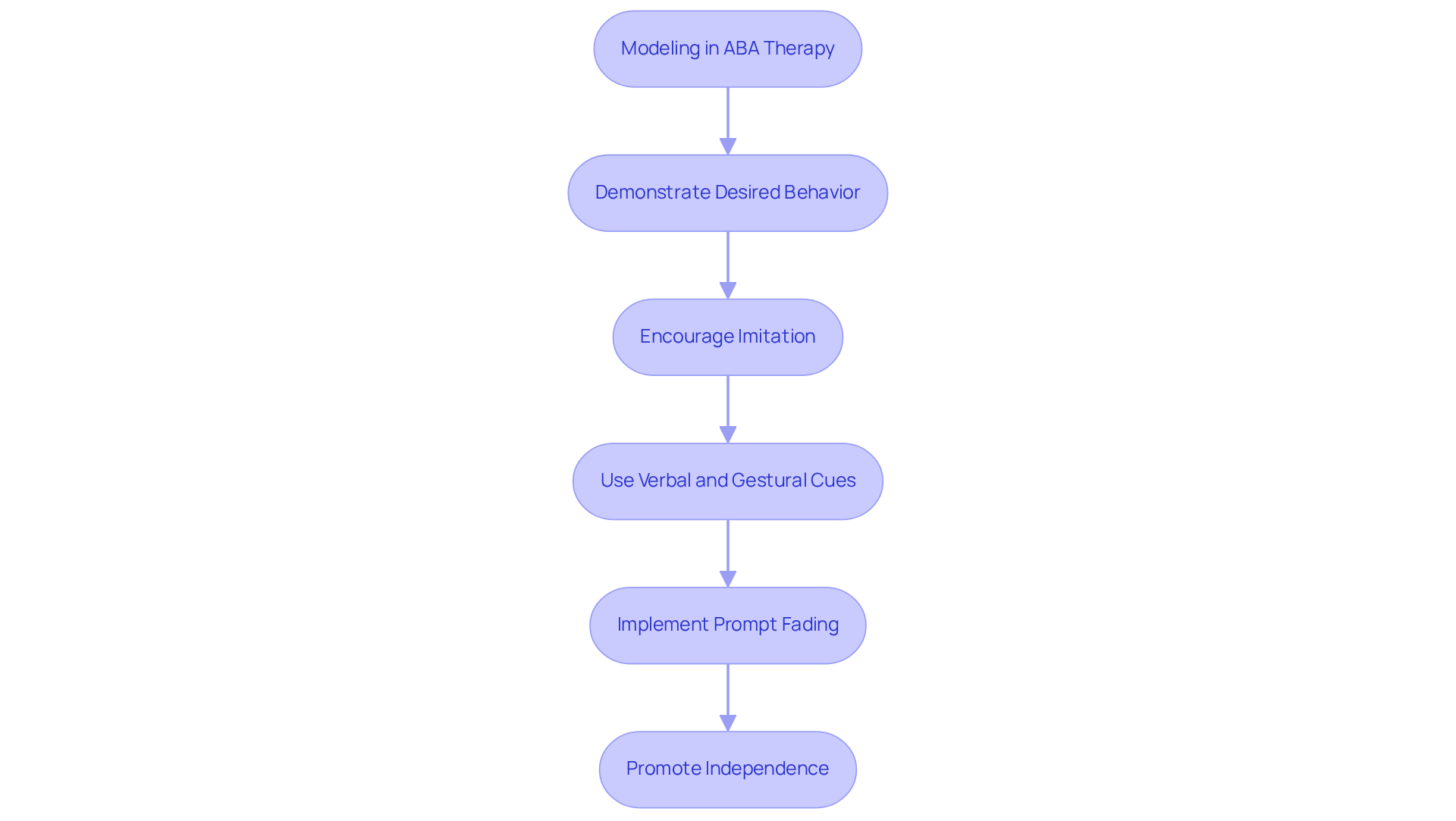
In ABA therapy, prompting aba example serves as a vital tool, empowering therapists to demonstrate desired behaviors for individuals to imitate. For instance, a therapist might illustrate the process of tying shoes before encouraging the child to try it independently. This approach is particularly effective for and complex tasks, as it provides learners with a clear visual representation of the expected behavior. By observing the correct actions, individuals develop a deeper understanding of the necessary steps, enhancing their ability to replicate the behavior successfully.
Research indicates that modeling not only facilitates skill acquisition but also fosters social interactions. Learners are more inclined to engage in positive behaviors they have witnessed. The integration of model cues into therapy sessions significantly supports the development of essential social skills, enabling individuals to navigate social situations with confidence and competence. Moreover, incorporating various techniques, such as verbal and gestural cues, as a prompting aba example can further enhance the effectiveness of model suggestions.
It's crucial to implement prompt fading techniques to promote independence and prevent prompt dependency, ensuring that individuals can perform tasks autonomously over time. Current studies underscore the importance of modeling behavior in ABA therapy, highlighting its role in improving social skills and overall participant engagement. As one therapist aptly noted, "Modeling provides a foundation for individuals to build upon, making complex tasks more accessible and less intimidating.
Verbal cues are powerful spoken signals or instructions designed to effectively guide an individual's behavior. Did you know that a prompting ABA example can enhance self-help capabilities in 83% of participants with intellectual disabilities? For example, a therapist might say, 'Please pick up your toys' to encourage a child to clean up. These cues can vary from direct commands to subtle hints, tailored to meet the specific needs of each learner.
The effectiveness of verbal cues in developing language abilities is well-documented. They provide immediate feedback and reinforcement, which are essential for mastering skills. Current trends in verbal cue techniques highlight the importance of personalization, ensuring that these cues align with individual communication styles. This tailored approach not only fosters a supportive learning environment but also significantly boosts engagement and motivation.
As one speech therapist noted, 'Every spoken word is a step forward, regardless of size.' This underscores the play in fostering meaningful communication and language development. So, how can healthcare employers implement these insights effectively? By developing personalized strategies, such as a prompting ABA example, that reflect the unique communication styles of their clients, they can enhance the overall therapeutic experience.

Visual cues are essential tools in ABA therapy, serving as a prompting ABA example by employing images, symbols, or written instructions to effectively guide behavior. For instance, a visual schedule can serve as a prompting ABA example to clearly illustrate the sequence of daily activities, aiding children in understanding the flow of their day. These cues act as a prompting ABA example that is particularly advantageous for students who thrive on visual stimuli, as they transform abstract concepts into tangible representations.
Recent research highlights that integrating visual supports not only boosts comprehension but also significantly alleviates anxiety for children with autism. By illustrating what to expect, these cues foster a more accessible learning environment. Educators have observed that involving children in the creation of their schedules enhances engagement, empowering them to navigate their routines with greater confidence and independence.
As Dr. Temple Grandin aptly states, "We can’t cure Autism, but we can reduce some of the suffering." This underscores the importance of effective strategies like visual cues in supporting students. Are you ready to explore how these methods can transform your approach to ABA therapy?

Gestural cues are powerful tools that utilize body movements or signals to guide individuals toward desired actions. For example, a therapist might utilize a prompting ABA example by pointing to a toy, encouraging a child to engage with it. These cues are less intrusive than physical prompts, allowing learners to respond appropriately without feeling overwhelmed.
Research shows that gestural cues are particularly effective in reinforcing previously learned behaviors and enhancing social interactions. Recent studies highlight their role in improving communication skills among children with autism, demonstrating that subtle cues can significantly boost engagement and interaction. In fact, current trends in [ABA therapy](https://hireaba.today) underscore the importance of integrating gestural cues into treatment plans. Not only do they facilitate skill acquisition, but they also promote independence and confidence in social settings.
Moreover, consistent data collection is crucial for tracking progress and informing adjustments to prompting strategies. Customizing gestural cues based on a child's independence, task complexity, and sensory responsiveness maximizes their effectiveness. By combining these cues with consistent reinforcement, children can better understand their purpose, further enriching their social interactions.
By leveraging these non-verbal cues, therapists can cultivate a more natural learning environment that fosters meaningful interactions. As B.F. Skinner wisely noted, 'What is love except another name for the use of positive reinforcement?' This principle underscores the careful application of in promoting positive behavioral outcomes.

Positional cues serve as a strategic method in ABA therapy, effectively organizing materials or objects within an individual's reach to promote interaction and engagement. For example, positioning a favored toy closer to a child can significantly encourage them to engage with it, fostering a sense of independence. This technique is particularly advantageous for , as it empowers individuals to make choices based on their environment.
By thoughtfully manipulating the physical space, therapists can create opportunities for success, reinforcing positive behaviors and enhancing the overall learning experience. Research underscores that effective environmental setups greatly aid in learning and autonomy, highlighting the crucial role of positional cues in ABA therapy. Have you considered how these strategies could enhance your practice?
As noted by professionals in the field, these suggestions not only boost interaction but also cultivate a supportive atmosphere that motivates individuals to explore and develop their abilities independently. Furthermore, the integration of the Least-to-Most Prompting Strategy with positional cues serves as a prompting aba example that can enhance autonomy, allowing therapists to provide varying levels of assistance tailored to the individual's needs.
As Laura NG, MA BCBA, emphasizes, discovering appropriate communication aids is vital for personalized therapy, reinforcing the importance of tailored environmental arrangements in promoting independence. Are you ready to implement these strategies and elevate your practice?

Fading cues represent a crucial strategy in ABA therapy, emphasizing the gradual reduction of support as individuals gain proficiency in specific skills. Consider this: a therapist may initiate the process with a complete physical guide, then transition to a verbal cue, ultimately phasing out all assistance, which serves as a prompting ABA example. This systematic approach not only fosters autonomy but also mitigates the risk of , where students may become overly reliant on signals.
Recent studies highlight the effectiveness of this method, providing a prompting ABA example that shows children who undergo well-structured prompt fading exhibit increased self-reliance and confidence in their abilities. Behavior analysts stress the importance of closely monitoring progress and making timely adjustments to the fading process. By tailoring fading methods to individual needs, therapists use a prompting ABA example to empower individuals to master tasks independently, leading to [significant skill development](https://hireaba.today/blog-posts/10-essential-steps-for-bcba-coursework-and-certification-success) and improved outcomes across various environments.
Current trends in ABA therapy advocate for personalized prompting strategies that prioritize the emotional well-being of individuals. This ensures that the journey toward independence is not only supportive but also effective. Are you ready to enhance your practice with these proven techniques?

The ABA hierarchy stands as a vital framework in the realm of therapy, meticulously organizing cues from most to least intrusive. This structure empowers therapists to tailor their support to meet the unique abilities and needs of each individual. For instance, a therapist may initiate a session with a physical cue when introducing a new skill, subsequently transitioning to verbal or gestural cues as the student builds confidence. This systematic approach not only nurtures independence but also amplifies the effectiveness of teaching within [[ABA therapy](https://hireaba.today/blog-posts/10-essential-functional-analysis-examples-for-bcb-as-in-aba-therapy)](https://hireaba.today).
Research underscores that implementing hierarchical structures significantly reduces reliance on cues, allowing students to engage more fully in their educational journey. Professionals in the field emphasize that understanding the hierarchy of cues is essential for providing the right level of assistance at each developmental stage. This understanding ultimately fosters and generalization across various environments.
As noted by Childwise ABA, a prompting aba example is integrating cue hierarchies into ABA therapy, which is a proven strategy for helping individuals achieve their goals. Moreover, the most-to-least encouragement method, which begins with maximum assistance and gradually lessens cues, is crucial for ensuring that students develop independence while minimizing frustration. Are you ready to enhance your approach to ABA therapy? Embrace the power of the ABA hierarchy and witness the transformation in your practice.

Customizing ABA prompts is crucial for providing a prompting ABA example that meets the distinct needs and abilities of each student. Did you know that prompting ABA example strategies can significantly enhance engagement and skill acquisition? This process involves adjusting the type of prompt-whether visual, verbal, or physical-along with the level of assistance and the pace of instruction. Research shows that individuals who respond positively to often excel with visual tools, while others may benefit from straightforward verbal or physical assistance.
According to the Autism Society, "Effective data collection ensures that interventions are tailored to meet the specific needs of each individual, maximizing the likelihood of meaningful improvements." By using a prompting ABA example to align prompts with individual preferences and learning styles, therapists can create a more effective learning environment, ultimately leading to improved outcomes.
Behavior analysts emphasize that this customized approach not only aids in mastering skills but also fosters increased independence and confidence in learners. Are you considering how individualized strategies in ABA therapy can transform your practice? Embrace the significance of tailored prompting ABA example strategies to enhance both your effectiveness and the success of your students.

The demand for Board Certified Behavior Analysts (BCBAs) is skyrocketing, making it essential for both job seekers and employers to find the right fit in ABA therapy. Hire ABA specializes in connecting these qualified professionals with top-tier job opportunities in the field. By streamlining the hiring process, Hire ABA ensures that skilled BCBAs discover roles that align with their expertise and career aspirations.
Are you struggling to find the right candidates for your ABA therapy positions? Our personalized resume assessments allow job seekers to submit their resumes for evaluation, ensuring their experience and career goals are matched with the best roles available. With , we identify opportunities that align with their skills, preferences, and desired locations.
Job seekers can benefit from tailored job listings, resources for resume building, and interview preparation. This comprehensive support makes it easier to navigate the competitive landscape of ABA therapy. Don't miss out on the chance to connect with the best talent in the industry. Let Hire ABA help you find the perfect match today!

The exploration of prompting techniques in ABA therapy underscores their vital role in enhancing learning and fostering independence among individuals. By effectively utilizing various prompts-whether physical, verbal, visual, gestural, or positional-therapists can tailor their approaches to meet the unique needs of each client. This ensures that the therapeutic process is not only supportive but also empowering.
Key insights emphasize the necessity of customizing prompts to align with individual learning styles and preferences. The effective application of physical cues, model prompts, and fading techniques aids in skill acquisition while mitigating the risk of dependency. Moreover, understanding the ABA prompt hierarchy enables therapists to provide the appropriate level of assistance at each developmental stage, ultimately promoting autonomy and confidence in learners.
Incorporating these prompting strategies into practice can significantly enhance the effectiveness of ABA therapy. By embracing personalized approaches and remaining attuned to clients' needs, therapists can create a more engaging and productive learning environment. The journey toward independence is enriched through the thoughtful application of these techniques, making it essential for practitioners to continually refine their methods and stay informed about best practices in the field.
Are you ready to elevate your practice? Embrace these strategies and witness the transformation in your clients' learning experiences.
What are physical prompts in ABA therapy?
Physical prompts are cues that provide direct support to learners, such as hand-over-hand guidance, which is effective for teaching self-care skills and motor tasks.
Why is it important to use physical cues judiciously in therapy?
Over-reliance on physical cues can lead to dependency, so it is crucial to gradually reduce these cues as the learner gains confidence.
How do physical cues impact learning outcomes in ABA therapy?
Effective application of physical cues improves learning outcomes and helps individuals develop necessary skills for self-care and daily living.
What is the significance of customizing physical strategies in ABA therapy?
Customizing physical strategies allows for tailored interventions that meet the unique needs and preferences of individuals, enhancing the effectiveness of therapy.
How much can physical cues enhance learning rates according to research?
Research indicates that physical cues can enhance learning rates by 73% across various areas of expertise.
What are model prompts in ABA therapy?
Model prompts involve therapists demonstrating desired behaviors for individuals to imitate, such as showing how to tie shoes before encouraging the child to try it independently.
How do model prompts facilitate skill acquisition?
By providing a clear visual representation of expected behavior, model prompts enhance learners' understanding of the necessary steps to replicate the behavior successfully.
What additional techniques can enhance the effectiveness of model prompts?
Incorporating verbal and gestural cues alongside model prompts can further enhance their effectiveness in therapy.
Why is it important to implement prompt fading techniques in ABA therapy?
Prompt fading techniques promote independence and prevent prompt dependency, ensuring individuals can perform tasks autonomously over time.
What are verbal prompts in ABA therapy?
Verbal prompts are spoken signals or instructions designed to guide an individual's behavior, such as asking a child to clean up by saying, 'Please pick up your toys.'
How effective are verbal cues in developing self-help capabilities?
A prompting ABA example can enhance self-help capabilities in 83% of participants with intellectual disabilities.
What is the role of personalization in verbal cue techniques?
Personalization ensures that verbal cues align with individual communication styles, fostering a supportive learning environment and boosting engagement and motivation.
How can healthcare employers implement insights from verbal cue techniques?
They can develop personalized strategies that reflect the unique communication styles of their clients to enhance the overall therapeutic experience.
Our expert recruitment strategies and AI-driven sourcing ensure that you receive top-notch candidates quickly, without compromising on quality. Whether you’re looking for BCBAs, Clinical Directors, or RBTs, we’ve got you covered.


