


Thank you! Your submission has been received!
Oops! Something went wrong while submitting the form.
February 25, 2026

In the rapidly evolving field of Applied Behavior Analysis (ABA), the demand for skilled behavior technicians is surging. Did you know that the need for Board Certified Behavior Analysts (BCBAs) has increased by over 30% in recent years? This statistic underscores the necessity for foundational competencies that drive success in this field.
This article delves into ten essential skills that entry-level behavior technicians must master, from effective communication and data analysis to empathy and teamwork. As the landscape of behavioral therapy becomes increasingly complex, how can aspiring professionals ensure they are equipped to meet diverse client needs and navigate ethical challenges?
Exploring these critical skills not only prepares technicians for immediate success but also positions them for long-term growth in a rewarding career. Are you ready to enhance your hiring strategies? Consider how Hire ABA can help you recruit the best talent to meet these demands.
Effective communication stands as the cornerstone of successful interactions in Applied Behavior Analysis (ABA). Did you know that the demand for Board Certified Behavior Analysts (BCBAs) is on the rise? This underscores the need for entry level behavior technicians to develop their verbal and non-verbal .
Focusing on active listening, using clear and concise language, and being aware of body language are essential. For instance, rephrasing what clients express can significantly enhance comprehension and foster trust. Have you considered how these skills could transform your interactions?
Moreover, utilizing visual aids and straightforward language can greatly improve communication with individuals who may struggle to grasp intricate instructions. This approach not only clarifies messages but also builds rapport.
In a field where effective communication is paramount, investing in these skills can set you apart. Are you ready to elevate your communication strategies? Embrace these techniques and watch your professional relationships flourish.

Behavior specialists must master a variety of data collection techniques, including frequency counts, duration recording, and interval recording, to effectively monitor individual behaviors. Did you know that proficiency in analyzing this data is crucial for identifying behavioral patterns that inform treatment decisions? Regular [data analysis](https://nurturingnests.com/aba-data-collection) not only enhances the understanding of customer progress but also supports the development of tailored interventions.
For instance, studies show that children receiving continuous data monitoring through [ABA therapy](https://hireaba.today) demonstrate significant advancements in adaptive behaviors. Evidence indicates that such monitoring leads to improved outcomes. Moreover, the increasing transition to electronic data gathering systems enhances precision and productivity, allowing specialists to focus more on customer interactions.
Consistent data analysis fosters transparency and collaboration between therapists and families, ultimately improving treatment outcomes. Are you participating in regular evaluations of data with your supervisors? This practice can enhance your understanding and result in more , ensuring that interventions are both evidence-based and attuned to individual needs.
Furthermore, sustaining high interobserver agreement (IOA) is crucial for guaranteeing data reliability. It verifies that actions are clearly defined and that data collection is objective. Embrace these practices to elevate your effectiveness in the field and ensure the best outcomes for your clients.

Did you know that the demand for Board Certified Behavior Analysts (BCBAs) is skyrocketing? Empathy stands as the cornerstone of successful therapeutic connections, enabling behavior practitioners to truly understand and resonate with the emotions of those they assist. By practicing active listening and validating individuals' feelings, practitioners foster deeper connections - essential for achieving successful outcomes.
Research shows that the empathy-outcome relationship is significant across various theoretical orientations, with a mean weighted correlation of r = .28. This statistic underscores the critical role empathy plays in therapy outcomes. But that’s not all; patience is equally vital. Progress in Applied Behavior Analysis (ABA) therapy often unfolds gradually, requiring consistent reinforcement. Experts emphasize that cultivating patience can profoundly impact client advancement, allowing specialists to remain supportive during challenging times.
How can professionals maintain their composure and focus? Methods like mindfulness can be invaluable, ensuring that they provide the highest quality assistance to those they serve. By combining empathy, patience, and mindfulness, behavior specialists can enhance their effectiveness and positively influence the journeys of their clients.
Are you facing challenges in hiring qualified BCBAs? Consider how [Hire ABA](https://hireaba.today) can streamline your recruitment process and connect you with the right talent. With our platform, you can ensure that your team is equipped with the skills necessary to .

Nearly one in three Americans experiences symptoms of depression or anxiety, underscoring the urgent need for skilled behavior specialists who can adapt to diverse client needs. Behavior specialists must be adept at modifying their approaches to meet the unique requirements of each individual. can take many forms, such as adjusting communication styles, refining intervention techniques, and remaining receptive to feedback from both clients and supervisors.
Adaptability is not just a skill; it's essential for survival. All life forms must adjust to their ever-changing environments. For behavior specialists, participating in role-playing exercises can be particularly beneficial. These exercises provide a controlled setting where professionals can practice and enhance their adaptability. Such methods not only bolster a specialist's ability to respond effectively to varied client needs but also foster a more nurturing and flexible therapeutic environment.
Highlighting adaptability in client interactions is crucial. It enables practitioners to forge stronger connections and achieve better outcomes in [Applied Behavior Analysis (ABA) treatment](https://hireaba.today/blog-posts/10-bcba-certification-programs-to-elevate-your-career-in-aba). As the demand for behavior specialists continues to rise, the ability to adjust to different client requirements has never been more vital. Are you facing challenges in hiring the right professionals? Consider how [Hire ABA](https://hireaba.today) can help you find the skilled specialists you need to meet these demands.

Technicians must prioritize in team meetings and discussions, sharing valuable insights and strategies with coworkers. Did you know that [effective teamwork can significantly enhance treatment outcomes](https://sciencedirect.com/science/article/pii/S0033350624000398)? Establishing strong relationships with [Board Certified Behavior Analysts (BCBAs)](https://hireaba.today) and educators is essential for maximizing the effectiveness of treatment plans.
Collaborative goal-setting methods not only promote a sense of shared responsibility but also enhance dedication to customer success. Evidence shows that interdisciplinary collaboration leads to improved patient outcomes. Studies indicate that teams with diverse professional compositions are more likely to achieve higher patient satisfaction scores. Furthermore, defining distinct roles and responsibilities between families and analysts is crucial for fostering collaborative partnerships.
Regular team meetings and open communication channels, supported by technology, facilitate the exchange of ideas. This ensures that all team members are aligned in their approach. By adopting a culture of teamwork, support specialists can greatly enhance the effectiveness of interventions, ultimately benefiting the individuals they assist. Are you ready to elevate your team's collaboration and improve patient care? Embrace these strategies today.

Technicians must develop a strong understanding of various intervention strategies, particularly:
Did you know that positive reinforcement can lead to a 30% increase in student concentration? Research shows that immediate rewards following positive actions significantly enhance the likelihood of action repetition in educational settings. For instance, a case study revealed that after implementing positive reinforcement techniques, a child's non-compliance rate plummeted from 79.80 actions per day to just 16.00 actions per day.
Mastering these techniques is essential for providing effective client support. Routine training sessions and workshops are crucial for specialists to stay updated on the latest evidence-based methods in ABA, including the (Antecedents, Action, Consequence), which is vital for analyzing behaviors. By consistently enhancing their knowledge, professionals can effectively apply strategies that improve patient outcomes and adapt to the evolving landscape of behavioral health technology.
Are you ready to elevate your practice? Embrace the power of positive reinforcement and ongoing education to transform your approach to client support.

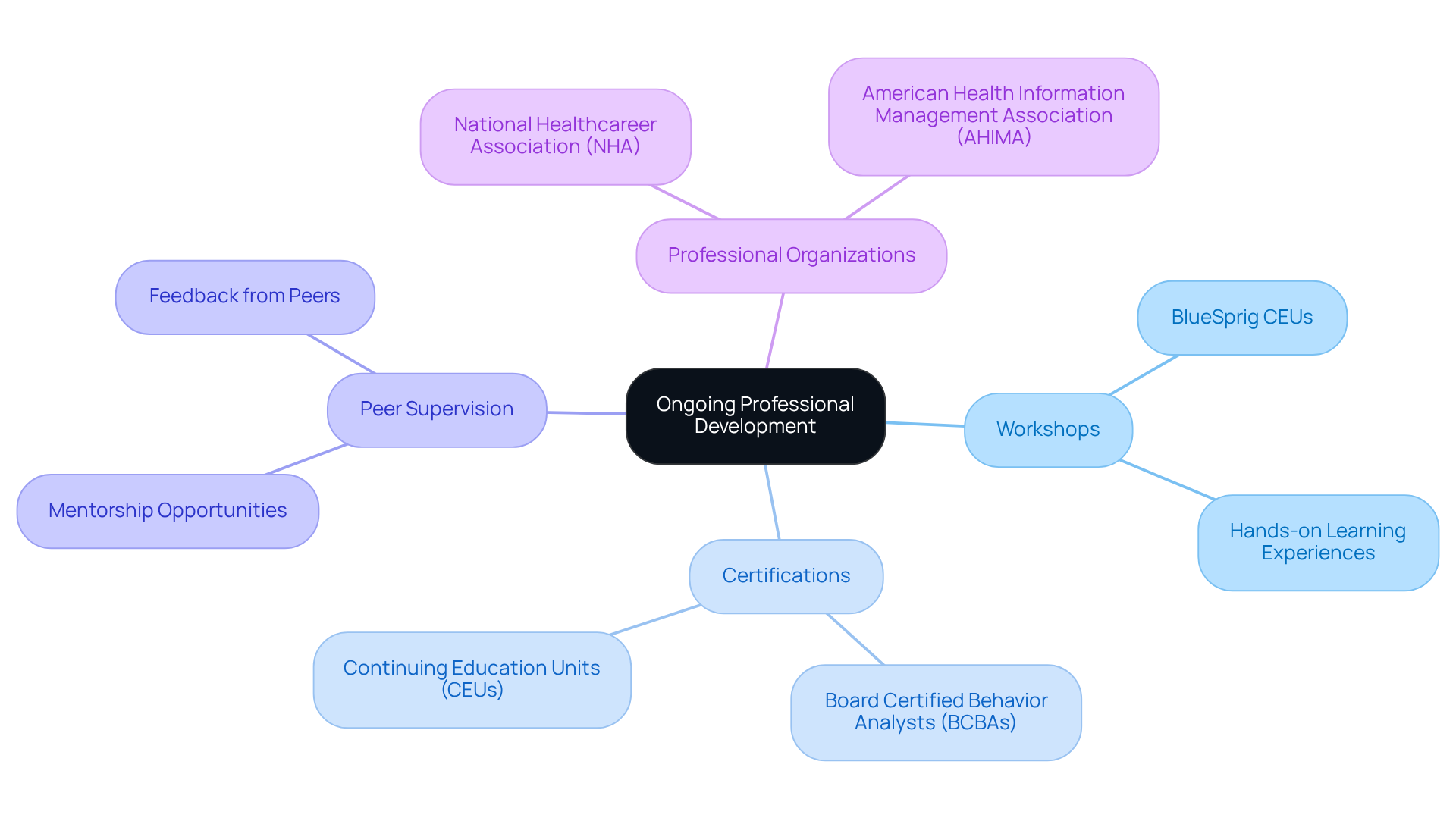
Behavior specialists must prioritize ongoing professional development to thrive in the dynamic field of Applied Behavior Analysis (ABA). Did you know that the demand for Board Certified Behavior Analysts (BCBAs) is skyrocketing? Engaging in workshops, pursuing relevant certifications, and participating in peer supervision are essential steps for enhancing skills and effectiveness. Ongoing education not only keeps professionals informed about the latest research and trends but also directly impacts the delivered to clients.
For instance, regular training fosters collaboration and mentorship, ensuring practitioners are equipped with evidence-based practices that lead to better therapeutic outcomes. Additionally, joining professional organizations such as:
offers access to valuable resources, networking opportunities, and workshops that further support career growth.
As B.F. Skinner aptly stated, "Education is what survives when what has been learned has been forgotten." By committing to lifelong learning, behavior professionals can significantly enhance their practice and contribute to the overall success of ABA interventions. Are you ready to take the next step in your professional journey? Embrace ongoing education and watch your impact in the field grow.
In the dynamic field of Applied Conduct Analysis (ABA) therapy, professionals must cultivate critical thinking abilities through reflective practice and case study examination. Did you know that individuals who engage in reflective practices report a 30% increase in their problem-solving effectiveness? This statistic underscores the demand for Board Certified Behavior Analysts (BCBAs) who can with confidence.
Engaging in techniques such as brainstorming and structured problem-solving exercises not only enhances professionals' ability to assess situations but also empowers them to make informed decisions. Regular discussions with supervisors provide valuable insights, fostering a deeper understanding of effective decision-making processes. This ongoing learning approach is crucial for success in ABA therapy.
Are you facing challenges in hiring qualified professionals who excel in these areas? Consider how the right recruitment platform can address these issues. By prioritizing reflective practice and critical thinking, you can ensure that your team is equipped to meet the demands of this evolving field. Embrace the opportunity to enhance your hiring strategy and invest in the future of your practice.

Support specialists must have a solid grasp of the ethical standards established by the Analyst Certification Board (BACB). These standards include core principles like beneficence, non-maleficence, and client autonomy. Did you know that approximately 95% of Board Certified Analysts (BCBAs) report encountering ethical dilemmas in their practice? This statistic highlights the critical need for ongoing education in ethical decision-making.
Familiarity with these guidelines is not just beneficial; it’s essential. They form the bedrock of ethical practice in ABA therapy. Regular training equips technicians to navigate complex situations effectively, ensuring they uphold the highest standards of professionalism and integrity. RBTs are also mandated to review the ethics code at least annually and before starting new cases. Ignoring these guidelines can lead to serious repercussions, including certification revocation.
This unwavering commitment to not only enhances the quality of care provided to clients but also fosters trust and accountability within the therapeutic relationship. Are you ready to ensure your team is equipped to handle ethical challenges? Consider the importance of integrating ongoing ethical training into your hiring practices. By prioritizing ethical standards, you can elevate the quality of care and build a more trustworthy therapeutic environment.

Behavior technicians should consider the [growing demand for Board Certified Behavior Analysts (BCBAs)](https://biermanautism.com/resources/blog/aba-therapist-job-demand-2026) in today’s job market. With an increasing number of opportunities available, utilizing [Hire ABA](https://hireaba.today) can be a that align with your skills and career aspirations.
Hire ABA offers a wealth of resources designed to support your journey. From resume building to interview preparation and job fit assessments, the platform equips you with the tools necessary to stand out in a competitive field. Have you thought about how these resources could enhance your job search?
Engaging with the community on Hire ABA not only provides valuable networking opportunities but also offers insights into the evolving landscape of ABA therapy. By connecting with peers and industry leaders, you can stay informed about trends and best practices that can shape your career.
Don’t miss out on the chance to elevate your professional journey. Explore Hire ABA today and take the first step toward finding a role that truly fits your aspirations.

The demand for skilled behavior specialists is skyrocketing, making it essential for entry-level behavior technicians to master the skills outlined in this article. Effective communication, data analysis, empathy, and ethical practices are not just buzzwords; they are pivotal in enhancing client interactions and improving therapeutic outcomes. By honing these competencies, technicians can lay a solid foundation for their careers and make a positive impact on the lives of those they serve.
Consider the importance of:
Together, these elements foster a more effective and compassionate approach to therapy, benefiting both clients and practitioners alike.
As the demand for skilled behavior specialists continues to rise, embracing these essential skills is not just beneficial but imperative. By committing to continuous learning and ethical practices, behavior technicians can elevate their professional journey while making a meaningful impact in their clients' lives. Are you facing challenges in hiring the right talent? Leverage resources like Hire ABA to advance your career and ensure the best possible outcomes in your practice. Take the initiative to develop these competencies and watch your professional journey flourish.
Why is effective communication important in Applied Behavior Analysis (ABA)?
Effective communication is crucial in ABA as it enhances interactions with clients, builds trust, and improves overall treatment outcomes.
What are key communication skills that behavior technicians should develop?
Behavior technicians should focus on active listening, using clear and concise language, and being aware of body language to improve client interactions.
How can rephrasing client expressions aid in communication?
Rephrasing what clients express can enhance comprehension and foster trust, making interactions more effective.
What role do visual aids play in communication with clients?
Visual aids and straightforward language help clarify messages and build rapport with individuals who may struggle with complex instructions.
What data collection techniques should behavior specialists master?
Behavior specialists should master frequency counts, duration recording, and interval recording to effectively monitor individual behaviors.
Why is proficiency in data analysis important for behavior specialists?
Proficiency in data analysis is crucial for identifying behavioral patterns that inform treatment decisions and enhance understanding of client progress.
How does continuous data monitoring impact children receiving ABA therapy?
Continuous data monitoring has been shown to lead to significant advancements in adaptive behaviors among children receiving ABA therapy.
What is the significance of interobserver agreement (IOA) in data collection?
Sustaining high interobserver agreement ensures data reliability by verifying that actions are clearly defined and that data collection is objective.
How does empathy influence therapeutic outcomes in ABA?
Empathy fosters deeper connections between practitioners and clients, which is essential for achieving successful outcomes in therapy.
Why is patience important in ABA therapy?
Patience is vital as progress often unfolds gradually, and it allows specialists to remain supportive during challenging times.
What methods can professionals use to maintain composure and focus?
Techniques like mindfulness can help professionals maintain composure, ensuring they provide high-quality assistance to clients.
How can Hire ABA assist in recruiting qualified BCBAs?
Hire ABA can streamline the recruitment process and connect organizations with qualified Board Certified Behavior Analysts, ensuring they have the necessary skills for effective therapeutic connections.
Our expert recruitment strategies and AI-driven sourcing ensure that you receive top-notch candidates quickly, without compromising on quality. Whether you’re looking for BCBAs, Clinical Directors, or RBTs, we’ve got you covered.


