


Thank you! Your submission has been received!
Oops! Something went wrong while submitting the form.
January 22, 2026

Understanding the demand for Board Certified Behavior Analysts (BCBAs) is crucial in today’s landscape of Applied Behavior Analysis (ABA). With the increasing need for effective behavioral strategies, practitioners must explore the intricacies of reinforcement schedules. By examining various examples, you can discover strategies that not only enhance learning outcomes but also create a more engaging environment for clients.
But with so many options available, how do you determine the most effective approach to motivate and reinforce desired behaviors? This article delves into ten compelling schedules of reinforcement, offering insights and practical applications that can revolutionize the way behavior is shaped and maintained across diverse settings. Are you ready to transform your practice and elevate your clients' experiences?
A serves as one of the , effectively incentivizing consistent effort by offering rewards after a predetermined number of responses. For instance, consider a child who earns a sticker for every five math problems solved correctly, which serves as one of the . This approach not only motivates learners but also fosters high rates of engagement, as individuals quickly grasp that their efforts will be rewarded after completing a , which can be better understood through .
Have you considered ? By implementing a , you can , knowing that their hard work will lead to tangible rewards. This method not only enhances performance but also .

illustrate that in a , rewards are dispensed after an . Consider gambling: players may win after an unknown number of bets. This unpredictability, as seen in , is not just a quirk; it keeps individuals engaged and motivated. Why? Because they remain uncertain about when the next reward will come, which .
This concept has profound implications, especially in fields like recruitment. Think about your current . Are you finding it difficult to attract the right talent? The unpredictability of candidate responses can mirror , where the right fit might come after several attempts.
By understanding these dynamics, you can better navigate the hiring landscape. Platforms like Hire ABA can help , ensuring that you . With the right tools, you can , making it more predictable and effective.
So, are you ready to enhance your recruitment efforts? Explore how Hire ABA can provide the solutions you need to overcome your .

A fixed interval schedule is a powerful tool that provides rewards after a predetermined amount of time has passed, effectively shaping behavior through anticipation. Consider this: a teacher rewards students with a small treat every 10 minutes of focused work. This method not only encourages but also leads to a 'scalloped' response pattern, where students ramp up their effort as the reinforcement time approaches.
Research underscores the importance of timing in this approach. Kendra Cherry highlights that can significantly influence the pace of learning and response rates. Imagine the when fixed interval plans are applied. A case study illustrates how fixed-time attention delivery effectively boosted among learners. This clearly emphasizes the significance of within , resulting in enhanced focus and motivation.
Are you facing challenges in maintaining student engagement? Consider how implementing with answers, specifically , could transform your approach. By understanding and applying these principles, you can foster an but also maximizes their potential.

In a variable interval system, rewards are delivered after unpredictable time periods, fostering . Consider this: a teacher might offer praise to a student at random moments during a lesson. This keeps students alert, as they remain uncertain about when the next reinforcement will occur, ultimately enhancing their focus and involvement in the learning process.
The effectiveness of this approach is backed by various case studies. For example, in , practitioners utilize to reinforce , particularly those with (ASD). By providing rewards at irregular intervals, and encourage the repetition of preferred actions.
Experts in emphasize the benefits of . They assert that such schedules not only boost participation but also lead to more . The unpredictability of rewards can elicit a stronger behavioral response, making it a valuable strategy in both educational and therapeutic contexts.

Continuous reinforcement plays a crucial role in by providing a reward each time a desired action occurs. This method fosters a strong connection between the action and the reward, making it particularly . For example, consider a child who receives a treat every time they use courteous language. This consistent reinforcement not only encourages immediate recognition of but also solidifies it over time.
Psychologists emphasize the importance of instant incentives in developing actions. As B.F. Skinner aptly noted, "" Current practices in child development frequently incorporate strategies that include for ongoing encouragement. These include specific and regular praise or tangible rewards, all aimed at inspiring children to adopt new behaviors.
Research supports the effectiveness of this approach, indicating that it not only reinforces desired conduct but also fosters a positive learning environment. In such an environment, children feel valued and understood, which is essential for their growth. Moreover, , prompting children to engage more fully in their learning experiences.
Are you currently facing challenges in reinforcing in your educational settings? Consider how implementing , along with , can transform your approach and enhance the learning experience for your students.

is crucial for effective action learning and sustainability. Did you know that professionals who grasp these concepts can significantly improve their ? For example, indicate that often lead to high response rates, while promote consistent behavior over time. By comprehending these patterns, you can select the most .
Consider your current . Are you struggling to find the right candidates? With the right , you can enhance your approach and attract top talent. Embrace the opportunity to refine your and ensure your clients receive the best support possible.
In conclusion, not only benefits your clients but also positions you as a knowledgeable leader in the field. Take action now and explore how these strategies can transform your hiring practices.

Applying reward systems in necessitates a strong emphasis on ethical considerations. Practitioners must ensure that the reinforcers used are not only suitable and significant but also do not unintentionally reinforce negative actions. Have you considered the implications of your ? underscore the importance of , ensuring that clients are fully aware of the processes involved while respecting their autonomy throughout the therapeutic journey.
Transparency in practitioner-client interactions is vital; it fosters . This commitment to ethical standards, as outlined in the , promotes a supportive environment where clients can thrive. By reinforcing , we safeguard their dignity and rights. As one ABA practitioner noted, "What you reinforce, you grow," highlighting the profound impact of ethical reinforcement in shaping positive outcomes.
In this evolving field, the demand for is significant. Are you prepared to meet this challenge? Embracing not only enhances client outcomes but also elevates the standards of our profession.

are versatile tools that can be effectively applied in various settings, including classrooms, therapy sessions, and home environments. Did you know that can ? For example, a therapist might use , such as a , to incentivize a child for completing homework tasks. This approach not only motivates the child but also fosters a sense of accomplishment.
By customizing the timetable to meet the individual needs of each client, practitioners can significantly . This is crucial in creating an environment where children feel supported and empowered. Are you currently facing challenges in motivating your clients? Consider how a could transform their engagement and outcomes.
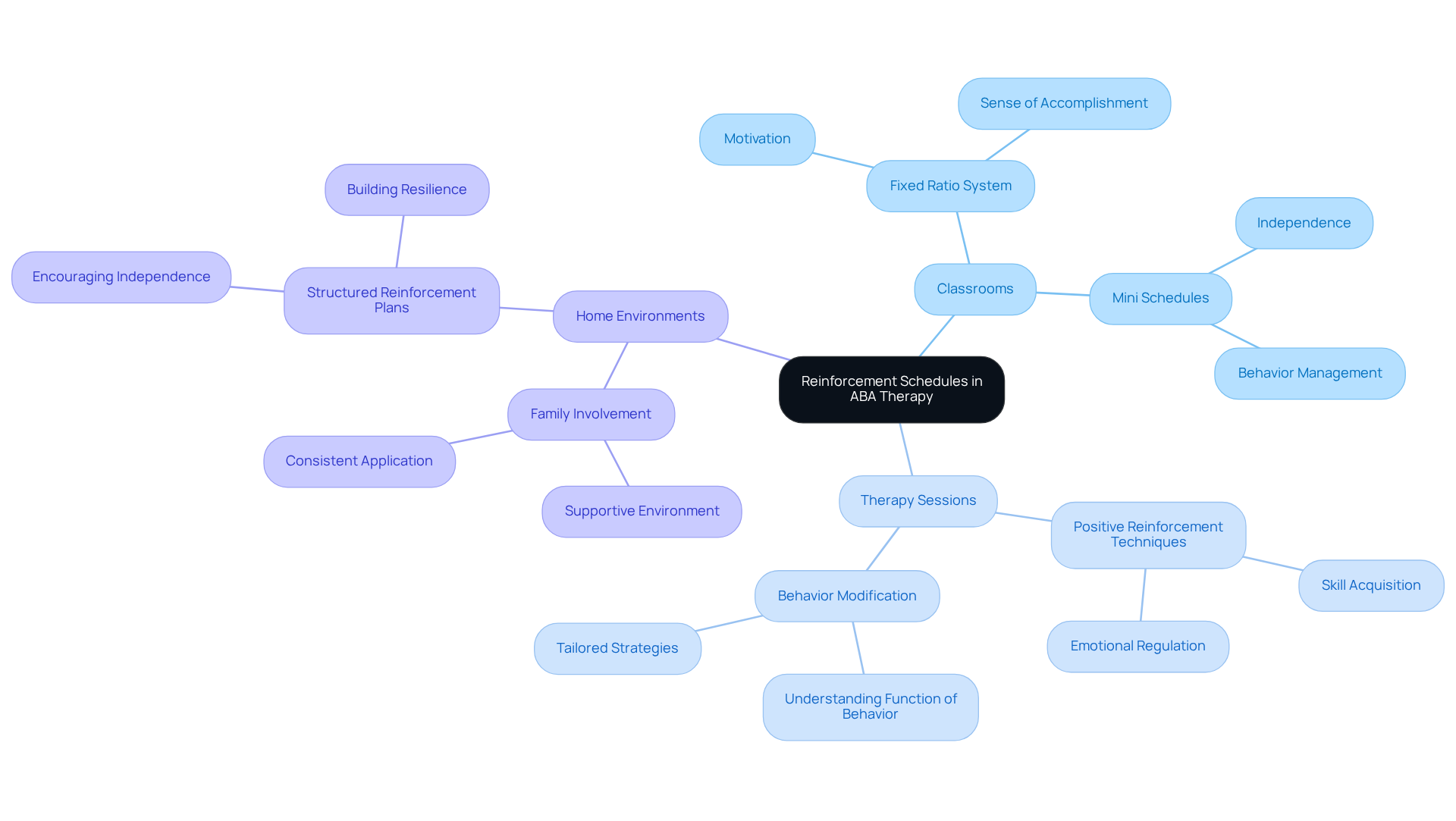
In the realm of , consistency is key. Did you know that many practitioners struggle with applying ? Common pitfalls include:
To truly excel in this field, it’s crucial to consistently . Are your rewards significant enough for your clients? By ensuring that the incentives you provide resonate with them, you can foster a more effective environment for change.
Moreover, adaptability is essential. As needs evolve, so should your plans. This flexibility not only enhances the but also demonstrates your commitment to your clients’ growth.
So, how can you ensure that your approach is both effective and responsive? Consider leveraging platforms like for recruitment. They can help you find the right talent to support your , ensuring that you have the expertise needed to navigate these challenges successfully.

The demand for is skyrocketing, with . stands out as a that connects highly qualified professionals with roles that require their expertise in .
As the landscape of Applied Behavior Analysis evolves, streamlines the . This ensures that BCBAs can easily find positions that align with their skills and career aspirations. Why struggle with traditional hiring methods when you can leverage a platform tailored specifically for your needs?
With , you gain access to a who are ready to make an impact. Our platform not only simplifies the recruitment process but also enhances the quality of hires, ensuring that you find the right fit for your organization.
Are you facing ? Consider how can address these issues effectively. Our commitment to connecting employers with top-tier talent makes us a reliable partner in your recruitment efforts.
In a field where expertise is paramount, trust to deliver the professionals you need. Start your journey towards today.
The demand for skilled Board Certified Behavior Analysts (BCBAs) is skyrocketing, with a growing need for effective behavioral interventions in various settings. Understanding and implementing schedules of reinforcement is not just beneficial; it’s essential for success in Applied Behavior Analysis (ABA). By leveraging diverse reinforcement strategies - such as fixed ratio, variable ratio, fixed interval, and variable interval schedules - practitioners can craft tailored environments that truly motivate and engage learners.
Each type of schedule brings unique advantages. For instance, fixed ratio schedules foster consistent behavior, while variable ratio schedules enhance engagement through unpredictability. These strategies ultimately shape positive outcomes in behavioral interventions. Have you considered how these reinforcement schedules could transform your approach to client motivation?
Throughout this article, we’ve explored key insights on applying different reinforcement schedules in contexts like education and therapy. The importance of timing, the power of unpredictable rewards, and the ethical considerations in applying these strategies have been emphasized. Practical applications showcase how personalized reinforcement plans can significantly enhance learning experiences and boost client motivation.
As the demand for BCBAs continues to rise, embracing these reinforcement strategies not only improves client outcomes but also positions professionals as leaders in the field. By refining recruitment processes and ensuring ethical practices, practitioners can navigate challenges effectively and contribute to the growth of the ABA community. The journey toward effective reinforcement is ongoing. Are you ready to explore these strategies and achieve transformative results in both educational and therapeutic settings? Let’s take action together.
What is a fixed ratio schedule in reinforcement?
A fixed ratio schedule is a reinforcement strategy where rewards are given after a predetermined number of responses. For example, a child may earn a sticker for every five math problems solved correctly.
How does a fixed ratio schedule motivate individuals?
It motivates individuals by clearly linking their efforts to tangible rewards, which fosters high engagement and encourages consistent behavior.
What is a variable ratio schedule in reinforcement?
A variable ratio schedule is a reinforcement strategy where rewards are provided after an unpredictable number of responses, keeping individuals engaged due to the uncertainty of when the next reward will occur.
How does unpredictability in a variable ratio schedule affect persistence?
The unpredictability keeps individuals motivated and engaged, as they remain uncertain about when they will receive the next reward, leading to higher levels of persistence.
What is an example of a fixed interval schedule?
A fixed interval schedule rewards individuals after a specific amount of time has passed, such as a teacher giving students a small treat every 10 minutes of focused work.
How does timing affect behavior in a fixed interval schedule?
Timing plays a crucial role, as it can influence the pace of learning and response rates. Students may increase their efforts as the reinforcement time approaches, leading to a 'scalloped' response pattern.
What are the implications of applying these reinforcement schedules in educational settings?
Implementing these schedules can significantly enhance student engagement and motivation, helping to create an environment that maximizes learners' potential.
Our expert recruitment strategies and AI-driven sourcing ensure that you receive top-notch candidates quickly, without compromising on quality. Whether you’re looking for BCBAs, Clinical Directors, or RBTs, we’ve got you covered.


