


Thank you! Your submission has been received!
Oops! Something went wrong while submitting the form.
March 20, 2026

Establishing effective supervision practices in behavior analysis is not just important; it’s essential for nurturing the next generation of professionals. Did you know that the demand for Board Certified Behavior Analysts (BCBAs) is skyrocketing? By implementing structured frameworks that emphasize clear goals, regular feedback, and personalized support, supervisors can significantly enhance trainee development.
However, a pressing challenge remains: how can supervisors ensure they are meeting the diverse needs of their trainees while fostering an environment conducive to growth and ethical practice? This is where the right approach makes all the difference.
Consider this: Are you currently facing hiring challenges that hinder your ability to provide effective supervision? By reflecting on your current practices, you can identify areas for improvement. Embracing structured supervision not only benefits trainees but also elevates the overall quality of care provided in the field.
In conclusion, the path to effective supervision is clear. It requires commitment, structured frameworks, and a focus on ethical practice. Let’s take action to ensure that we are not only meeting the needs of our trainees but also setting a standard for excellence in behavior analysis.
To establish , a must create a structured framework that includes , regular feedback, and . This approach is not just beneficial; it’s essential for in the field of behavior analysis.
Set Clear Goals: Start by defining for each participant. These goals should align with BACB standards and the individual’s career aspirations. Clarity in objectives helps learners understand their targets and promotes accountability. Are your current goals truly setting your team up for success?
Regular Check-Ins: Schedule consistent meetings to discuss progress, address challenges, and adjust goals as necessary. and allows for timely interventions when issues arise. How often do you connect with your team to ensure they’re on track?
Provide Constructive Feedback: Utilize to deliver feedback that is specific, timely, and actionable. This method, as implemented by a behavior analyst supervisor, helps learners recognize their strengths and identify areas for improvement, which is crucial for their development. Are you providing the kind of feedback that drives growth?
Encourage Self-Reflection: Prompt participants to reflect on their experiences and learning. This practice enhances , empowering participants to take charge of their professional development. How often do you encourage your team to reflect on their learning journey?
Utilize : Incorporate positive reinforcement strategies to motivate trainees and reinforce desired behaviors, as mandated by the Compliance Code. This not only encourages engagement but also supports the development of effective practices in behavior analysis. Are you leveraging positive reinforcement to cultivate a thriving learning environment?
By implementing these strategies, you can create a robust supervisory framework that not only meets compliance standards but also fosters a culture of continuous improvement and professional excellence.
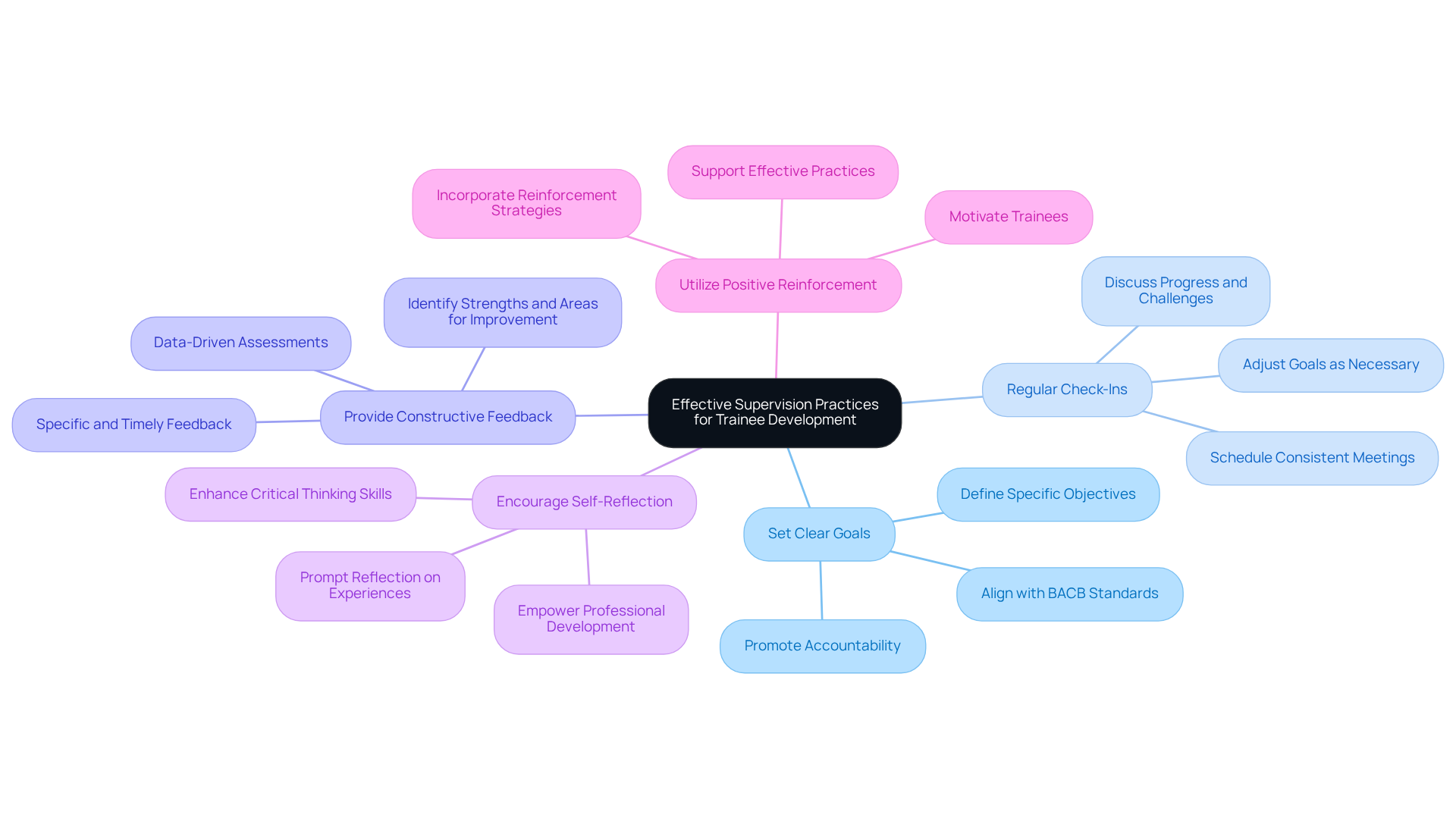
To effectively implement BACB-recommended supervision behaviors, supervisors must focus on several key practices that not only enhance the supervisory relationship but also drive .
By implementing these practices, supervisors can not only enhance their effectiveness but also contribute significantly to the professional development of their supervisees.

To effectively evaluate the impact of supervision on trainee outcomes, supervisors must adopt essential practices that drive results:

To tailor supervision effectively, supervisors must first recognize the growing demand for , projected to increase by 25% by 2026. This statistic underscores the importance of in retaining talent in this field. Here’s how supervisors can enhance their approach:
By implementing these strategies, supervisors can create a more effective learning environment that not only meets the needs of their trainees but also contributes to the overall success of the organization. Consider how can assist you in recruiting the right talent to support these initiatives.

The demand for Board Certified Behavior Analysts (BCBAs) is projected to grow significantly, making effective supervision practices more critical than ever for the development of behavior analyst trainees. By implementing structured frameworks that include clear expectations, regular feedback, and ongoing support, supervisors can greatly enhance the professional journey of their supervisees. This approach not only aligns with BACB standards but also fosters a culture of accountability and continuous improvement within the field of behavior analysis.
Key strategies include:
Have you considered how tailoring supervision to meet the diverse needs of trainees can impact their growth? Understanding individual backgrounds and adapting communication styles allows supervisors to create a more inclusive and effective learning environment. Moreover, the significance of data collection and evaluation underscores the necessity of monitoring trainee progress and adjusting practices accordingly.
In light of the increasing demand for BCBAs, prioritizing effective supervision is essential. By embracing these best practices, behavior analyst supervisors not only enhance trainee development but also contribute to the overall success and sustainability of the profession. Implementing these strategies will lead to a more competent and satisfied workforce, ensuring that the field of behavior analysis continues to thrive.
What is the primary purpose of establishing effective supervision practices for trainee development in behavior analysis?
The primary purpose is to create a structured framework that includes clear expectations, regular feedback, and ongoing support, which is essential for fostering professional growth in the field of behavior analysis.
How should clear goals be set for trainees?
Clear goals should be specific, measurable, and aligned with BACB standards and the individual’s career aspirations. This clarity helps learners understand their targets and promotes accountability.
Why are regular check-ins important in the supervision process?
Regular check-ins are important because they allow for consistent communication to discuss progress, address challenges, and adjust goals as necessary, building trust and enabling timely interventions.
What role does constructive feedback play in trainee development?
Constructive feedback, delivered through data-driven assessments, helps learners recognize their strengths and identify areas for improvement, which is crucial for their development.
How can self-reflection benefit trainees?
Encouraging self-reflection prompts participants to evaluate their experiences and learning, enhancing critical thinking and self-evaluation skills, and empowering them to take charge of their professional development.
What is the significance of utilizing positive reinforcement in trainee supervision?
Positive reinforcement strategies motivate trainees and reinforce desired behaviors, encouraging engagement and supporting the development of effective practices in behavior analysis.
What is the overall goal of implementing these supervision strategies?
The overall goal is to create a robust supervisory framework that meets compliance standards while fostering a culture of continuous improvement and professional excellence.
Our expert recruitment strategies and AI-driven sourcing ensure that you receive top-notch candidates quickly, without compromising on quality. Whether you’re looking for BCBAs, Clinical Directors, or RBTs, we’ve got you covered.


