


Thank you! Your submission has been received!
Oops! Something went wrong while submitting the form.
December 26, 2025

Whole Interval Recording stands as a cornerstone method in Applied Behavior Analysis (ABA), offering a structured approach to tracking continuous behaviors over specific time intervals. This technique is not just a tool; it’s a gateway to invaluable insights into a client's engagement and participation. By understanding these dynamics, therapists can pave the way for more tailored interventions that truly meet the needs of their clients.
However, the effectiveness of Whole Interval Recording hinges on grasping its nuances and challenges. What strategies can practitioners implement to ensure accurate data collection? How can they avoid common pitfalls that could skew results? Reflecting on these questions is crucial for any professional looking to enhance their practice and deliver the best outcomes for their clients.
is a systematic data collection method used in [Applied Behavior Analysis (ABA)](https://hireaba.today) that evaluates actions persisting continuously over designated time intervals. This technique requires the observer to record whether the target action is present throughout the whole interval. For example, if the observation period is divided into 10-second segments, the action must be displayed for the full 10 seconds to be noted as occurring.
This approach is particularly beneficial for tracking ongoing actions, such as task engagement or active participation in activities. However, it’s crucial to recognize that Whole Interval Recording can present a misleadingly low picture of target behaviors that are not present throughout the whole interval. Any behavior that does not persist throughout the whole interval is not counted, which can skew results.
Moreover, distractions during observation can lead to incorrect interval markings, impacting the accuracy of the information gathered. Therefore, thorough planning and execution are essential when applying Whole Interval Recording to ensure reliable data collection. By providing a comprehensive perspective on behavior patterns, Whole Interval Recording serves as a vital resource for analysts focused on improving treatment outcomes and tailoring interventions effectively.

is crucial for ensuring the reliability of information in [ABA therapy](https://hireaba.today). By requiring that a behavior persists for the whole interval, this method significantly reduces the risk of overestimating behavior occurrences. This overestimation can lead to misleading assessments of a client's progress.
Dependable information gathering is essential for making informed decisions regarding treatment strategies and interventions. For instance, when a child is instructed to maintain focus on a task, the Whole Interval method of Recording provides accurate evidence of their sustained attention. This accuracy enables therapists to adjust their methods based on precise data, ultimately fostering trust in the information collected. Such reliability is vital for both therapists and clients, as it underpins [effective therapy outcomes](https://hireaba.today/blog-posts/10-benefits-of-free-40-hour-rbt-training-for-your-aba-team).
However, it’s important to recognize the challenges associated with the whole interval recording. Ongoing observation is necessary, and potential observer bias can influence data accuracy. Have you considered how these factors might impact your assessments? Incorporating statistics, such as the percentage of children who remained engaged in therapy for 12 months, can further illustrate the effectiveness of this method in contributing to successful therapy outcomes.
In conclusion, embracing the whole interval approach to recording not only enhances the reliability of data but also empowers therapists to make informed decisions that lead to better client outcomes.

To implement Whole Interval Recording effectively, practitioners should adhere to the following strategies:

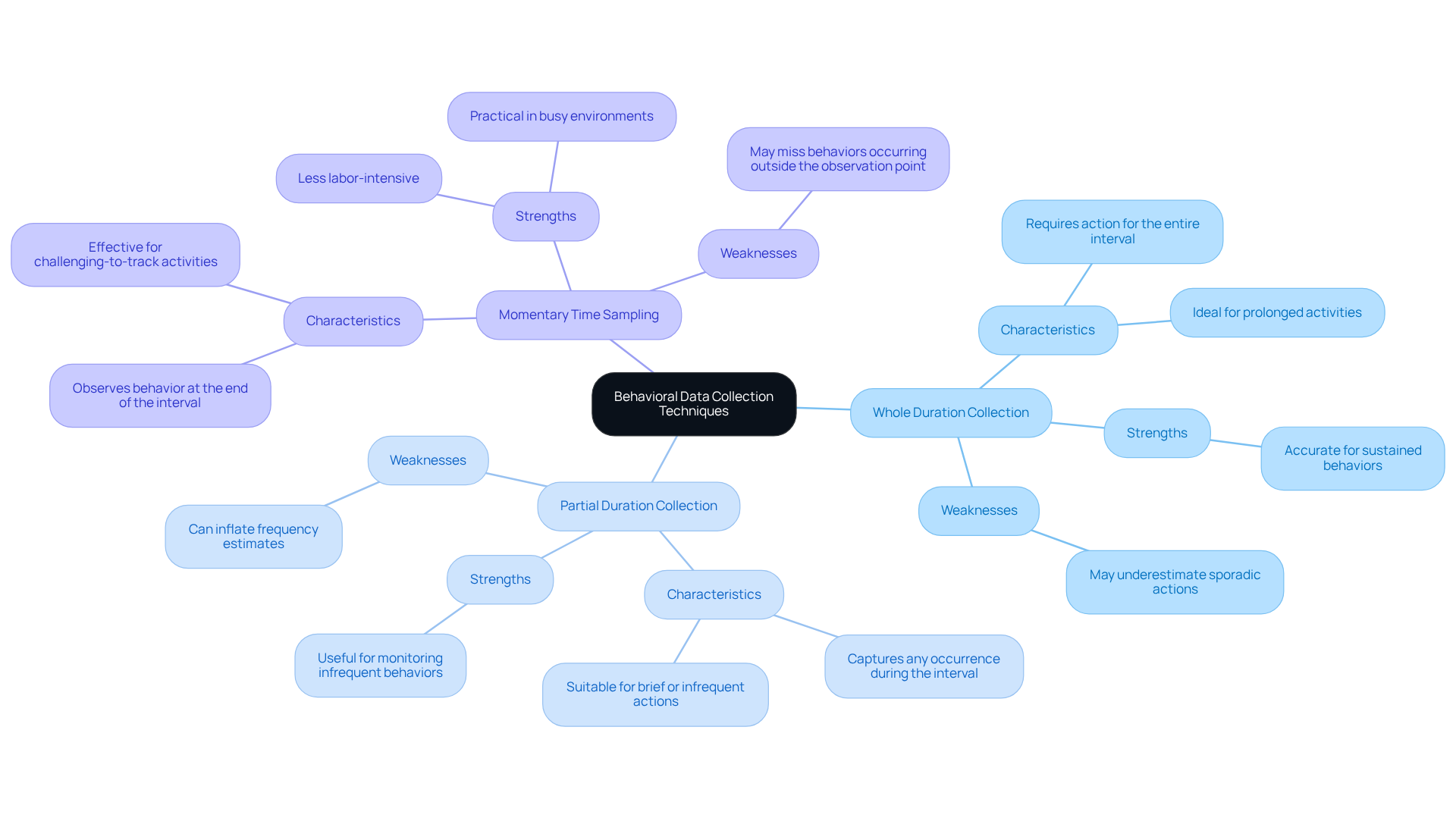
Whole Duration Collection is often compared to other data gathering techniques like Partial Duration Collection and [Momentary Time Sampling](https://hireaba.today). requires the action to occur for the whole interval, making it ideal for assessing prolonged activities. However, it may underestimate the frequency of actions that happen sporadically.
On the other hand, [Partial Interval Recording](https://hireaba.today) captures whether the action takes place at any point during the interval, which can lead to an inflated estimation of frequency. This method is particularly suited for brief actions or those that occur infrequently.
Momentary Time Sampling involves observing whether the action is happening at the end of the interval, which proves useful for activities that are challenging to track continuously.
Understanding these distinctions empowers practitioners to choose the most suitable method based on the specific behaviors they are monitoring and the objectives of their interventions.
Whole Interval Recording stands as a cornerstone technique in Applied Behavior Analysis (ABA), offering a systematic method for tracking behaviors across defined time intervals. By concentrating on whether a behavior persists throughout the entire interval, this approach significantly boosts the reliability of data collection. Such reliability is crucial for accurately assessing client progress and effectively tailoring interventions.
Implementing Whole Interval Recording involves several best practices. These include:
Each of these strategies is vital in minimizing observer bias, ensuring that the information gathered is both precise and beneficial for guiding treatment decisions.
The true value of Whole Interval Recording lies in its capacity to enhance data reliability, a fundamental aspect of effective ABA therapy. By adopting this method and its best practices, therapists are empowered to make informed decisions that lead to improved outcomes for their clients. As the field of ABA evolves, integrating these techniques will not only elevate the quality of therapy but also enable practitioners to achieve meaningful results in their work.
What is Whole Interval Recording in ABA Therapy?
Whole Interval Recording is a systematic data collection method used in Applied Behavior Analysis (ABA) that evaluates whether target actions persist continuously over designated time intervals.
How does Whole Interval Recording work?
In Whole Interval Recording, the observer records whether the target action is present throughout the entire interval. For example, if the observation period is divided into 10-second segments, the action must be displayed for the full 10 seconds to be noted as occurring.
What types of behaviors are best tracked using Whole Interval Recording?
Whole Interval Recording is particularly beneficial for tracking ongoing actions, such as task engagement or active participation in activities.
What are the potential drawbacks of Whole Interval Recording?
Whole Interval Recording can present a misleadingly low picture of target behaviors that do not persist throughout the whole interval, as behaviors not present for the entire interval are not counted, which can skew results.
How can distractions affect Whole Interval Recording?
Distractions during observation can lead to incorrect interval markings, impacting the accuracy of the information gathered.
Why is planning and execution important in Whole Interval Recording?
Thorough planning and execution are essential to ensure reliable data collection when applying Whole Interval Recording, as it helps provide a comprehensive perspective on behavior patterns.
How does Whole Interval Recording contribute to treatment outcomes?
By offering insights into behavior patterns, Whole Interval Recording serves as a vital resource for analysts focused on improving treatment outcomes and tailoring interventions effectively.
Our expert recruitment strategies and AI-driven sourcing ensure that you receive top-notch candidates quickly, without compromising on quality. Whether you’re looking for BCBAs, Clinical Directors, or RBTs, we’ve got you covered.


