


Thank you! Your submission has been received!
Oops! Something went wrong while submitting the form.
October 25, 2025

The Changing Criterion Design (CCD) in Applied Behavior Analysis (ABA) represents a transformative approach that allows therapists to assess and modify behavior through systematic adjustments in reinforcement criteria. This method not only enhances the effectiveness of interventions but also provides a structured framework for tracking progress over time. As the demand for Board Certified Behavior Analysts (BCBAs) continues to rise, understanding and effectively implementing CCD becomes crucial.
However, as practitioners navigate the complexities of behavior modification, one pressing question remains: how can the nuances of changing criterion design be effectively leveraged to optimize therapeutic outcomes in diverse settings? Reflecting on your current hiring challenges, consider how the principles of CCD can inform your recruitment strategies, ensuring that you attract the right talent to enhance your practice. By embracing this structured approach, you can not only improve intervention outcomes but also foster a culture of continuous improvement in your organization.
The Changing Criterion Framework (CCD), which exemplifies the aba, represents a in , designed to evaluate the effects of interventions on behavior through the gradual modification of .
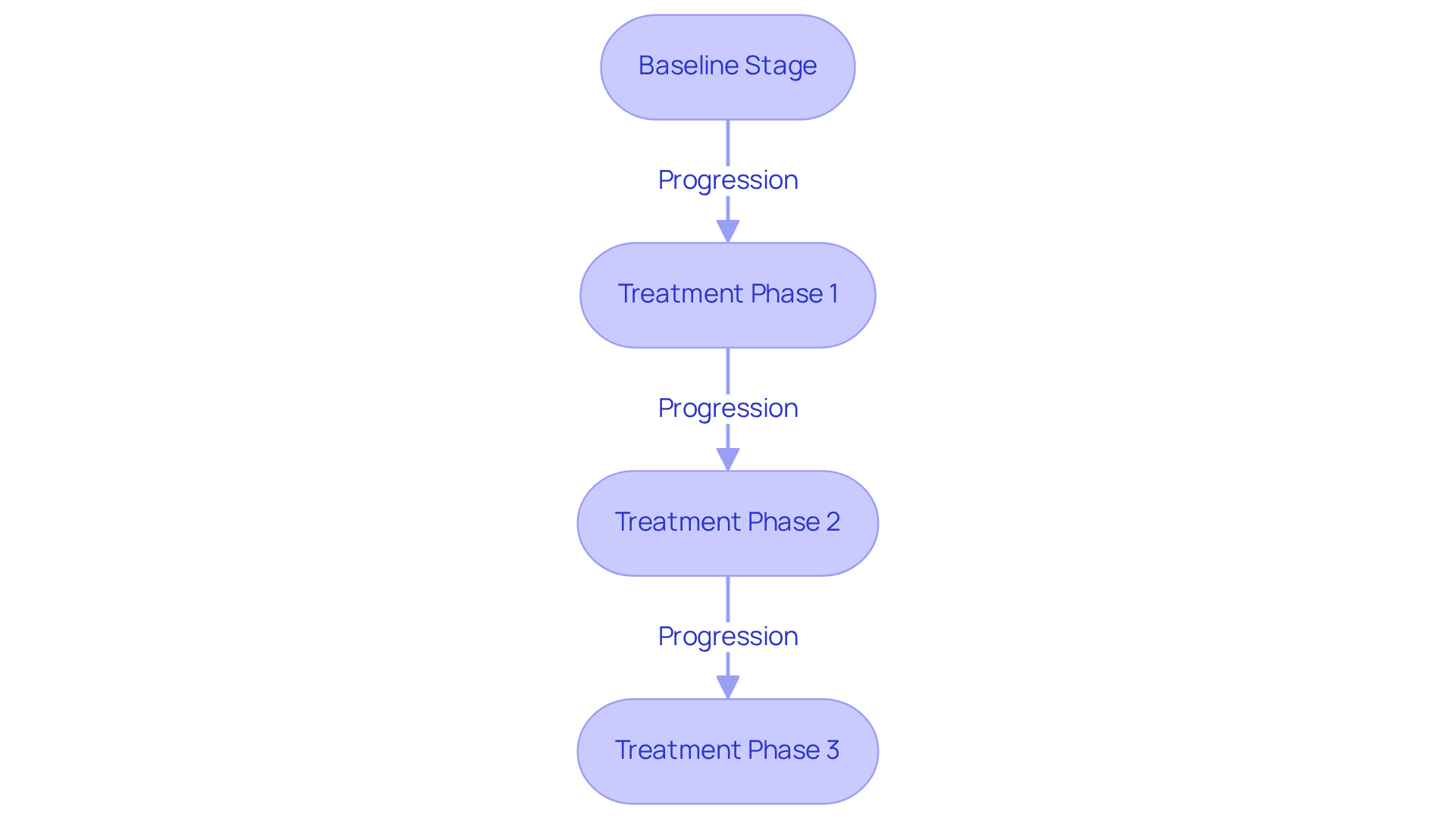
Initially, the process begins with a baseline stage, which is followed by a series of treatment phases where performance standards are systematically adjusted. This method enables practitioners to observe in response to these incremental modifications, thereby allowing for a thorough assessment of intervention effectiveness over time using .
stands as a pivotal element in therapeutic practices, particularly in shaping and modifying current actions. This approach not only facilitates gradual improvements but is also ideal for skills already present in the learner's repertoire. In clinical environments such as schools and therapy clinics, CCD is employed to enhance specific skills or mitigate unwanted behaviors through .
Consider this: a performance analyst may implement a CCD to guide a student in solving 20 math problems within a 30-minute timeframe, progressively increasing the number of problems required for reinforcement. This method establishes a clear framework for measuring progress while highlighting the significance of in (ABA). Notably, statistics reveal that 85.2% of interventions utilizing contingent reinforcement apply fixed-ratio schedules, underscoring the effectiveness of structured reinforcement in achieving desired behavioral changes.
Moreover, the has demonstrated successful applications across diverse settings, with studies illustrating its versatility in targeting a broad spectrum of behaviors, from academic tasks to social skills. By allowing for , CCD empowers therapists to make informed decisions regarding treatment modifications, ultimately leading to more effective behavioral outcomes.

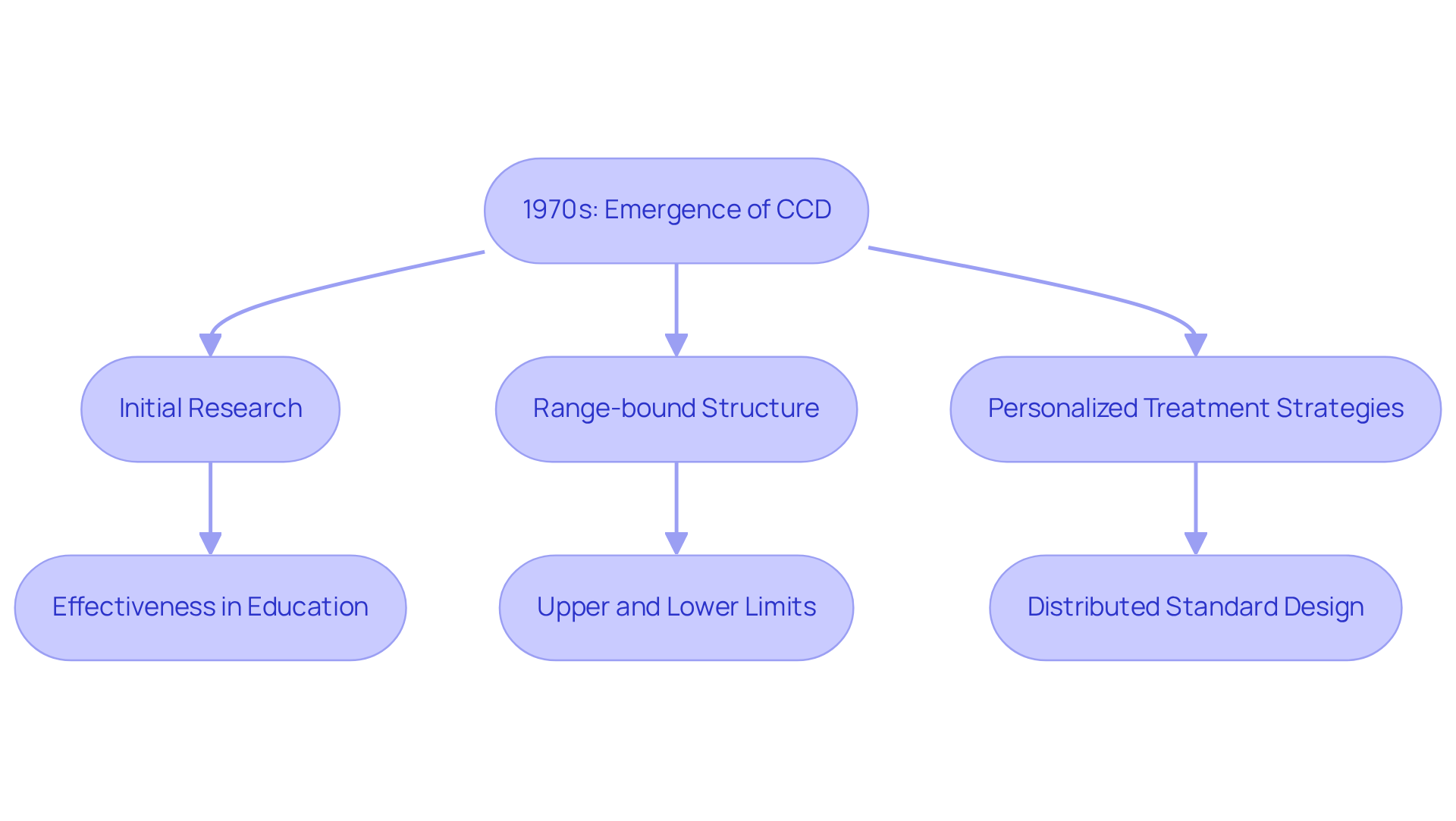
The evolving standard approach (CCD) emerged in the 1970s, addressing the demand for more in . Initial research highlighted its effectiveness in illustrating , particularly within educational and therapeutic frameworks. As noted by Dennis McDougall, the range-bound signifies a substantial innovation, establishing upper and lower limits on . This framework facilitates precise adjustments tailored to individual needs.
This variation exemplifies the ongoing evolution of , reflecting a broader trend towards in . Furthermore, the distributed standard design, which integrates elements from changing benchmarks, multiple-baseline, and ABAB designs, enhances the adaptability of interventions in multitasking contexts. Such advancements ensure that remains an essential and influential tool for analysts in contemporary practice, as it accommodates individual performance variations and promotes effective outcomes.
The is a powerful approach characterized by its emphasis on gradual modifications in actions. By employing stepwise adjustments in performance standards, facilitates incremental enhancements that are crucial for effective . Each treatment phase is meticulously designed to strengthen actions that meet the newly established criteria, enabling .
A is essential ; it allows for clear comparisons and assessments of modifications. This design not only illustrates experimental control—connecting alterations in actions directly to the modifications in criteria—but also proves particularly effective for activities requiring gradual improvement by utilizing . Notably, a substantial 45.7% of CCD research focuses on , highlighting its relevance in educational environments.
Furthermore, the versatility of CCD is evident as it has been applied across diverse populations, with a total of 906 individuals participating in CCD research. This underscores its . Expert insights further emphasize the , reinforcing the necessity of a prior to implementing changes. Are you ready to leverage the strengths of CCD in your practice?

The Changing Criterion Design (CCD) in Applied Behavior Analysis (ABA) signifies a pivotal advancement in enhancing the effectiveness of behavioral interventions through strategic adjustments in performance standards. This methodology not only facilitates a detailed assessment of behavioral changes over time but also underscores the necessity of structured reinforcement strategies tailored to individual needs. By systematically modifying reinforcement criteria, practitioners can realize substantial improvements in target behaviors, establishing CCD as an indispensable tool in therapeutic contexts.
Throughout this article, we have delved into the role, evolution, and defining characteristics of changing criterion design. The necessity of establishing a stable baseline prior to implementing changes has been emphasized, ensuring precise evaluations of behavioral modifications. Furthermore, the versatility of CCD has been illustrated through its successful applications across diverse settings, highlighting its adaptability in addressing a broad spectrum of behaviors, from academic tasks to social skills. The historical context surrounding CCD's development accentuates its sustained relevance and innovation within the field of ABA.
In light of these insights, it is evident that adopting the principles of changing criterion design can significantly elevate therapeutic outcomes. As practitioners refine their methodologies, incorporating CCD into treatment plans not only nurtures individualized care but also champions data-driven decision-making. The potential for enhanced behavior management through this method invites further exploration and application, urging professionals to leverage its strengths in practice for the benefit of those they serve.
What is Changing Criterion Design in ABA?
Changing Criterion Design is a single-subject experimental approach in Applied Behavior Analysis (ABA) that evaluates the effects of interventions on behavior by gradually modifying reinforcement criteria.
What are the stages involved in Changing Criterion Design?
The process begins with a baseline stage, followed by a series of treatment phases where performance standards are systematically adjusted.
How does Changing Criterion Design allow for assessment of intervention effectiveness?
This method enables practitioners to observe behavioral changes in response to incremental modifications, allowing for a thorough assessment of intervention effectiveness over time.
Our expert recruitment strategies and AI-driven sourcing ensure that you receive top-notch candidates quickly, without compromising on quality. Whether you’re looking for BCBAs, Clinical Directors, or RBTs, we’ve got you covered.


