


Thank you! Your submission has been received!
Oops! Something went wrong while submitting the form.
January 19, 2026

Effective documentation in ABA therapy is not merely a regulatory requirement; it stands as a cornerstone of successful treatment outcomes. Did you know that mastering the art of objective session notes can significantly enhance client progress tracking? By doing so, practitioners not only ensure compliance but also foster collaborative care.
However, how can ABA professionals navigate the complexities of documentation while steering clear of common pitfalls? This article delves into key practices that enhance clarity and objectivity in session notes. It reveals strategies that not only improve record-keeping but also elevate the quality of care provided to clients.
Consider your current documentation practices. Are they as effective as they could be? Let’s explore how refining your approach can lead to better outcomes for both you and your clients.
Effective ABA documentation is crucial for ensuring clarity and utility, which are essential for tracking progress and maintaining compliance with regulatory standards. Did you know that thorough documentation can significantly enhance treatment outcomes? Here are the key components that every ABA professional should include:
By integrating these elements, professionals can create thorough and impactful records, such as an objective session notes example, that not only assist client advancement but also improve cooperation among therapy groups. Ultimately, this results in better outcomes for children with autism. As one Registered Behavior Technician (RBT) noted, "Data helps us understand how well therapy works for each child with autism and allows us to make necessary adjustments to improve their outcomes." This highlights the critical role that detailed documentation plays in the therapeutic process. Are you ready to enhance your documentation practices and improve client outcomes?
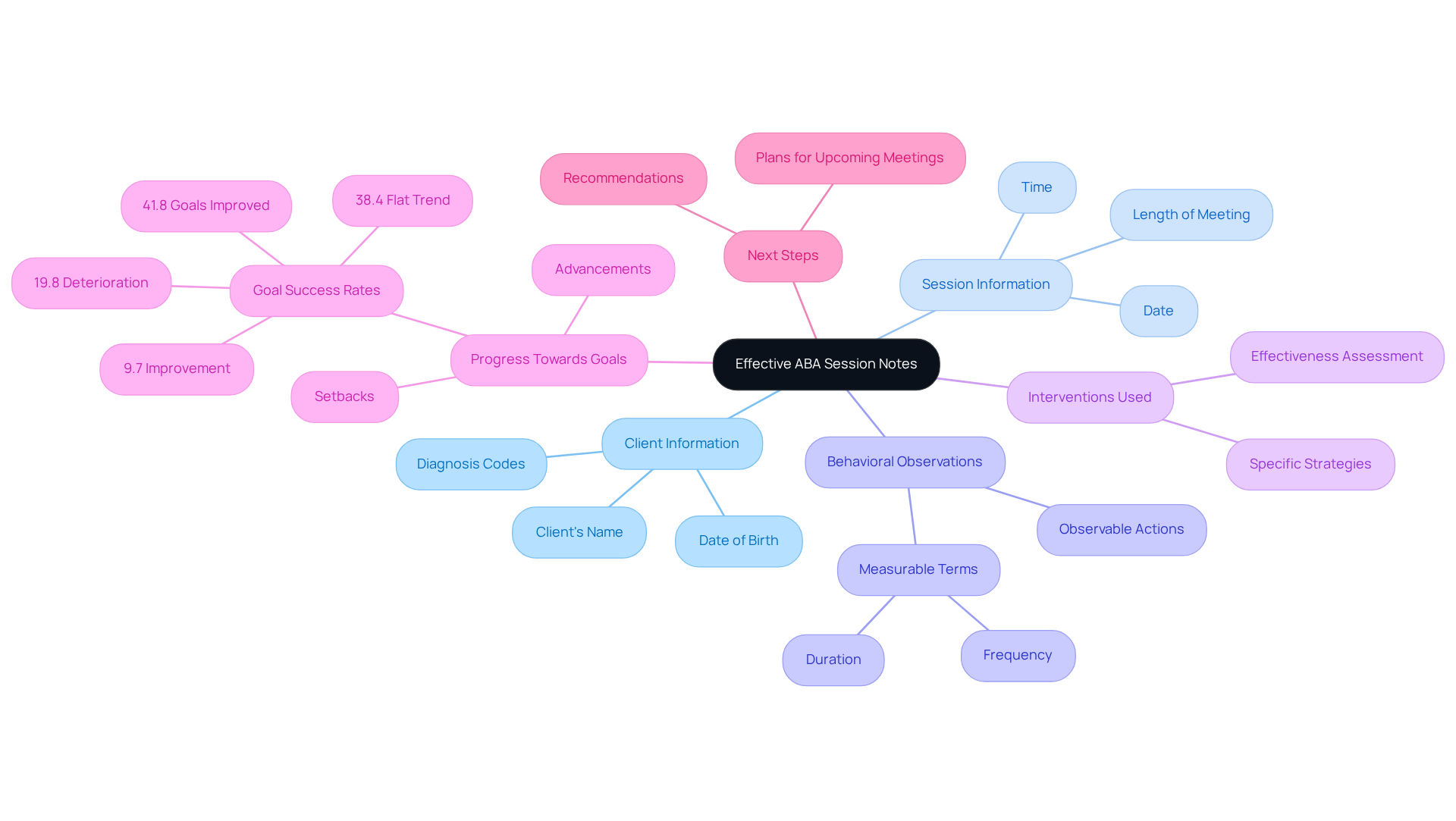
To ensure objectivity and clarity in ABA session notes, practitioners must adhere to essential best practices:
Use Observable Language: Document behaviors that can be seen and measured, steering clear of subjective interpretations. For instance, instead of stating 'the individual seemed frustrated,' specify 'the individual cried and turned away.' This precision captures the individual's emotional state accurately and without bias.
Be Specific: Provide detailed descriptions of behaviors, including the context in which they occurred. Observing that 'the customer exhibited non-compliant behavior when moving to the next task' enables a better understanding of triggers and responses linked to specific actions.
Avoid Assumptions: Refrain from inferring feelings or motivations behind behaviors. Stick to observable facts to uphold the integrity of the records. Rather than saying 'the client was upset,' document observable actions like 'the client crossed their arms and looked away.'
Utilize Checklists: Implementing checklists ensures that all necessary observations are consistently recorded. This practice enhances the objectivity of the notes and minimizes the risk of omitting critical information, as studies have shown that structured templates improve note quality.
Incorporate Data Collection: Acknowledge the significance of gathering information beyond therapy meetings to provide a complete view of the child's behavior. Tracking behaviors during daily activities helps in understanding patterns and triggers.
Leverage Technology: Utilize electronic data collection tools and data tracking apps to simplify the recording process. These technologies can enhance efficiency and precision in documenting meeting details.
Regular Training: Engage in ongoing training to refine observational skills and improve documentation practices. Continuous education assists professionals in staying informed about best practices, enhancing their ability to create high-quality records.
By adhering to these guidelines, practitioners can produce clear and useful objective session notes examples that assist in assessing client progress. This ultimately leads to more effective interventions. As Aim Higher ABA states, 'Data collection is a powerful tool in ABA therapy, offering valuable insights that guide treatment decisions and ensure positive outcomes for children.

Integrating technology into the note-taking process can significantly enhance the efficiency and precision of an objective session notes example in ABA records. Consider this: the demand for Board Certified Behavior Analysts (BCBAs) is on the rise, making effective documentation more crucial than ever. Here are some best practices for leveraging technology in your practice:
By effectively leveraging technology, practitioners can enhance their documentation processes. Are you ready to improve client care and operational efficiency? Embrace these practices and elevate your ABA services.

To ensure high-quality ABA session notes, practitioners must recognize and avoid several common pitfalls:
By being vigilant about these common mistakes, practitioners can significantly enhance the quality of their ABA session documentation. This leads to improved client outcomes and ensures compliance with industry standards.

Effective documentation in ABA therapy is not merely a regulatory requirement; it stands as a cornerstone for achieving successful treatment outcomes. With the demand for Board Certified Behavior Analysts (BCBAs) on the rise, practitioners must focus on key components of session notes:
This approach enables the creation of records that are not only comprehensive but also actionable. By emphasizing objectivity and clarity, documentation becomes reliable, empowering therapists to make informed decisions that directly impact client care.
Throughout this discussion, we've explored essential practices for enhancing ABA session notes. These practices include:
By adhering to these best practices, ABA professionals can significantly elevate the quality of their records, leading to improved treatment planning and, ultimately, more positive outcomes for clients.
In conclusion, the importance of meticulous and objective session notes in ABA therapy cannot be overstated. They serve as a vital tool for tracking progress, facilitating collaboration among therapy teams, and ensuring compliance with industry standards. As the demand for effective ABA services continues to grow, embracing these documentation practices will not only enhance individual client outcomes but also contribute to the overall advancement of the field. Now is the time to prioritize and refine your documentation strategies to foster a more effective therapeutic environment.
Why is effective ABA documentation important?
Effective ABA documentation is crucial for ensuring clarity and utility, which are essential for tracking progress and maintaining compliance with regulatory standards. Thorough documentation can significantly enhance treatment outcomes.
What client information should be included in ABA session notes?
ABA session notes should include the client's name, date of birth, and relevant diagnosis codes to create a distinct identity for the meeting and ensure precise record-keeping.
What session information is necessary to document?
It's necessary to document the date, time, and length of the meeting, as this information is vital for monitoring progress over time and ensuring consistency in treatment.
What should be included in the behavioral observations section?
The behavioral observations section should document specific, observable actions displayed by the individual during the meeting, using measurable terms such as frequency and duration to provide a clear picture of the client's performance.
How should interventions used during the session be recorded?
The specific interventions or strategies implemented during the session should be detailed in the notes. This helps assess the effectiveness of various methods and guides future treatment choices.
Why is it important to note progress towards goals?
Noting advancements or setbacks in relation to the client's treatment goals is essential for ongoing treatment planning and necessary adjustments. Systematic tracking can lead to improved outcomes, as evidenced by studies.
What should be included in the next steps section of the notes?
The next steps section should outline recommendations or plans for upcoming meetings based on the observations made, ensuring continuity of care and informing subsequent interventions.
How does thorough documentation benefit therapy groups?
Integrating key components into session notes creates thorough and impactful records that assist client advancement and improve cooperation among therapy groups, ultimately resulting in better outcomes for children with autism.
Our expert recruitment strategies and AI-driven sourcing ensure that you receive top-notch candidates quickly, without compromising on quality. Whether you’re looking for BCBAs, Clinical Directors, or RBTs, we’ve got you covered.


