


Thank you! Your submission has been received!
Oops! Something went wrong while submitting the form.
October 24, 2025

Partial interval data collection stands as a cornerstone technique in Applied Behavior Analysis (ABA), offering a structured method for observing behaviors over designated time segments. This approach not only streamlines the data-gathering process but also enhances the reliability of the insights derived, particularly for infrequent or variable actions.
However, practitioners often grapple with the challenge of balancing efficiency with accuracy. This raises critical questions about the true effectiveness of this method:
A pivotal technique in Applied Behavior Analysis (ABA) is , where in , the , allowing practitioners to observe and document whether specific actions take place during designated time segments. This method is particularly beneficial for monitoring infrequent actions or those with varying durations. By segmenting the observation period into shorter intervals, practitioners can effectively capture the occurrence of target actions, recognizing that in , the , without the necessity for continuous oversight. This structured approach not only streamlines information collection but also enhances the reliability and validity of the acquired measurements.
In 2025, the importance of in action analysis is underscored by its ability to provide actionable insights into behavioral patterns. For instance, within a classroom setting, educators can utilize this technique to observe specific behaviors such as student engagement or disruptive actions, facilitating timely interventions that improve learning outcomes. Research indicates that when implemented effectively, partial time recording can lead to significant advancements in management strategies, ultimately enhancing the quality of life for individuals receiving ABA therapy.
Practical applications further illustrate the efficacy of partial time collection. In a case study involving a 25-year-old individual named Alex, who displays aggressive outbursts (including hitting, kicking, and yelling) and self-injurious behaviors (such as skin picking and biting), practitioners evaluated the frequency of these behaviors during transitions, noting that in , the . The data collected revealed patterns that informed targeted interventions, showcasing the method's real-world applicability in addressing intricate behavioral challenges. Environmental factors, such as noise levels and activity transitions, were also considered when selecting appropriate recording techniques, ensuring that the gathered information was relevant and actionable.
Numerous research studies have consistently highlighted the effectiveness of partial interval information gathering techniques in behavioral analysis. These studies emphasize the necessity of operational definitions for behaviors, guaranteeing that data collection is both reliable and credible. By establishing clear criteria for what constitutes a behavior, practitioners can bolster procedural integrity and social validity in their interventions, ultimately leading to more effective outcomes in ABA therapy. This systematic approach to information gathering is crucial for and intervention planning, reiterating the overall significance of partial time gathering in the enhancement of therapeutic practices.

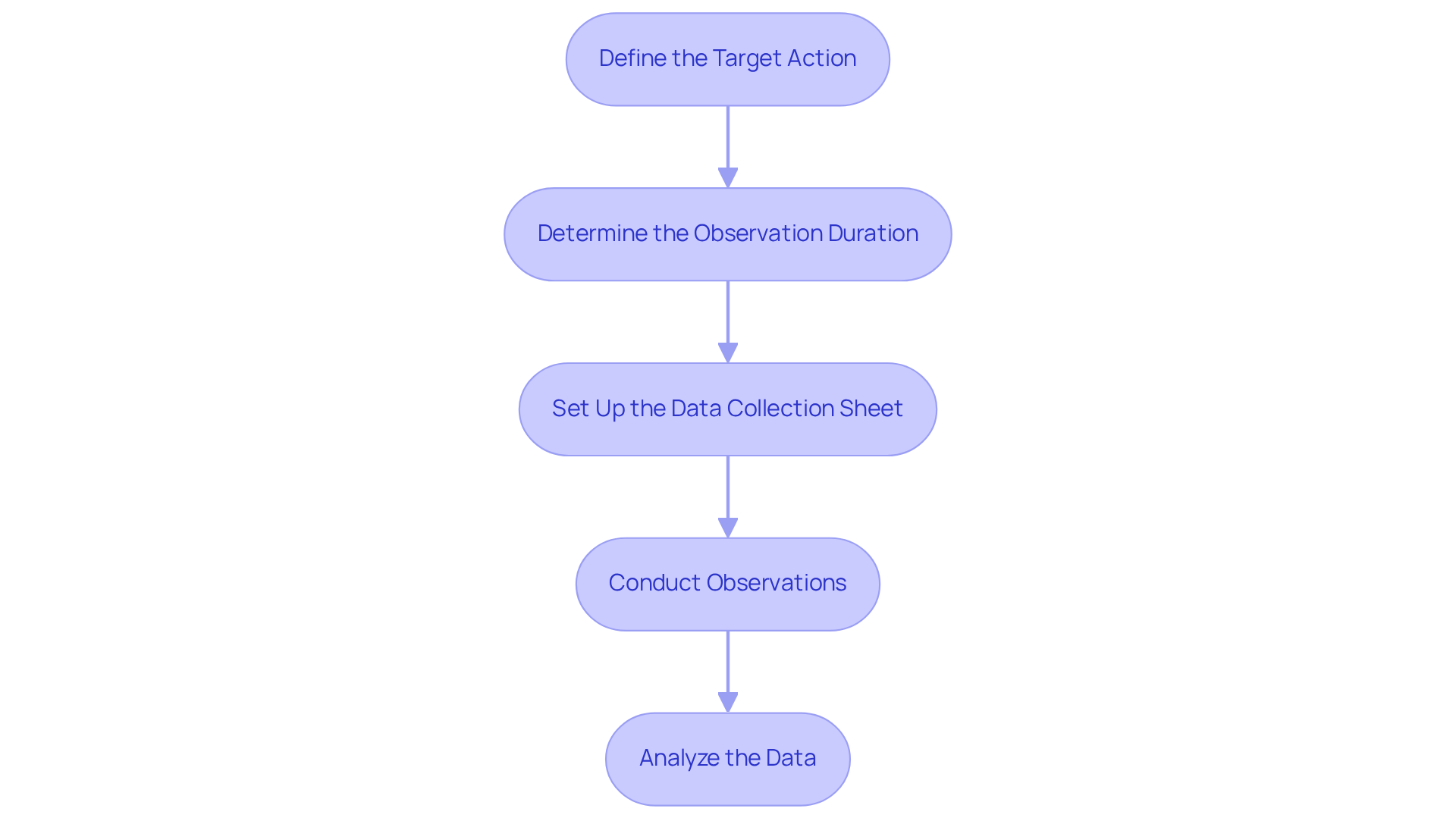
To implement effectively, follow these steps:
Partial interval presents notable advantages:
However, it is essential to acknowledge certain limitations:

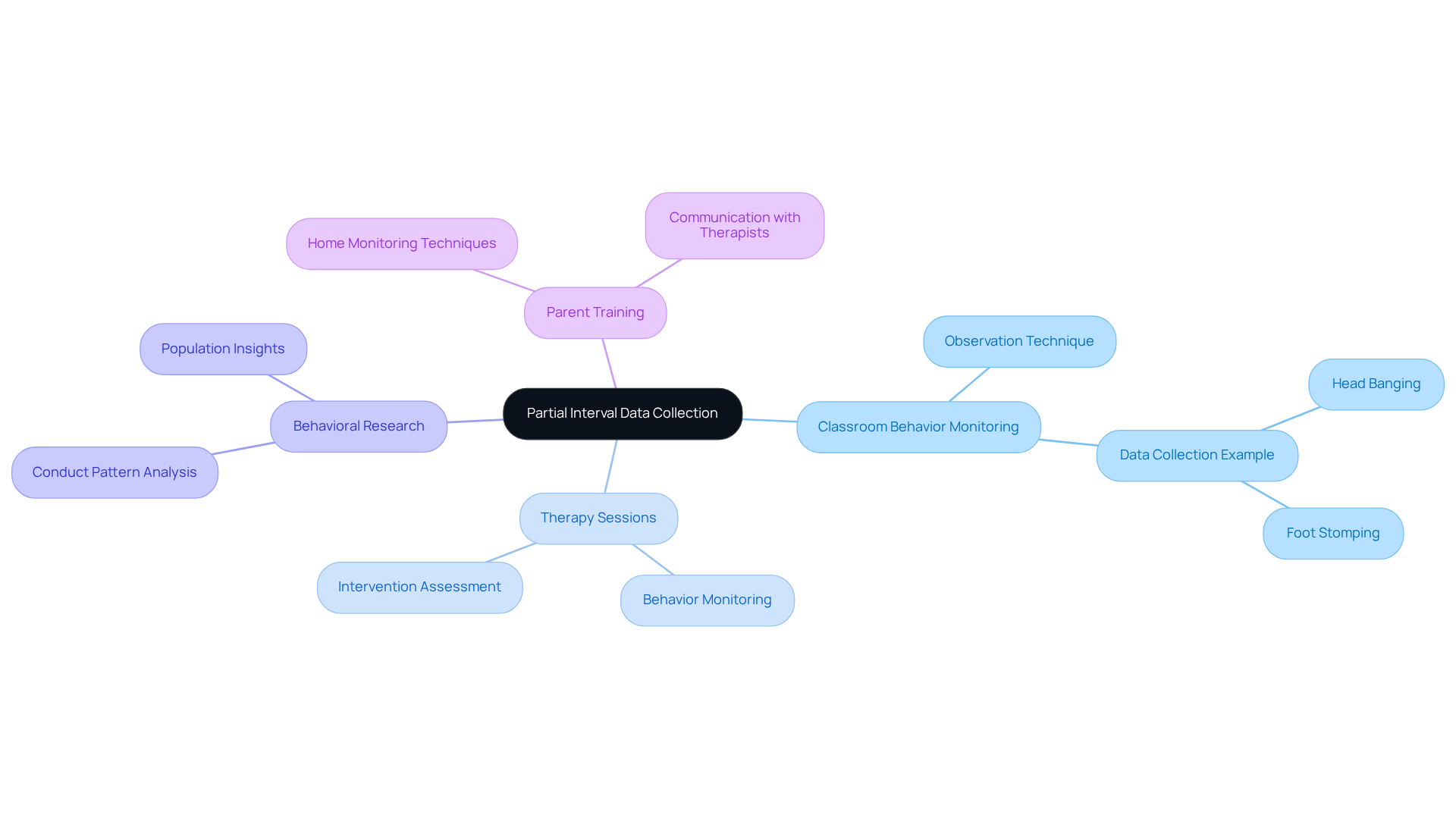
Partial collection of information represents a flexible approach, suitable for diverse environments, and significantly enhances the efficacy of . Key applications include:
As emphasized by How To ABA, "Partial timing recording offers a more practical method" for . By implementing these applications, practitioners can seamlessly integrate the principle that in partial interval data collection, the behavior must occur for the duration of a time interval into their work, leading to improved outcomes for clients.
Implementing effective partial interval data collection in ABA therapy is not just beneficial; it is essential for accurately monitoring behaviors and improving therapeutic outcomes. This structured approach empowers practitioners to observe and document specific actions during designated time segments, making it particularly valuable for infrequent or variable behaviors. By concentrating on the occurrence of target actions within defined intervals, practitioners can gather reliable data that informs interventions and enhances the overall effectiveness of ABA therapy.
Key steps for implementing partial interval data collection have been meticulously outlined, including:
The discussion also highlights the method's benefits, such as efficiency and flexibility, while addressing its limitations, including potential overestimation of behavior frequency and less precision in data. Practical applications in various settings—from classrooms to therapy sessions—demonstrate how this technique can lead to meaningful insights and improved behavioral interventions.
In summary, embracing partial interval data collection as a fundamental practice in ABA therapy equips practitioners with a robust tool for behavioral analysis and fosters a deeper understanding of client needs. By applying these techniques consistently, practitioners can enhance communication with stakeholders and ensure that interventions are tailored to effectively address individual behavioral challenges. The significance of this method in shaping successful outcomes cannot be overstated; it paves the way for more informed decision-making and ultimately contributes to the well-being of those receiving ABA therapy.
What is partial interval data collection in Applied Behavior Analysis (ABA)?
Partial interval data collection is a technique where behavior must occur for the duration of a designated time interval, allowing practitioners to observe and document specific actions during those segments.
Why is partial interval data collection beneficial?
It is particularly useful for monitoring infrequent behaviors or those with varying durations, as it allows practitioners to capture the occurrence of target actions without requiring continuous oversight.
How does partial interval data collection enhance the reliability of measurements?
By segmenting the observation period into shorter intervals, this structured approach streamlines information collection and improves the reliability and validity of the data gathered.
In what contexts can partial interval data collection be applied?
It can be applied in various settings, such as classrooms, where educators can observe behaviors like student engagement or disruptive actions to facilitate timely interventions.
Can you provide an example of partial interval data collection in practice?
In a case study involving a 25-year-old named Alex, practitioners used partial interval data collection to evaluate the frequency of aggressive and self-injurious behaviors during transitions, leading to targeted interventions based on observed patterns.
What factors should be considered when using partial interval data collection?
Environmental factors, such as noise levels and activity transitions, should be considered to ensure the relevance and actionability of the gathered information.
What do research studies say about the effectiveness of partial interval data collection?
Numerous studies highlight its effectiveness in behavioral analysis, emphasizing the importance of operational definitions for behaviors to ensure reliable and credible data collection.
How does establishing clear criteria for behaviors impact ABA therapy?
It bolsters procedural integrity and social validity in interventions, leading to more effective outcomes in ABA therapy and improving the overall quality of life for individuals receiving treatment.
Our expert recruitment strategies and AI-driven sourcing ensure that you receive top-notch candidates quickly, without compromising on quality. Whether you’re looking for BCBAs, Clinical Directors, or RBTs, we’ve got you covered.


