Introduction
The field of behavior analysis is witnessing an impressive surge in demand. With more professionals aspiring to become Board Certified Behavior Analysts (BCBAs), the opportunities are vast. Did you know that the need for qualified BCBAs has skyrocketed in recent years? This guide outlines the essential steps to embark on this rewarding career path, from earning a relevant bachelor's degree to securing a state license.
However, with numerous requirements and competitive job prospects, what does it truly take to stand out and succeed as a BCBA today? Consider this: how can you navigate the complexities of this field and ensure you’re not just another candidate in the crowd? This is where Hire ABA comes into play, offering tailored recruitment solutions that can help you shine in this competitive landscape.
By leveraging Hire ABA, you gain access to a network of resources designed to support your journey. Imagine having a platform that not only connects you with potential employers but also provides insights into the skills and qualifications that are in high demand. This is your chance to elevate your career and make a meaningful impact in the lives of those you serve.
As you explore this guide, reflect on your current hiring challenges. Are you ready to take the next step in your career? Let’s dive into the essential steps you need to take to become a successful BCBA.
Earn a Relevant Bachelor's Degree
Are you aware that the demand for is skyrocketing? To embark on this rewarding journey, the first step is to earn a relevant . Common fields of study include psychology, education, or applied . Here’s how to set yourself up for success:
- Choose Your Major: Opt for a major that lays a solid foundation in behavioral sciences. Psychology is often recommended due to its focus on human behavior. In fact, the number of students has surged in recent years, highlighting its significance in the field.
- Research Programs: Seek out centered on or related disciplines. Make sure the program includes coursework that meets certification requirements.
- Maintain a Strong GPA: Strive for a GPA of 3.0 or higher. Many graduate programs will evaluate your undergraduate performance during admissions. Remember, bachelor’s degree holders typically earn $1.2 million more over their lifetime compared to high school graduates, making a essential for your future.
- Engage in Relevant Activities: Get involved in internships, volunteer work, or research projects related to . These experiences will enhance your application for graduate studies. Entry-level analyst positions usually start at around $55,000 annually, and relevant experiences can significantly boost your readiness for a career in .
By following these steps, you can effectively position yourself for a successful career as a BCBA Board Certified Behavior Analyst. Take action now and pave the way for a fulfilling future in this vital field!

Complete a Graduate Program in Behavior Analysis
The demand for is on the rise, with over 74,000 professionals certified in behavior analysis as of 2025. This growing need underscores the importance of pursuing a . Here’s how to navigate this crucial step:
- Select an : Choose a master's program . Accreditation is vital, as it guarantees adherence to high educational standards, which is essential for your future career. Programs with ABAI accreditation have a proven track record, with graduates often achieving impressive pass rates on the . For instance, the University of South Florida boasted a remarkable 100% pass rate in both 2018 and 2022.
- Complete Required Coursework: Enroll in courses that cover . Ensure that the program includes a . This coursework is designed to equip you with the necessary skills and knowledge to excel in the field.
- Engage with Faculty: Build relationships with your professors and mentors who can provide guidance and support throughout your studies. Faculty involvement is a key factor in student success. Many graduates from ABAI-s report that strong faculty support significantly enhanced their learning experience. For example, McNeese State University offers a favorable 13:1 student-to-faculty ratio, ensuring personalized attention.
- Stay Informed: Keep up with any changes in certification requirements or best practices in the field by attending workshops and conferences. Engaging with the professional community not only broadens your knowledge but also enhances your networking opportunities, which can be invaluable in your career.
Are you ready to take the next step in your career? By following these guidelines, you’ll be well on your way to becoming a successful BCBA board certified behavior analyst.

Gain Required Fieldwork Experience
To qualify for the certification exam, you must complete a specified amount of . Did you know that the demand for is on the rise? This certification not only enhances your credibility but also opens doors to numerous . Here’s how to gain the necessary experience:
- Understand the Requirements: You need to complete under the guidance of a qualified behavior analyst. Familiarize yourself with the to ensure you meet all criteria.
- Find a Supervisor: Seek out a BCBA Board Certified Behavior Analyst who can oversee your fieldwork. This may involve networking through your graduate program or professional organizations. Have you considered how your connections can help you find the right mentor?
- Document Your Hours: Keep meticulous records of your fieldwork hours and the activities you engage in. This documentation will be essential when seeking certification. Are you prepared to track your progress diligently?
- Engage in Diverse Experiences: Aim to work in various settings, such as schools, clinics, or community organizations, to gain a well-rounded understanding of . Each experience will enrich your knowledge and skills, making you a more competitive candidate.
By following these steps, you’ll be well on your way to achieving certification and advancing your career in .

Prepare for and Pass the BCBA Exam
In today's competitive landscape, the demand for is on the rise. After completing your education and gaining practical experience, preparing thoroughly for the is crucial. Follow these essential steps to ensure your success:
- Review the Assessment Content Outline: Familiarize yourself with the published by the BACB. Understanding the topics covered is vital for targeted preparation, especially with the latest updates for 2025.
- Create a Learning Plan: Develop a structured timetable that allocates specific time for each subject area. Incorporate learning tools like flashcards, practice tests, and cooperative review groups to enhance retention.
- Utilize Resources: Leverage a variety of resources, including textbooks, online courses, and designed for the . These materials align with the latest assessment content updates for 2025.
- Practice with Simulated Tests: Regularly engage in practice assessments to evaluate your knowledge and refine your test-taking skills. This practice will familiarize you with the assessment format and timing, boosting your confidence.
- Remain Composed and Assured: On test day, ensure you are well-rested and arrive early. Trust in your preparation and approach the assessment with confidence. Many accomplished emphasize the importance of a .
In 2025, candidates typically report an average of 200 hours of preparation leading up to the test, showcasing the dedication necessary for success. Many individuals who are attribute their achievements to , underscoring the value of thorough preparation. Are you ready to take the next step in your career? Start your journey with confidence!

Obtain Your State License
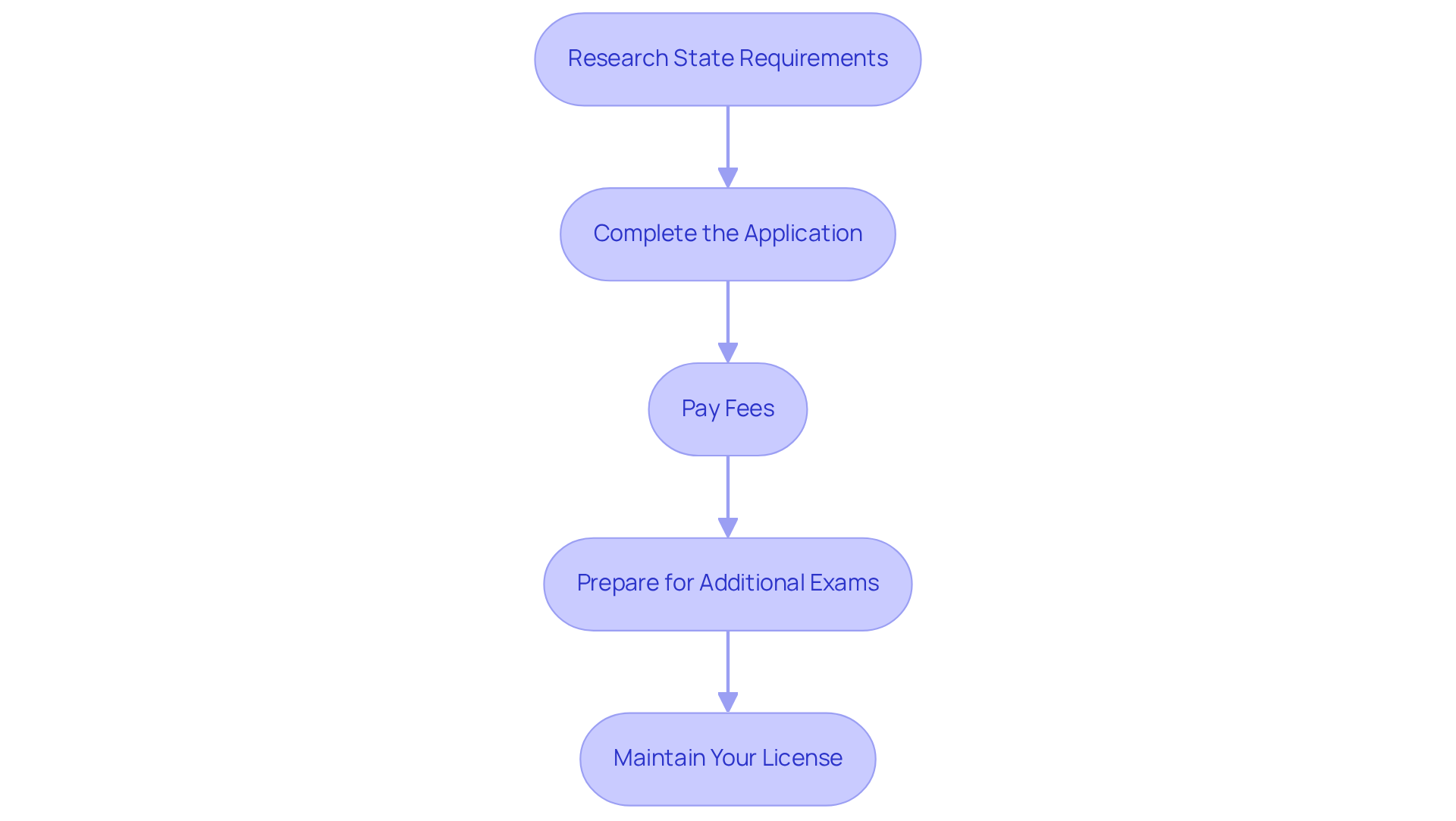
After successfully completing the board certification assessment, the next vital step is acquiring your state license. Did you know that the demand for is on the rise? Navigating this process effectively is crucial for your career advancement. Here’s how to do it:
- Researching is important because each state has unique . Visit your state’s to understand the specific criteria and any additional documentation needed.
- Complete the Application: Fill out the , which typically requires proof of your , educational transcripts, and documentation of your supervised fieldwork.
- Pay Fees: Be prepared for varying . On average, the application fee is $245, so budgeting accordingly is crucial. Additionally, it’s wise to set aside an extra fund of $1,000 to $2,000 to cover unexpected expenses during the certification process.
- Prepare for Additional Exams: Some states may mandate passing an additional state exam or a jurisprudence exam that focuses on local laws and regulations governing behavior analysis practice.
- Maintain Your License: Once licensed, it’s vital to comply with to keep your license active. This often includes completing a set number of professional development hours within a specified timeframe.
Candidates who have successfully navigated the licensure process often highlight the importance of thorough preparation and understanding of state-specific requirements. As noted by a representative from the Board (BACB), "Planning for board fees requires knowing the exact amounts and when they are due in the certification timeline." Comprehending these steps and the related expenses can assist in optimizing your path to becoming a BCBA board certified behavior analyst. Are you ready to take the next step and ensure you are well-prepared for the responsibilities ahead?
Apply for BCBA Positions
With your and state license in hand, you’re poised to enter a thriving job market. Did you know that the is skyrocketing? Now is the perfect time to leverage your skills and secure a rewarding position. Here’s how to effectively navigate your :
- Update Your Resume: Tailor your resume to showcase your education, fieldwork experience, and relevant skills. Highlight your accomplishments and the to stand out.
- Network: Utilize professional networks like LinkedIn and attend . Connecting with potential employers and fellow professionals can open doors to exciting opportunities.
- Prepare for Interviews: Familiarize yourself with common interview questions for the and practice your responses. Be ready to discuss your experience and articulate how you can contribute to the organization’s success.
- Consider Different Settings: Explore , including schools, clinics, and private practices. Each setting offers unique experiences and challenges that can enrich your career.
- Stay Persistent: The can be competitive. Remain persistent and open to diverse opportunities. Consider applying for positions that may not be your ideal role but can provide valuable experience.
Are you ready to take the next step in your career? With determination and the right strategies, you can find a position that not only meets your needs but also allows you to make a significant impact in the field.

Conclusion
The demand for Board Certified Behavior Analysts (BCBAs) is skyrocketing, with a significant increase in the need for qualified professionals in the field. This structured journey to becoming a BCBA encompasses education, practical experience, and certification, offering a rewarding career that allows you to make a meaningful impact on individuals and communities.
To embark on this path, start by:
- Obtaining a relevant bachelor's degree
- Following a graduate program accredited by the Association for Behavior Analysis International
- Gaining supervised fieldwork experience
Gaining supervised fieldwork experience is crucial; it not only prepares you for the certification exam but also equips you with the skills necessary for success. Remember, thorough preparation and a positive mindset are key. Additionally, acquiring a state license and actively seeking job opportunities are essential steps in launching a fulfilling career in behavior analysis.
As the demand for BCBA board certified behavior analysts continues to rise, now is the perfect time to take action. By committing to the necessary steps and embracing the challenges along the way, you can achieve your professional goals while contributing to the advancement of behavior analysis. Are you ready to invest in a future that holds both personal and professional rewards? Start your journey today!
Frequently Asked Questions
What is the first step to becoming a BCBA board certified behavior analyst?
The first step is to earn a relevant bachelor's degree in fields such as psychology, education, or applied behavior analysis.
What should I consider when choosing my major for a bachelor's degree?
It is recommended to choose a major that provides a solid foundation in behavioral sciences, with psychology being a popular option due to its focus on human behavior.
How can I find suitable programs for my bachelor's degree?
Look for accredited universities that offer programs centered on behavior analysis or related disciplines, ensuring the coursework meets certification requirements.
What GPA should I aim for during my undergraduate studies?
It is advisable to maintain a GPA of 3.0 or higher, as many graduate programs evaluate undergraduate performance during admissions.
What are the benefits of engaging in relevant activities during my studies?
Participating in internships, volunteer work, or research projects related to behavior analysis can enhance your application for graduate studies and prepare you for a career in the field.
What is the average starting salary for entry-level behavior analyst positions?
Entry-level analyst positions typically start at around $55,000 annually.
What is the next step after completing a bachelor's degree?
The next step is to complete a graduate program in behavior analysis.
How important is it to select an accredited graduate program?
It is crucial to choose a master's program accredited by the Association for Behavior Analysis International (ABAI) to ensure adherence to high educational standards.
What coursework should I complete in a graduate program?
Enroll in courses covering essential topics such as ethics, research methods, and behavior assessment, ensuring the program includes a Verified Course Sequence (VCS) recognized by the Behavior Analyst Certification Board (BACB).
How can I benefit from engaging with faculty during my graduate studies?
Building relationships with professors and mentors can provide guidance and support, enhancing your learning experience and overall success in the program.
What should I do to stay informed about changes in the field?
Attend workshops and conferences to keep up with changes in certification requirements and best practices, which also helps in networking opportunities.
List of Sources
- Earn a Relevant Bachelor's Degree
- research.com (https://research.com/degrees/best-aba-programs-in-the-usa)
- Psychology Majors Are Booming. Here's Why | BestColleges (https://bestcolleges.com/news/psychology-majors-booming-why)
- COE - Undergraduate Degree Fields (https://nces.ed.gov/programs/coe/indicator/cta)
- Best Behavioral Science Programs of 2025 (https://bestcolleges.com/interdisciplinary-studies/bachelors/behavioral-science)
- 75 Bachelor's Degree Statistics and Facts | NU (https://nu.edu/blog/bachelors-degree-statistics)
- Complete a Graduate Program in Behavior Analysis
- 18 Best Masters in Applied Behavior Analysis Programs for 2026 - Online ABA Programs (https://onlineabaprograms.org/masters)
- 2025: ABAI-Accredited Master's in ABA for the Most Streamlined Path to the BCBA® (https://appliedbehavioranalysisedu.org/2025/06/abai-accredited-masters-in-aba-most-streamlined-way-to-earn-bcba)
- 2026 Types of Applied Behavior Analysis (ABA) Certification Online | Research.com (https://research.com/careers/types-of-applied-behavior-analysis-certification-online)
- University Program Pass Rates (https://bacb.com/university-examination-pass-rates)
- Gain Required Fieldwork Experience
- 2026 BCBA Fieldwork Requirements Guide & Online Placement Options | Research.com (https://research.com/bcba-programs/bcba-fieldwork-requirements-guide-and-online-placement-options)
- 2026 Fieldwork Hours Requirements for Board Certified Behavior Analyst (BCBA) | Research.com (https://research.com/careers/fieldwork-hours-requirements-for-board-certified-behavior-analyst-bcba)
- Why Supervision Matters in ABA Fieldwork & Professional Tips (https://ripleyfieldworktracker.com/articles/the-importance-of-supervision-in-aba-fieldwork-tips-for-building-strong-relationships)
- BCBA Certification Requirements & Steps | ABA Edu (https://appliedbehavioranalysisedu.org/bcba-certification)
- Prepare for and Pass the BCBA Exam
- abatechnologies.com (https://abatechnologies.com/blog/inside-2024-bacbr-university-exam-pass-rates)
- What is the Pass Rate for the BCBA® Exam? (https://passthebigabaexam.com/what-is-the-bcba-exam-pass-rate)
- How Many People Successfully Pass the BCBA Exam First Try? (https://achievebt.com/blog/how-many-people-pass-the-bcba-exam)
- 2026 BCBA Exam Pass Rates: Schools With the Highest Success Rates | Research.com (https://research.com/bcba-programs/bcba-exam-pass-rates-schools-with-highest-success-rates)
- Essential BCBA Exam Pass Rate Statistics | Blue. Jay ABA (https://bluejayaba.com/blog/bcba-exam-pass-rate)
- Obtain Your State License
- BACB CERTIFICANT DATA (https://bacb.com/bacb-certificant-data)
- How to Become a BCBA in 2025: Requirements, Costs, and Timeline Explained - ABA Study Guide (https://abastudyguide.com/how-to-become-a-bcba-in-2025-requirements-costs-and-timeline-explained)
- 2026 BCBA Tuition & Fees Breakdown: Total Cost to Become Certified | Research.com (https://research.com/bcba-programs/bcba-tuition-and-fees-breakdown-total-cost-to-become-certified)
- BCBA® Certification and Licensure by State (https://thebehavioracademy.com/blog/bcba-certification-and-licensure-by-state)
- BCBA Job Outlook 2025 Shows Strong Growth and Demand (https://blossomabatherapy.com/blog/bcba-job-outlook)
- weachieveaba.com (https://weachieveaba.com/blogs/bcba-job-growth-2025-why-demand-is-outpacing-available-professionals)
- The Rate of Job Growth for BCBAs | Intellistars - ABA Therapy (https://intellistarsaba.com/blog/the-rate-of-job-growth-for-bcbas)
- BCBA Job Outlook in 2025 Growing Demand and Opportunities (https://connectncareaba.com/blog/bcba-job-outlook)
- The Rate of Job Growth for BCBAs | Double Cara ABA Blog (https://doublecareaba.com/post/the-rate-of-job-growth-for-bcbas)


