


Thank you! Your submission has been received!
Oops! Something went wrong while submitting the form.
November 23, 2025

Understanding the distinctions between Applied Behavior Analysis (ABA) and Board Certified Behavior Analysts (BCBAs) is crucial in today’s rapidly evolving healthcare landscape. Did you know that the demand for qualified BCBAs is skyrocketing? This surge is evident in the significant increase in job postings and the growing recognition of ABA's effectiveness. As professionals in this field, you stand to gain valuable insights into your career trajectories.
Yet, with varying educational requirements, responsibilities, and salary expectations, how can aspiring behavior analysts navigate this complex landscape? Reflect on your current hiring challenges. Are you equipped to make informed decisions about your future?
As you consider your path, remember that understanding these distinctions not only enhances your career prospects but also positions you to leverage platforms like Hire ABA for recruitment. With the right tools and knowledge, you can confidently step into the future of behavior analysis.
Applied Behavior Analysis (ABA) is a scientific field dedicated to understanding and modifying behavior through systematic interventions grounded in learning principles. This approach utilizes various techniques to enhance socially significant behaviors, particularly in individuals with developmental disorders like autism. In contrast, a Board Certified Behavior Analyst (BCBA) is a professional who has met specific educational and certification requirements to practice ABA, which often leads to discussions about ABA vs BCBA. Behavior analysts are tasked with designing, implementing, and overseeing ABA programs, ensuring that interventions are both effective and ethical.
Did you know that the demand for board-certified behavior analysts has skyrocketed? Job postings surged from 7,091 in 2017 to 16,109 in 2018 alone. Moreover, the total number of job postings for certifications, specifically ABA vs BCBA, increased significantly from 28,967 in 2010 to approximately 65,366 in 2023. This trend reflects a growing recognition of ABA's effectiveness. Factors such as the rise in autism diagnoses and legal mandates for ABA services underscore the crucial role behavior analysts play in implementing these methodologies.
But what does this mean for you? Behavior analysts not only enjoy competitive salaries and benefits, but their expertise is also essential across various sectors, including education and healthcare. However, regional disparities in demand exist, with certain areas experiencing a higher need for qualified BCBAs. This highlights the importance of having a reliable recruitment platform like [Hire ABA](https://hireaba.today).
Are you facing challenges in hiring qualified behavior analysts? Consider how Hire ABA can streamline your recruitment process. With the , now is the time to act. Leverage the expertise of Hire ABA to connect with top talent in the field and ensure your organization meets the growing needs of your clients.

Did you know that the demand for professionals in ABA vs BCBA is skyrocketing? With approximately 59,976 certified behavior analysts in the U.S. and an anticipated from 2019 to 2029, the need for qualified professionals has never been greater.
To become a BCBA, candidates must:
After that, they must pass the BCBA examination administered by the Behavior Analyst Certification Board (BACB). In contrast, when considering ABA vs BCBA, the path to becoming a Board Certified Assistant Behavior Analyst (BCaBA) is less demanding; it requires only a bachelor's degree and supervision from a BCBA. The BCaBA certification involves:
This educational difference highlights the advanced training and greater responsibilities that come with the BCBA role in the context of the ABA vs BCBA comparison.
The BACB has reported an average annual increase of 14% in newly certified BCBAs since 2010, reflecting a strong interest in this career path. Furthermore, many behavior analysts express high job satisfaction, with 94% finding their work rewarding and impactful.
Are you facing challenges in hiring qualified behavior analysts? Hire ABA can help. We offer customized resume evaluations that emphasize your unique qualifications and experiences, ensuring you align with top job opportunities through advanced job fit scoring. Don't miss out on the chance to connect with the best talent in this expanding field. Let Hire ABA guide you in navigating the recruitment landscape effectively.

The demand for Board Certified Behavior Analysts (BCBAs) is skyrocketing, with job growth projected to reach an impressive 22% by 2029. This surge highlights the critical need for qualified professionals in the field of Applied Behavior Analysis (ABA), particularly in understanding the .
Board Certified Analysts possess a broader scope of practice compared to their Assistant counterparts. They are equipped to:
Additionally, they play a vital role in training and supporting Behavior Analysts and Registered Behavior Technicians (RBTs), ensuring that every team member is prepared to deliver effective therapy.
In contrast, Assistant Behavior Analysts assist in executing treatment plans but do not have the authority to design these plans or conduct assessments independently. This clear delineation of responsibilities is essential for maintaining high-quality, supervised care, allowing behavior analysts to focus on more complex clinical tasks.
As the demand for ABA services continues to rise, especially in regions with high autism prevalence, understanding the differences in roles in ABA vs BCBA becomes increasingly crucial for the partnership between behavior analysts and assistant behavior analysts. Together, they can deliver effective interventions and meet clients' needs.
Moreover, the need for assistant behavior analysts has surged by 58% from 2023 to 2024, underscoring the importance of these roles in addressing the growing demand for ABA services. Industry leaders emphasize that effective collaboration between behavior practitioners and BCaBAs is vital for enhancing client outcomes. Numerous case studies demonstrate that teamwork leads to significant improvements in therapy effectiveness.
With the ABA therapy sector expected to expand considerably, how can you ensure you're hiring the right talent? [Hire ABA](https://hireaba.today) offers tailored resume evaluations to help Board Certified Behavior Analysts navigate their careers and connect with high-demand roles that align with their skills and preferences. Don't miss out on the opportunity to enhance your team and improve client outcomes - partner with Hire ABA today.

The demand for Board Certified Analysts is on the rise, with projections indicating a remarkable 25% increase in job opportunities by 2026. This surge stems from the growing recognition of Applied Behavior Analysis (ABA) therapy as an effective intervention for individuals with developmental disabilities. As a healthcare employer, are you prepared to meet this increasing demand?
[Board Certified Behavior Analysts (BCBAs)](https://hireaba.today/blog-posts/10-chaining-aba-examples-to-enhance-skill-development) enjoy diverse career paths, including:
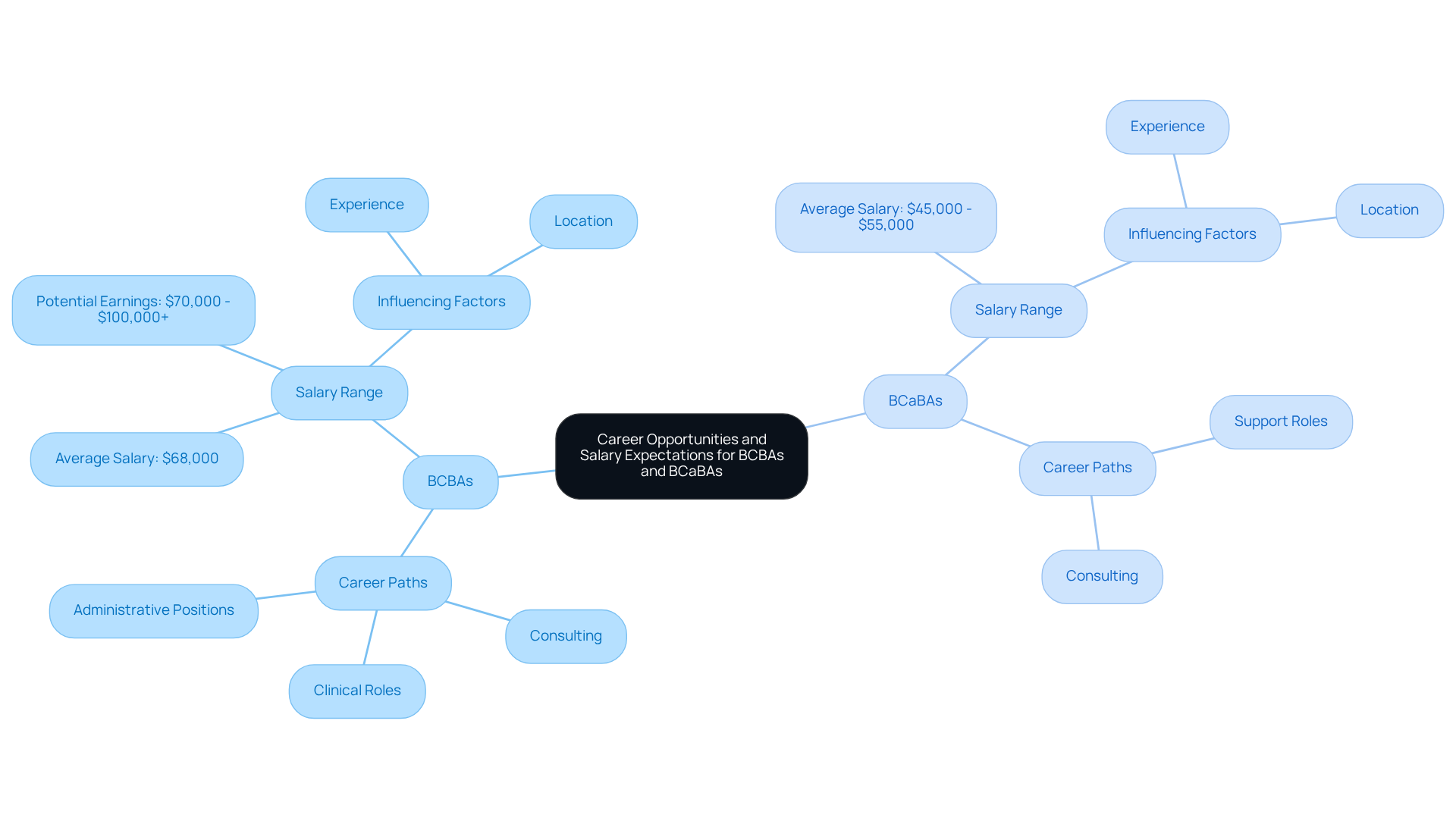
With an average salary of approximately $68,000 in the United States, many BCBAs earn between $70,000 and over $100,000 annually. Factors such as experience, location, and specific role demands influence these earnings. Moreover, many positions offer flexible working conditions, allowing behavior analysts to balance their professional and personal lives effectively.
In contrast, Board Certified Assistant Behavior Analysts (BCaBAs) typically earn lower salaries, averaging between $45,000 and $55,000 annually. This pay gap highlights the varying degrees of qualifications and responsibilities associated with each position, especially in the discussion of ABA vs BCBA, as assistant behavior analysts work under the guidance of BCBAs. For instance, while behavior analysts in metropolitan areas may command higher salaries, those in rural regions often earn less due to differences in demand and cost of living.
The evolving landscape of ABA therapy presents promising career opportunities, particularly in the context of ABA vs BCBA, for both BCBAs and BCaBAs. As professionals gain experience and pursue further certifications, the potential for salary growth increases. Are you ready to tap into this talent pool? Consider utilizing [Hire ABA](https://hireaba.today) for your recruitment needs. With our platform, you can who are prepared to meet the challenges of this growing field.
The demand for Board Certified Behavior Analysts (BCBAs) is skyrocketing, with job growth projected to surge due to the increasing recognition of Applied Behavior Analysis (ABA) in addressing autism and other behavioral challenges. This trend underscores the critical need for qualified professionals in the field, making it essential for organizations to connect with top talent.
Utilizing platforms like Hire ABA can significantly streamline your recruitment process. By leveraging this resource, you can tap into a pool of skilled behavior analysts who are ready to make a difference in healthcare and education. Imagine having access to candidates who not only meet rigorous educational and certification requirements but also bring a wealth of practical experience to your team.
Are you facing challenges in finding the right professionals for your organization? With the evolving landscape of ABA, the importance of hiring skilled BCBAs cannot be overstated. The right talent can enhance client outcomes and drive your organization’s success.
As you consider your hiring strategies, remember that embracing the opportunities within this expanding sector not only boosts your career prospects but also contributes to meaningful improvements in client care. Don’t miss out on the chance to connect with qualified candidates through Hire ABA. Take action today and ensure your organization is equipped with the expertise needed to thrive in this vital field.
What is Applied Behavior Analysis (ABA)?
Applied Behavior Analysis (ABA) is a scientific field focused on understanding and modifying behavior through systematic interventions based on learning principles. It aims to enhance socially significant behaviors, particularly in individuals with developmental disorders like autism.
What is a Board Certified Behavior Analyst (BCBA)?
A Board Certified Behavior Analyst (BCBA) is a professional who has fulfilled specific educational and certification requirements to practice ABA. BCBAs are responsible for designing, implementing, and overseeing ABA programs, ensuring that interventions are effective and ethical.
How has the demand for BCBAs changed over the years?
The demand for board-certified behavior analysts has significantly increased, with job postings rising from 7,091 in 2017 to 16,109 in 2018. Additionally, the total number of job postings for ABA certifications grew from 28,967 in 2010 to approximately 65,366 in 2023.
What factors contribute to the growing demand for ABA and BCBAs?
The rising diagnoses of autism and legal mandates for ABA services are key factors contributing to the increased demand for behavior analysts and the recognition of ABA's effectiveness.
What benefits do behavior analysts enjoy in their careers?
Behavior analysts typically enjoy competitive salaries and benefits, and their expertise is essential in various sectors, including education and healthcare.
Are there regional disparities in the demand for BCBAs?
Yes, there are regional disparities in the demand for qualified BCBAs, with certain areas experiencing a higher need for these professionals.
How can organizations improve their recruitment of behavior analysts?
Organizations can streamline their recruitment process by utilizing platforms like Hire ABA, which helps connect them with top talent in the field of behavior analysis.
Our expert recruitment strategies and AI-driven sourcing ensure that you receive top-notch candidates quickly, without compromising on quality. Whether you’re looking for BCBAs, Clinical Directors, or RBTs, we’ve got you covered.


