Introduction
The landscape for Board Certified Behavior Analysts (BCBAs) is evolving rapidly, particularly in Georgia, where the demand for qualified professionals is surging. Did you know that the need for BCBAs has increased by over 30% in recent years? This statistic highlights the urgency for skilled analysts in the field.
This comprehensive guide outlines the essential steps and requirements for achieving BCBA certification. Aspiring analysts will gain valuable insights into educational pathways, supervised fieldwork, and exam preparation. With various routes to certification and ever-changing guidelines, navigating this complex process can be daunting.
What strategies can you employ to secure a successful career in behavior analysis? Consider how Hire ABA can assist you in overcoming hiring challenges. By leveraging our platform, you can connect with qualified candidates who meet your specific needs.
As you explore your options, remember that the right support can make all the difference in your journey toward becoming a BCBA. Take action today and discover how Hire ABA can streamline your recruitment process.
Understand BCBA Certification Requirements in Georgia
Are you aware that the demand for with is on the rise? To meet this growing need, candidates must fulfill several essential requirements to achieve BCBA certification:
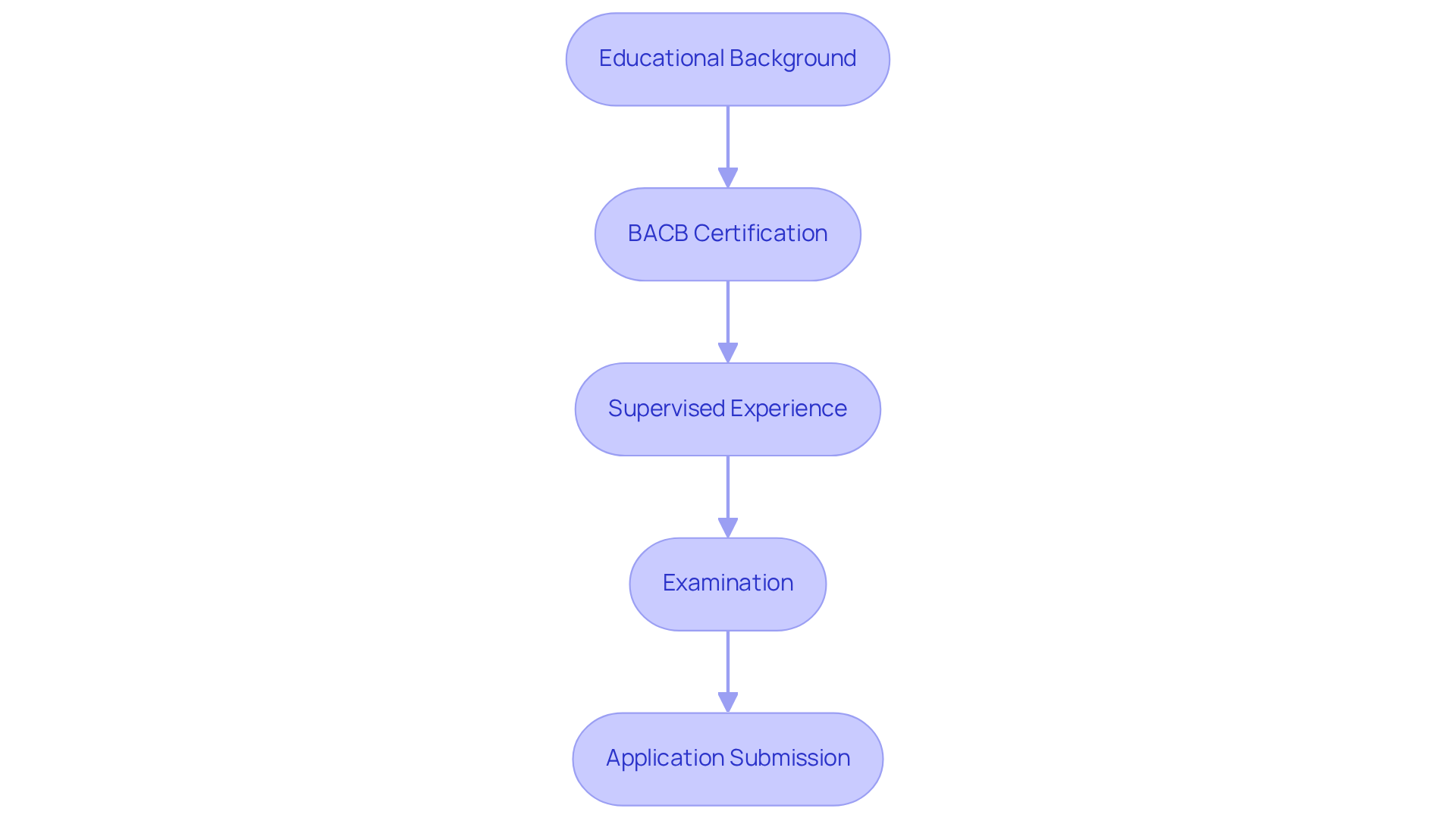
- Educational Background: Candidates must hold a master's degree or higher in behavior analysis, psychology, or a related field from an accredited institution.
- BACB Certification: Certification from the (BACB) is mandatory for all candidates.
- Supervised Experience: A minimum of 2,000 hours of is necessary, completed under the guidance of a certified behavior analyst.
- Examination: Candidates must successfully pass the , which evaluates their knowledge and competencies in behavior analysis.
- Application Submission: After fulfilling all prerequisites, applicants must submit their of the state by the specified deadlines.
As of 2025, Georgia has seen a significant number of professionals holding , reflecting the increasing in the state. The emphasizes that successful individuals typically demonstrate a strong dedication to the field and effectively meet all specified criteria.
Are you navigating the challenges of hiring qualified BCBAs? Hire ABA is here to help. We provide that connect your experience and career objectives with top job prospects in . By utilizing advanced job fit scoring, we ensure you are matched with roles that align with your skills, preferences, and desired locations.
Staying informed about the Behavior Analyst Board's guidelines is crucial for potential candidates to ensure adherence to any modifications in the accreditation process. Let Hire ABA guide you on your journey to success in the ABA field.
Explore Educational Pathways to BCBA Certification
The demand for Board Certified Behavior Analysts (BCBAs) is on the rise, with projections indicating significant growth in the coming years. Candidates can pursue through several educational pathways that cater to diverse needs and backgrounds.
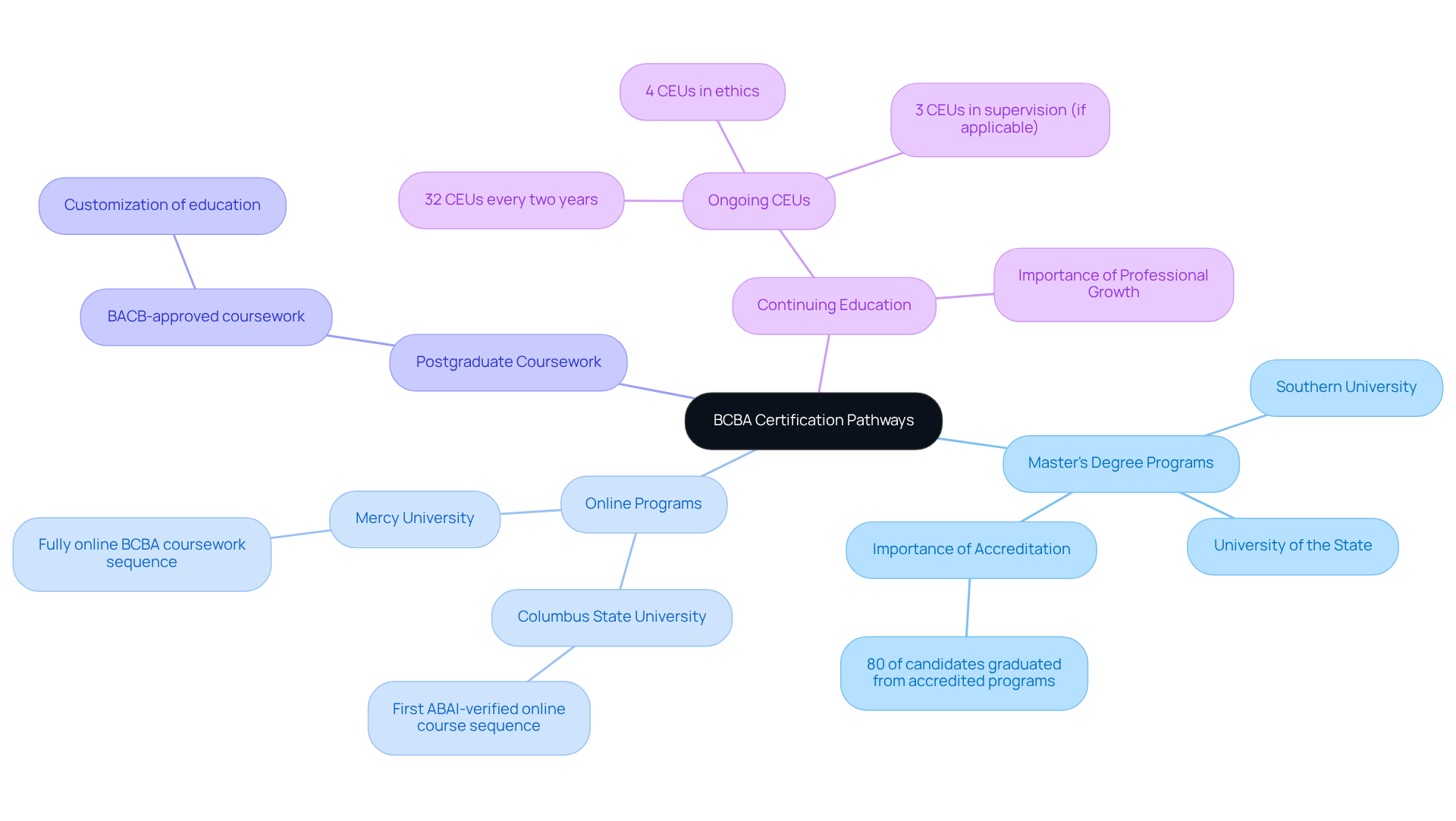
- : Enroll in a master's program in applied behavior analysis or a related field that is BACB-accredited. Notable options for pursuing include Southern University and the University of the State, both offering robust curricula designed to meet certification standards. In fact, approximately 80% of BCBA candidates in 2025 graduated from , underscoring the importance of selecting accredited pathways.
- Online Programs: Consider , such as the one at Columbus State University, recognized as the first ABAI-verified online course sequence in Georgia. These programs offer flexibility and accessibility, catering to the needs of working professionals while upholding high educational standards. With the rising demand for BCBAs expected to expand considerably by 2025, pursuing through these programs is particularly relevant.
- : For individuals who already hold a master's degree, completing additional BACB-approved coursework can help fulfill qualification requirements. This pathway allows candidates to customize their education to align effectively with BACB standards.
- Continuing Education: Engage in ongoing to stay updated on best practices and meet the necessary CEU requirements post-certification. This commitment to professional growth is crucial for maintaining qualifications and enhancing service quality in the field of behavior analysis. As emphasized by the Behavior Analyst Certification Board, ensuring that education providers uphold rigorous standards is vital for maintaining accreditation.
Complete Supervised Fieldwork and Prepare for the Exam
To successfully complete the for in Georgia, follow these essential steps:
- Find a : Your supervisor must be a who meets the BACB's supervision requirements. This is vital for ensuring that the supervision hours you receive are valid and contribute effectively to your training.
- Accumulate Hours: Complete a . Of these hours, at least 5% must involve direct supervision, ensuring that you receive adequate guidance and feedback throughout your training. Additionally, at least 60% of your total hours must be in unrestricted activities, such as plan implementation or ethical discussions, to comply with .
- Document Your Experience: Maintain meticulous records of your fieldwork hours and the specific activities performed. This documentation is crucial for your application and must adhere to , including the retention of records for seven years to prepare for potential audits. According to the Behavior Analyst Certification Board, 'You must , as audits can happen randomly during the evaluation process.'
- Prepare for the Exam: Utilize a variety of study materials, including the Handbook and practice exams, to enhance your exam readiness. Engaging in study groups or online forums can also provide valuable support and resources, helping you to navigate the effectively. Additionally, ensure that you complete the (M-FVF) to verify compliance with hour thresholds and supervision intensity.
By adhering to these steps, you can guarantee that your supervised fieldwork experience is both compliant and advantageous, establishing a solid groundwork for your journey toward in Georgia. With the by 2026, completing your certification in a timely manner is more important than ever.

Engage in Professional Development and Networking Opportunities
To enhance your career as a , consider these impactful strategies:
- Attend Conferences: , like the Association for Behavior Analysis (GABA) annual event, allows you to gain insights from industry experts and connect with peers. These events not only provide valuable knowledge but also foster connections that can lead to future opportunities.
- Join : Becoming a member of organizations such as the Association for Behavior Analysis International (ABAI) opens doors to a wealth of resources and . The significant growth in membership reflects the increasing demand for s and the value of engaging with a professional community.
- Pursue : Regularly completing (CEUs) through workshops, online courses, and webinars is essential for maintaining your certification and staying updated on the latest practices in ABA therapy. Are you keeping pace with the evolving landscape of your field?
- Network with Other Professionals: Actively engaging with fellow s through social media groups, local meetups, and professional events is crucial. Building a robust network not only supports your career growth but also enhances your perspective on the field. Many BCBAs have shared success stories highlighting how meaningful connections can lead to collaborative opportunities and career advancements.
- Participate in local networking events that cater to BCBAs pursuing . These gatherings provide a platform to meet like-minded professionals and share experiences, enriching your professional journey.
- Leverage : Pay attention to quotes and insights shared by speakers at ABA conferences regarding . For instance, Dorie Clark emphasizes that "." Their experiences can inspire you to cultivate genuine relationships that extend beyond transactional interactions, underscoring the importance of trust and collaboration in professional networking.

Conclusion
Did you know that the demand for Board Certified Behavior Analysts (BCBAs) is projected to increase by 25% by 2026? This statistic underscores the growing need for qualified professionals in the field of behavior analysis. Achieving BCBA certification in Georgia is not just a structured journey; it’s a vital step for those eager to make a significant impact in this expanding job market.
To embark on this journey, aspiring BCBAs must focus on key components:
- Obtaining the necessary educational qualifications
- Accumulating supervised fieldwork hours
- Successfully passing the BCBA examination
These steps are essential, but they are just the beginning. Engaging in professional development and networking opportunities can significantly enhance your knowledge and career prospects. Are you staying competitive and informed about the latest industry trends?
As the demand for qualified BCBAs continues to rise, it’s crucial for candidates to take proactive steps in their professional development. Embracing educational opportunities, connecting with peers, and staying updated on best practices will not only fulfill certification requirements but also pave the way for a rewarding career in behavior analysis. Taking action now can set you on the path to future success in this vital field. Don’t wait-start your journey today!
Frequently Asked Questions
What is the demand for Board Certified Behavior Analysts (BCBAs) in Georgia?
The demand for BCBAs with certification in Georgia is on the rise, reflecting a growing need for qualified professionals in the field.
What educational background is required for BCBA certification in Georgia?
Candidates must hold a master's degree or higher in behavior analysis, psychology, or a related field from an accredited institution.
Is BACB certification necessary for BCBA candidates?
Yes, certification from the Behavior Analyst Certification Board (BACB) is mandatory for all candidates seeking BCBA certification.
How much supervised experience is required for BCBA certification?
Candidates must complete a minimum of 2,000 hours of supervised fieldwork under the guidance of a certified behavior analyst.
What examination must candidates pass to obtain BCBA certification?
Candidates must successfully pass the BCBA examination, which assesses their knowledge and competencies in behavior analysis.
What is the process for submitting an application for BCBA certification?
After fulfilling all prerequisites, applicants must submit their application to the Behavior Analyst Licensing Board of the state by the specified deadlines.
How many professionals currently hold BCBA certification in Georgia?
As of 2025, Georgia has seen a significant number of professionals holding BCBA certification, indicating the increasing demand for qualified BCBAs in the state.
What qualities do successful BCBA candidates typically demonstrate?
Successful individuals typically show a strong dedication to the field and effectively meet all specified criteria for certification.
How can Hire ABA assist candidates in the ABA field?
Hire ABA provides tailored resume evaluations and advanced job fit scoring to connect candidates' experience and career objectives with top job prospects in ABA therapy.
Why is it important for potential BCBA candidates to stay informed about the Behavior Analyst Board's guidelines?
Staying informed is crucial to ensure adherence to any modifications in the accreditation process and to successfully navigate the requirements for BCBA certification.
List of Sources
- Understand BCBA Certification Requirements in Georgia
- The Rate of Job Growth for BCBAs | Double Cara ABA Blog (https://doublecareaba.com/post/the-rate-of-job-growth-for-bcbas)
- BCBA Certificant Demographics and Growth Trends | Inclusive (https://inclusiveaba.com/blog/bcba-certificant-demographics)
- BACB CERTIFICANT DATA (https://bacb.com/bacb-certificant-data)
- supportivecareaba.com (https://supportivecareaba.com/statistics/aba-therapist-demographics)
- Explore Educational Pathways to BCBA Certification
- BACB CERTIFICANT DATA (https://bacb.com/bacb-certificant-data)
- How to Become BCBA Certified: A Step-by-Step Guide – Rori Blog (https://rori.care/post/how-to-become-bcba-certified-a-step-by-step-guide)
- BCBA Programs & Schools | Intellistars - ABA Therapy (https://intellistarsaba.com/blog/bcba-programs-schools)
- 15 Best BCBA Degree Programs & Schools Certification (In-Person & Online) for 2025 | Research.com (https://research.com/degrees/best-bcba-degree-programs-and-schools-certification-in-person-and-online)
- Complete Supervised Fieldwork and Prepare for the Exam
- Step-by-Step BCBA Fieldwork Documentation Guide (https://praxisnotes.com/resources/bcba-fieldwork-documentation-guide)
- A Survey of the State of the Field of Applied Behavior Analysis in Vermont - PMC (https://pmc.ncbi.nlm.nih.gov/articles/PMC11219634)
- BCBA Exam Pass Rate Statistics & Insights - Precious Care (https://preciouscareaba.com/blog/bcba-pass-rate)
- BACB CERTIFICANT DATA (https://bacb.com/bacb-certificant-data)
- Engage in Professional Development and Networking Opportunities
- Inspirational ABA and Autism Quotes - Mrs. Moe's Modifications (https://mrsmoesmodifications.com/inspirational-aba-and-autism-quotes)
- 40 Quotes That Will Change How You Network (https://deliberatedirections.com/networking-quotes)
- 50 Networking Quotes To Inspire You To Connect With People (https://leaddelta.com/networking-quotes)
- 81 ABA Therapy Statistics You Need to Know - apricott ABA (https://apricott.com/resources/aba-therapy-statistics)