


Thank you! Your submission has been received!
Oops! Something went wrong while submitting the form.
November 25, 2025

Did you know that the demand for Board Certified Behavior Analysts (BCBAs) is skyrocketing, with job opportunities projected to grow by over 20% in the coming years? Achieving BCaBA certification not only opens the door to a rewarding career in behavior analysis but also positions you at the forefront of this rapidly expanding field.
However, the path to obtaining this credential can seem daunting. This comprehensive guide demystifies the essential steps involved, from understanding the rigorous requirements to navigating the application process and maintaining your certification.
What challenges might aspiring behavior analysts face on this journey? How can they effectively overcome these obstacles to ensure their success? By addressing these questions, we aim to equip you with the knowledge and tools necessary to thrive in this dynamic profession.
To achieve BCaBA certification, candidates must fulfill several essential requirements:
Educational Background: A minimum of a bachelor's degree from an accredited institution is required. While the degree can be in any field, it is essential that applicants complete coursework in behavior analysis.
Coursework: Candidates must complete at least 225 hours of behavior-analytic coursework. This coursework should encompass key topics relevant to behavior analysis, including ethics, assessment, and intervention strategies.
Supervised Experience: A minimum of 1,300 hours of supervised fieldwork is necessary. This experience must be carried out under the supervision of a qualified BCBA or assistant behavior analyst, ensuring that participants acquire practical skills in real-world environments. The significance of quality control over supervision experiences cannot be overstated, as it guarantees individuals are adequately prepared for the profession of behavior analysis.
Assessment: After fulfilling the educational and supervised experience criteria, individuals must pass the Behavior Analyst Certification Board (BACB) certification test. This exam assesses knowledge across various domains of behavior analysis. Notably, the initial pass rate for behavior analysis assistant applicants was 61% in 2021, highlighting the challenges individuals may face.
Application Process: Candidates are required to submit an application through their BACB account, which includes documentation of their education and supervised experience.
Understanding these prerequisites is crucial for individuals preparing for BCaBA certification online and their path toward behavior analysis assistant credentials. With the demand for BCBA/BCBA-D credential holders skyrocketing by nearly 2000% from 2010 to 2020, meeting these standards is essential for success in the field. As Ellie Kazemi pointed out, a training program’s first-time pass rate serves as a significant outcome measure, indicating the program's effectiveness in preparing candidates for qualification.
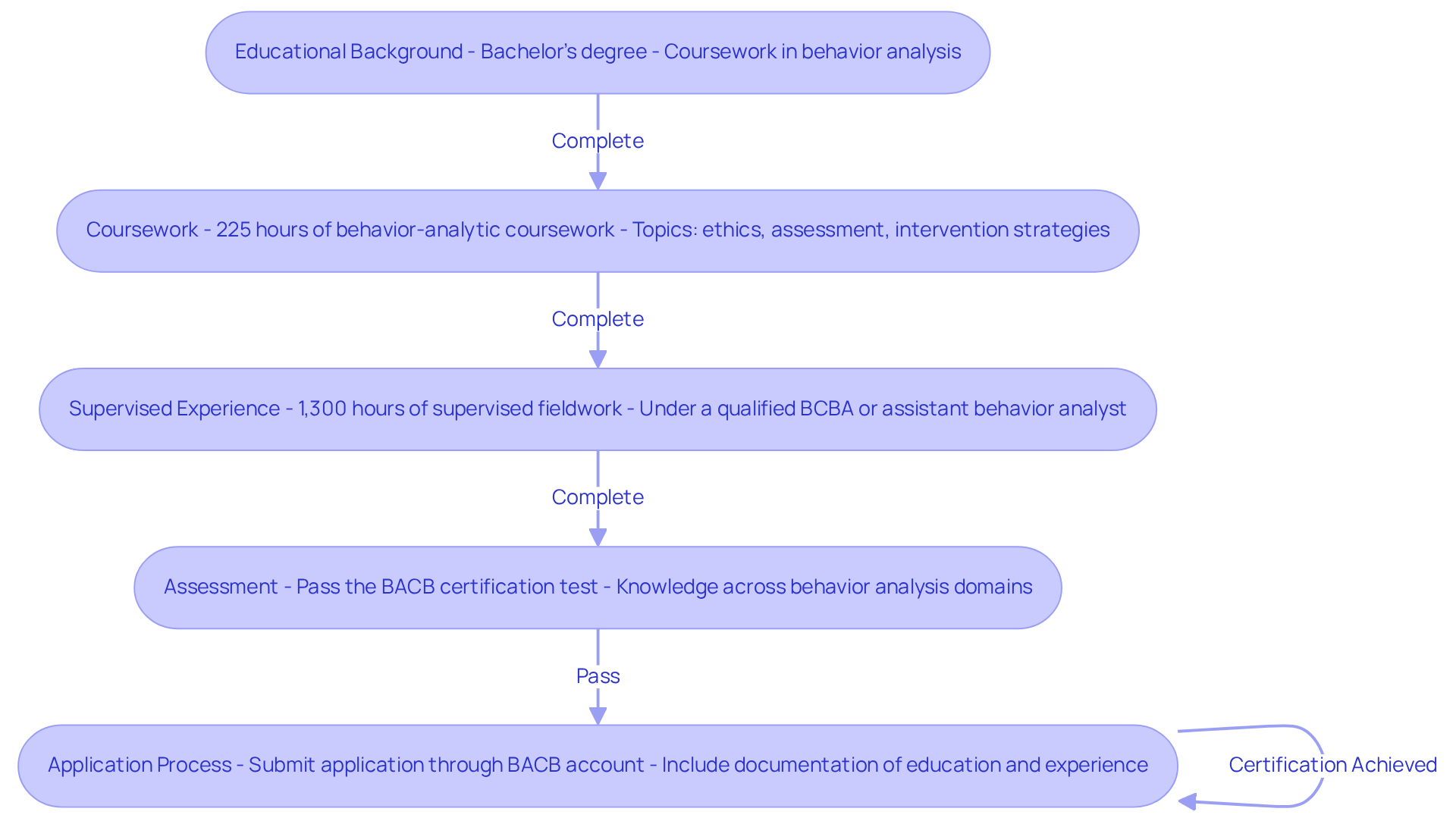
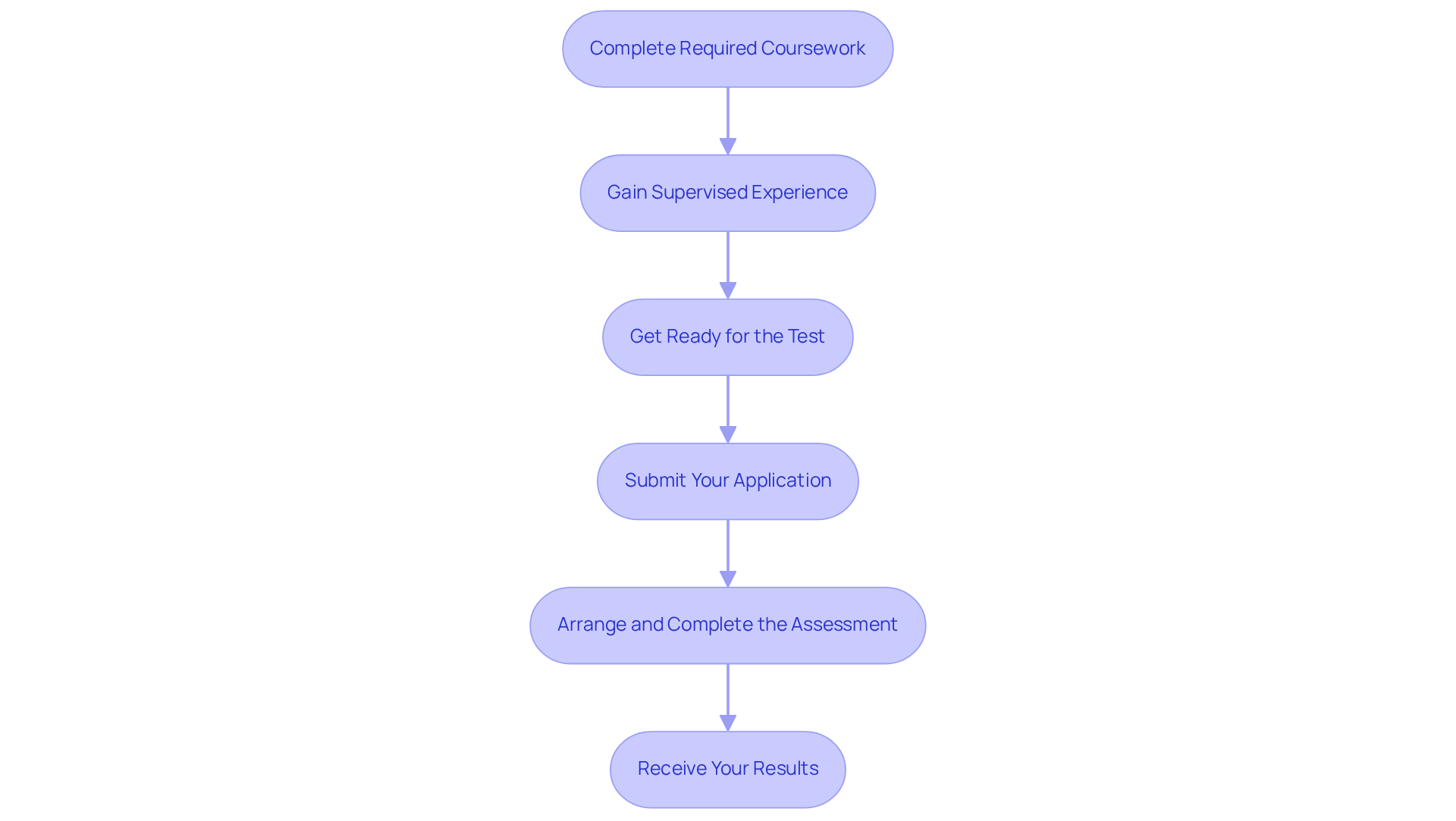
To obtain your BCaBA certification, follow these essential steps:
Complete Required Coursework: Enroll in an accredited program that offers the necessary behavior-analytic coursework. Ensure that the program meets BACB standards and thoroughly addresses all necessary subjects. This foundational knowledge is crucial for success on the test. Programs with high pass rates often indicate effective curricula and support structures that facilitate student learning.
Gain Supervised Experience: Seek opportunities to work under the guidance of a qualified BCBA or Board Certified Assistant Behavior Analyst. Meticulously document your hours and experiences, as this detailed record will be essential for your application. Indicate your application pathway: Pathway 1 for those with an APBA-accredited or ABAI-accredited degree, or Pathway 2 for those who have completed Verified Course Sequences (VCS) coursework and obtained a graduate degree.
Get Ready for the Test: Utilize a variety of study resources, including study guides, practice tests, and review courses. Participating in mock assessments and workshops can significantly enhance your comprehension and preparedness for the BCaBA certification. High pass rates suggest that a program provides effective instruction, resources, and support to help students succeed.
Submit Your Application: After completing your coursework and supervised experience, log into your BACB account to submit your certification application. Ensure that all documentation is accurate and complete to prevent any delays in processing. Be sure to specify your pathway in the application.
Arrange and Complete the Assessment: Once your application is approved, arrange your assessment through Pearson VUE. Acquaint yourself with the assessment structure and content outline provided by the BACB to understand what to anticipate on test day.
Receive Your Results: After completing the test, you will receive your results. If you pass, congratulations! You will receive your BCaBA credential. If not, review your performance to identify areas for improvement and consider additional study before retaking the exam.
By adhering to these steps and acknowledging the significance of pass rates and program comparisons, you can navigate the credentialing process with assurance and clarity, positioning yourself for success in the field of behavior analysis.
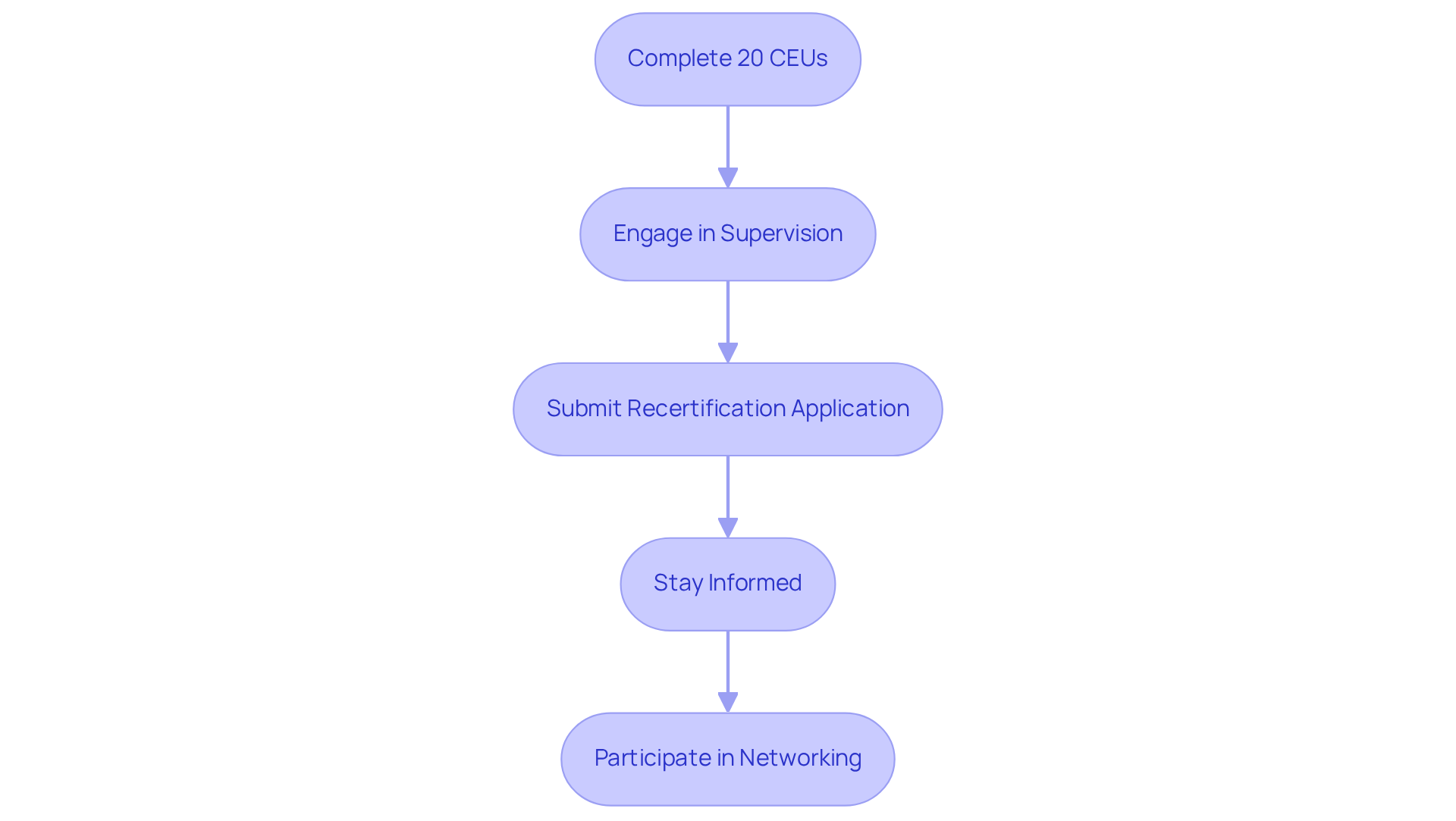
To maintain your BCaBA certification, it’s essential to adhere to the following requirements:
Continuing Education Units (CEUs): Complete 20 CEUs every two years. This includes at least 4 hours in ethics and 3 hours in supervision. Are you keeping up with these essential learning opportunities?
Supervision: Engage in ongoing supervision or mentorship with a qualified BCBA. This relationship is crucial for staying updated on best practices and ethical standards in the field. How often do you seek guidance from experienced professionals?
Recertification Application: Submit your recertification application through your BACB account before your status expires. Ensure that all CEUs are documented and meet BACB standards. Have you checked your application status lately?
Stay Informed: Regularly check the BACB website for updates on credentialing requirements and changes in the field of behavior analysis. Staying informed is key to maintaining compliance and enhancing your professional development. When was the last time you visited the BACB site?
Networking and Professional Development: Participate in workshops, conferences, and professional organizations related to behavior analysis. Networking with other professionals can provide valuable insights and opportunities for growth. Are you making the most of these networking opportunities?
By actively engaging in these maintenance activities, you can ensure that your bcaba certification online remains valid and that you continue to provide high-quality services in the field of behavior analysis. Take action now to secure your professional future!
The demand for Board Certified Behavior Analysts (BCBAs) is skyrocketing, making the pursuit of BCaBA certification more relevant than ever. Achieving this certification online is a structured process that requires careful adherence to specific educational and professional standards. Not only does this certification open doors to a rewarding career in behavior analysis, but it also highlights the importance of rigorous training and practical experience in ensuring the efficacy of future practitioners in the field.
The journey to obtaining BCaBA certification involves several key steps:
Each of these components plays a vital role in equipping candidates with the knowledge and skills necessary to excel in behavior analysis. Have you considered how understanding pass rates and program efficacy can influence your educational choices? This knowledge is essential for prospective candidates to make informed decisions about their education and career paths.
Ultimately, the commitment to pursuing and maintaining BCaBA certification transcends mere requirement fulfillment; it’s about contributing to a field that profoundly impacts individuals and communities. By taking proactive steps - engaging in continuing education, seeking mentorship, and staying informed about industry changes - aspiring behavior analysts can ensure they are well-prepared to provide high-quality services. Embrace this opportunity to enhance your professional journey and make a meaningful difference in the lives of those you serve.
What is required for educational background to achieve BCaBA certification?
Candidates must have a minimum of a bachelor's degree from an accredited institution, and they must complete coursework in behavior analysis.
How many hours of behavior-analytic coursework are needed for BCaBA certification?
Candidates must complete at least 225 hours of behavior-analytic coursework covering key topics such as ethics, assessment, and intervention strategies.
What is the supervised experience requirement for BCaBA certification?
A minimum of 1,300 hours of supervised fieldwork is necessary, which must be conducted under the supervision of a qualified BCBA or assistant behavior analyst.
Why is quality control important in supervised experiences for BCaBA certification?
Quality control ensures that individuals are adequately prepared for the profession of behavior analysis by providing effective supervision during their fieldwork.
What assessment must candidates pass after completing the educational and supervised experience requirements?
Candidates must pass the Behavior Analyst Certification Board (BACB) certification test, which assesses knowledge across various domains of behavior analysis.
What was the initial pass rate for behavior analysis assistant applicants in 2021?
The initial pass rate for behavior analysis assistant applicants was 61% in 2021.
How do candidates apply for BCaBA certification?
Candidates must submit an application through their BACB account, which includes documentation of their education and supervised experience.
Why is understanding the BCaBA certification prerequisites important?
Understanding these prerequisites is crucial for individuals preparing for BCaBA certification and pursuing behavior analysis assistant credentials, especially given the significant demand for BCBA/BCBA-D credential holders.
Our expert recruitment strategies and AI-driven sourcing ensure that you receive top-notch candidates quickly, without compromising on quality. Whether you’re looking for BCBAs, Clinical Directors, or RBTs, we’ve got you covered.


