


Thank you! Your submission has been received!
Oops! Something went wrong while submitting the form.
February 27, 2026

The demand for Board Certified Behavior Analysts (BCBAs) is surging, with the national average salary around $90,000. However, Michigan's average salary lags behind at approximately $82,833. This disparity highlights significant regional differences influenced by factors like cost of living and the demand for services.
As the need for skilled behavior analysts continues to grow, particularly in educational and healthcare settings, what does this mean for professionals navigating their careers in this vital field? Understanding these salary trends is crucial for BCBAs looking to make informed career decisions.
With the right recruitment strategies, organizations can attract top talent in this competitive landscape. Hire ABA offers a reliable platform to connect employers with qualified BCBAs, ensuring that your hiring challenges are effectively addressed. Don't let salary disparities hinder your ability to find the right professionals for your team.
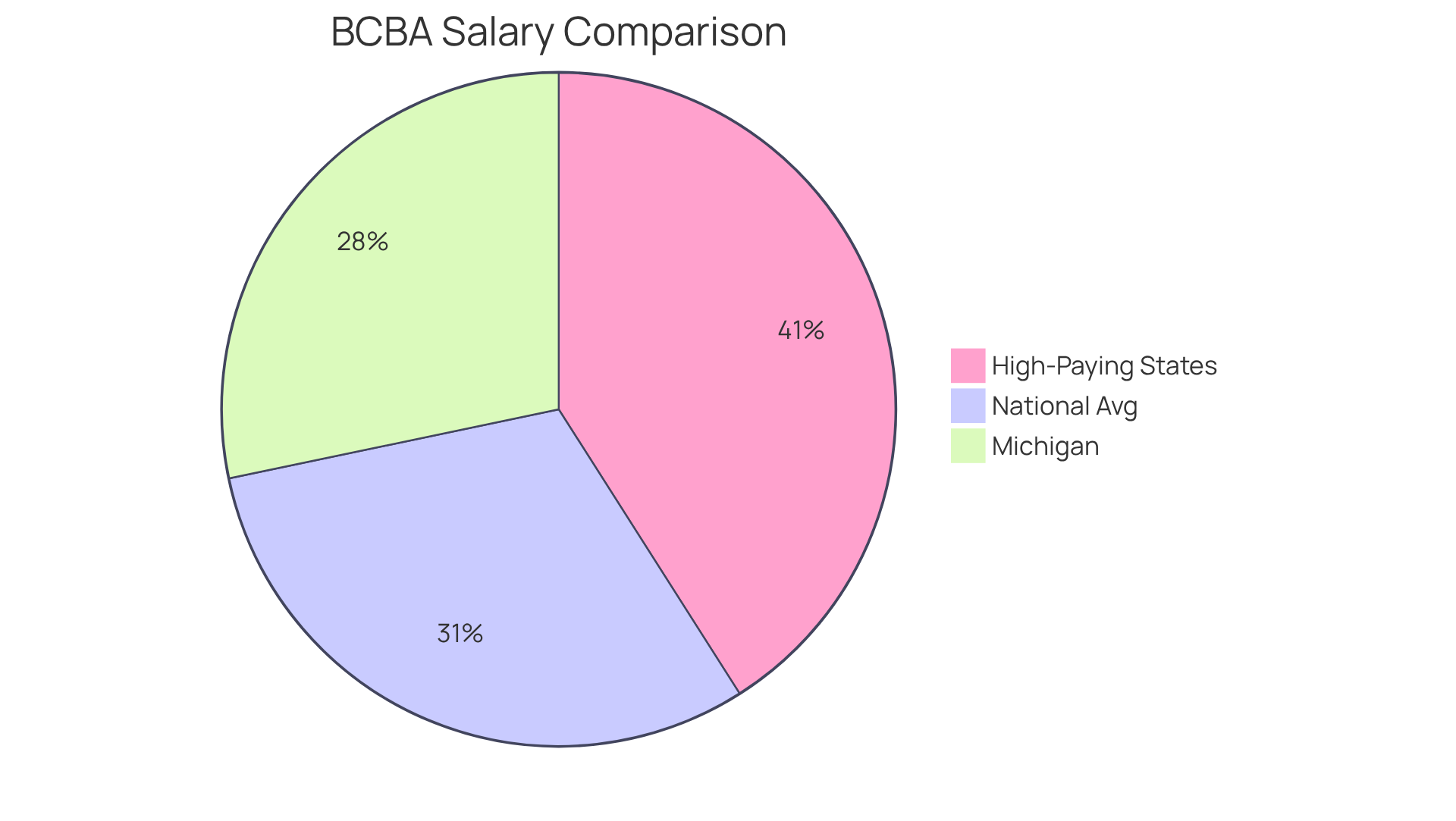
The compensation patterns for [Board Certified Behavior Analysts](https://hireaba.today) (BCBAs) reveal significant disparities between state and national averages. As of early 2026, the national average salary for board-certified behavior analysts stands at approximately $90,000 per year. In contrast, the [BCBA salary in Michigan](https://thebehavioracademy.com/blog/bcba-salary-by-state) is reported to be around $82,833. This difference underscores the regional variations in demand for behavior analysts, shaped by factors such as the cost of living, the availability of ABA services, and the dynamics of the job market. Understanding these seeking employment and for employers looking to attract top talent.
In Michigan, the typical income reflects a blend of factors, including a relatively lower cost of living compared to states with higher BCBA salaries. For instance, states like California and Massachusetts report average compensations exceeding $120,000, particularly for highly skilled professionals in leadership or consulting roles. Furthermore, the expansion of insurance coverage for ABA therapy has made these services more accessible, driving up demand for Board Certified Behavior Analysts in states with comprehensive mandates.
Case studies illustrate that behavior analysts in states with robust Medicaid funding and high autism rates experience greater job stability and increased compensation. Take Florida, for example, known for its vibrant ABA community and ongoing need for BCBAs, which offers attractive compensation that often surpasses the national benchmark. Conversely, the BCBA salary in Michigan may not fully reflect the growing need for behavior analysts in the market.
Looking ahead, the anticipated average earnings for behavior analysts in 2030 are projected to be $88,573, indicating a 12% increase. Additionally, the significant rise in job listings for BCBA/BCBA-D roles from 2023 to 2024 signals an increasing demand for these positions, which may influence compensation expectations. As the need for behavior analysts continues to grow-especially in educational settings and specific fields like substance misuse treatment-compensation expectations are likely to evolve. It’s crucial for professionals to stay informed about market trends.
In Michigan, the demand for Board Certified Behavior Analysts (BCBAs) is on the rise, with an anticipated growth of 25% by 2026. This statistic underscores the urgent need for skilled professionals in the field, making it crucial for employers to attract top talent.
The average BCBA salary in Michigan is approximately $80,701 per year, reflecting a competitive landscape influenced by various factors. Entry-level roles typically start around $63,843, while seasoned BCBAs can earn over $98,753 annually, reflecting the BCBA salary in Michigan, with leading earners reaching as high as $118,140. Notably, salary variations are significantly influenced by the type of employer; behavior analysts in healthcare settings often earn higher wages compared to those in private practices or educational institutions.
As the demand for behavior analysts continues to grow, so too does the potential for increased compensation. This upward trend is essential for attracting and retaining talent in a field that is becoming increasingly vital to mental wellness and behavioral health services.
Are you facing challenges in hiring qualified BCBAs? Consider how Hire ABA can streamline your recruitment process and connect you with the best candidates in the industry. With the right support, you can and well-equipped to meet the growing needs of your clients.

As of 2026, the national typical income for Board Certified Behavior Analysts (BCBAs) stands at approximately $102,690 annually. However, this figure conceals significant disparities influenced by geographic location, experience, and employer type. For example, states like California and New York, where demand for Applied Behavior Analysis (ABA) services is robust, report average earnings that can exceed $120,000. In contrast, behavior analysts in rural areas may earn between $50,000 and $65,000, underscoring the critical role that location plays in earning potential.
The demand for behavior analysts is surging, fueled by a rise in autism diagnoses and the growing acceptance of ABA services across various sectors. This trend is particularly evident in the employment sector, where BCBAs in healthcare environments often report some of the highest compensation, ranging from $70,000 to $110,000. Meanwhile, those working in nonprofit organizations typically earn between $50,000 and $75,000. Furthermore, behavior analysts with specialized skills or advanced degrees can command higher salaries; individuals holding a doctorate earn between $75,000 and $90,000, while those with a master's degree earn between $55,000 and $70,000.
Understanding these compensation dynamics, particularly the , is crucial for BCBAs and emerging professionals as they navigate their career paths. The competitive nature of the job market highlights the importance of strategic career planning, especially in high-demand states, to maximize earning potential and job satisfaction. Are you facing challenges in hiring qualified behavior analysts? Consider how Hire ABA can streamline your recruitment process and connect you with top talent in the field.

BCBA earnings vary significantly between state and national averages, driven by several key factors. Did you know that the cost of living plays a crucial role in determining compensation? Areas with higher living expenses typically offer better pay to offset these costs. For example, states like New York and California, notorious for their steep living costs, report average BCBA earnings of approximately $97,000 and $85,000, respectively. In New York, the compensation range can stretch from $60,000 to $150,000, starkly contrasting with the [BCBA salary in Michigan, which reflects lower averages](https://aprilaba.com/resources/bcba-and-aba-salaries-by-state).
Moreover, the demand for ABA services is another critical factor. Regions with a higher prevalence of autism diagnoses and robust funding for mental health services tend to provide better compensation to attract qualified professionals. This creates a competitive landscape where skilled BCBAs are in high demand.
Educational background and years of experience also significantly impact earning potential. Professionals holding advanced degrees or specialized certifications can see an increase of $10,000 to $20,000 in their annual earnings. A study by Brown & Lee (2020) highlights that as Board Certified Behavior Analysts gain experience, their salaries rise dramatically. Entry-level positions typically start at around $50,000 to $60,000, while seasoned professionals can earn over $100,000.
Additionally, the regulatory environment in each state affects compensation levels. States with stringent licensing requirements often offer higher pay to attract and retain qualified behavior analysts. This dynamic fosters a competitive atmosphere where professionals must navigate compensation negotiations and comprehensive benefits packages, which may include health insurance, retirement plans, and professional development opportunities.
Understanding these factors is essential for those looking to enhance their earning potential and job satisfaction. With the typical around $75,784, it’s crucial to consider how these elements can influence your career trajectory. Are you ready to take the next step in your professional journey? Explore how [Hire ABA](https://hireaba.today) can help you navigate these challenges and secure the best talent in the field.

A striking disparity exists when comparing the [BCBA salary in Michigan](https://globalgurus.org/average-salary-of-bcbas-in-different-states-state-by-state-comparison) to national averages. Did you know that the national average compensation for Board Certified Behavior Analysts stands at approximately $102,690? In contrast, the [typical BCBA salary in Michigan](https://indeed.com/career/board-certified-behavior-analyst/salaries/MI) is around $82,833. This significant difference can be attributed to various factors, such as the state's cost of living, the demand for ABA services, and the availability of funding for mental health initiatives.
The BCBA salary in Michigan falls within a range of $68,411 to $100,296. This suggests a promising potential for growth, especially as the continues to rise, driven by legislative requirements for ABA services in educational and healthcare settings. As the need for behavior analysts expands, it is anticipated that the BCBA salary in Michigan may gradually increase, potentially narrowing the gap with national averages.
For BCBAs considering relocation or new job opportunities, understanding these salary dynamics is crucial for making informed career decisions. Are you facing challenges in hiring qualified behavior analysts? Explore how [Hire ABA](https://hireaba.today) can assist you in navigating these complexities and securing the talent you need.

The exploration of BCBA salary trends in Michigan compared to national averages reveals significant insights into the evolving landscape of this profession. Did you know that the national average salary for Board Certified Behavior Analysts is around $102,690? In contrast, Michigan's average sits at approximately $82,833, highlighting a noteworthy gap shaped by regional demand, cost of living, and resource availability. This disparity underscores the importance of understanding local market dynamics for both job seekers and employers in the field of behavior analysis.
Key arguments throughout the article illustrate that factors such as geographic location, experience, and employer type play pivotal roles in determining compensation levels. The anticipated growth in demand for BCBAs, particularly in states with robust Medicaid funding and high autism rates, suggests that Michigan's salary may gradually increase as the need for these professionals continues to rise. Additionally, the competitive nature of the job market emphasizes the necessity for strategic career planning, especially for those entering the field or considering relocation.
As the landscape of behavioral health services evolves, so too do the opportunities for Board Certified Behavior Analysts. Professionals are encouraged to stay informed about market trends and salary dynamics to better navigate their career paths. For employers, understanding these compensation trends is essential for attracting and retaining top talent in a field that is increasingly vital to mental wellness and behavioral health services. Embracing these insights can lead to more informed decisions, ultimately benefiting both practitioners and the communities they serve.
Are you facing challenges in hiring qualified BCBAs? Consider how Hire ABA can address these issues effectively. By leveraging our platform, you can connect with top talent and ensure your organization remains competitive in this growing field. Don't miss out on the opportunity to enhance your team and improve the quality of care you provide. Act now and explore how Hire ABA can transform your recruitment strategy.
What is the national average salary for Board Certified Behavior Analysts (BCBAs) as of early 2026?
The national average salary for Board Certified Behavior Analysts stands at approximately $90,000 per year.
How does the BCBA salary in Michigan compare to the national average?
The BCBA salary in Michigan is reported to be around $82,833, which is lower than the national average.
What factors contribute to the salary differences for BCBAs between states?
Salary differences are influenced by factors such as the cost of living, the availability of ABA services, and the dynamics of the job market.
What is the projected average salary for BCBAs in 2030?
The projected average earnings for behavior analysts in 2030 are anticipated to be $88,573, indicating a 12% increase.
What is the expected growth rate for BCBA demand in Michigan by 2026?
The demand for BCBAs in Michigan is expected to grow by 25% by 2026.
What is the typical salary range for BCBAs in Michigan?
In Michigan, entry-level BCBAs typically earn around $63,843, while seasoned BCBAs can earn over $98,753 annually, with leading earners reaching as high as $118,140.
How do employer types affect BCBA salaries in Michigan?
Salary variations are influenced by the type of employer, with behavior analysts in healthcare settings often earning higher wages compared to those in private practices or educational institutions.
What is driving the increased demand for BCBAs?
The expansion of insurance coverage for ABA therapy and the growing need for behavior analysts in educational settings and fields like substance misuse treatment are driving the increased demand for BCBAs.
What should professionals do to stay informed about BCBA salary trends?
It is crucial for professionals to stay informed about market trends, especially as the demand for behavior analysts continues to grow and may influence compensation expectations.
Our expert recruitment strategies and AI-driven sourcing ensure that you receive top-notch candidates quickly, without compromising on quality. Whether you’re looking for BCBAs, Clinical Directors, or RBTs, we’ve got you covered.


