


Thank you! Your submission has been received!
Oops! Something went wrong while submitting the form.
November 22, 2025

The landscape of behavior analysis is witnessing an unprecedented surge in demand for qualified professionals. Did you know that the need for Board Certified Behavior Analysts (BCBAs) and Board Certified Assistant Behavior Analysts (BCaBAs) is at an all-time high? As these roles become increasingly vital in healthcare settings, understanding their distinct responsibilities and career trajectories is essential.
What sets BCBAs apart from BCaBAs? This exploration delves into the nuances of these two certifications, illuminating the pathways, responsibilities, and financial implications that shape the future of behavior analysis. By grasping the key differences, you can better navigate professional opportunities and enhance patient outcomes.
Consider this: how are you currently addressing your hiring challenges in this evolving field? With the right insights, you can make informed decisions that benefit both your organization and the individuals you serve. Hire ABA stands ready to assist you in recruiting the best talent in behavior analysis, ensuring that your team is equipped to meet the growing demands of the industry.
The demand for Board Certified Behavior Analysts (BCBAs) has skyrocketed, with a staggering increase of 1,942% from 2010 to 2018. This trend is projected to continue, with a growth rate of 22% over the next decade. Understanding the roles of BCBAs and BCaBAs is crucial for healthcare settings aiming to implement effective Applied Behavior Analysis (ABA) strategies, particularly when considering the differences in bcba vs bcaba.
The Board Certified Analyst credential represents a master's-level qualification, empowering practitioners to operate autonomously and supervise others in the field of ABA. This qualification enables behavior analysts to independently create and execute treatment plans, showcasing their advanced training and expertise. In contrast, the distinction of bcba vs bcaba shows that the BCaBA is a bachelor's-level certification that necessitates oversight by a Board Certified Behavior Analyst to deliver behavior-analytic services. This distinction is vital, as it clearly delineates the scope of practice and the degree of autonomy each role possesses.
The differences in bcba vs bcaba are evident as BCBAs can function independently, while BCaBAs must collaborate under the direction of a BCBA, which inherently limits their capacity for independent practice. As the demand for BCBAs continues to rise, healthcare employers must consider how to effectively recruit these professionals. Are you facing challenges in hiring qualified behavior analysts? Hire ABA can help streamline your recruitment process, ensuring you find the right talent to meet your needs.
As highlighted by the Analyst Certification Board, achieving a passing score of 76% or higher on the exam is essential for obtaining qualifications. This underscores the rigorous preparation required for success in this field. By understanding these roles and leveraging reliable recruitment platforms like Hire ABA, healthcare settings can enhance their ABA strategies and improve patient outcomes.
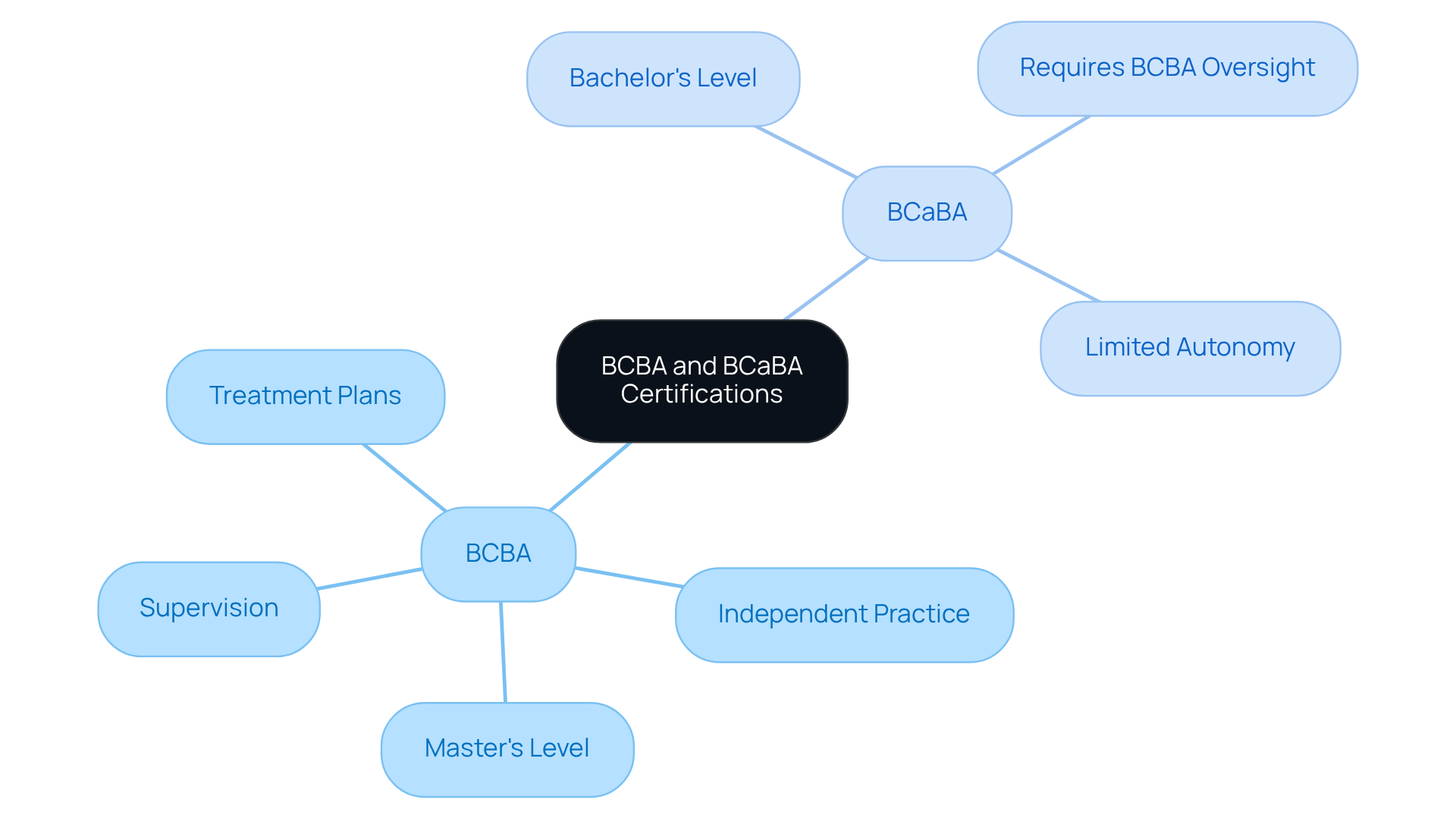
The demand for Board Certified Behavior Analysts (BCBAs) is on the rise, particularly highlighted in discussions about BCBA vs BCaBA, with an average annual salary of approximately $71,627. To become a Board Certified Analyst, candidates must:
There are four distinct pathways to BCBA credentials, accommodating various educational backgrounds and professional experiences.
In contrast, the requirements for the BCBA vs BCaBA credentials indicate that those pursuing the Board Certified Assistant Behavior Analyst (BCaBA) credential need:
The distinction of BCBA vs BCaBA significantly influences the depth of knowledge and expertise each role possesses, impacting their capacity to manage complex cases and lead treatment initiatives.
The comprehensive training for Board Certified Behavior Analysts highlights the differences in responsibilities when considering BCBA vs BCaBA, as the former are equipped for advanced roles while the latter are prepared for supportive positions under their guidance. Furthermore, BCaBAs earn around $50,000 annually, highlighting the financial implications of pursuing each certification.
Choosing the right educational program is crucial. It can significantly impact career readiness and opportunities in the field. Are you facing challenges in hiring qualified behavior analysts? Consider how Hire ABA can streamline your recruitment process and connect you with top talent in the industry.

The demand for behavior analysts is projected to rise by 25% in the next five years. This statistic underscores the critical need for qualified professionals in the field, making it an opportune time to consider how to effectively recruit BCBAs.
BCBAs possess a broader scope of practice, enabling them to:
They oversee the work of BCaBAs and Registered Behavior Technicians (RBTs), ensuring adherence to ethical standards and effective service delivery. In contrast, BCaBAs can assist in performing evaluations and creating treatment strategies, but their actions must be directed by a board-certified behavior analyst. This hierarchical framework is essential for maintaining the integrity and compliance of ABA services, as BCaBAs do not hold the authority to make independent clinical decisions.
Their responsibilities include supporting the implementation of behavior-analytic strategies and collecting data under the supervision of a BCBA. This structured approach not only enhances the quality of care provided to clients but also fosters professional growth within the field.
With many new opportunities emerging, often accompanied by higher salaries, leadership positions, and flexible working arrangements, it’s crucial to understand these distinctions. Approximately 67% of clinical directors are promoted from within, indicating strong internal advancement opportunities for those who excel in their roles.
Are you facing challenges in hiring qualified behavior analysts? Understanding the differences in roles between BCBAs and BCaBAs, highlighted in the bcba vs bcaba discussion, is vital for aspiring behavior analysts and employers alike, as it informs effective team dynamics and client outcomes. Consider how Hire ABA can streamline your recruitment process and connect you with top talent in the field.
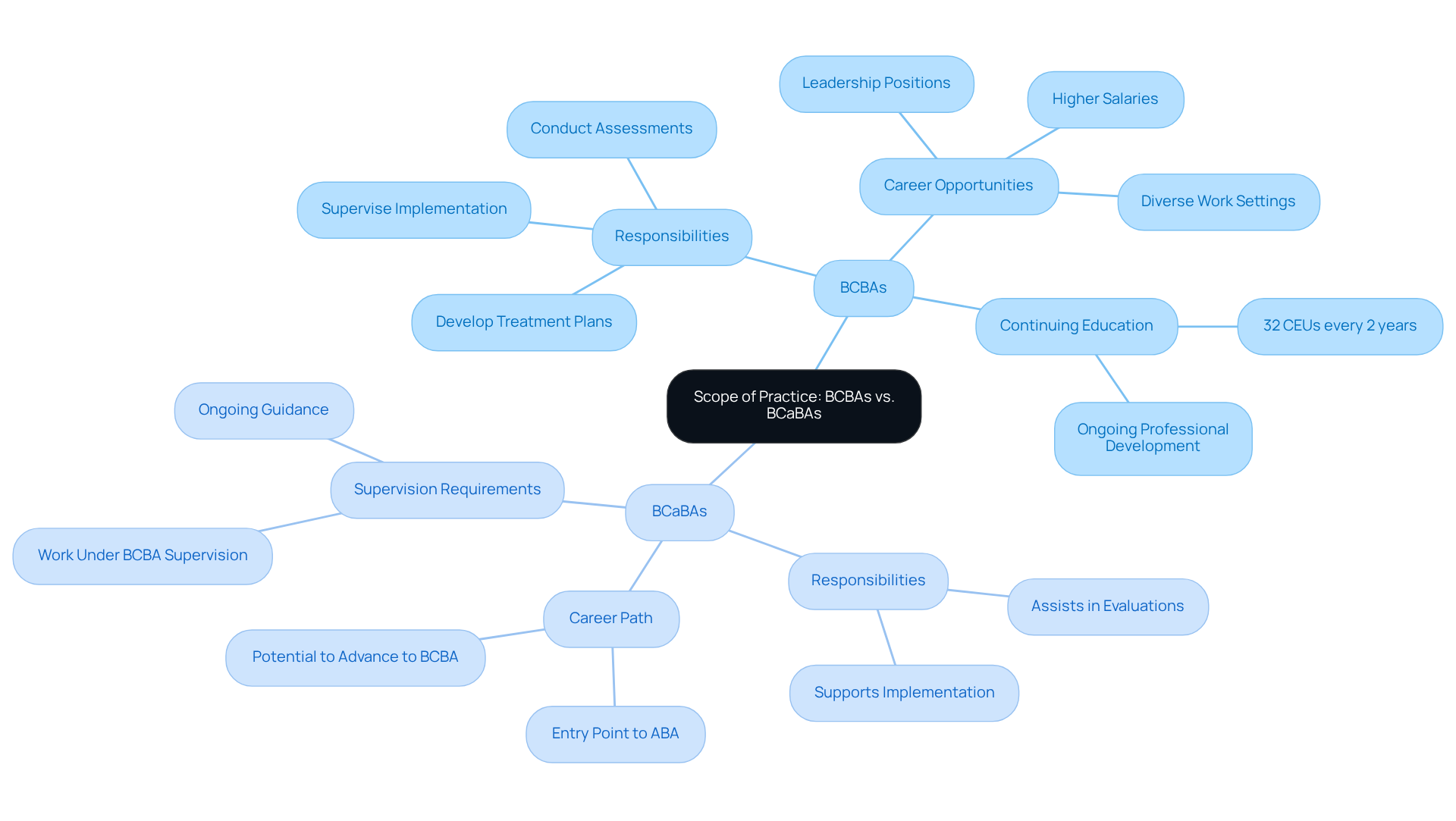
The job market for Board Certified Behavior Analysts (BCBAs) is thriving, highlighting the differences in opportunities when considering BCBA vs BCaBA, with a projected growth rate of 25% by 2026. This surge is driven by the increasing demand for behavior analysts across various settings, including schools, clinics, and private practices.
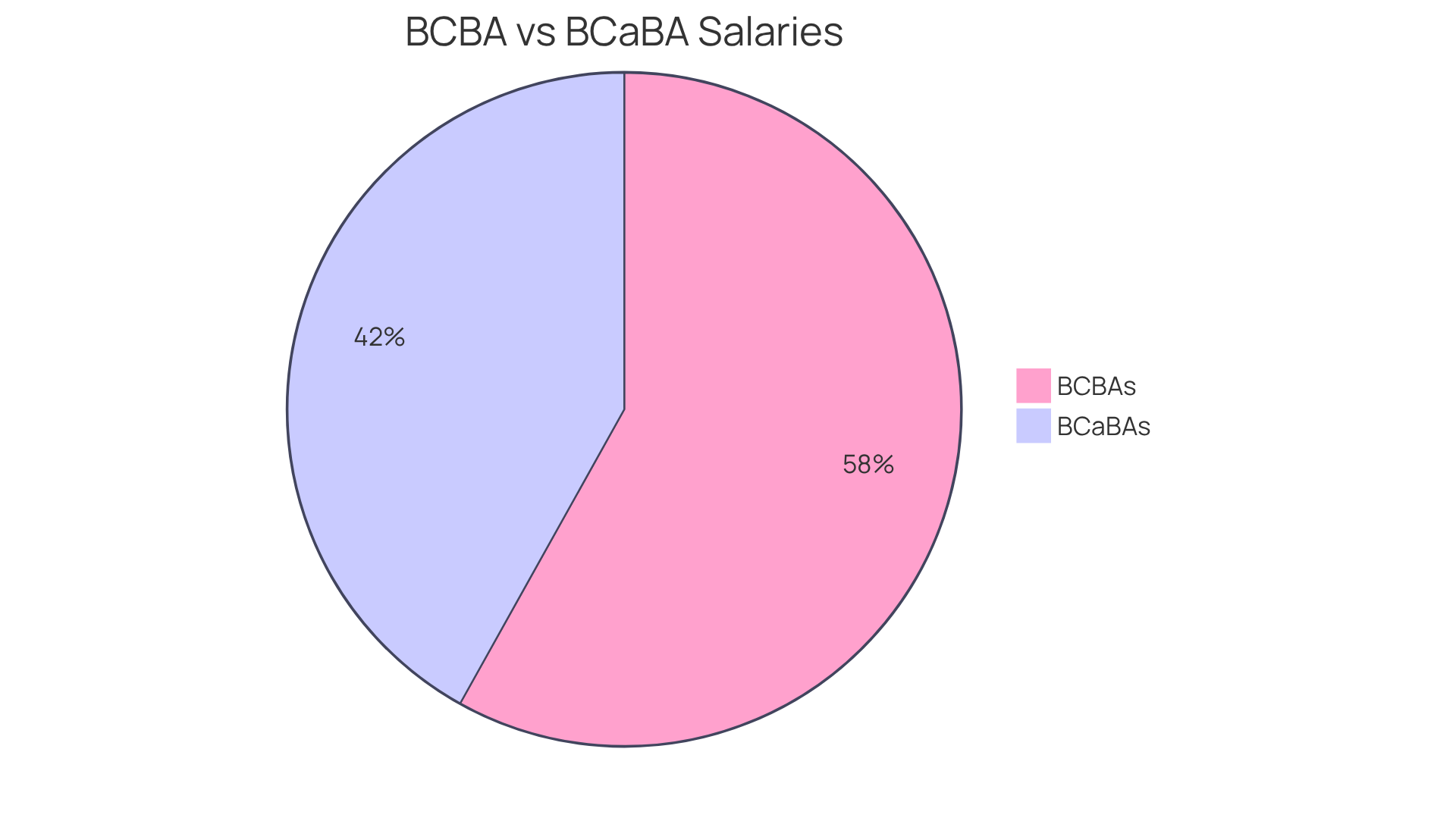
As of 2025, BCBAs command an average salary of approximately $75,784 per year. However, potential earnings can vary significantly based on experience and geographic location. In high-demand regions, BCBAs can earn over $100 per hour, translating to annual salaries up to $120,000. In contrast, the comparison of BCBA vs BCaBA shows that Board Certified Assistant Behavior Analysts (BCaBAs) earn lower salaries, averaging around $54,274 annually. This disparity highlights the career advancement opportunities available to BCaBAs, many of whom pursue BCBA vs BCaBA certification to enhance their professional prospects and earning potential.
The salary landscape reflects the growing acknowledgment of the essential role behavior analysts play in tackling behavioral challenges. Board-certified behavior analysts are frequently positioned for higher compensation due to their advanced training and responsibilities. Additionally, the demand for BCBAs surged by 58% from 2023 to 2024, indicating a robust job outlook for the profession.
Are you facing challenges in hiring qualified behavior analysts? Consider how Hire ABA can streamline your recruitment process and connect you with top talent in the field. With the increasing demand for BCBAs, now is the time to act. Don't miss out on the opportunity to enhance your team with skilled professionals who can make a difference.
The distinction between Board Certified Behavior Analysts (BCBAs) and Board Certified Assistant Behavior Analysts (BCaBAs) is crucial in today’s rapidly evolving behavior analysis field. Did you know that the demand for BCBAs is skyrocketing? Understanding these roles not only enhances career prospects but also improves the quality of care provided to clients.
Both BCBAs and BCaBAs play vital roles in implementing Applied Behavior Analysis (ABA) strategies, yet their educational backgrounds, responsibilities, and career opportunities differ significantly. BCBAs, equipped with master's-level qualifications, have the autonomy to develop and supervise treatment plans independently. In contrast, BCaBAs work under the guidance of BCBAs, providing essential support in executing behavior-analytic strategies. This distinction is essential for aspiring professionals and healthcare employers looking to build effective teams.
Throughout this article, we’ve explored the educational pathways required for each certification, the scope of practice, and the salary expectations associated with these roles. The projected job growth and salary potential for BCBAs highlight the increasing demand for their expertise across various settings. As the landscape of behavior analysis evolves, it’s imperative for those considering a career in this field to evaluate their educational choices and professional aspirations carefully.
Are you facing challenges in hiring qualified behavior analysts? Embracing the knowledge of BCBA and BCaBA roles can empower you to make informed decisions about your recruitment strategies. By understanding these differences, you can not only enhance your hiring process but also contribute to better outcomes in the field. Take action now-consider how Hire ABA can address your hiring needs and help you build a strong, effective team.
What is a Board Certified Behavior Analyst (BCBA)?
A BCBA is a master's-level qualified practitioner in Applied Behavior Analysis (ABA) who can operate autonomously and supervise others in the field. They are trained to independently create and execute treatment plans.
What is a Board Certified Assistant Behavior Analyst (BCaBA)?
A BCaBA is a bachelor's-level certification that requires oversight by a BCBA to deliver behavior-analytic services. They must work under the direction of a BCBA, which limits their capacity for independent practice.
How has the demand for BCBAs changed over the years?
The demand for BCBAs has increased dramatically, with a rise of 1,942% from 2010 to 2018. It is projected to continue growing at a rate of 22% over the next decade.
What is the main difference between BCBA and BCaBA?
The main difference is that BCBAs can function independently and supervise others, while BCaBAs must work under the supervision of a BCBA, limiting their autonomy in practice.
What is required to obtain BCBA certification?
To obtain BCBA certification, candidates must achieve a passing score of 76% or higher on the certification exam, indicating the rigorous preparation needed for success in this field.
How can healthcare settings effectively recruit BCBAs?
Healthcare settings can streamline their recruitment process by using reliable platforms like Hire ABA, which helps employers find qualified behavior analysts to meet their needs.
Why is it important to understand the roles of BCBAs and BCaBAs in healthcare settings?
Understanding these roles is crucial for implementing effective ABA strategies, as it helps delineate the scope of practice and the degree of autonomy each role possesses, ultimately improving patient outcomes.
Our expert recruitment strategies and AI-driven sourcing ensure that you receive top-notch candidates quickly, without compromising on quality. Whether you’re looking for BCBAs, Clinical Directors, or RBTs, we’ve got you covered.


