


Thank you! Your submission has been received!
Oops! Something went wrong while submitting the form.
February 24, 2026

The demand for Board Certified Behavior Analysts (BCBAs) has surged dramatically, reflecting the increasing prevalence of autism diagnoses. This rise presents a unique opportunity for parents seeking effective support for their children. However, many remain uncertain about the specific role BCBAs play in the diagnostic process.
While BCBAs are crucial in implementing effective treatment strategies, it’s important to note that they do not have the authority to diagnose autism. That responsibility lies with licensed medical professionals. This distinction raises essential questions for parents navigating the complexities of autism diagnosis:
Understanding these dynamics is vital for families seeking clarity and guidance on this critical journey. By partnering with the right professionals, parents can ensure their child receives tailored support that meets their unique needs. Are you ready to explore how Hire ABA can assist you in finding the right BCBA for your family? Let’s take the first step together.
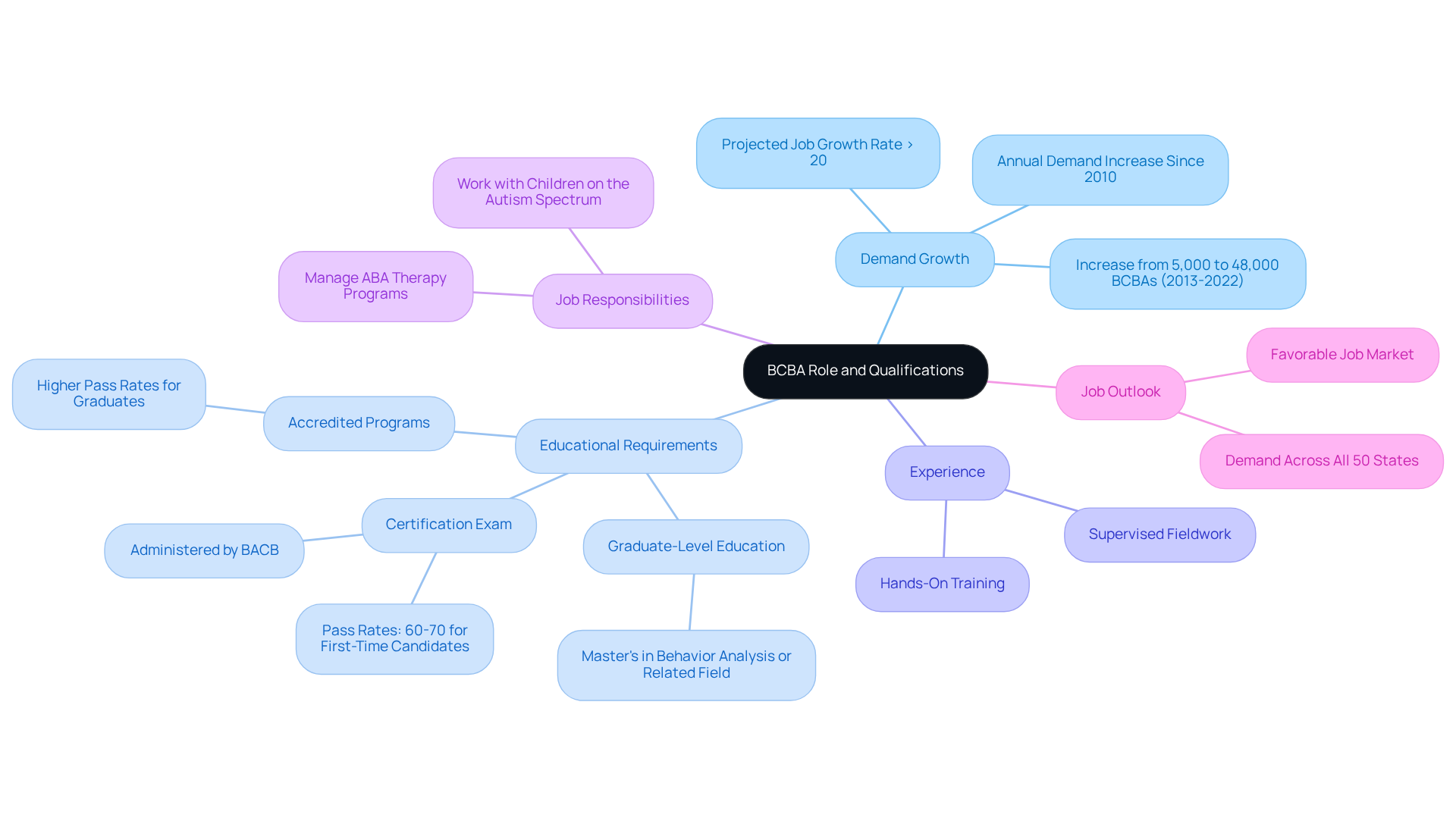
The demand for (BCBAs) is skyrocketing, with the number of certified professionals soaring from 5,000 in 2013 to an impressive 48,000 in 2022. This surge highlights the in today’s landscape.
A BCBA is a highly trained professional who has completed a graduate-level education in behavior analysis and passed the certification exam administered by the Behavior Analyst Certification Board (BACB). Most BCBAs hold a master's degree in behavior analysis, psychology, or a related field, reflecting the advanced knowledge required for effective practice. Candidates must pass the , which assesses their understanding of ABA principles and their application in real-world scenarios. Notably, candidates from accredited programs often perform slightly better, underscoring the importance of selecting .
Experience is another cornerstone of a BCBA's qualifications. They are required to complete supervised fieldwork, providing them with practical experience in implementing ABA techniques. This hands-on training is essential for developing the skills necessary to create and manage treatment plans for individuals with behavioral challenges, particularly those on the spectrum.
More than 70 percent of BCBA certificants work directly with children on the spectrum, managing . They utilize evidence-based ABA interventions to address various behavioral issues, such as food rigidity and sensory-seeking behaviors. However, it’s crucial to understand that do not have the authority to diagnose conditions, so the question of whether a BCBA can diagnose autism is moot; their involvement begins only after a diagnosis has been made by a qualified medical professional. This distinction is vital for families seeking assistance, as that enhance the quality of life for individuals with developmental disorders.
Looking ahead, the is projected to exceed 20% in the next eight years, indicating a favorable job outlook in this field. Are you facing challenges in hiring qualified BCBAs? Consider how Hire ABA can and connect you with top talent in behavior analysis.
Behavior analysts play a vital role in supporting individuals with , yet it’s essential to recognize that they are not authorized to diagnose spectrum conditions. The diagnostic process typically requires a by such as psychologists, psychiatrists, or developmental pediatricians.
BCBAs can:
However, it’s crucial to understand that while the question of arises, cannot provide formal diagnoses. This distinction underscores the importance for parents to seek assessments from qualified medical professionals to obtain an official diagnosis of the condition.
Have you considered how , involving BCBAs and licensed diagnosticians, can lead to more comprehensive support for youth with ? By ensuring that their unique needs are effectively addressed, we can significantly improve their quality of life.
In summary, while BCBAs are instrumental in the treatment process, it is important to consider whether a BCBA can diagnose autism, as the path to a formal diagnosis must be navigated with the help of licensed professionals. This partnership not only enhances the care provided but also ensures that every child receives the they deserve.

To seek an for your child, follow these essential steps:
By following these steps, you can an with confidence and clarity.

The is a collaborative effort that brings together various professionals, each playing a crucial role:
This ensures that every facet of a is taken into account, resulting in a more and a tailored . Are you actively engaging with each professional involved in your child's care? Sharing your insights and concerns can significantly enhance communication and coordination, ultimately benefiting your child's journey.

The role of a Board Certified Behavior Analyst (BCBA) in the autism diagnosis process is not just important; it’s essential. While BCBAs are highly trained professionals ready to implement evidence-based interventions for individuals with autism, they lack the authority to diagnose the condition themselves. This distinction is crucial for parents navigating the complexities of autism diagnosis, highlighting the need for collaboration with licensed medical professionals who can provide formal evaluations.
Throughout this discussion, we’ve explored key points, including:
The importance of working with pediatricians, psychologists, and other specialists cannot be overstated. A comprehensive approach leads to more accurate diagnoses and effective treatment plans. Parents are encouraged to document their observations and actively engage with professionals to ensure their child's unique needs are addressed.
Ultimately, the journey to an autism diagnosis can feel overwhelming, but it’s a vital step toward securing the necessary support for children on the spectrum. By fostering collaboration among various professionals and remaining proactive in the diagnostic process, parents can significantly enhance their child's quality of life. Embracing this teamwork not only aids in accurate diagnosis but also paves the way for tailored interventions that can truly make a difference.
What is the role of a Board Certified Behavior Analyst (BCBA)?
A BCBA is a highly trained professional who implements Applied Behavior Analysis (ABA) techniques to manage treatment plans for individuals with behavioral challenges, particularly those on the autism spectrum.
What qualifications are required to become a BCBA?
To become a BCBA, individuals must complete a graduate-level education in behavior analysis or a related field, pass the BCBA certification exam administered by the Behavior Analyst Certification Board (BACB), and complete supervised fieldwork for practical experience.
How has the demand for BCBAs changed in recent years?
The demand for BCBAs has significantly increased, with the number of certified professionals rising from 5,000 in 2013 to 48,000 in 2022.
What type of degree do most BCBAs hold?
Most BCBAs hold a master's degree in behavior analysis, psychology, or a related field.
Can BCBAs diagnose autism or other conditions?
No, BCBAs do not have the authority to diagnose conditions. Their involvement begins only after a diagnosis has been made by a qualified medical professional.
What percentage of BCBAs work with children on the autism spectrum?
More than 70 percent of BCBA certificants work directly with children on the spectrum, managing ABA therapy programs.
What is the projected job growth rate for BCBAs in the next eight years?
The job growth rate for behavior analysts is projected to exceed 20% in the next eight years.
How can organizations streamline their recruitment process for BCBAs?
Organizations can consider using services like Hire ABA to connect with top talent in behavior analysis and streamline their recruitment process.
Our expert recruitment strategies and AI-driven sourcing ensure that you receive top-notch candidates quickly, without compromising on quality. Whether you’re looking for BCBAs, Clinical Directors, or RBTs, we’ve got you covered.


