Introduction
Choosing the right applied behavior analysis (ABA) providers is crucial for delivering effective care to individuals with autism and other behavioral challenges. Did you know that the demand for qualified Board Certified Behavior Analysts (BCBAs) is skyrocketing? As this need continues to grow, understanding how to assess potential providers can significantly impact treatment outcomes.
What factors should practices consider to ensure they select the best professionals? It’s not just about meeting clinical standards; alignment with your organizational culture is equally important. This article explores essential criteria and strategies for identifying and onboarding the right ABA providers. By doing so, you can ensure a positive and effective therapeutic experience.
Are you facing challenges in hiring the right talent? Consider how Hire ABA can streamline your recruitment process, connecting you with qualified BCBAs who fit your needs. With the right approach, you can enhance your practice and improve outcomes for those you serve.
Understand the Basics of Applied Behavior Analysis
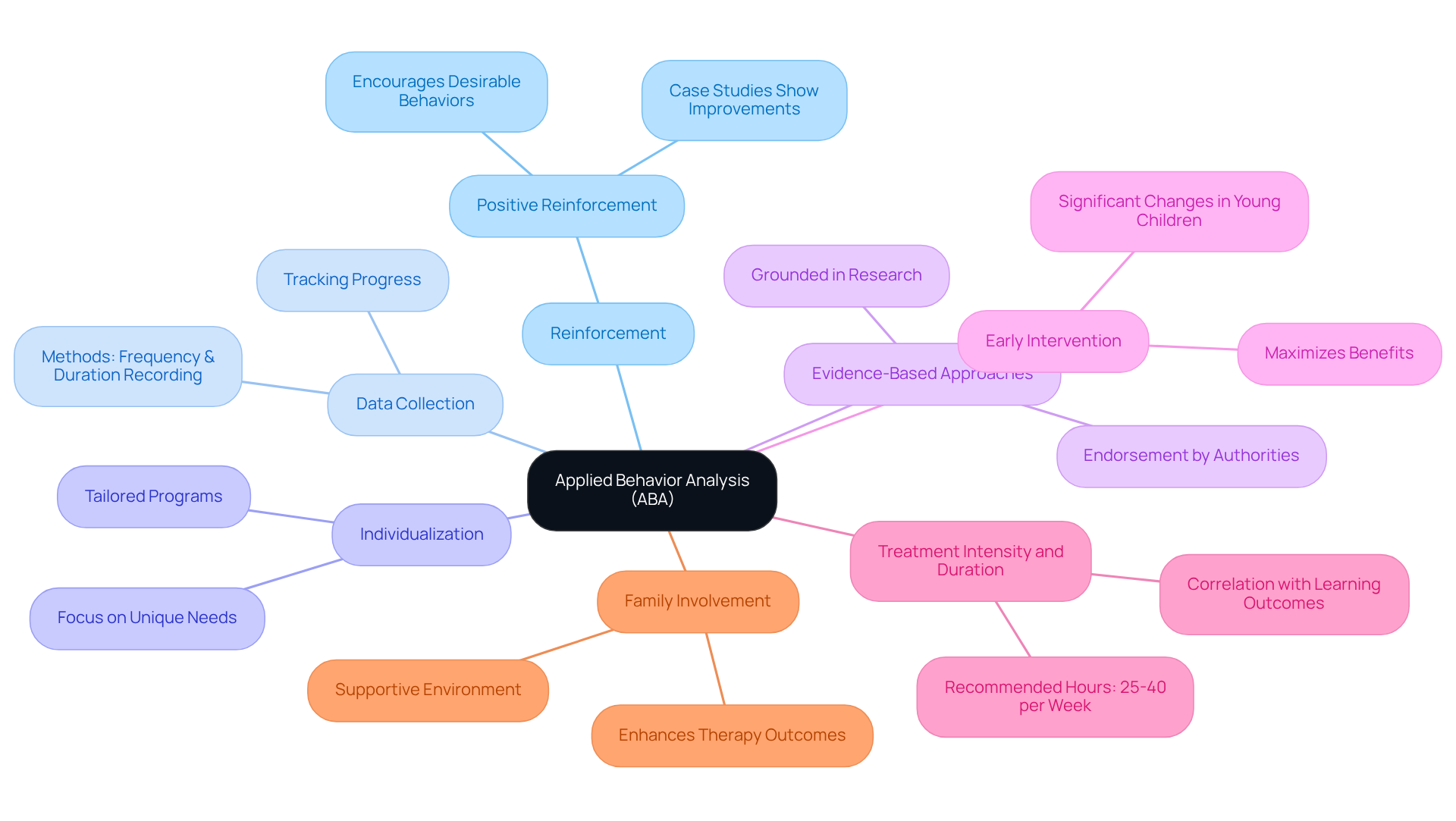
Applied Behavior Analysis (ABA) stands as a pivotal scientific discipline focused on understanding and modifying behavior through systematic interventions. With the demand for Board Certified Behavior Analysts (BCBAs) on the rise, grasping the is essential for anyone involved in this field.
- Reinforcement: This principle is all about providing consequences that boost the likelihood of a behavior being repeated. , in particular, encourages desirable behaviors by offering rewards. Research shows that this approach significantly enhances engagement and motivation in treatment settings. For instance, case studies reveal that children receiving immediate for social interactions exhibit marked improvements in initiating conversations and maintaining peer relationships.
- : ABA relies heavily on meticulous to track progress and inform intervention strategies. Systematic measurement of behaviors before and after implementing specific strategies is crucial. Recent studies underscore that effective methods, such as frequency and duration recording, empower therapists to identify behavioral patterns and make necessary adjustments to treatment plans, maximizing outcomes.
- Individualization: to meet the unique needs of individuals is vital. This personalized approach considers specific challenges and strengths, leading to better engagement and significant improvements in targeted behaviors. For example, a child’s therapy plan may focus on enhancing communication skills while also addressing social interactions, ensuring a holistic approach to their development.
- Evidence-Based Approaches: ABA interventions are grounded in thorough research and must adhere to established best methods for effectiveness. The endorsement of ABA as an by organizations like the US Surgeon General highlights its validity. Recent meta-analyses demonstrate that ABA-based interventions lead to significant enhancements in communication, social skills, and daily living activities, reinforcing the importance of employing proven methodologies in treatment.
- : is crucial for maximizing the benefits of ABA treatment for young children with autism. Research indicates that starting treatment at a young age can result in more substantial and lasting changes in behavior and skill development.
- : The correlation between with improved learning outcomes, particularly in academic and language domains, is well-documented. Programs offering 25 to 40 hours of treatment weekly over 1 to 3 years have shown notable gains across various developmental areas.
- Family Involvement: Active family involvement in therapy sessions enhances outcomes by enabling families to reinforce learning and create a supportive environment for individuals with autism.
Understanding these principles equips you to effectively assess potential applied behavior analysis providers and their approaches. Are you ready to choose those who adhere to optimal standards and can deliver significant results for individuals with autism? Engage with Hire ABA today to ensure you have the best support in your recruitment efforts.
Identify Your Practice's Specific ABA Needs
To effectively identify your practice's specific ABA needs, consider these essential steps:
- Assess Client Demographics: Gather detailed information about the age, diagnosis, and unique challenges faced by your clients. Understanding these factors is crucial for determining the appropriate type of . Did you know that autism is nearly four times more common among boys than girls? This statistic may influence the focus of your services.
- Define Goals: Establish clear and measurable objectives for your ABA results. These goals might include enhancing communication skills, reducing challenging behaviors, or improving social interactions. Effective goal setting is vital; studies indicate that ABA therapy can lead to significant improvements in these areas for up to 90% of (ASD). This potential for improvement underscores the importance of setting specific, achievable objectives.
- Evaluate Current Resources: Conduct a thorough inventory of your existing resources, including staff qualifications, training, and available materials. Recognizing gaps in your existing abilities will assist you in understanding what extra assistance you might require from an ABA professional. For instance, with the being around $68,000, ensuring you have qualified professionals is essential for effective service delivery. Additionally, the is 22% from 2018 to 2028, highlighting the urgency of recruiting qualified staff to meet increasing demands.
- Consider s: Decide on the most appropriate for your establishment, whether it be in-home, center-based, or community-based services. This decision will significantly influence the type of supplier you seek, as different models may cater to . Understanding the demographic breakdown of ABA therapists can also provide insight into the workforce and help ensure cultural competence in service delivery.
By clearly outlining your practice's requirements through these steps, you can effectively connect with in the areas most relevant to your clients. This connection ensures a higher quality of care and improved outcomes. Are you ready to take the next step in enhancing your ABA services?

Evaluate Qualifications and Experience of ABA Providers
When considering potential , it’s crucial to evaluate key factors that can significantly impact the quality of care provided to your clients.
- Credentials: Did you know that the demand for is on the rise? It is essential to confirm that your hold a . Verification through the ensures they meet industry standards, which is vital for .
- Experience: Look for professionals with a robust history in ABA treatment, especially with populations similar to your clients. How many years of experience do they have? What specific cases have they managed? Notably, the , a factor that can greatly influence treatment effectiveness. Research shows that can enhance in up to 90% of children with ASD, highlighting the importance of skilled professionals.
- Training and Supervision: What training protocols does their staff undergo? A reputable organization should have ongoing training and supervision processes in place to maintain high standards of care. This is crucial, as effective often hinges on continuous professional development. Interestingly, , which often correlates with the quality of care provided.
- References and Reviews: Have you asked for references from other organizations or families who have worked with the professional? Online reviews can also provide valuable insights into their reputation and effectiveness, helping you assess their impact on client outcomes.
By thoroughly evaluating these aspects, you can ensure that the you choose are well-equipped to meet your organization’s needs. This not only enhances the quality of care for your clients but also positions your organization as a leader in the field.

Assess Compatibility with Your Practice's Culture
To assess compatibility with , follow these :
- Define Your Practice's Values: Clearly articulate the of your practice. This foundation serves as a standard for .
- Conduct Interviews: During the interview process, ask potential suppliers about their approaches to . Their responses should resonate with your practice's values, indicating a .
- Observe Interactions: If possible, observe how the supplier engages with your team and clients. Look for signs of respect, adaptability, and - key elements for a harmonious working relationship.
- Seek Feedback: Involve your team in the selection process and . Their perspectives can shed light on and highlight any possible challenges.
By ensuring that the supplier aligns with your organization's culture, you cultivate a more productive and positive working relationship, ultimately enhancing the quality of care delivered.

Finalize Selection and Onboard Your ABA Provider
To finalize your selection and onboard your , follow these essential steps:
- Confirm Agreement Terms: Ensure that all terms of the agreement - models, payment structures, and expectations - are clearly defined and agreed upon by both parties. This clarity is crucial for a .
- Develop an Onboarding Plan: Create a that includes training on your practice's protocols, policies, and client needs. This plan should also cover communication expectations and reporting structures, setting the stage for .
- Set Up : Schedule between your team and the ABA service to discuss goals, strategies, and any immediate concerns. Establishing rapport at this stage is vital; it sets a collaborative tone for the relationship.
- : After onboarding, regularly check in with the supplier to assess progress and address any issues that arise. Ongoing communication is key to ensuring that the partnership remains effective and beneficial.
By following these steps, you can ensure a of providers into your practice, ultimately benefiting your clients. Are you ready to take the next step in enhancing your ?

Conclusion
Choosing the right applied behavior analysis (ABA) providers is crucial for effective treatment of individuals with autism. Did you know that the demand for Board Certified Behavior Analysts (BCBAs) is at an all-time high? Understanding foundational principles of ABA-like reinforcement, data collection, individualization, and evidence-based approaches empowers practitioners to make informed decisions that lead to better outcomes for their clients.
The significance of early intervention, treatment intensity, and family involvement cannot be overstated. These factors highlight the necessity of a comprehensive approach when selecting qualified professionals. Key insights from this guide emphasize the importance of:
- Assessing client demographics
- Defining clear goals
- Evaluating the qualifications and experience of potential ABA providers
Have you considered how well these providers align with your practice's culture? Compatibility fosters a collaborative environment that enhances service delivery.
The final steps - confirming agreement terms and developing a structured onboarding plan - are essential for establishing a productive partnership. Remember, selecting and onboarding ABA providers is not merely about filling a position; it’s about finding the right fit that resonates with your practice's values and meets the unique needs of your clients.
Engaging with qualified professionals who adhere to best practices can significantly impact treatment effectiveness. So, why wait? Take the initiative today to assess your practice's needs and connect with the right ABA providers. Ensure that you offer the highest quality of care to those who depend on your expertise.
Frequently Asked Questions
What is Applied Behavior Analysis (ABA)?
Applied Behavior Analysis (ABA) is a scientific discipline focused on understanding and modifying behavior through systematic interventions.
Why is reinforcement important in ABA?
Reinforcement is crucial in ABA as it provides consequences that increase the likelihood of a behavior being repeated, particularly through positive reinforcement, which encourages desirable behaviors by offering rewards.
How does data collection play a role in ABA?
Data collection is essential in ABA as it tracks progress and informs intervention strategies, allowing therapists to identify behavioral patterns and adjust treatment plans for better outcomes.
Why is individualization important in ABA programs?
Individualization is vital in ABA because it tailors programs to meet the unique needs of individuals, considering their specific challenges and strengths, which leads to better engagement and improvements in targeted behaviors.
What are evidence-based approaches in ABA?
Evidence-based approaches in ABA are grounded in thorough research and adhere to established best practices, ensuring the effectiveness of interventions, as endorsed by organizations like the US Surgeon General.
What is the significance of early intervention in ABA?
Early intervention is crucial for maximizing the benefits of ABA treatment for young children with autism, as starting treatment at a young age can lead to more substantial and lasting changes in behavior and skill development.
How does treatment intensity and duration affect learning outcomes in ABA?
There is a documented correlation between treatment intensity and duration with improved learning outcomes, particularly in academic and language domains, with programs offering 25 to 40 hours of treatment weekly over 1 to 3 years showing notable gains.
How does family involvement impact ABA therapy outcomes?
Active family involvement in therapy sessions enhances outcomes by enabling families to reinforce learning and create a supportive environment for individuals with autism.
What steps should be taken to identify a practice's specific ABA needs?
To identify specific ABA needs, one should assess client demographics, define clear goals, evaluate current resources, and consider appropriate service delivery models.
Why is it important to assess client demographics in ABA?
Assessing client demographics is important to gather information about age, diagnosis, and unique challenges faced by clients, which helps determine the appropriate type of ABA services required.
What should be considered when defining goals for ABA therapy?
Goals for ABA therapy should be clear and measurable, focusing on areas such as enhancing communication skills, reducing challenging behaviors, or improving social interactions.
How can evaluating current resources help in ABA practice?
Evaluating current resources helps identify gaps in staff qualifications, training, and materials, ensuring that qualified professionals are available to deliver effective ABA services.
What factors influence the choice of service delivery models in ABA?
Factors influencing the choice of service delivery models include client needs and preferences, with options such as in-home, center-based, or community-based services available.
List of Sources
- Understand the Basics of Applied Behavior Analysis
- connectncareaba.com (https://connectncareaba.com/blog/aba-therapy-effectiveness-for-autism)
- The Numbers Don't Lie: Revealing Autism Therapy Statistics | Above and Beyond Therapy (https://abtaba.com/blog/autism-therapy-statistics)
- Resources | Golden Steps ABA (https://goldenstepsaba.com/resources/success-rates-of-aba-therapy)
- Success Rates of ABA Therapy | Advanced Autism Services (https://advancedautism.com/post/success-rates-of-aba-therapy)
- Applied Behavior Analysis (ABA) Statistics: Data, Effectiveness, and Evidence-Based Practices (https://nexoaba.com/applied-behavior-analysis-statistics)
- Identify Your Practice's Specific ABA Needs
- 60+ ABA Therapist Statistics & Demographics (https://ambitionsaba.com/resources/aba-therapist-statistics-demographics)
- The Numbers Don't Lie: Revealing Autism Therapy Statistics | Above and Beyond Therapy (https://abtaba.com/blog/autism-therapy-statistics)
- 28 ABA Therapist Demographics & Statistics (https://thetreetop.com/statistics/aba-therapist-demographics)
- goldenstepsaba.com (https://goldenstepsaba.com/resources/aba-therapist-statistics)
- Evaluate Qualifications and Experience of ABA Providers
- 60+ ABA Therapist Statistics & Demographics (https://ambitionsaba.com/resources/aba-therapist-statistics-demographics)
- BCBA Certificant Demographics and Growth Trends | Inclusive (https://inclusiveaba.com/blog/bcba-certificant-demographics)
- The Rate of Job Growth for BCBAs | Double Cara ABA Blog (https://doublecareaba.com/post/the-rate-of-job-growth-for-bcbas)
- 28 ABA Therapist Demographics & Statistics (https://thetreetop.com/statistics/aba-therapist-demographics)
- weachieveaba.com (https://weachieveaba.com/blogs/bcba-job-growth-2025-why-demand-is-outpacing-available-professionals)
- Assess Compatibility with Your Practice's Culture
- 35 Quotes about Communication to Inspire Collaboration (https://vibe.us/blog/35-quotes-about-communication?srsltid=AfmBOooYv7P4Y7KCS0VX9ijUIbsOGCQ63uwl-QNORMd8DI1_xeLpQXsV)
- journals.stfm.org (https://journals.stfm.org/familymedicine/2020/september/mainous-2020-0060)
- Physician Cultural Competence and Patient Ratings of the Patient-Physician Relationship - PMC (https://pmc.ncbi.nlm.nih.gov/articles/PMC2659158)
- Cultural Competence and Cultural Intelligence of Healthcare Professionals Providing Emergency Medical Services | MDPI (https://mdpi.com/1660-4601/18/21/11547)
- 100 Important Quotes on Communication and Relationships (https://marriage.com/advice/relationship/quotes-on-communication-and-relationships)
- Finalize Selection and Onboard Your ABA Provider
- Employee Onboarding Statistics: Top Trends & Insights (2025) | Devlin Peck (https://devlinpeck.com/content/employee-onboarding-statistics)
- 27+ Employee Onboarding Statistics & Trends You Must Know in 2026 (https://aihr.com/blog/employee-onboarding-statistics)
- Efficiency in Healthcare Staffing: Streamlining Clinical Onboarding - masc (https://mascmedical.com/efficiency-in-healthcare-staffing-streamlining-clinical-onboarding)
- americanmedicalcompliance.com (https://americanmedicalcompliance.com/general/the-roi-of-structured-onboarding-in-healthcare)


