


Thank you! Your submission has been received!
Oops! Something went wrong while submitting the form.
February 26, 2026

Understanding the financial landscape of Registered Behavior Technicians (RBTs) is crucial in a field experiencing rapid growth and increasing demand. Did you know that the demand for Board Certified Behavior Analysts (BCBAs) is skyrocketing? This surge not only highlights the importance of RBTs but also underscores the need for competitive compensation.
This article delves into the factors influencing RBT hourly wages, from experience and geographic location to specialized skills and employer type. As job opportunities continue to rise, how can RBTs effectively negotiate their salaries to reflect their true worth in this vital role?
Consider this: Are you aware of the current market rates for RBTs in your area? Understanding these dynamics can empower you to advocate for yourself in salary discussions. With the right information and strategies, you can ensure that your compensation aligns with the value you bring to the table.
In this evolving landscape, it’s essential to stay informed and proactive. Let’s explore how you can navigate these challenges and secure the salary you deserve.
Registered Behavior Technicians (RBTs) are essential in the realm of Applied Behavior Analysis (ABA) therapy. As paraprofessionals, they implement behavior-analytic services under the supervision of Board Certified Behavior Analysts (BCBAs). To achieve certification, RBTs must complete 40 hours of supervised training, equipping them for their vital responsibilities.
Why are RBTs so important? Their primary duties include:
The impact of behavior technicians on patient outcomes is well-documented. Case studies reveal that behavior therapists significantly reduce maladaptive behaviors and enhance social skills in clients. Their role transcends mere implementation of strategies; they cultivate a supportive environment that promotes growth and development. Many employers offer attractive compensation and benefits packages for RBTs, leading to inquiries about how much do RBTs make an hour, making this a rewarding career choice.
As the demand for BCBAs and RBTs continues to surge, it is crucial for those looking to negotiate their salaries to understand how much do RBTs make an hour. Their expertise and dedication to client success are invaluable assets in the field of ABA therapy.
Are you facing challenges in hiring qualified RBTs? Consider how Hire ABA can streamline your recruitment process and connect you with top talent in the field.

Several factors significantly influence how much do RBTs make an hour.
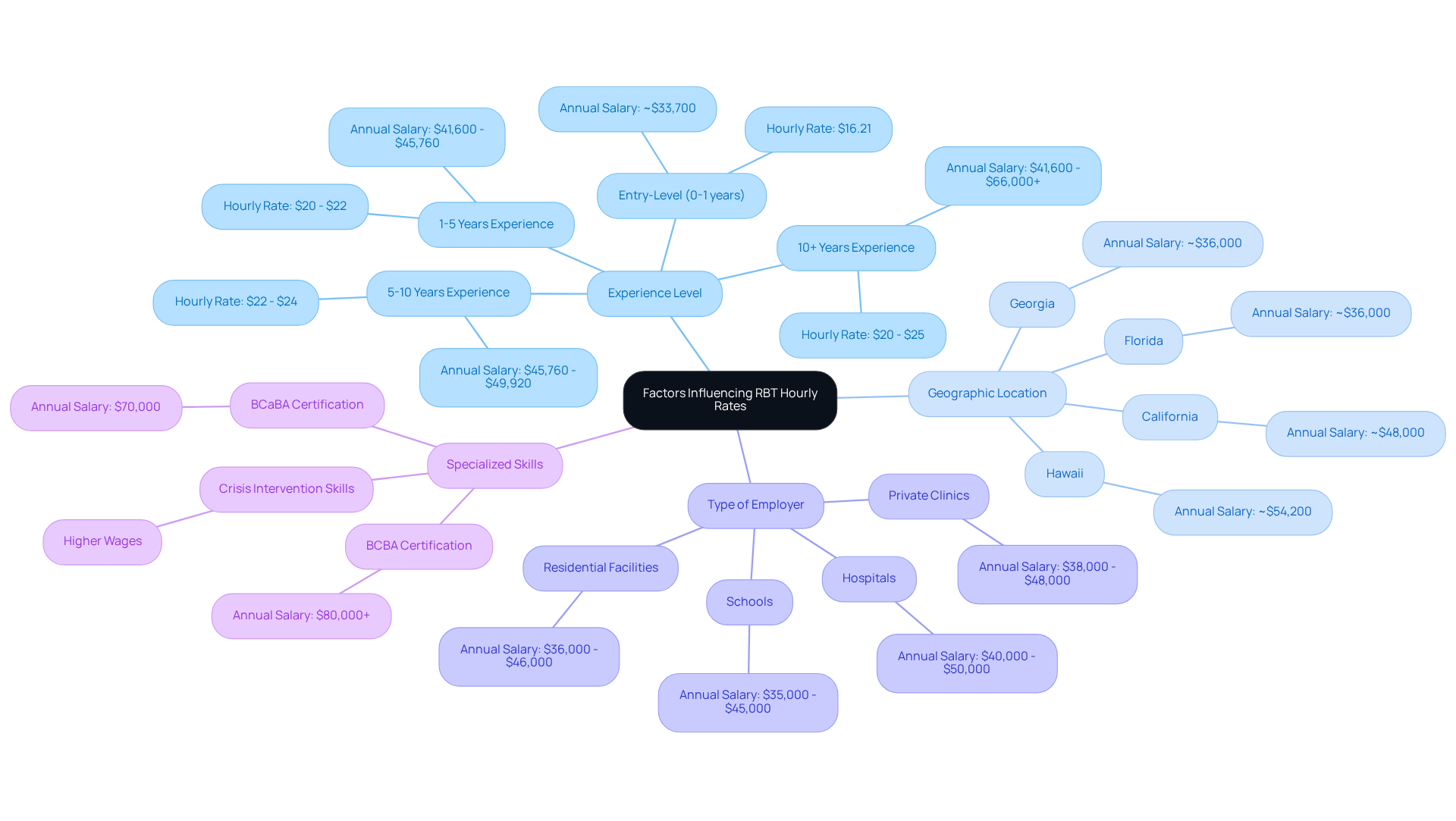
Experience Level: RBTs with more years of experience typically command higher wages. Entry-level positions often start at around $20 per hour, which relates to how much do RBTs make an hour. However, those with 1-5 years of experience can earn between $20 to $22 per hour, raising the inquiry of how much do RBTs make an hour, which translates to annual salaries of roughly $41,600 to $45,760. For individuals with 5-9 years of experience, it raises the question of how much do RBTs make an hour, which can be approximately $18.11. Many people wonder how much do RBTs make an hour, and seasoned registered behavior technicians, especially those with over 10 years of experience, may earn between $20 to $25 per hour, with some surpassing $66,000 yearly.
Geographic Location: Salaries vary widely by region. Urban areas generally offer higher pay due to increased demand for services and higher living costs. For instance, behavior technicians in California can earn around $48,000 annually, while those in states like Georgia and Florida may earn closer to $36,000. In high-demand locations such as Honolulu, HI, registered behavior technicians can anticipate earnings around $54,200.
Type of Employer: The kind of organization also influences compensation. Registered Behavior Technicians in private clinics often receive higher compensation than those in schools or non-profit organizations. For example, registered behavior technicians in educational environments usually earn between $35,000 and $45,000, while those in clinical positions may see compensation ranging from $38,000 to $48,000.
Specialized Skills: RBTs with additional qualifications, such as BCBA or BCaBA, can negotiate for greater compensation due to their specialized training. This can lead to salaries exceeding $80,000 for those who advance into supervisory roles.
By understanding these factors, RBTs can better evaluate their worth in the job market and prepare effectively for compensation discussions. Are you ready to leverage this knowledge in your hiring strategy?
Negotiating your pay as a Registered Behavior Technician (RBT) requires a strategic approach. Did you know that the demand for RBTs is expected to rise significantly in the coming years? This growing need presents a unique opportunity for you to advocate for your worth. Here are key steps to guide your research:
Utilize Online Compensation Databases: Platforms like Indeed, Glassdoor, and PayScale are invaluable resources for accessing compensation data tailored to your job title and location. For example, in discussing how much do RBTs make an hour, RBTs in Massachusetts earn an average of $19.90 per hour, while those in California can earn upwards of $28 per hour. With the average RBT compensation in the United States around $39,520, you have a solid foundation for your negotiations.
Consider Cost of Living: It's essential to factor in the cost of living when evaluating compensation. Higher salaries in urban areas may not translate to greater purchasing power if living expenses are significantly elevated.
Engage with Other Registered Behavior Technicians: Networking with colleagues through professional networks or social media groups can provide insights into compensation expectations across various locations. This firsthand information can clarify the market landscape.
Review Job Listings: Take the time to examine job postings for RBT positions in your area. Identifying the compensation ranges offered by different employers will help you understand the competitive landscape and set realistic expectations.
Stay Informed About Job Growth: The anticipated rise in the need for RBTs by 12% to 22% over the next decade indicates a robust job market and potential for wage increases.
By gathering this information and insights from compensation research experts, you can present a well-informed case during negotiations. This preparation ensures you advocate effectively for your value in the field.

Negotiating your compensation as a Registered Behavior Technician (RBT) can be challenging, but with effective strategies, you can advocate for a fair wage. Did you know that the demand for RBTs is projected to increase by 12% to 22% over the next decade? This is a vital moment to discuss your value. Here are essential steps to follow:
Prepare your case by investigating how much RBTs make an hour in your region, taking into account factors such as experience and specialization. If you're wondering how much RBTs make an hour, the average pay for RBTs is roughly $54,000 annually. Document your qualifications and any unique skills that enhance your value.
Practice Your Pitch: Role-play your negotiation conversation with a trusted friend or mentor to build confidence. Clearly express your compensation expectations and the reasoning behind them. Remember, information is a negotiator's greatest weapon, so be well-prepared.
Be Open to Discussion: During negotiations, be ready to talk about not only pay but also benefits such as health insurance, retirement plans, and paid time off. These can significantly enhance your overall compensation package. Empathy is critical in negotiations; understanding the employer's perspective can lead to more productive discussions.
Recognize Your Value: If the employer cannot accommodate your compensation request, consider negotiating for extra benefits like flexible working hours or opportunities for professional growth. Emphasize your potential for income advancement as you gain experience and possibly transition into specialized positions.
Follow Up: After the negotiation, send a thank-you email expressing your enthusiasm for the position and summarizing any agreements made. This reinforces your professionalism and keeps communication channels open.
By employing these strategies, RBTs can navigate salary negotiations with confidence, ensuring their compensation reflects their skills and contributions. Are you ready to take charge of your career and secure the compensation you deserve?

Registered Behavior Technicians (RBTs) are essential in the realm of Applied Behavior Analysis (ABA) therapy, executing treatment plans, gathering data, and collaborating with supervisors to drive positive change in clients. With the demand for their services on the rise, understanding how much RBTs earn per hour is crucial. This knowledge empowers RBTs to evaluate their worth and equips them with the necessary tools to negotiate fair compensation.
Several factors influence the hourly rates for RBTs, such as experience level, geographic location, type of employer, and specialized skills. Entry-level positions typically start around $20 per hour, with potential increases based on experience and additional qualifications. Regional differences can significantly impact salaries, as urban areas often offer higher wages due to increased demand and living costs. Are you prepared for salary negotiations? Researching these factors and understanding the competitive landscape is vital for RBTs seeking equitable pay.
As the need for RBTs is projected to grow, it’s imperative for professionals in this field to effectively advocate for their value. By leveraging insights from compensation research and engaging in meaningful discussions, RBTs can navigate salary negotiations with confidence. Recognizing the importance of their contributions not only benefits individual practitioners but also strengthens the overall profession. Let’s ensure that the essential work of RBTs is recognized and rewarded appropriately. Are you ready to take action and advocate for your worth?
What is the role of Registered Behavior Technicians (RBTs)?
RBTs implement behavior-analytic services under the supervision of Board Certified Behavior Analysts (BCBAs) in the field of Applied Behavior Analysis (ABA) therapy.
What qualifications do RBTs need to achieve certification?
To achieve certification, RBTs must complete 40 hours of supervised training.
What are the primary duties of RBTs?
RBTs are responsible for implementing treatment plans, collecting data on participant progress, directly interacting with individuals to teach new skills, and collaborating with supervisors to adjust treatment plans as necessary.
How do RBTs implement treatment plans?
RBTs execute individualized treatment plans aimed at enhancing clients' behavioral and social skills, applying ABA principles to foster positive behavior changes.
Why is data collection important in the work of RBTs?
Accurate data collection is essential for evaluating the effectiveness of treatment strategies and is a cornerstone of effective ABA therapy.
How do RBTs interact with clients?
RBTs work closely with individuals, often in one-on-one settings, to teach new skills and reinforce positive behaviors, facilitating meaningful behavioral changes.
How do RBTs collaborate with their supervisors?
RBTs maintain regular communication with BCBAs to discuss participant progress and adjust treatment plans as needed, ensuring interventions align with each individual's evolving needs.
What is the impact of RBTs on patient outcomes?
RBTs significantly reduce maladaptive behaviors and enhance social skills in clients, creating a supportive environment that promotes growth and development.
What are the compensation and benefits for RBTs?
Many employers offer attractive compensation and benefits packages for RBTs, making it a rewarding career choice.
What should individuals know about negotiating RBT salaries?
As the demand for BCBAs and RBTs continues to surge, understanding the salary range for RBTs is important for those looking to negotiate their pay.
How can organizations improve their hiring process for RBTs?
Organizations facing challenges in hiring qualified RBTs can consider using services like Hire ABA to streamline their recruitment process and connect with top talent in the field.
Our expert recruitment strategies and AI-driven sourcing ensure that you receive top-notch candidates quickly, without compromising on quality. Whether you’re looking for BCBAs, Clinical Directors, or RBTs, we’ve got you covered.


