


Thank you! Your submission has been received!
Oops! Something went wrong while submitting the form.
February 21, 2026

The demand for Registered Behavior Technicians (RBTs) is skyrocketing, underscoring their essential role in delivering quality patient care. With certification requirements set to change in January 2026, healthcare employers have a prime opportunity to refine their training programs and align with the latest standards. Yet, the challenge remains: how do you navigate the complexities of selecting the right training programs and implementing effective study strategies? These strategies must not only prepare candidates for certification but also elevate the overall quality of care provided.
How can healthcare organizations strategically invest in RBT training to meet these new requirements while fostering a culture of excellence in patient care? This is a pivotal moment for healthcare employers to reflect on their current hiring challenges and consider how investing in RBT training can transform their approach to patient care. By prioritizing effective training, organizations can ensure compliance and enhance the quality of care they deliver.
The is a crucial stepping stone for those aiming to become . This comprehensive program equips individuals with essential skills in , vital for delivering effective therapy to clients. Starting January 1, 2026, adherence to the becomes mandatory. with certificates from outdated courses will face disqualification for RBT certification. This underscores the pressing need for healthcare employers to .
Healthcare employers must recognize the significance of this education in . RBTs are instrumental in executing treatment plans devised by , and their training directly impacts the quality of care provided. For example, organizations that invest in robust can anticipate improved staff competency, which correlates with better patient outcomes and a more streamlined operational framework. As CentralReach states, "With early access, built-in administrative support, and a proven curriculum, CR Institute makes it easy to transition with confidence."
Furthermore, the shift to the new development requirements offers healthcare employers a chance to elevate their service quality. By proactively updating their development programs before the January 2026 deadline, organizations can mitigate risks associated with noncompliance, such as denied qualifications and delayed onboarding. This strategic investment not only enhances RBT skills but also cultivates a culture of continuous improvement in patient care, ultimately benefiting both clients and the organization. It's essential to note that RBTs must be supervised at least 5% of the time to maintain their credentials, highlighting the ongoing commitment to quality care.

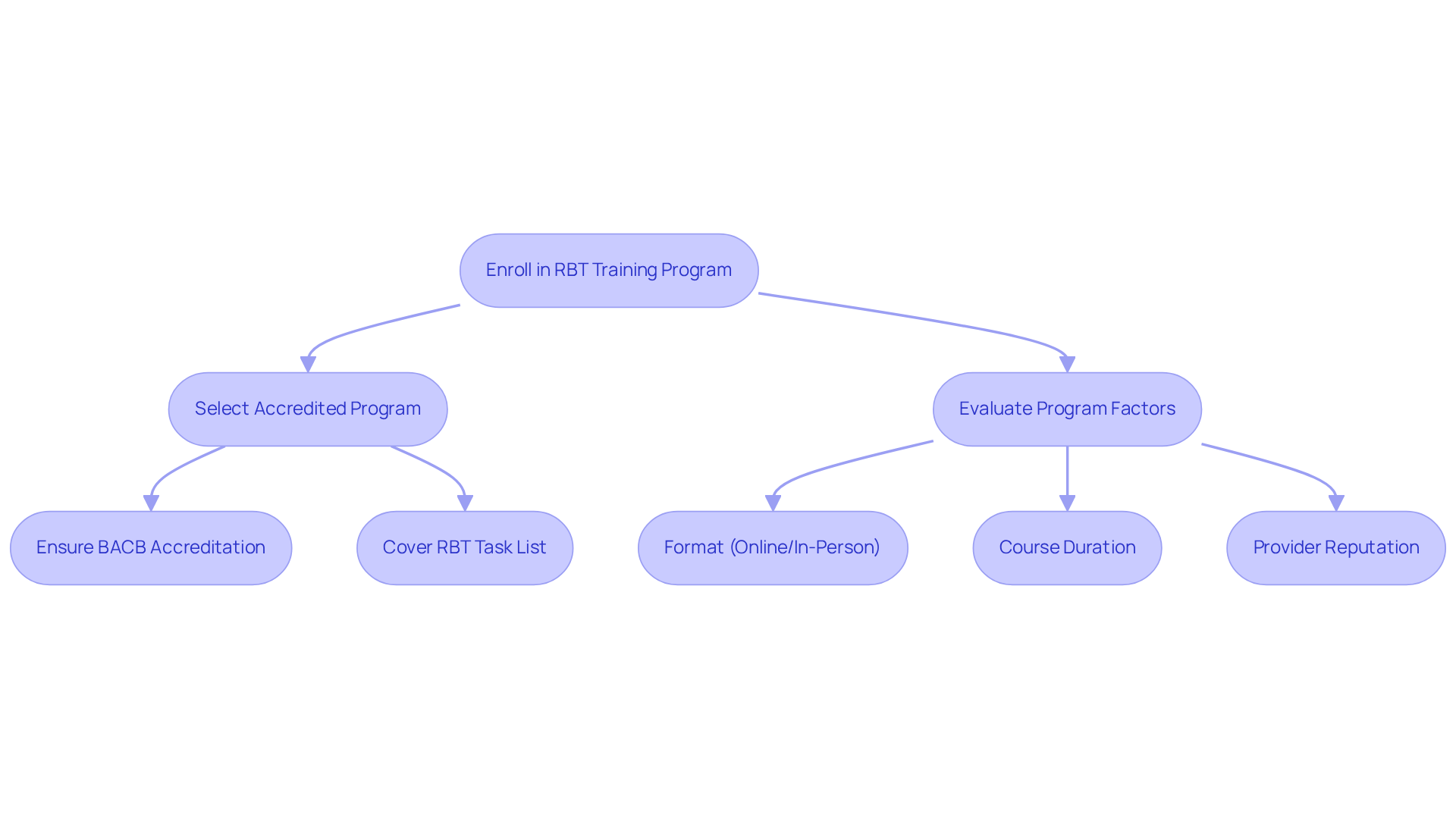
To embark on the journey toward , healthcare employers must first enroll their candidates in a recognized RBT education program. Did you know that selecting an is essential for meeting the latest educational standards? This choice not only ensures compliance but also enhances the quality of training your staff receives.
Employers should seek programs that . This includes critical topics such as:
By focusing on these areas, you can equip your team with the necessary skills to excel in their roles.
When evaluating programs, consider factors like:
The reputation of the provider also plays a significant role in the quality of education offered. By choosing a , you can ensure that your staff is well-prepared to meet the demands of their roles as RBTs.
Are you facing challenges in hiring qualified RBTs? Reflect on how a robust training program can address these issues and elevate your team's performance. By investing in , you not only enhance your staff's capabilities but also contribute to the overall success of your organization.
In today's competitive landscape, the demand for is on the rise. To excel in this field, joining a recognized is just the beginning. To truly enhance your learning experience, consider these essential :
By adopting these strategies, you can deepen your understanding of the material and prepare thoroughly for the . Don't leave your success to chance-implement these techniques today to enhance your chances of achieving your goals.

Upon completing the , candidates must focus on passing the , which involves several key steps:
Additionally, starting in 2026, RBTs will need to complete , which healthcare employers should consider when preparing their candidates.

The path to becoming a Registered Behavior Technician (RBT) is more than just a certification; it’s a crucial investment in quality patient care and professional growth in healthcare. The structured 40-hour RBT training program provides candidates with essential skills in Applied Behavior Analysis (ABA), ensuring they are equipped to implement effective treatment plans. With changes to certification requirements on the horizon in 2026, healthcare employers must prioritize modernized training programs to stay compliant and elevate the quality of care.
This guide outlines key steps for healthcare employers, from enrolling in accredited training programs to implementing effective study strategies. Choosing recognized programs is vital, as it ensures RBTs are proficient in critical areas like data collection and ethical considerations. Additionally, thorough preparation for the RBT certification exam, including the competency assessment and application process, highlights the importance of strategic planning for certification success.
Investing in comprehensive RBT training fosters a culture of continuous improvement and directly correlates with better patient outcomes. Healthcare employers are urged to take proactive steps in revamping their training programs, enhancing staff competency, and ensuring compliance with industry standards. By doing so, organizations can meet the demands of the evolving healthcare landscape and significantly contribute to improving patient care quality.
What is the purpose of the 40-hour RBT training?
The 40-hour RBT training is designed to equip individuals with essential skills in Applied Behavior Analysis (ABA), which are vital for delivering effective therapy to clients as Registered Behavior Technicians.
What changes are coming to the RBT certification process starting January 1, 2026?
Starting January 1, 2026, adherence to the new third edition Test Content Outline will be mandatory. Candidates applying for certification with certificates from outdated 40-hour RBT training courses will be disqualified.
Why is it important for healthcare employers to update their RBT development programs?
It is important for healthcare employers to update their RBT development programs to enhance patient care, ensure compliance with industry standards, and prevent risks associated with noncompliance, such as denied qualifications and delayed onboarding.
How do RBTs contribute to patient care?
RBTs are instrumental in executing treatment plans devised by Board Certified Behavior Analysts (BCBAs), and their training directly impacts the quality of care provided to clients.
What benefits can organizations expect from investing in robust RBT development programs?
Organizations that invest in robust RBT development programs can anticipate improved staff competency, better patient outcomes, and a more streamlined operational framework.
What is the significance of ongoing supervision for RBTs?
RBTs must be supervised at least 5% of the time to maintain their credentials, which underscores the ongoing commitment to quality care in their practice.
Our expert recruitment strategies and AI-driven sourcing ensure that you receive top-notch candidates quickly, without compromising on quality. Whether you’re looking for BCBAs, Clinical Directors, or RBTs, we’ve got you covered.


