Master ABA Extinction: Techniques, Strategies, and Ethics Explained

December 4, 2025

Introduction

Understanding the complexities of behavior modification in Applied Behavior Analysis (ABA) is crucial for practitioners who aim to create meaningful change. Did you know that the demand for Board Certified Behavior Analysts (BCBAs) is on the rise? This highlights the importance of mastering effective techniques in the field. Among these techniques, extinction emerges as a powerful method for reducing unwanted behaviors by systematically withdrawing the reinforcement that sustains them.

However, implementing extinction strategies presents significant challenges. How can practitioners navigate these hurdles while ensuring ethical considerations are met? This article delves into the techniques, strategies, and ethical frameworks surrounding ABA extinction. By exploring these insights, professionals can enhance their practice and improve client outcomes.

As you read on, consider your current hiring challenges. Are you equipped with the right strategies to address them? Discover how the insights shared here can empower you to make informed decisions in your practice.

Define Extinction in ABA Therapy

In Applied Behavior Analysis (ABA), the concept of aba extinction is critical as it refers to the process of reducing or eliminating a specific behavior by discontinuing the reinforcement that previously supported it. This means that if a behavior has been reinforced in the past, withdrawing that reinforcement will likely lead to a decrease in the frequency of that behavior over time. For example, consider a child who throws a tantrum to gain attention; if that attention is no longer provided, the tantrum is expected to diminish.

Understanding aba extinction is essential for professionals in the field. It not only aids in effectively modifying behaviors in therapeutic settings but also enhances the overall effectiveness of interventions. Have you considered how the principles of ABA can transform your approach to behavior management? By grasping the nuances of extinction, practitioners can implement strategies that lead to more successful outcomes for their clients.

In summary, the knowledge of aba extinction and its implications is vital for those working in ABA. It empowers professionals to create meaningful changes in behavior, ultimately benefiting the individuals they serve.

The central node represents the main concept of extinction, while the branches show related ideas and examples. Each color-coded branch helps you see how different aspects of extinction connect and contribute to effective behavior management.

Explore Types of Extinction Techniques

In Applied Behavior Analysis (ABA) therapy, several ABA extinction techniques are utilized to effectively alter actions. Did you know that consistent application of these techniques can lead to significant behavioral changes? Here’s a closer look at some of the most effective methods:

  1. Attention Extinction: This technique involves withholding attention from actions that are sustained by the desire for attention. For instance, disregarding a child who is misbehaving to attract attention can result in a notable reduction in that action. Research suggests that attention reduction can be especially effective, with success rates reported as high as 82% when applied consistently. Additionally, behaviors successfully reduced through extinction maintain low levels in 78% of cases when proper maintenance strategies are implemented.

  2. Escape Extinction: This method prevents individuals from escaping tasks or situations they find aversive. For example, if a student tries to exit a classroom to evade a challenging assignment, the teacher would ensure the student stays in the classroom until the task is completed. This method has demonstrated encouraging outcomes in educational environments, where it can result in a 73% decrease in disruptive actions within weeks.

  3. Tangible Extinction: This technique involves withholding access to a desired item or activity. For instance, if a young one tosses a toy to reach another toy, taking away the toy can help lessen the throwing actions. This approach is effective in instructing young individuals that such actions do not produce the intended results.

  4. Sensory Extinction: This technique concentrates on eliminating sensory reinforcement that sustains a conduct. For example, preventing a young person from participating in a repetitive action that offers sensory input can assist in diminishing that action. Comprehending the sensory requirements of the young one is essential for the effective implementation of this technique.

Every elimination method must be thoughtfully chosen according to the purpose of the actions being addressed, ensuring that interventions are customized to the specific requirements of the individual. Steady application and oversight are crucial for attaining the desired results in conduct modification. However, practitioners should be aware of potential challenges in the context of ABA extinction, such as emotional reactions from the child and the occurrence of behavior bursts, which may temporarily increase undesired behaviors before they decrease. Ethical considerations, including obtaining informed consent and ensuring transparency about the eradication process, are also critical for responsible implementation.
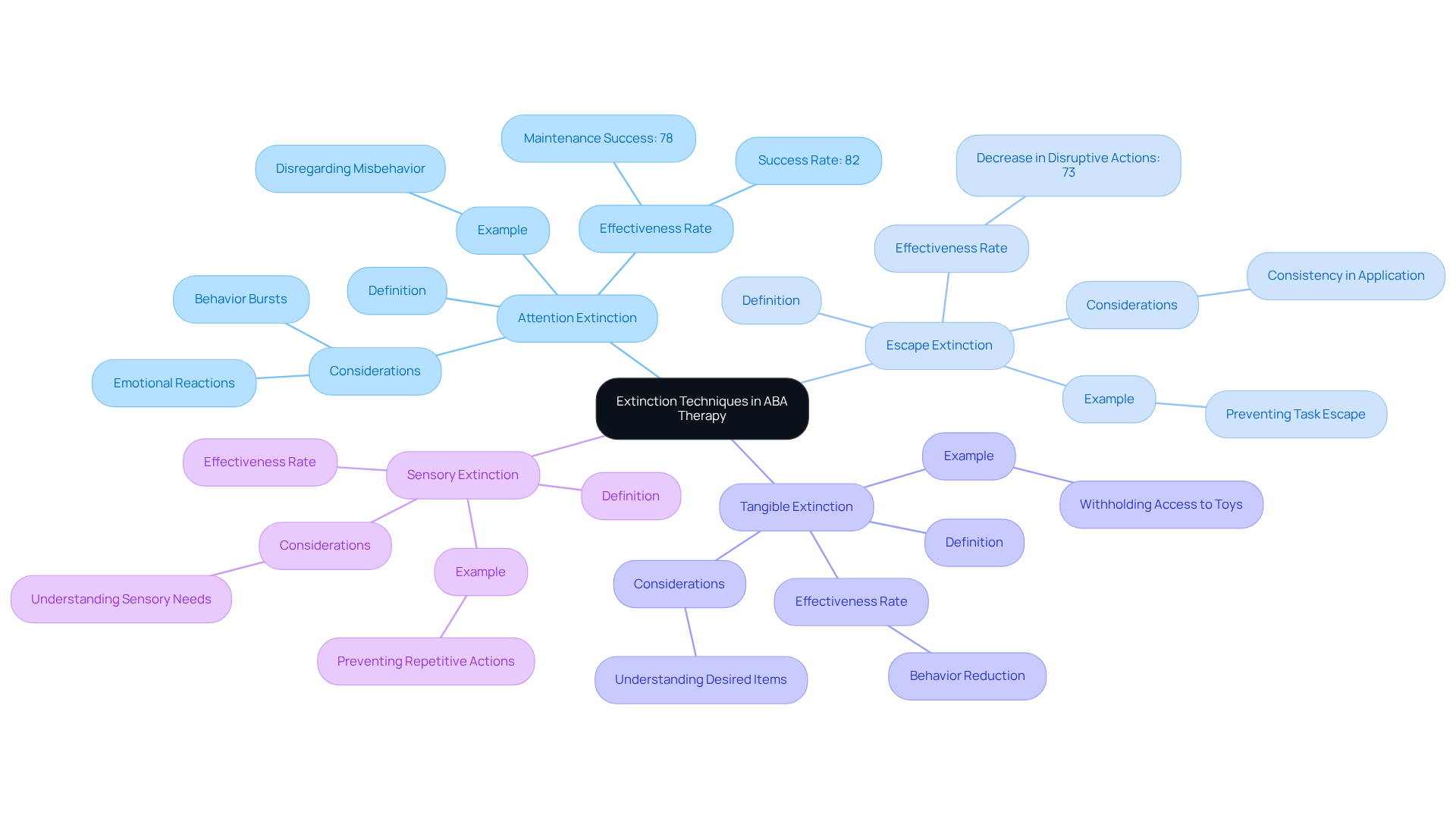
The central node represents the main topic, while the branches show different techniques used in ABA therapy. Each technique has its own details, helping you understand how they work and their effectiveness.

Implement Extinction Strategies Effectively

To implement extinction strategies effectively, practitioners must follow these essential steps:

  1. Identify the Target Action: Clearly define the behavior that needs modification and understand its purpose. Observing actions in context is crucial to determine the reinforcement maintaining them. For example, if a child throws objects to gain attention, recognizing this pattern is vital.

  2. Develop a Plan: Create a comprehensive strategy that outlines how to consistently withhold reinforcement. This plan should detail the actions to take when the target behavior occurs, ensuring all caregivers are aligned in their responses.

  3. Train Caregivers and Staff: It’s essential that everyone involved in the individual’s care understands the extinction procedure and is committed to its consistent implementation. Research indicates that educating caregivers on ABA extinction can lead to an 82% success rate in addressing issues like bedtime resistance when adequate support is provided. Furthermore, studies show that 90% of individuals make significant progress when caregivers actively participate in the process of ABA extinction therapy.

  4. Monitor Progress: Regularly evaluate the effectiveness of the elimination strategy by tracking the occurrence and intensity of the target behavior. Systematic data collection is vital for making informed adjustments based on the individual’s response. Studies reveal that behaviors diminished through removal maintain low levels in 78% of cases with appropriate maintenance strategies. Practitioners should also be aware of potential extinction bursts, where undesired behaviors may temporarily increase in frequency or intensity before they decline.

  5. Offer Alternative Reinforcement: While withholding support for undesired behaviors, it’s crucial to encourage alternative, positive actions. This dual approach not only fosters the development of new skills but also ensures that the individual feels supported throughout the process. Effective alternatives should align with the function of the problem behavior and receive immediate positive reinforcement, creating a balanced strategy for behavior modification.

Each box represents a crucial step in the process of implementing extinction strategies. Follow the arrows to see how each step leads to the next, ensuring a comprehensive approach to behavior modification.

Address Ethical Considerations and Safety in Extinction

When implementing aba extinction strategies, practitioners must adhere to several ethical guidelines that ensure effective and responsible practice.
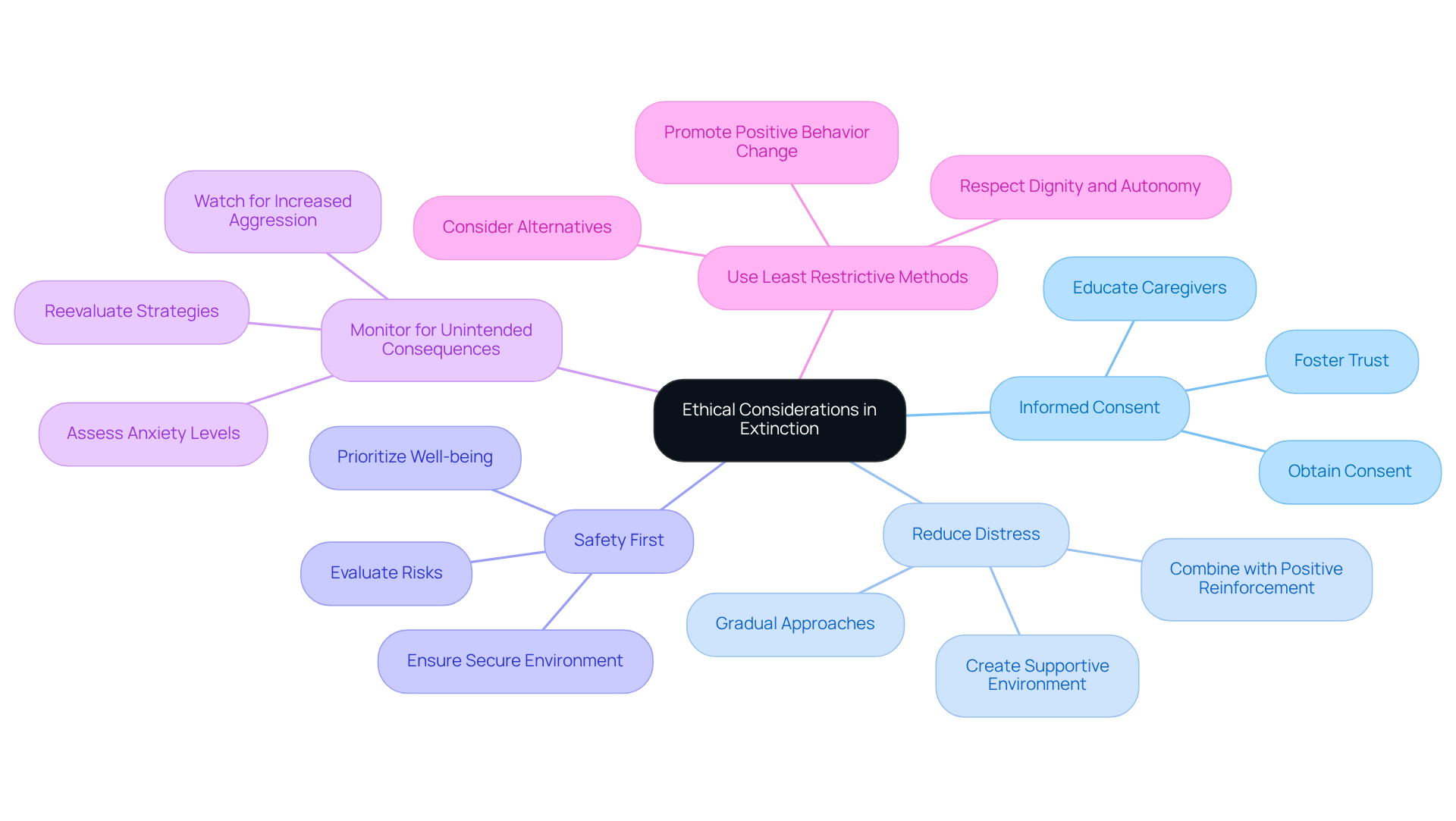
  1. Informed Consent: It is crucial to guarantee that caregivers and parties involved are thoroughly educated about the elimination process and its possible impacts. Consent should be obtained prior to proceeding, as this fosters trust and collaboration in the therapeutic relationship.

  2. Reduce Distress: Executing the procedure should be carried out in a way that lessens emotional discomfort for the person. This may involve gradual approaches or combining removal techniques with positive reinforcement strategies to create a supportive environment.

  3. Safety First: The surroundings must be secure for the person during the elimination process. Practitioners should evaluate potential risks and ensure that the person is not placed in situations where they could harm themselves or others, thereby prioritizing their well-being.

  4. Monitor for Unintended Consequences: Practitioners must remain vigilant for any negative side effects, such as increased aggression or anxiety, that may arise during the elimination process. If such actions happen, it might be essential to reevaluate the strategy to ensure the person's needs are being addressed effectively.

  5. Use Least Restrictive Methods: Always consider less restrictive alternatives before implementing extinction. The goal is to promote positive behavior change while respecting the individual's dignity and autonomy, ensuring that interventions are ethical and client-centered, particularly in the context of aba extinction.

The center represents the main topic of ethical considerations, while each branch highlights a specific guideline. Follow the branches to explore each principle and its importance in ensuring responsible practice.

Conclusion

Understanding and mastering ABA extinction is not just beneficial; it’s essential for professionals aiming to modify behaviors effectively in therapeutic settings. The demand for Board Certified Behavior Analysts (BCBAs) is on the rise, underscoring the need for expertise in this area. This article has delved into the definition of extinction within Applied Behavior Analysis, highlighting its critical role in reducing undesired behaviors by discontinuing reinforcement. By grasping the intricacies of this concept, practitioners can significantly enhance the effectiveness of their interventions.

Key techniques for implementing extinction strategies have been discussed, including:

  1. Attention extinction
  2. Escape extinction
  3. Tangible extinction
  4. Sensory extinction

Each method serves a specific purpose and requires careful consideration of the individual's needs and the context of their behaviors. Have you considered how these strategies could transform your practice? Moreover, the article emphasizes the significance of a structured approach, which involves:

  • Identifying target behaviors
  • Developing comprehensive plans
  • Training caregivers
  • Monitoring progress
  • Providing alternative reinforcement to support positive behavior change

Ultimately, the ethical considerations surrounding ABA extinction cannot be overlooked. Ensuring informed consent, reducing distress, prioritizing safety, and monitoring for unintended consequences are all vital components of responsible practice. By adhering to these principles, practitioners can foster a therapeutic environment that respects the dignity and autonomy of individuals while effectively guiding them toward meaningful behavioral changes. Embracing these strategies and ethical guidelines not only enhances the practice of ABA but also contributes to the overall well-being of those served. Are you ready to elevate your practice and make a lasting impact?

Frequently Asked Questions

What is extinction in ABA therapy?

In Applied Behavior Analysis (ABA), extinction refers to the process of reducing or eliminating a specific behavior by discontinuing the reinforcement that previously supported it.

How does extinction work in ABA therapy?

Extinction works by withdrawing the reinforcement that has previously encouraged a behavior, leading to a decrease in the frequency of that behavior over time.

Can you provide an example of extinction in practice?

An example of extinction is a child who throws a tantrum to gain attention; if that attention is no longer provided, the tantrum is expected to diminish.

Why is understanding extinction important for ABA professionals?

Understanding extinction is essential for ABA professionals as it aids in effectively modifying behaviors in therapeutic settings and enhances the overall effectiveness of interventions.

How can knowledge of extinction impact behavior management strategies?

By grasping the nuances of extinction, practitioners can implement strategies that lead to more successful outcomes for their clients, creating meaningful changes in behavior.