


Thank you! Your submission has been received!
Oops! Something went wrong while submitting the form.
December 24, 2025

Creating effective ABA session notes is not merely a routine task; it stands as a cornerstone of quality therapy and client progress tracking. Mastering the art of documentation significantly enhances therapeutic practice, ensuring that each session is accurately recorded and evaluated. Yet, many practitioners encounter common pitfalls that can undermine the clarity and effectiveness of their notes.
What if you could transform ABA session documentation from a mundane task into a powerful tool for client success? By honing your documentation skills, you not only improve your practice but also contribute to better outcomes for your clients.
Consider the impact of precise and insightful notes: they provide a clear roadmap for tracking progress and adjusting interventions. This clarity fosters a deeper understanding of client needs and enhances the overall therapeutic process.
Are you ready to elevate your documentation practices? Embrace the opportunity to refine your skills and ensure that your notes serve as a reliable foundation for client success.
Creating effective aba session notes is crucial for ensuring quality therapy and tracking progress. Here are the key components you need to include:
Client Information: Begin with the client's full name, date of birth, and any relevant identification numbers. This step is vital for accurate attribution of the notes.
Session Information: Document the date, start and end times, and the location of the session - be it a clinic, home, or school. This information is essential for monitoring the frequency and duration of therapy.
Treatment Goals: Clearly outline the specific objectives targeted during the session. This clarity aids in assessing progress and coordinating future meetings with the individual's treatment plan.
Interventions Used: Describe the specific interventions or strategies implemented during the session. This context is important for understanding the client's responses and evaluating the treatment's effectiveness.
Client Responses: Record the client's behavior and responses to the interventions. Use objective language to describe observable behaviors, steering clear of subjective interpretations.
Information Gathered: Include any numerical data collected during the session, such as frequency counts or the duration of specific behaviors. This data is crucial for assessing progress and making informed decisions about treatment adjustments.
Plans for Upcoming Meeting: Conclude with suggestions or strategies for the next meeting, including any modifications to the treatment approach based on the current session's outcomes.
By incorporating these elements into your aba session notes, you not only enhance the quality of documentation but also improve the overall effectiveness of therapy. Are you ready to elevate your practice?

To enhance the quality of ABA session notes, consider these essential practices:
Use Clear and Objective Language: Avoid jargon and subjective terms. Employ precise language in the aba session notes to describe behaviors and interventions, ensuring that anyone reading them can understand the records without ambiguity.
Maintain Consistency: Create a standardized format for records to ensure uniformity across various meetings and clients. Utilizing templates that prompt for all necessary components can streamline this process and improve the quality of aba session notes.
Document Promptly: Record observations as quickly as possible following the meeting, ideally within 24 hours. Allocate around 10 minutes for creating aba session notes during each session to capture details accurately while they are still fresh in your mind, reducing the risk of memory fade.
Review and Refine Regularly: Periodically evaluate your records for clarity and completeness. Seeking feedback from colleagues can help identify areas for improvement and enhance the overall quality of aba session notes documentation.
Incorporate Data: Whenever possible, include quantitative data to support your observations. This not only adds credibility to your aba session notes but also assists in monitoring progress over time, making it easier to demonstrate the effectiveness of interventions. In 2025, applied behavior analysis statistics will serve as the foundation for smarter, more effective ABA practices.
Be professional by maintaining a professional tone throughout your aba session notes. This reflects positively on you as a clinician and ensures that the documentation meets ethical and legal standards, including HIPAA compliance, fostering trust and accountability in patient care.

To ensure high-quality ABA session notes, be mindful of the following common mistakes:
Using Subjective Language: Avoid vague or opinionated terms that can lead to misinterpretation. Instead of saying a customer was 'difficult,' detail specific actions observed, such as 'The individual declined to participate in the activity for 10 minutes.' This shift to observable behaviors enhances clarity and objectivity.
Omitting Key Information: Ensure that all essential components, such as client details, meeting specifics, and interventions used, are included. Missing details can cause confusion and obstruct treatment planning, complicating it for other professionals to grasp the context of the meeting.
Replicating and Inserting: Resist the urge to recycle records from prior meetings. Every meeting is distinct, and records should represent the particular interactions and interventions of that day. This practice not only maintains accuracy but also demonstrates the evolving nature of the client's progress.
Postponed Record-Keeping: Composing records long after the meeting can result in errors. Aim to document immediately after the session to capture details accurately. Timely documentation helps maintain the integrity of the information and supports effective treatment planning.
Ignoring Information Gathering: Omitting pertinent details can diminish the impact of your notes. Always document observable metrics, such as the number of trials completed or specific behaviors exhibited, to support your observations and treatment decisions. This data is crucial for demonstrating medical necessity and justifying services to payers. For instance, Client A.J. attempted 20 trials of 'imitate two-step gross motor actions' during a 2-hour session, achieving 16 correct responses (80%).
Inconsistent Formatting: Discrepancies in document formatting can create confusion. Stick to a standardized format to enhance clarity and professionalism. Utilizing templates can help ensure that all necessary components are included and presented clearly, facilitating better communication among team members and with families.
Lack of a Plan Section: Conclude every record with a Plan section that includes goals to continue, modifications to try, or reinforcers to test. This is essential for effective treatment planning and ensures continuity of care.
Consequences of Poor Documentation: Be aware that incomplete or unclear records often lead to requests for additional information, causing payment delays. Insurers may deny claims when meeting records lack important components, and providers may encounter more frequent audits from payers if documentation is consistently inadequate.

To enhance the efficiency of ABA session note management, consider these technological solutions:
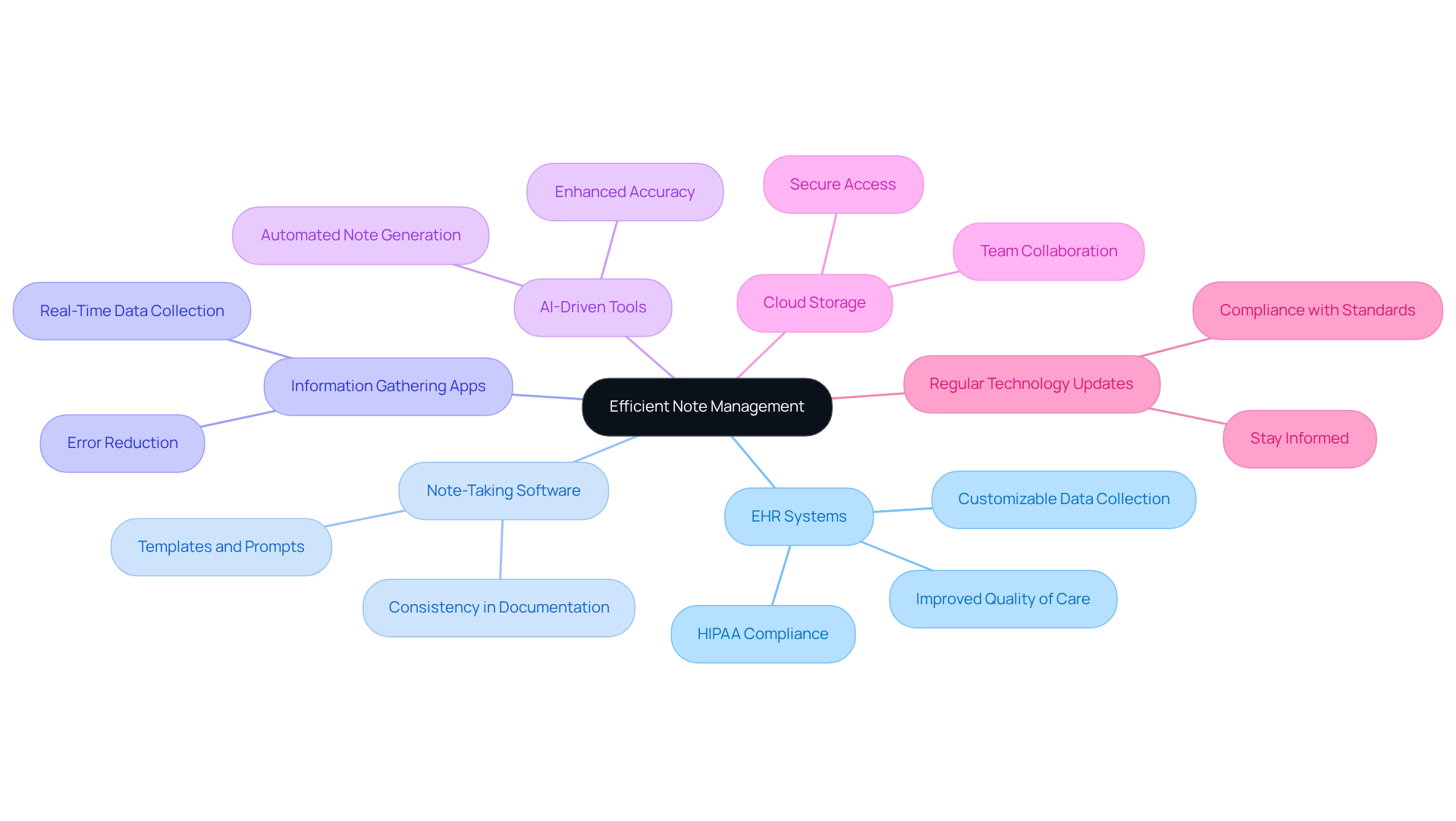
Utilize Electronic Health Record (EHR) Systems: Implement an EHR system specifically designed for ABA therapy. This facilitates straightforward documentation, information collection, and retrieval of client details, streamlining your workflow.
Adopt Note-Taking Software: Leverage specialized note-taking software that provides templates and prompts for essential components. This ensures that all necessary information is captured consistently in the ABA session notes, thereby reducing the risk of oversight.
Integrate Information Gathering Applications: Use mobile applications that allow for real-time information collection during meetings. These apps simplify the process and significantly decrease the likelihood of errors associated with manual data entry.
Automate documentation by exploring AI-driven tools that assist in creating ABA session notes based on input data. This not only saves time but also enhances accuracy in documentation, allowing you to focus on what truly matters-your clients.
Utilize Cloud Storage: Store notes in a secure cloud environment to ensure easy access and sharing among team members. This approach maintains compliance with privacy regulations while fostering collaboration.
Regularly Update Technology: Stay informed about new tools and technologies that can enhance your documentation practices. Regular updates can improve efficiency and ensure compliance with evolving standards.
Are you ready to transform your ABA session note management? Embrace these solutions to streamline your processes and elevate your practice.
Creating effective ABA session notes is not just a task; it’s a cornerstone for optimizing therapy outcomes and tracking client progress. Did you know that thorough documentation can significantly enhance the quality of therapy? By focusing on essential components - client information, treatment goals, and interventions - practitioners can elevate their records and improve therapeutic effectiveness.
Key strategies for effective documentation have been outlined, including:
Have you considered how incorporating data can strengthen your documentation process? Avoiding common pitfalls, such as subjective language and omitted information, is crucial. Moreover, leveraging technology, like EHR systems and note-taking software, can streamline the management of session notes, making it easier to maintain accuracy and efficiency.
Ultimately, the quality of ABA session notes is pivotal to the success of therapy. By committing to best practices and embracing technological tools, practitioners can ensure their documentation meets ethical standards and serves as a valuable resource for informed treatment planning. Elevating the practice of note-taking in ABA therapy transcends mere compliance; it fosters trust and accountability in client care, leading to better outcomes for those served. Are you ready to enhance your documentation practices and improve your therapy outcomes?
What are the key components of ABA session notes?
The key components include client information, session information, treatment goals, interventions used, client responses, information gathered, and plans for the upcoming meeting.
What client information should be included in ABA session notes?
ABA session notes should include the client's full name, date of birth, and any relevant identification numbers for accurate attribution.
Why is session information important in ABA notes?
Session information, such as the date, start and end times, and location, is essential for monitoring the frequency and duration of therapy.
What should be documented regarding treatment goals in ABA session notes?
Treatment goals should clearly outline the specific objectives targeted during the session to aid in assessing progress and coordinating future meetings.
What is meant by 'interventions used' in ABA session notes?
'Interventions used' refers to the specific strategies or techniques implemented during the session, which are important for understanding the client's responses and evaluating treatment effectiveness.
How should client responses be recorded in ABA session notes?
Client responses should be recorded using objective language to describe observable behaviors, avoiding subjective interpretations.
What type of information should be gathered during the session?
Information gathered includes any numerical data collected, such as frequency counts or the duration of specific behaviors, which are crucial for assessing progress and making treatment adjustments.
What should be included in the plans for the upcoming meeting section of ABA session notes?
This section should include suggestions or strategies for the next meeting, along with any modifications to the treatment approach based on the current session's outcomes.
Our expert recruitment strategies and AI-driven sourcing ensure that you receive top-notch candidates quickly, without compromising on quality. Whether you’re looking for BCBAs, Clinical Directors, or RBTs, we’ve got you covered.


