Introduction
Applied Behavior Analysis (ABA) therapy has emerged as a cornerstone in the educational support of students with autism, boasting an impressive success rate that underscores its effectiveness. By harnessing structured techniques and principles, educators can foster significant improvements in communication, social skills, and academic performance among learners.
However, the challenge lies in effectively implementing these strategies within school settings. How can educators ensure that ABA practices are not only adopted but also tailored to meet the unique needs of each student?
This article delves into the core principles of ABA therapy, explores practical techniques for success, and highlights collaborative approaches that can transform educational experiences for students with autism.
Define ABA Therapy: Core Principles and Concepts
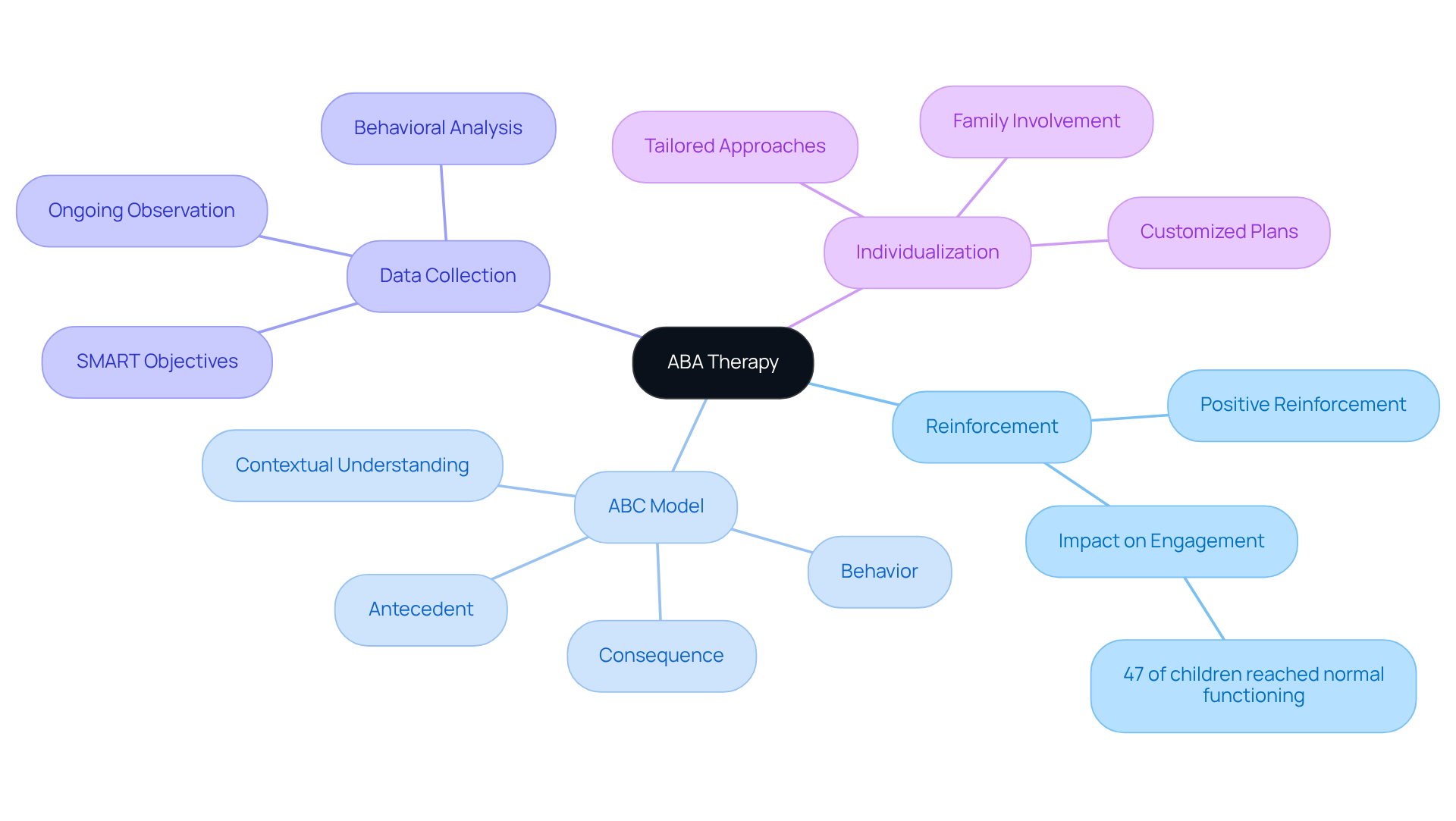
Applied Behavior Analysis (ABA) is a scientific field focused on understanding and altering behavior through systematic methods. The overall is an impressive 89%, demonstrating the effectiveness of these core principles in fostering positive results for learners.
Reinforcement is a fundamental principle of ABA. This principle involves providing a consequence that increases the likelihood of a behavior being repeated. , such as praise or rewards, is widely utilized in educational settings to encourage desired behaviors. Recent studies indicate that , leading to improved academic outcomes. For instance, 47% of children who participated in the UCLA Young Autism Project treatment reached normal intellectual and educational functioning, underscoring the effectiveness of reinforcement strategies.
The aids in understanding the context of behaviors. The antecedent refers to what occurs before a behavior, the behavior itself, and the consequence that follows. This framework allows educators to recognize triggers and results of student behaviors, promoting focused strategies. The effectiveness of the ABA therapy school relies on several crucial factors, including early support, intensity, and duration of therapy, which are essential to the ABC model.
is vital in ABA. Ongoing observation and documentation of behaviors are essential for assessing the effectiveness of strategies. This data-driven method permits prompt modifications according to individual learner requirements, ensuring that support remains pertinent and efficient.
Individualization is at the heart of the ABA therapy school. It highlights the significance of , especially those with autism spectrum disorder (ASD). This tailored approach not only boosts engagement but also results in improved learning outcomes, as shown by recent research emphasizing the on learner behavior and academic performance. Furthermore, children undergoing consistent ABA treatment show sustained improvements even after sessions conclude, reinforcing the argument for tailored interventions.
Explore ABA Techniques: Strategies for Educational Success
Several ABA techniques can be effectively utilized in school settings to promote educational success:
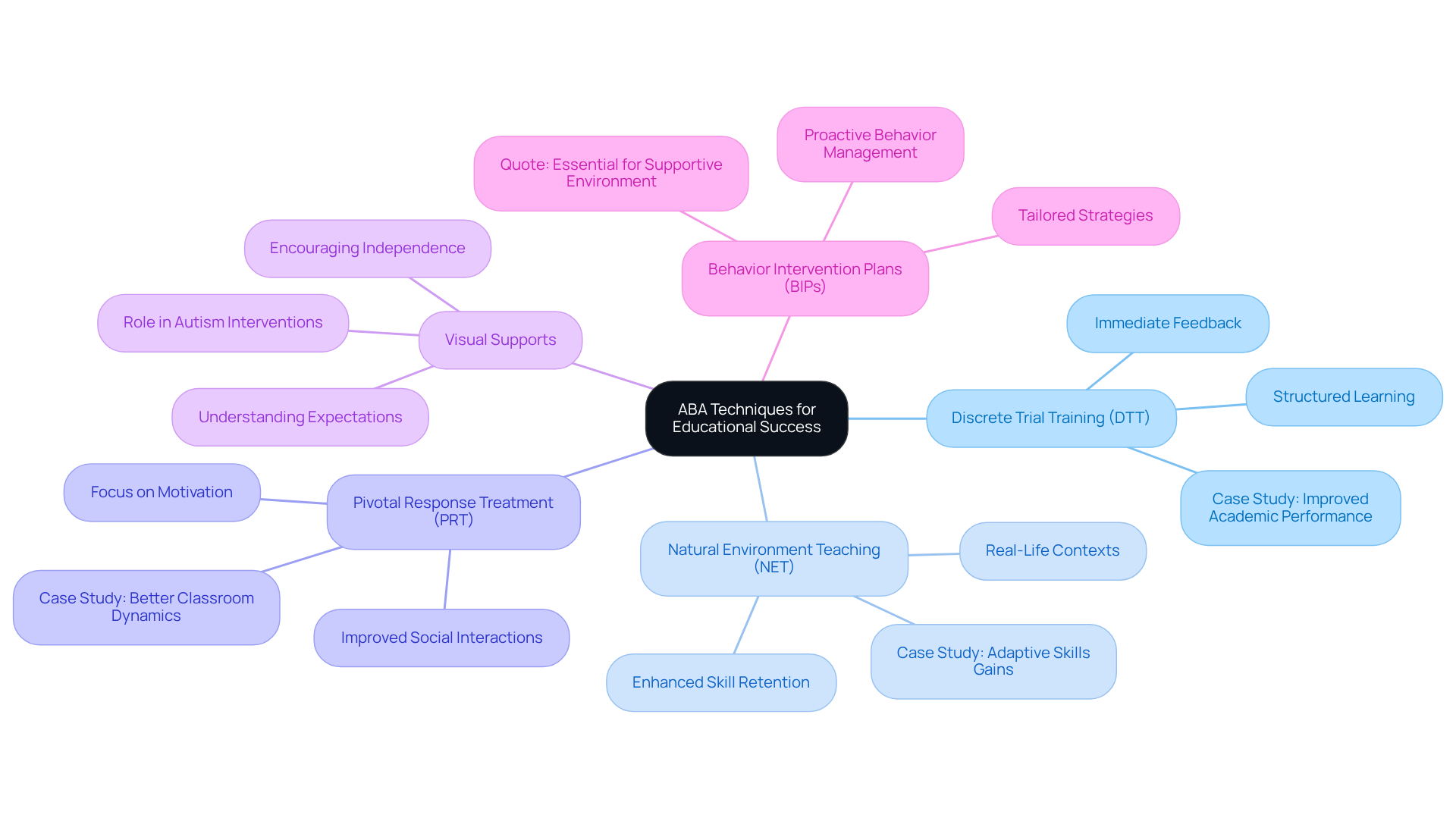
- : This structured method breaks down skills into small, teachable units, each taught through clear instruction, prompting, and reinforcement. DTT is particularly effective for introducing new concepts, as it allows for focused learning and immediate feedback. For instance, a case study demonstrated that individuals who underwent DTT showed significant improvements in their ability to grasp complex concepts, leading to enhanced academic performance.
- : NET emphasizes teaching skills in the natural contexts where they will be applied. For instance, social skills can be practiced during lunch or recess, enabling students to engage in real-life interactions. Research suggests that children with autism demonstrate greater progress in daily skills when NET is included in their treatment, as it increases the relevance and applicability of acquired abilities. A recent study highlighted that toddlers with autism made notable gains in adaptive skills when NET was integrated into their therapy sessions.
- : PRT targets pivotal areas of development, such as motivation and self-management. By nurturing these key areas, individuals can improve their overall learning and social interactions, resulting in more meaningful involvement in classroom activities. A case study revealed that individuals who participated in PRT demonstrated increased motivation and enhanced social skills, resulting in better classroom dynamics.
- : The use of visual aids, such as charts and schedules, assists learners in understanding expectations and routines. This approach not only lessens anxiety but also encourages independence, enabling learners to navigate their school environment more effectively. According to external sources, play a significant role in enhancing autism interventions through ABA therapy, making them a crucial component in educational settings.
- : Tailored to address specific behavioral challenges, BIPs outline strategies for preventing and responding to problematic behaviors. This proactive approach ensures that educators can manage behaviors effectively, creating a for everyone. A quote from a recent article highlighted that 'Behavior Intervention Plans are essential for fostering a supportive educational environment, enabling learners to thrive.'
Incorporating these ABA techniques into an not only supports the learning of individuals with autism but also enhances the overall classroom dynamics, fostering a more inclusive and effective educational experience.
Implement ABA in Schools: Collaborative Approaches and Best Practices
Implementing strategies from an necessitates a collaborative approach that engages multiple stakeholders.
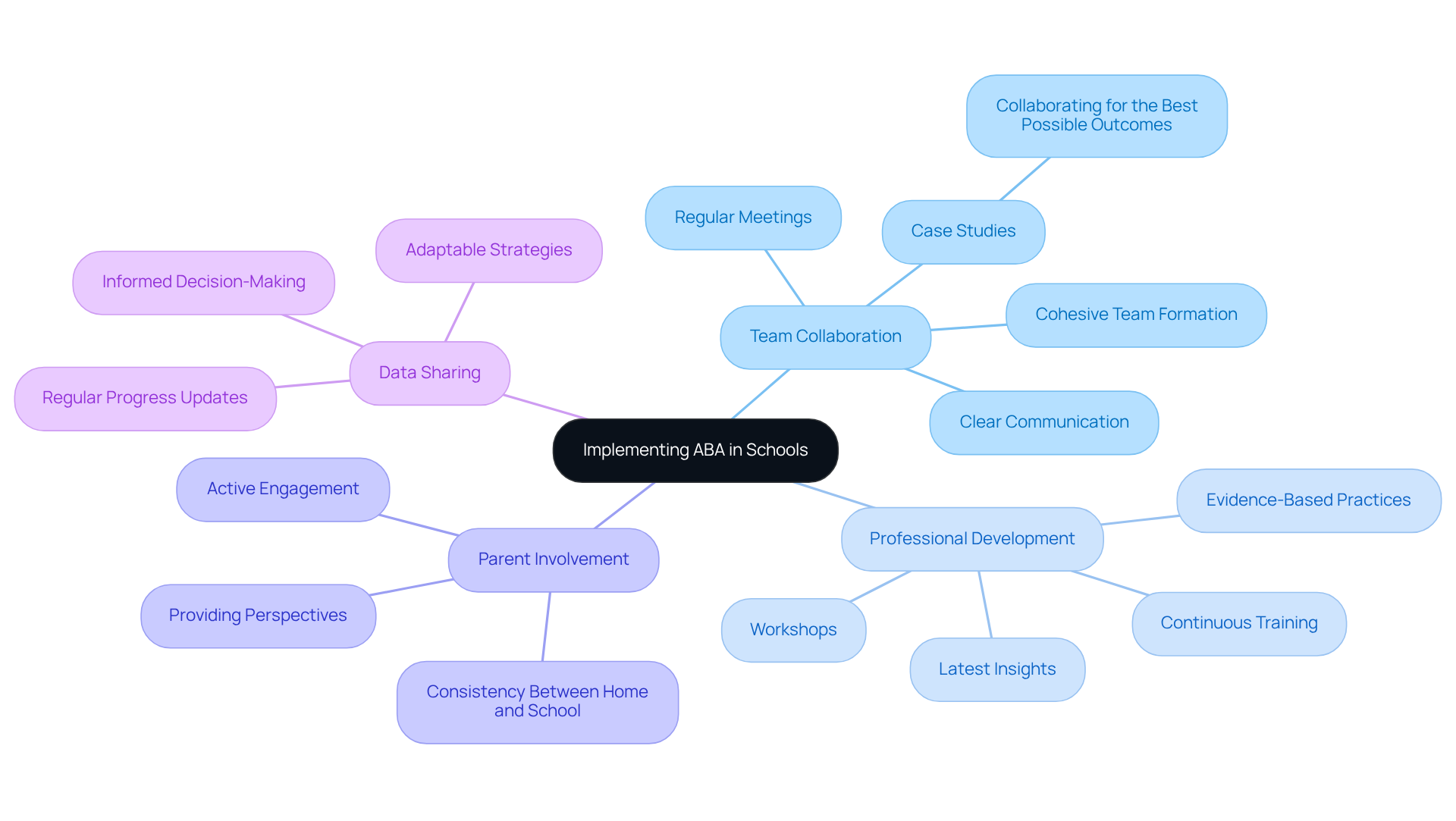
- Team Collaboration: Forming a cohesive team comprising educators, behavior analysts, therapists, and parents is essential. Frequent gatherings and clear communication assist in aligning everyone on common objectives and strategies, promoting a unified approach to learner support. A case study titled '' emphasizes the positive effect of teamwork among ABA professionals and educators, illustrating enhanced educational results for learners.
- Professional Development: Continuous training for school staff on ABA principles and techniques is vital for enhancing their capacity to apply effective strategies in the classroom. Workshops and seminars offer educators the latest insights and practical skills, ensuring they are well-equipped to address the diverse needs of learners with Autism Spectrum Disorder (ASD). According to the National Autism Center, there is , which underscores the importance of professional development.
In an , incorporating ABA strategies into (IEPs) is essential for addressing the unique needs of learners with ASD. These legal documents specify individualized educational objectives and the essential supports, guaranteeing that assistance is customized to each student's needs. Research indicates that , emphasizing the importance of individualized approaches.
- : Actively engaging parents in the ABA process promotes consistency between home and school environments. Parents provide important perspectives on their child's behavior and preferences, which can greatly guide and improve support strategies. The involvement of parents is critical, as it that supports the child's development.
- Data Sharing: Regularly exchanging information on learner progress among team members promotes informed decision-making and enables prompt modifications to interventions. This collaborative data-driven method guarantees that strategies stay effective and adaptable to each learner's evolving needs. Effective data sharing practices can lead to improved outcomes, as evidenced by the overall success rate of 89% for treating autism with ABA methods.
By prioritizing teamwork and continuous professional growth, an can establish a supportive atmosphere that enhances the effectiveness of ABA interventions for individuals with ASD.
Evaluate Outcomes: Benefits of ABA Therapy for Students with Autism
The benefits of ABA therapy for students with autism are well-documented and include:
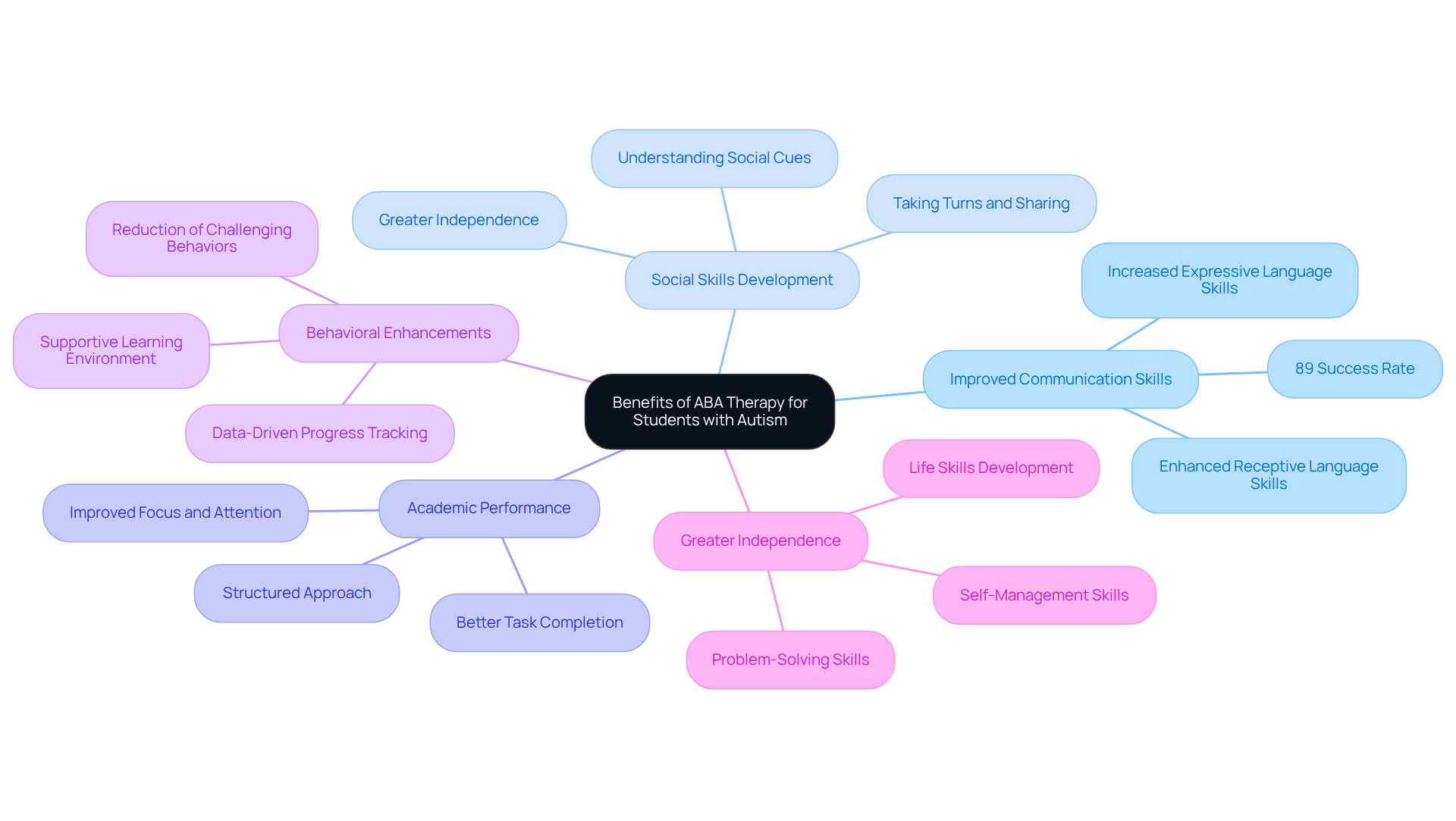
- : ABA therapy significantly enhances language and communication abilities, enabling students to express their needs and interact more effectively with peers and teachers. Research indicates that children enrolled in an exhibit increased expressive and receptive language skills, leading to better social interactions. Notably, the boasts an over 89% , underscoring its effectiveness in .
- : At the , students enhance their social skills through focused strategies, acquiring essential abilities such as taking turns, sharing, and understanding social cues. Long-term studies indicate that children who receive early, intensive support at an achieve and social integration, which are essential for successful interactions. Children who receive early, intensive intervention at an are more likely to achieve , further supporting the importance of timely intervention.
- Academic Performance: The ABA therapy school employs techniques that by improving focus, attention, and task completion, which leads to better academic outcomes for students with ASD. The structured approach of the ABA therapy school provides routine and clarity, which are vital for unlocking academic potential.
- : At the ABA therapy school, are achieved through interventions that effectively reduce challenging behaviors, such as aggression and self-injury, fostering a more supportive learning environment. In an ABA therapy school, data collection methods help quantify behavioral changes, ensuring continuous progress tracking and adjustments. This effectiveness is backed by the statistic that the ABA therapy school treatment significantly , enhancing the overall learning experience.
- : is promoted in learners at an ABA therapy school by teaching self-management and problem-solving skills, thus preparing them for future success in various environments. This empowerment is crucial for developing life skills that extend beyond the classroom, aspects often emphasized in an ABA therapy school. However, it is important to note that less than half (46%) of children continue treatment for 24 months, highlighting the challenges in maintaining engagement over time.
In conclusion, the comprehensive benefits of attending an ABA therapy school for students with autism are supported by substantial evidence, including endorsements from the US Surgeon General, who recognizes ABA as an evidence-based approach that shows significant improvements in communication and social skills.
Conclusion
Applied Behavior Analysis (ABA) therapy stands as a transformative approach for students with autism, underscoring the critical importance of tailored strategies and collaborative efforts within educational settings. By concentrating on core principles such as reinforcement, the ABC model, and individualized interventions, schools can cultivate an environment that not only addresses the unique needs of each learner but also promotes significant academic and social growth.
The article highlights various effective techniques, including:
- Discrete Trial Training
- Natural Environment Teaching
- Behavior Intervention Plans
These strategies collectively enhance communication, social skills, and academic performance among students with autism. Moreover, the emphasis on teamwork among educators, therapists, and parents ensures a cohesive approach that maximizes the benefits of ABA therapy, reinforcing the notion that collaboration is essential for successful implementation.
To fully harness the potential of ABA therapy in schools, ongoing professional development and data-driven decision-making are indispensable. By prioritizing these elements, educators can adapt to the evolving needs of their students, ultimately leading to greater independence and improved learning outcomes. Embracing these strategies not only enhances the educational experience for students with autism but also fosters a more inclusive and supportive school environment for all learners.
Frequently Asked Questions
What is ABA therapy?
Applied Behavior Analysis (ABA) is a scientific field focused on understanding and altering behavior through systematic methods, particularly effective in treating autism.
What is the success rate of ABA therapy for treating autism?
The overall success rate for treating autism at ABA therapy schools is 89%, demonstrating its effectiveness in fostering positive results for learners.
What is reinforcement in ABA therapy?
Reinforcement is a fundamental principle of ABA that involves providing a consequence that increases the likelihood of a behavior being repeated, often through positive reinforcement like praise or rewards.
How does reinforcement impact learner engagement?
Effective reinforcement strategies can significantly enhance learner engagement and motivation, leading to improved academic outcomes.
What is the ABC Model in ABA therapy?
The Antecedent-Behavior-Consequence (ABC) Model helps understand the context of behaviors by identifying what occurs before a behavior (antecedent), the behavior itself, and the consequence that follows, allowing for focused strategies.
What factors contribute to the effectiveness of ABA therapy?
Key factors include early support, intensity, and duration of therapy, which are essential components of the ABC model.
Why is data collection important in ABA therapy?
Ongoing observation and documentation of behaviors are vital for assessing the effectiveness of strategies, allowing for prompt modifications based on individual learner needs.
How does individualization play a role in ABA therapy?
Individualization emphasizes customizing approaches to meet the unique needs of each learner, particularly those with autism spectrum disorder (ASD), resulting in better engagement and improved learning outcomes.
What evidence supports the effectiveness of individualized strategies in ABA therapy?
Recent research indicates that tailored interventions can lead to sustained improvements in behavior and academic performance for children undergoing consistent ABA treatment.
List of Sources
- Define ABA Therapy: Core Principles and Concepts
- Resources | Golden Steps ABA (https://goldenstepsaba.com/resources/success-rates-of-aba-therapy)
- Success Rates of ABA Therapy | Advanced Autism Services (https://advancedautism.com/post/success-rates-of-aba-therapy)
- Applied Behavior Analysis in Children and Youth with Autism Spectrum Disorders: A Scoping Review - PMC (https://pmc.ncbi.nlm.nih.gov/articles/PMC9458805)
- The Impact of ABA Therapy on Academic Success for Children with Autism (https://magnetaba.com/blog/the-impact-of-aba-therapy-on-academic-success-for-children-with-autism)
- Explore ABA Techniques: Strategies for Educational Success
- Natural Environment Teaching (NET): How It Helps with Skill Generalization (https://astroaba.com/blog/natural-environment-teaching-net-how-it-helps-with-skill-generalization)
- ravenhealth.com (https://ravenhealth.com/blog/natural-environment-teaching)
- The Effectiveness of DTT (Discrete Trial Training) in ABA Therapy (https://mastermindbehavior.com/post/the-effectiveness-of-dtt-discrete-trial-training-in-aba-therapy)
- The Benefits of Natural Environment Teaching in ABA Therapy (https://mastermindbehavior.com/post/the-benefits-of-natural-environment-teaching-in-aba-therapy)
- What is Natural Environment Teaching? A Guide to NET | National University (https://nu.edu/blog/what-is-natural-environment-teaching)
- Implement ABA in Schools: Collaborative Approaches and Best Practices
- What Are ABA Therapy Quotes? Understanding Their Role and Importance – Rori Blog (https://rori.care/post/what-are-aba-therapy-quotes-understanding-their-role-and-importance)
- centralreach.com (https://centralreach.com/blog/collaborative-learning-the-value-of-aba-in-schools)
- Resources | Golden Steps ABA (https://goldenstepsaba.com/resources/success-rates-of-aba-therapy)
- discoveryaba.com (https://discoveryaba.com/aba-therapy/aba-therapy-for-child-development-programs)
- pmc.ncbi.nlm.nih.gov (https://pmc.ncbi.nlm.nih.gov/articles/PMC11487924)
- Evaluate Outcomes: Benefits of ABA Therapy for Students with Autism
- Success Rates of ABA Therapy | Advanced Autism Services (https://advancedautism.com/post/success-rates-of-aba-therapy)
- The Numbers Don't Lie: Revealing Autism Therapy Statistics | Above and Beyond Therapy (https://abtaba.com/blog/autism-therapy-statistics)
- magnetaba.com (https://magnetaba.com/blog/how-aba-therapy-improves-communication-skills-in-children-with-autism)
- supportivecareaba.com (https://supportivecareaba.com/statistics/the-impact-of-aba-therapy-on-academic-success-for-children-with-autism)