


Thank you! Your submission has been received!
Oops! Something went wrong while submitting the form.
October 27, 2025

The surge in demand for Board Certified Behavior Analysts (BCBAs) is a compelling indicator of a critical juncture in the field of Applied Behavior Analysis (ABA). Job opportunities are projected to grow by an astounding 22% over the next decade. This statistic underscores the necessity for aspiring professionals to understand the educational pathways and certification requirements essential for success in this field.
However, navigating the complexities of BCBA certification can be daunting. What specific steps must one take to not only achieve certification but also maintain it in an ever-evolving landscape? This article delves into the intricacies of BCBA education requirements, the examination process, and the ongoing commitment to professional development. It provides a roadmap for those eager to excel in this rewarding career.
The demand for is staggering, with over the next decade. This growth significantly outpaces the average for other occupations, underscoring the importance of the BCBA designation. This credential, granted by the Behavior Analyst Certification Board (BACB), validates a professional's expertise in and ensures adherence to ethical practices in therapy.
BCBAs play a pivotal role in developing and implementing , making their qualifications essential for maintaining high standards of care in ABA therapy environments. As the field continues to evolve, the significance of meeting becomes increasingly apparent for those looking to advance their careers.
Moreover, Board Certified Behavior Analysts who pursue , such as BCBA-D, can expect . This potential for , particularly in a job market that is rapidly expanding. For instance, from 7,091 in 2017 to 16,109 in 2018, indicating a robust job market.
The urgency for certification is further emphasized by the astonishing 1,942% increase in demand for behavior analysts from 2010 to 2018. As the ABA therapy sector expands, professionals must stay informed about new opportunities. Personalized , such as those offered by Hire ABA, utilize advanced job fit scoring and Resume Assessments to connect behavior analysts with positions that align with their skills and career aspirations.
Are you facing challenges in hiring qualified behavior analysts? Hire ABA is here to help you navigate this evolving landscape. By leveraging our expertise, you can explore leadership and remote roles that not only enhance your career but also allow you to positively impact more lives. Don't miss out on the chance to connect with emerging opportunities—partner with Hire ABA today.

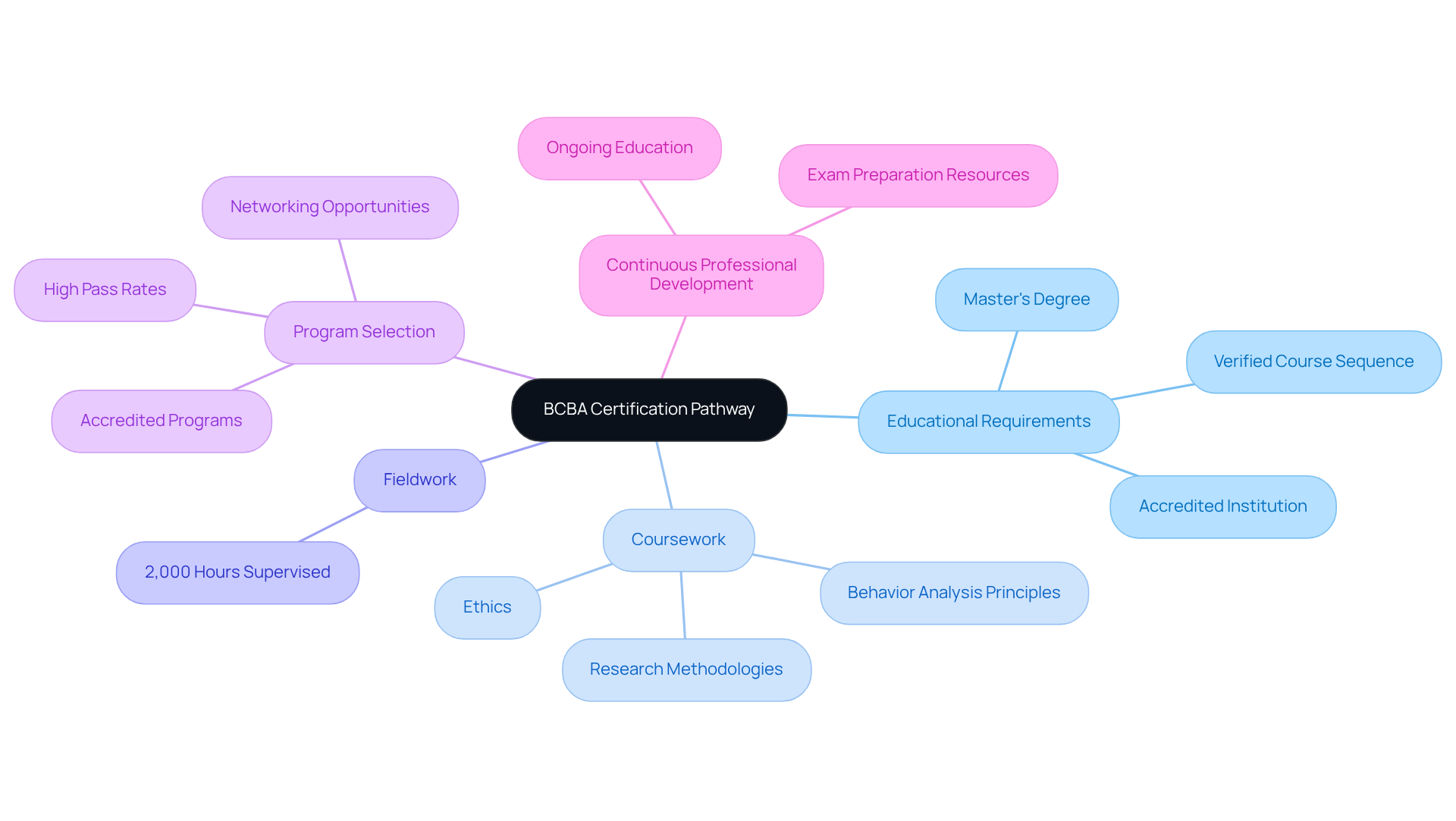
To meet the , individuals must earn a , psychology, or a related field from an . This educational journey encompasses essential coursework that fulfills the , covering behavior analysis principles, ethics, and research methodologies. Moreover, applicants must fulfill the [[BCBA education requirements](https://hireaba.today/blog-posts/10-bcba-masters-programs-to-advance-your-aba-career)](https://hireaba.today) by completing a sanctioned by the Behavior Analyst Certification Board (BACB), ensuring that the curriculum adheres to established standards. Candidates must also finish around 2,000 hours of to satisfy BACB requirements, which is an essential part of the credentialing process.
Numerous universities provide specialized programs tailored for aspiring BCBAs, often integrating . For instance, Florida Tech's online master's program boasts a 78% pass rate for the BCBA exam in 2023, highlighting its efficiency in preparing students for qualification. It is crucial for candidates to select programs that not only meet BCBA education requirements but also foster networking and mentorship opportunities within the ABA community.
Continuous professional growth and renewal processes are vital for upholding credentials and remaining current in the field. As of 2025, there are numerous across the United States, reflecting the growing demand for qualified professionals. Engaging with respected organizations that provide focused exam preparation materials, such as practice tests and guidance, significantly enhances the chances of success in the qualification process. Recent updates to BACB standards, including online testing through Pearson VUE, further improve accessibility for applicants.
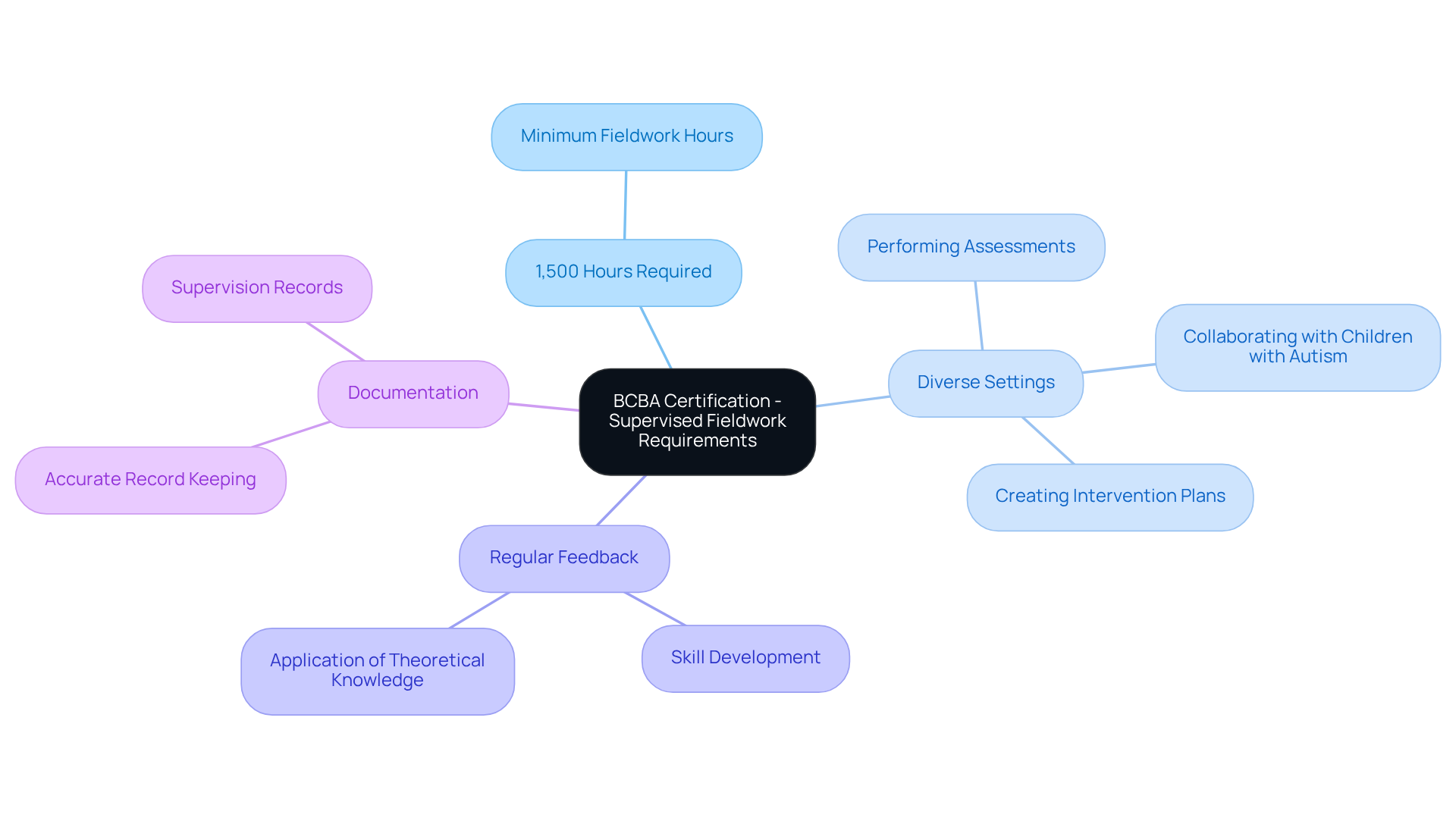
To meet the , candidates for must complete a minimum of 1,500 hours of , conducted under the guidance of a qualified BCBA. This essential fieldwork should encompass a variety of settings and populations, ensuring a well-rounded experience that is crucial for .
Regular feedback and assessment are integral to this oversight, assisting individuals in honing their skills and applying theoretical knowledge in real-world scenarios. To enhance practical comprehension of ABA principles, it is highly recommended for applicants to pursue . Collaborating with children with autism, performing assessments, and creating are just a few examples of how candidates can deepen their understanding and expertise in the field.
Documentation of fieldwork hours and supervision is not just a formality; it is necessary to fulfill the for certification. Therefore, maintaining accurate records is essential. Are you ready to take the next step in your career? Ensure you meet the BCBA education requirements to secure your BCBA certification and advance in this rewarding field.
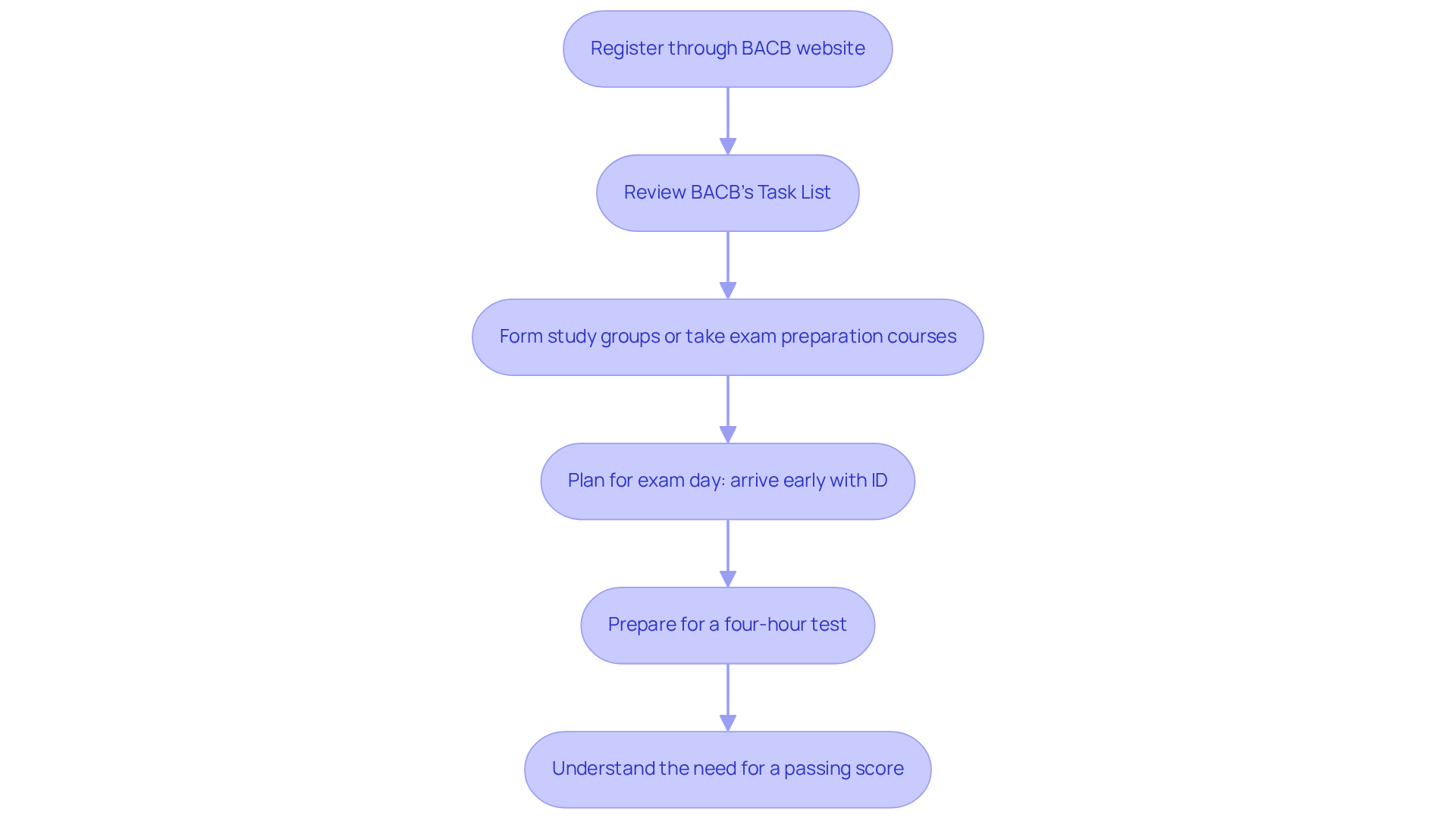
The represents a rigorous assessment that evaluates individuals' mastery of behavior analysis principles, ethical considerations, and practical applications. To initiate this process, applicants must register through the and remit the necessary fees. A critical component of preparation is the review of the , which delineates the key content areas that will be tested. Many successful applicants advocate for the formation of or participation in , as these collaborative efforts can significantly enhance comprehension and retention of complex material. Inge Poole, PhD, underscores the importance of in study environments, which can profoundly impact learning outcomes.
On exam day, participants should plan to arrive early, equipped with the necessary identification, and prepared to engage in a computer-based test that typically spans four hours. The exam's structure necessitates a , underscoring the importance of . Insights from accomplished behavior analysts reveal that an average preparation time of several months is typical, with many individuals noting that consistent study habits and practical application of concepts substantially contributed to their success. By employing these strategies, candidates can navigate the examination process with confidence and enhance their likelihood of obtaining accreditation. Furthermore, understanding the significance of effective study environments, as highlighted in case studies on classroom arrangements, can further bolster preparation efforts.
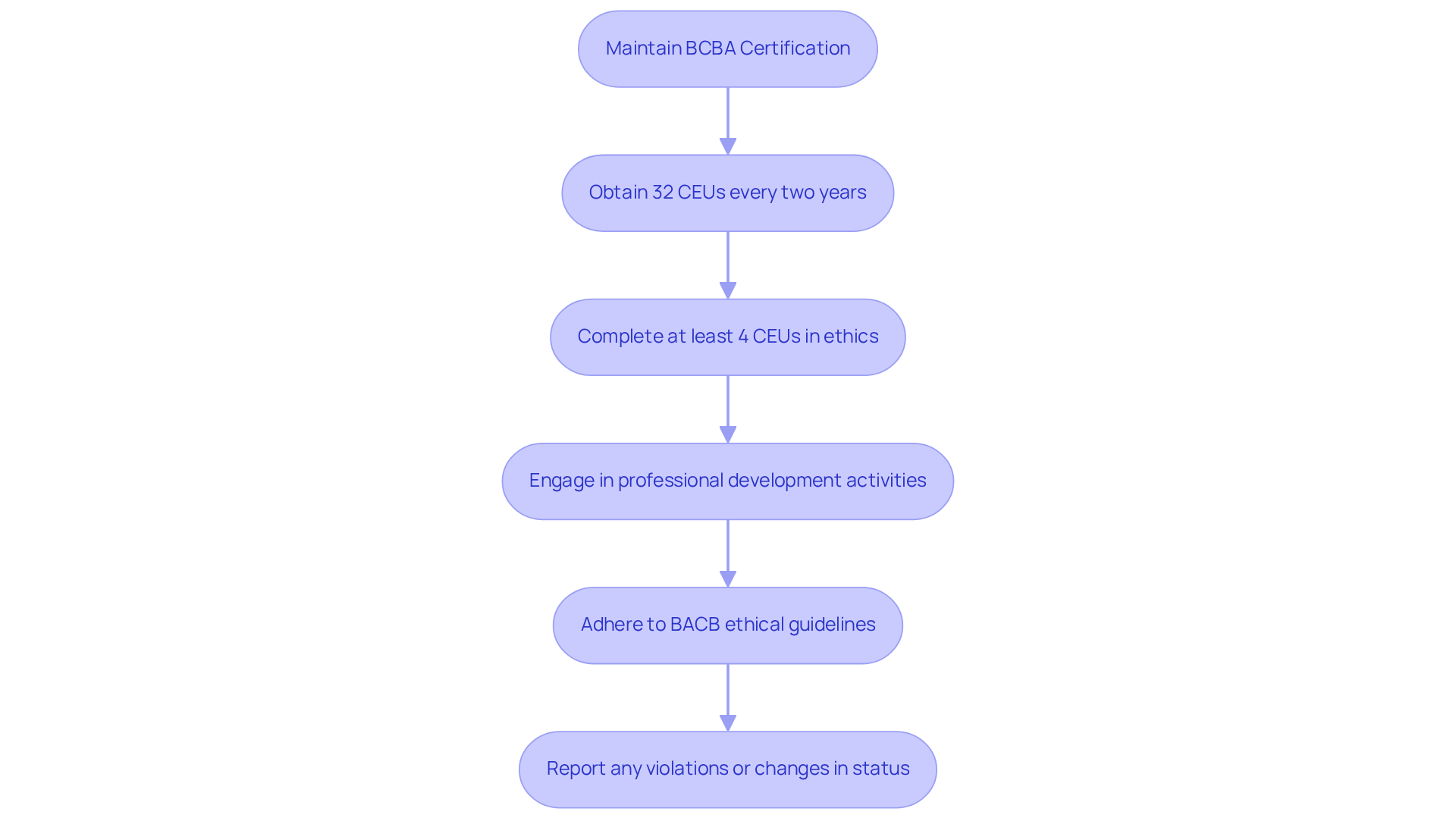
Once certified, board-certified behavior analysts (BCBAs) must uphold their credentials by fulfilling . This necessitates fulfilling the BCBA education requirements by obtaining a minimum of 32 (CEUs) every two years, with at least four units dedicated to ethics. Engaging in professional development activities, such as attending workshops, conferences, and online courses, is strongly encouraged to remain abreast of best practices and advancements in the field.
Furthermore, BCBAs are obligated to adhere to the set forth by the Behavior Analyst Certification Board (BACB) and must report any violations or changes in their professional status. Regularly reviewing and updating skills not only ensures compliance with certification requirements but also significantly enhances the quality of care provided to clients.
Are you facing challenges in hiring qualified BCBAs? Consider how the commitment to can elevate your team's effectiveness and client satisfaction. With platforms like , you can connect with top-tier professionals dedicated to excellence in behavior analysis.
The journey to becoming a Board Certified Behavior Analyst (BCBA) is both challenging and rewarding, underscoring the critical importance of this certification in the field of Applied Behavior Analysis (ABA). With the demand for qualified BCBAs continuing to soar, understanding the educational pathways and requirements is essential for aspiring professionals seeking to make a significant impact in their communities.
Throughout this article, key aspects of the BCBA certification process have been highlighted, including:
The ongoing commitment to professional development and ethical practice that certified BCBAs must uphold to maintain their credentials has also been emphasized. Furthermore, the potential for career advancement and financial growth illustrates the value of obtaining BCBA certification in today's job market.
In light of the increasing demand for BCBAs and the evolving landscape of behavior analysis, it is imperative for professionals to take proactive steps toward certification. By investing in their education and engaging in continuous learning, aspiring BCBAs can not only enhance their career prospects but also contribute to the well-being of those they serve. Embracing this path fulfills personal career aspirations and plays a crucial role in elevating the standards of care within the ABA community.
What is BCBA certification and why is it important?
BCBA certification, granted by the Behavior Analyst Certification Board (BACB), validates a professional's expertise in Applied Behavior Analysis (ABA) and ensures adherence to ethical practices in therapy. The demand for BCBAs is projected to grow by approximately 22% over the next decade, making this credential essential for maintaining high standards of care in ABA therapy environments.
What role do BCBAs play in the field of behavior analysis?
BCBAs are pivotal in developing and implementing behavior intervention strategies, which are crucial for effective therapy. Their qualifications are essential for ensuring high standards of care in ABA therapy settings.
What are the educational requirements for obtaining BCBA certification?
To obtain BCBA certification, individuals must earn a master's degree in behavior analysis, psychology, or a related field from an accredited institution. They must also complete a Verified Course Sequence (VCS) sanctioned by the BACB and finish around 2,000 hours of supervised fieldwork.
How can aspiring BCBAs prepare for the certification exam?
Aspiring BCBAs can prepare for the certification exam by enrolling in specialized programs that meet BCBA education requirements and offer practical experiences. Engaging with organizations that provide focused exam preparation materials, such as practice tests and guidance, can also enhance the chances of success.
What is the potential salary increase for BCBAs who pursue advanced credentials like BCBA-D?
BCBAs who pursue advanced credentials, such as BCBA-D, can expect salary increases of 10% to 20%, making these accreditations appealing in a rapidly expanding job market.
How has the demand for behavior analysts changed in recent years?
The demand for behavior analysts has significantly increased, with a 1,942% rise from 2010 to 2018. Job postings for board-certified behavior analysts surged from 7,091 in 2017 to 16,109 in 2018, indicating a robust job market.
What resources are available for job placement for behavior analysts?
Personalized job matching solutions, such as those offered by Hire ABA, utilize advanced job fit scoring and Resume Assessments to connect behavior analysts with positions that align with their skills and career aspirations.
What is the significance of continuing professional growth for BCBAs?
Continuous professional growth and renewal processes are vital for upholding BCBA credentials and remaining current in the field, ensuring that professionals stay informed about new opportunities and developments in ABA therapy.
Our expert recruitment strategies and AI-driven sourcing ensure that you receive top-notch candidates quickly, without compromising on quality. Whether you’re looking for BCBAs, Clinical Directors, or RBTs, we’ve got you covered.


