


Thank you! Your submission has been received!
Oops! Something went wrong while submitting the form.
February 21, 2026

Behavior contracts are pivotal tools in Applied Behavior Analysis (ABA) therapy. These formal agreements clarify expectations and responsibilities between clients and their therapists. With the increasing demand for Board Certified Behavior Analysts (BCBAs), the implementation of these contracts is essential for fostering accountability and driving positive behavioral changes.
But what challenges do practitioners face? Ensuring these contracts are not only well-defined but also adaptable to individual needs can be daunting. How can practitioners effectively harness the power of behavior contracts to enhance therapeutic outcomes?
Consider this: the demand for BCBAs is skyrocketing, making it crucial for professionals in the field to utilize every tool at their disposal. Behavior contracts not only set clear expectations but also empower clients to take ownership of their progress. By establishing a mutual understanding, therapists can create a more effective therapeutic environment.
As you reflect on your current hiring challenges, think about how behavior contracts can address these issues. Are you ready to enhance your practice and navigate the complexities of behavior modification? The time to act is now.
, often referred to as contingency arrangements, are essential formal pacts between individuals, such as clients or students, and their caregivers or therapists. These agreements clearly outline expected actions, the benefits of meeting those expectations, and the . In the realm of , these agreements provide a that enhances accountability and clarity in modification efforts.
Did you know that the demand for is on the rise? This growing need underscores the importance of in promoting . By defining objectives and the reinforcement methods to achieve them, these agreements foster a shared understanding of expectations. This empowers individuals to take responsibility for their actions and progress, ultimately leading to improved outcomes.
Research indicates that conduct agreements can significantly reduce inappropriate behaviors, boasting a moderate effect size of 0.57. They also positively impact academic achievement, showcasing their effectiveness across various environments. However, the successful implementation of these agreements hinges on , consistent monitoring, and the active participation of all stakeholders. This collaborative approach ensures that the therapeutic process is tailored to individual needs.
As the field of ABA therapy evolves, particularly looking ahead to 2026, the significance of remains paramount. They serve as a vital tool in promoting effective interventions and enhancing client success. Are you ready to leverage the power of behavior agreements in your practice? Embrace this essential strategy to drive meaningful change.

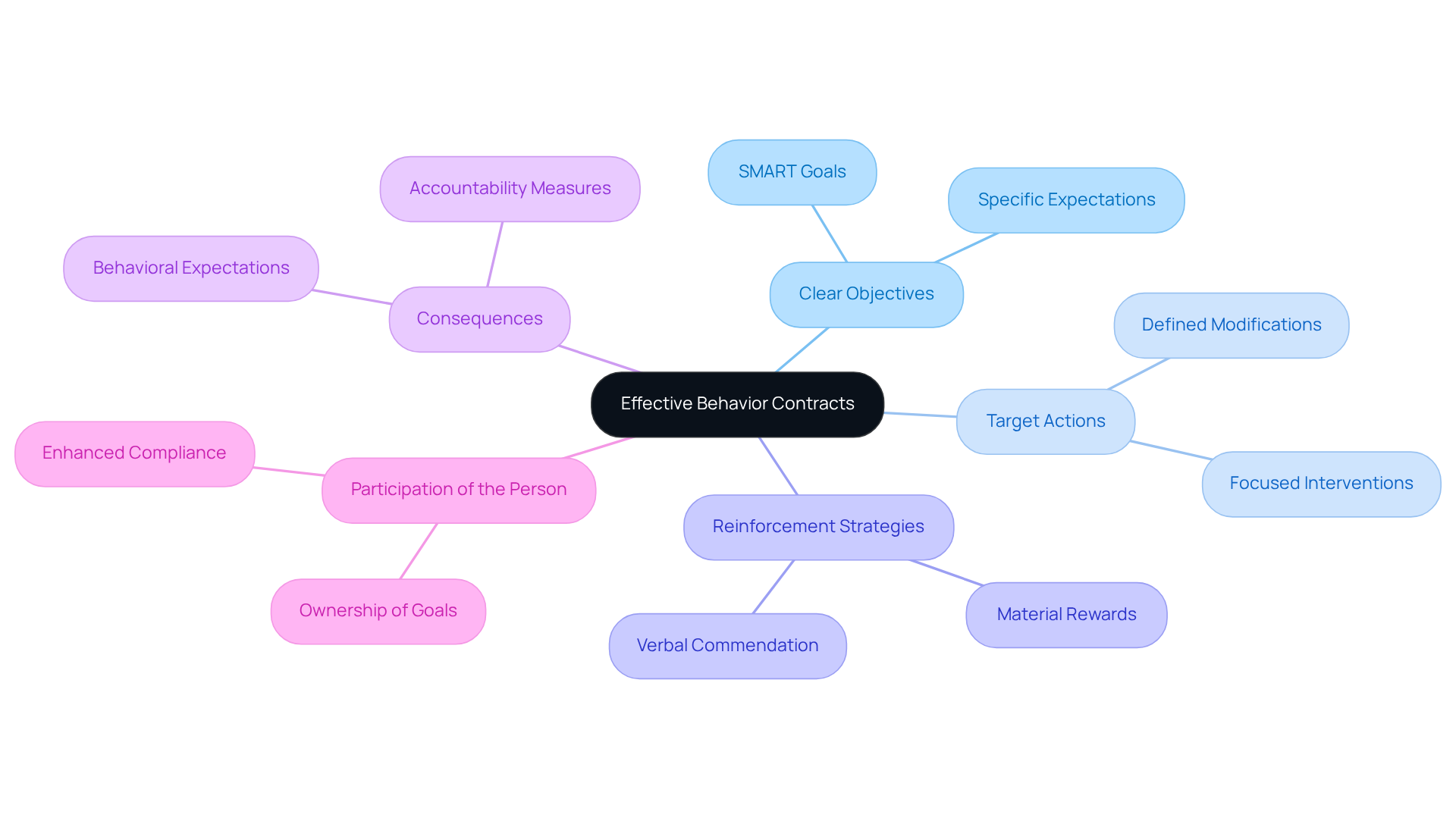
Effective are crucial for . They should include several key elements:
By incorporating these elements, practitioners can create that are . Are you ready to implement these strategies in your practice?
To implement and monitor effectively, practitioners should follow these essential steps:
By adhering to these steps, practitioners can ensure that are implemented effectively and contribute positively to the individual's journey toward meaningful change. Additionally, being mindful of common pitfalls - such as vague definitions of actions or inconsistent periods - can help practitioners avoid misapplication of these practices.

Continuous assessment and modification of agreements are essential for ensuring their effectiveness in ABA therapy. Consider these key practices:
By implementing these evaluation practices, practitioners can enhance the effectiveness of as tools for fostering positive behavior change in ABA therapy. Additionally, understanding the unique strengths and challenges of individuals within the autism spectrum can improve the tailoring of these contracts, ensuring they meet the specific needs of each person.

Behavior contracts are a cornerstone of Applied Behavior Analysis (ABA) therapy, providing a structured approach that enhances accountability and clarity. These agreements not only outline expectations for behavior but also establish a framework for reinforcement and consequences, empowering individuals to take ownership of their progress. By leveraging the principles of behavior contracts, practitioners can significantly improve therapeutic outcomes and foster meaningful change.
What makes behavior contracts so effective? Several key components contribute to their success, including the importance of clear objectives, defined target actions, and reinforcement strategies. Regular monitoring and evaluation are crucial, allowing practitioners to adjust contracts based on individual needs and progress. Engaging all stakeholders in the process ensures that the contracts remain relevant and effective, ultimately leading to improved behavioral outcomes.
Incorporating behavior contracts into ABA therapy is not merely a best practice; it is an essential strategy for driving positive change. By committing to clear communication, ongoing assessment, and flexibility in approach, practitioners can harness the full potential of these agreements. Embrace the power of behavior contracts to create a more impactful therapeutic experience, fostering growth and success for individuals on their journey toward meaningful behavior change.
What are behavior contracts in ABA therapy?
Behavior contracts, also known as contingency arrangements, are formal agreements between individuals, such as clients or students, and their caregivers or therapists. They outline expected actions, benefits for meeting those expectations, and consequences for failing to do so.
Why are behavior contracts important in ABA therapy?
They provide a structured framework that enhances accountability and clarity in behavior modification efforts, fostering a shared understanding of expectations and empowering individuals to take responsibility for their actions and progress.
What impact do behavior contracts have on behavior and academic achievement?
Research shows that behavior contracts can significantly reduce inappropriate behaviors and positively impact academic achievement, demonstrating their effectiveness in various environments.
What factors contribute to the successful implementation of behavior contracts?
Successful implementation relies on clear communication, consistent monitoring, and active participation from all stakeholders involved in the therapeutic process.
What is the future significance of behavior contracts in ABA therapy?
As the field of ABA therapy evolves, particularly looking ahead to 2026, behavior contracts remain a vital tool for promoting effective interventions and enhancing client success.
Our expert recruitment strategies and AI-driven sourcing ensure that you receive top-notch candidates quickly, without compromising on quality. Whether you’re looking for BCBAs, Clinical Directors, or RBTs, we’ve got you covered.


