


Thank you! Your submission has been received!
Oops! Something went wrong while submitting the form.
November 23, 2025

Understanding the complexities of behavior modification is crucial in Applied Behavior Analysis (ABA) therapy. The concept of extinction stands out as a key technique in this field. By deliberately withholding reinforcement, practitioners can effectively reduce undesired behaviors, making extinction a powerful tool for fostering positive change.
However, mastering extinction is not without its challenges. Practitioners often face initial behavior spikes and client resistance. How can ABA professionals effectively navigate these hurdles? This question is essential for implementing extinction strategies that truly transform behavior.
As the demand for Board Certified Behavior Analysts (BCBAs) continues to rise, the need for effective recruitment solutions becomes increasingly important. Hire ABA offers a reliable platform for connecting with qualified candidates, ensuring that your practice can thrive in this competitive landscape.
The concept of extinction in operant conditioning is critical as it refers to the process of reducing or eliminating a previously reinforced action by withholding the reinforcement that supported it. Consider this: if a child has been rewarded with attention for throwing a tantrum, stopping this attention will eventually lead to a decrease in those tantrums. This principle is not just theoretical; it plays a vital role in Applied Behavior Analysis (ABA) therapy. By understanding how actions can be altered through the lack of reinforcement, professionals can foster more adaptive responses over time.
Are you currently facing challenges in managing behaviors effectively? Recognizing the significance of extinction can empower you to implement strategies that lead to . By focusing on the absence of reinforcement, you can create an environment that encourages desirable behaviors.
In conclusion, it is essential for anyone involved in ABA therapy to master the concept of extinction in operant conditioning. It not only enhances your understanding of behavior modification but also equips you with the tools to promote healthier responses in your clients.

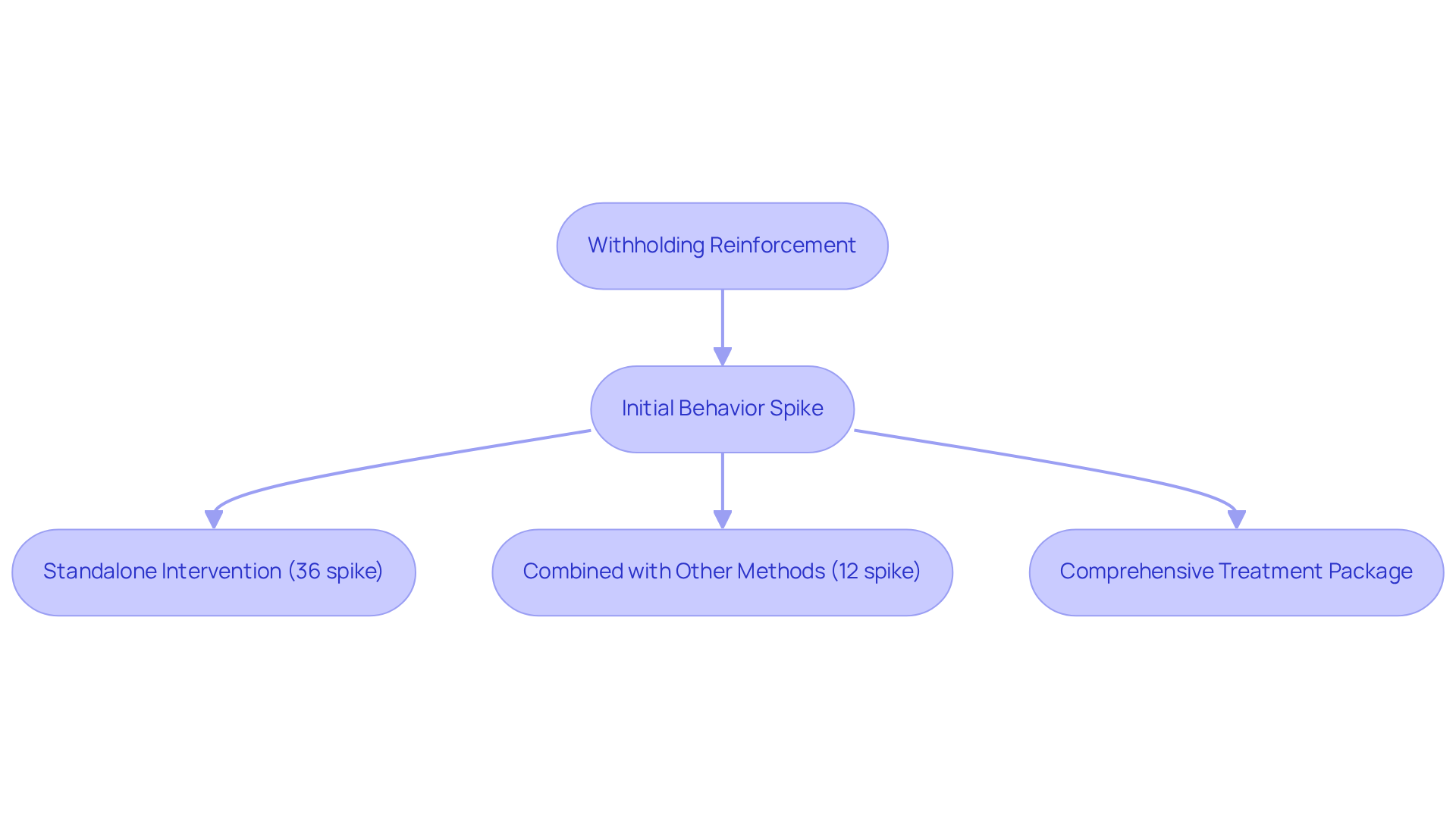
Understanding extinction in operant conditioning is vital for practitioners aiming to effectively manage behavior modification. Did you know that when reinforcement is withheld, individuals often experience an initial surge in the frequency of the target behavior? This is known as a behavior spike, and it occurs as individuals strive to regain the previously available reinforcement. Research indicates that cessation surges are evident in approximately 24% of cases examined in a study involving 113 data sets. This figure rises to 36% when the approach is used as a standalone intervention. Conversely, when combined with other operant methods, the frequency of behavior recovery spikes drops to just 12%.
For instance, a study analyzing 41 data sets on self-harming behavior treatment found that nearly half of the cases exhibited sudden spikes or increased aggression. However, these adverse effects were significantly mitigated when cessation was part of a comprehensive treatment package. This highlights the importance of incorporating alternative reinforcement strategies to reduce the likelihood of sudden behavioral increases.
Grasping these mechanisms is crucial for professionals. By anticipating the initial rise in unwanted behaviors, practitioners can better manage the process of extinction in operant conditioning. Utilizing methods that integrate cessation with other approaches allows for a smoother transition toward the desired change, ultimately . Are you ready to implement these strategies for better outcomes in your practice?
To effectively implement extinction techniques in clinical practice, practitioners should follow these essential steps:
As highlighted by the U.S. Centers for Disease Control and Prevention, effective ABA therapy relies on systematic data collection and monitoring to ensure meaningful improvements. Are you ready to elevate your practice with these proven strategies?
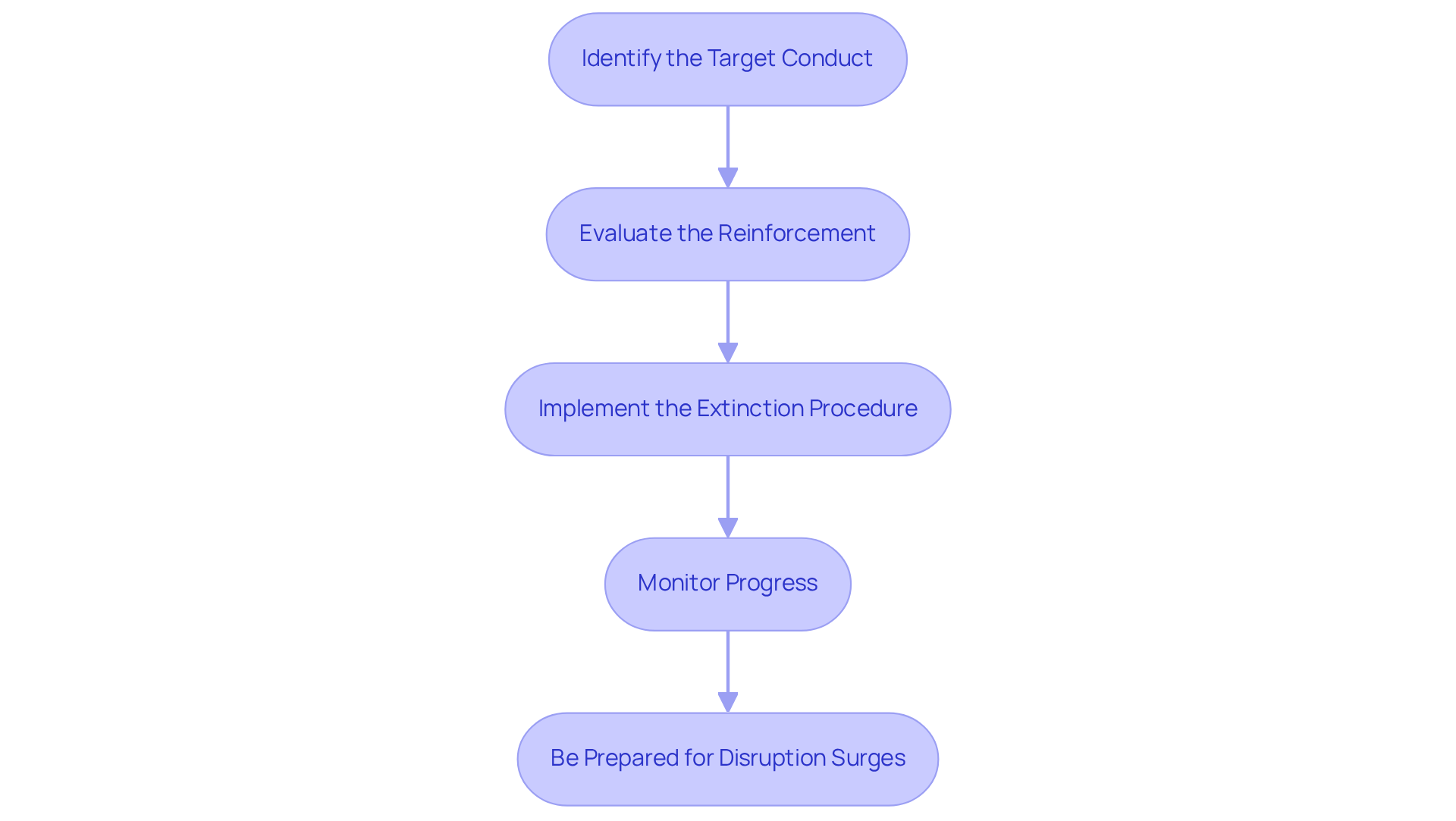
Implementing extinction in operant conditioning techniques in ABA therapy presents several challenges that practitioners must navigate effectively. Did you know that approximately 24% of cases analyzed in a study involving 113 sets of termination data show a phenomenon known as a cessation spike? This initial increase in actions can be unsettling, but professionals must remain patient and consistent in their approach. Understanding is crucial for practitioners preparing for potential responses during the elimination process.
By anticipating these challenges and preparing strategies to address them, practitioners can enhance the effectiveness of their practice regarding extinction in operant conditioning techniques. This proactive approach ultimately leads to more successful outcomes in behavior modification. Are you ready to improve your practice and tackle these challenges head-on?

Understanding extinction in operant conditioning is crucial for professionals in Applied Behavior Analysis (ABA) therapy. Did you know that the demand for Board Certified Behavior Analysts (BCBAs) is on the rise? Mastering this concept not only enhances behavior modification techniques but also empowers practitioners to foster positive behavioral changes in their clients. By effectively withholding reinforcement, practitioners can guide individuals toward more adaptive responses, ultimately improving therapeutic outcomes.
Key insights from the article highlight the mechanisms of operant extinction, including the initial behavior spike that often occurs when reinforcement is removed. What strategies can you implement for successful outcomes? Identifying target behaviors and monitoring progress are essential for navigating the challenges associated with extinction. Additionally, addressing potential resistance from clients and ensuring consistent application of techniques are vital for achieving effective behavior modification.
The significance of mastering extinction techniques cannot be overstated. By embracing these strategies, practitioners can enhance their effectiveness in ABA therapy, leading to more meaningful improvements in client behavior. As the field continues to evolve, the commitment to understanding and applying extinction in operant conditioning will remain a cornerstone of successful therapeutic practice. Are you ready to elevate your practice and make a lasting impact?
What is extinction in operant conditioning?
Extinction in operant conditioning refers to the process of reducing or eliminating a previously reinforced action by withholding the reinforcement that supported it.
Can you provide an example of extinction?
An example of extinction is when a child who has been rewarded with attention for throwing a tantrum stops receiving that attention, leading to a decrease in tantrums over time.
How is the concept of extinction used in Applied Behavior Analysis (ABA) therapy?
In ABA therapy, understanding extinction helps professionals alter behaviors by recognizing how the lack of reinforcement can lead to more adaptive responses.
Why is it important to understand extinction for behavior management?
Understanding extinction is important for behavior management as it empowers individuals to implement strategies that promote positive behavioral changes by focusing on the absence of reinforcement.
What is the significance of mastering extinction in ABA therapy?
Mastering extinction in ABA therapy enhances the understanding of behavior modification and equips practitioners with tools to promote healthier responses in their clients.
Our expert recruitment strategies and AI-driven sourcing ensure that you receive top-notch candidates quickly, without compromising on quality. Whether you’re looking for BCBAs, Clinical Directors, or RBTs, we’ve got you covered.


