


Thank you! Your submission has been received!
Oops! Something went wrong while submitting the form.
December 28, 2025

Understanding off-task behavior is crucial for educators who strive to cultivate an effective learning environment. This behavior, which encompasses distractions such as doodling or chatting, not only impedes individual student progress but can also disrupt the entire classroom dynamic. By delving into proactive strategies and operational definitions, educators can discover methods to enhance focus and engagement among students.
How can teachers transform these distractions into opportunities for improved academic performance and collaboration? This question invites educators to reflect on their current approaches and consider innovative solutions that can foster a more productive classroom atmosphere.
includes any actions that divert a learner's attention from assigned tasks, such as physical movements, verbal distractions, or even daydreaming. Understanding is crucial, as it can significantly affect educational outcomes and the dynamics of the classroom. For example, when students exhibit by doodling, chatting with peers, or using mobile devices during lessons, they .
Research indicates that establishing early on is far more effective than imposing consequences after disruptive behaviors arise. Proactive strategies, such as demonstrating empathy and fostering supportive relationships, are vital for encouraging . These approaches help learners grasp how their actions affect others.
Consider case studies like 'Preventing Conduct Issues,' which show that can and academic performance. This ultimately leads to a more effective learning environment. Are you ready to take action and create a classroom atmosphere that promotes focus and collaboration?

are crucial in effectively addressing challenges within educational environments. Did you know that can be defined as any instance where a student is not engaged with the assigned task for over three seconds? This includes , such as looking away from the teacher, chatting with classmates without permission, or engaging in unrelated activities. By establishing these , educators can systematically observe and document , which is vital for crafting targeted interventions.
Research indicates that classrooms utilizing visual aids have seen a . This statistic underscores the significance of clear definitions and strategies in managing student behavior. Moreover, consistently applying operational definitions , ensuring a shared understanding of what constitutes unproductive conduct. This clarity is essential for implementing effective strategies that foster student engagement and improve overall educational outcomes. After all, can significantly impact social interactions and emotional development.

creates a significant barrier to learner progress and growth. Did you know that about 54 percent of U.S. learners report being distracted by their peers using ? This statistic highlights the widespread nature of this issue. Students who frequently demonstrate often face diminished and fewer opportunities for skill development. For instance, research indicates that learners distracted by peers using scored an average of 15 points lower in mathematics, showcasing the academic toll of such distractions.
Moreover, disrupts the educational environment, leading to a ripple effect that can alienate other learners. When one individual strays from the task, it and interrupts the lesson's flow, impacting the entire class's concentration. This understanding underscores the urgent need for to minimize , fostering a more .
Educators must prioritize helping learners develop , as this presents a promising avenue for enhancing academic performance. Experts agree that managing distractions is a responsibility educators must embrace to boost student engagement and success. Are you ready to take action and implement strategies that will transform your classroom environment?

To effectively manage off-task behavior in educational settings, educators can implement several strategies:
By applying these strategies, educators can cultivate a focused and productive learning environment, ultimately enhancing student outcomes.
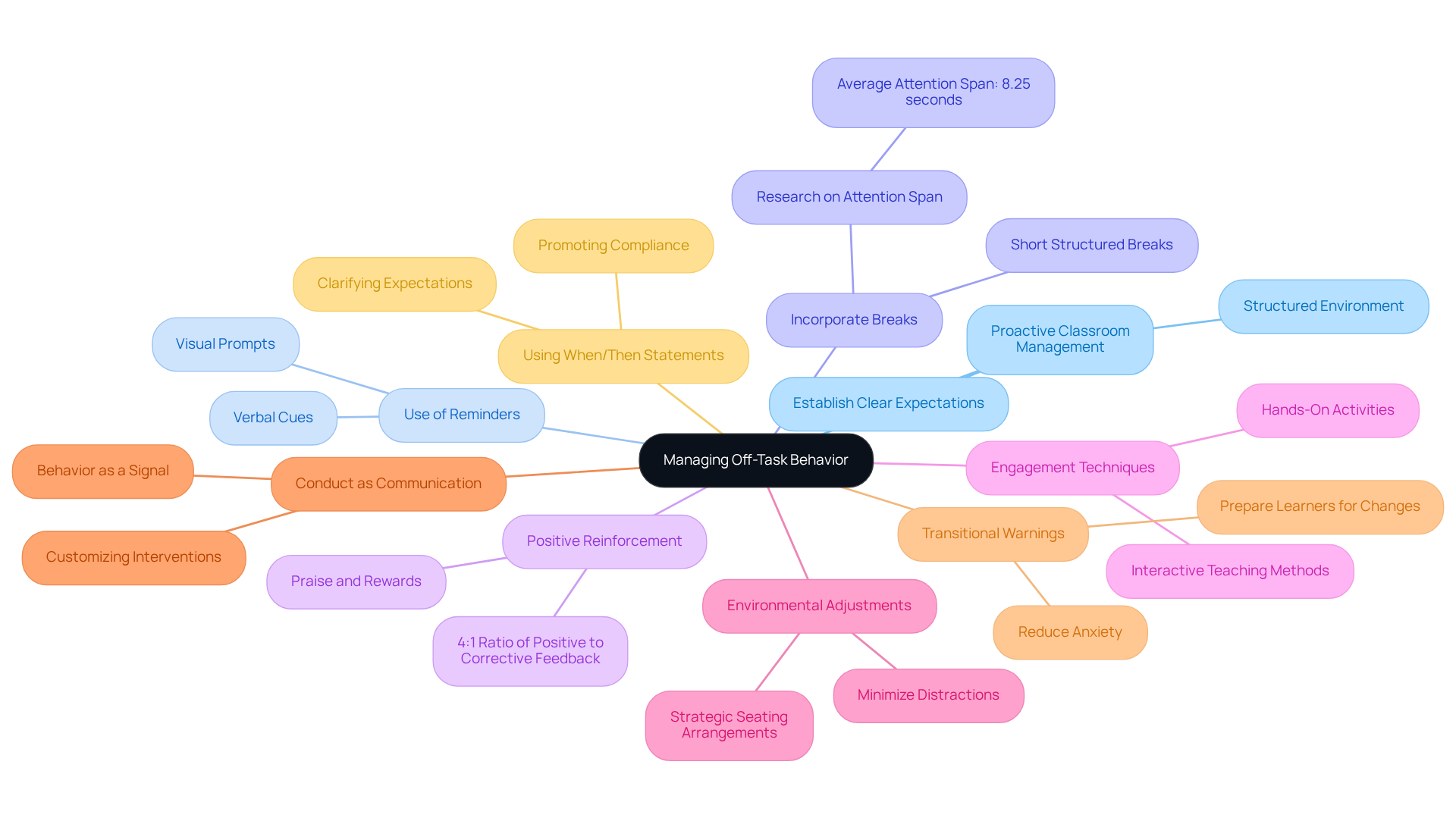
Understanding and effectively managing off-task behavior is not just important; it’s essential for creating a productive educational environment. Have you considered how distractions impact learning? By recognizing the various forms of distractions, educators can implement targeted strategies that address these behaviors while fostering a culture of engagement and accountability among students.
Key insights highlight the importance of:
Additionally, employing positive reinforcement and adapting the learning environment are crucial steps in minimizing distractions. These strategies collectively empower educators to navigate off-task behavior effectively, leading to improved academic performance and social development.
Ultimately, the responsibility lies with educators to cultivate environments where students can thrive. By prioritizing the management of off-task behavior, educators not only enhance individual learning experiences but also contribute to a more harmonious classroom dynamic. Are you ready to embrace these strategies? Doing so paves the way for a future where students are engaged, focused, and fully equipped to succeed in their educational journeys.
What is off-task behavior?
Off-task behavior includes any actions that divert a learner's attention from assigned tasks, such as physical movements, verbal distractions, or daydreaming.
Why is understanding off-task behavior important?
Understanding off-task behavior is crucial because it can significantly affect educational outcomes and classroom dynamics, disrupting both the learner's and their classmates' learning.
What are some examples of off-task behavior?
Examples of off-task behavior include doodling, chatting with peers, and using mobile devices during lessons.
How can teachers effectively address off-task behavior?
Teachers can effectively address off-task behavior by establishing clear expectations for conduct early on and using proactive strategies, such as demonstrating empathy and fostering supportive relationships.
What impact do proactive strategies have on student behavior?
Proactive strategies help learners understand how their actions affect others, encouraging positive conduct and enhancing student engagement and academic performance.
Can you provide an example of a strategy to manage distractions?
Case studies like 'Preventing Conduct Issues' illustrate that implementing strategies to manage distractions can lead to a more effective learning environment by promoting focus and collaboration.
Our expert recruitment strategies and AI-driven sourcing ensure that you receive top-notch candidates quickly, without compromising on quality. Whether you’re looking for BCBAs, Clinical Directors, or RBTs, we’ve got you covered.


