Master the RBT Credential: Steps to Certification and Maintenance

December 21, 2025

Introduction

The rising demand for Registered Behavior Technicians (RBTs) underscores the critical need to grasp the certification process and its requirements. With the right knowledge, aspiring professionals can embark on a fulfilling career in applied behavior analysis. However, the path to obtaining and maintaining the RBT credential can be complex, filled with eligibility criteria, training, and ongoing education that may seem overwhelming.

What strategies can candidates adopt to not only achieve certification but also excel in this dynamic field? Reflect on your current hiring challenges. Are you equipped to navigate this evolving landscape?

By mastering the steps to certification, you position yourself for success in a field that is not only rewarding but also essential in today’s healthcare environment. Embrace the opportunity to enhance your skills and knowledge, ensuring you stand out in a competitive job market.

Take action now - understand the certification process, engage with training resources, and commit to ongoing education. Your future as a successful RBT awaits.

Understand the RBT Credential Requirements

To become a Registered Behavior Technician (RBT), candidates must meet specific eligibility requirements:

  1. Age Requirement: Candidates must be at least 18 years old.
  2. Educational Background: A high school diploma or equivalent is necessary.
  3. Background Check: A criminal background check is mandatory for all applicants.
  4. Training: Completion of a 40-hour training course in applied behavior analysis (ABA) is required. This training must encompass the RBT Task List, detailing the essential skills and knowledge for the role.
  5. Competency Assessment: Following the training, candidates must pass a competency assessment conducted by a qualified Board Certified Behavior Analyst (BCBA).

These requirements are crucial as they represent the initial steps toward achieving the RBT credential. Candidates must ensure they have all required documentation and fulfill these criteria before progressing in the qualification process.

Did you know that in 2023, there were 67,001 newly certified RBTs who earned their RBT credential? This statistic underscores the growing demand for qualified professionals in the field. As Amy Weil notes, "By understanding the data on first-time pass rates and learning from previous exam experiences, aspiring RBTs can better prepare themselves for obtaining the RBT credential and a career in applied behavior analysis." This highlights the importance of thorough preparation and understanding of the requirements.

Are you ready to take the next step in your career? Understanding these eligibility standards is essential for success in the field of applied behavior analysis.

Each box represents a requirement you need to fulfill to become an RBT. Follow the arrows to see the order in which you should complete them.

Follow the Steps to Obtain RBT Certification

To obtain your RBT certification, follow these essential steps:

  1. Complete the 40-Hour Training: Enroll in a BACB-approved training program that thoroughly covers the RBT Task List. This training can be completed either online or in-person, catering to various learning preferences.
  2. Pass the Competency Assessment: After completing your training, schedule and successfully complete the competency assessment with a BCBA. This assessment is crucial as it evaluates your understanding and practical application of the skills learned during training.
  3. Create a BACB Account: Visit the BACB website to create an account. This account will be essential for your application and future renewals, streamlining the process.
  4. Submit your application by completing the application for the RBT credential through your BACB account. Ensure that all required documents, including proof of training and competency assessment, are uploaded accurately.
  5. Pay the Application Fee: Be prepared to pay the application fee at the time of submission, as this is a necessary step in the certification process.
  6. Schedule Your Test: Once your application is approved, you will receive instructions to arrange your RBT assessment through Pearson VUE, allowing you to choose a convenient time.
  7. Take and Pass the Exam: Prepare thoroughly for the RBT exam, which consists of 85 questions. A passing score of at least 80% is necessary to obtain qualification.

By diligently following these steps and maintaining consistent study habits, you will be well on your way to earning the RBT credential. Did you know that the median pass rate for RBT programs is approximately 80.4%? This statistic serves as a benchmark for your expectations. Additionally, understanding the challenges in the workforce related to RBT retention underscores the importance of obtaining certification in this growing field. Take action now and secure your future in this rewarding profession!
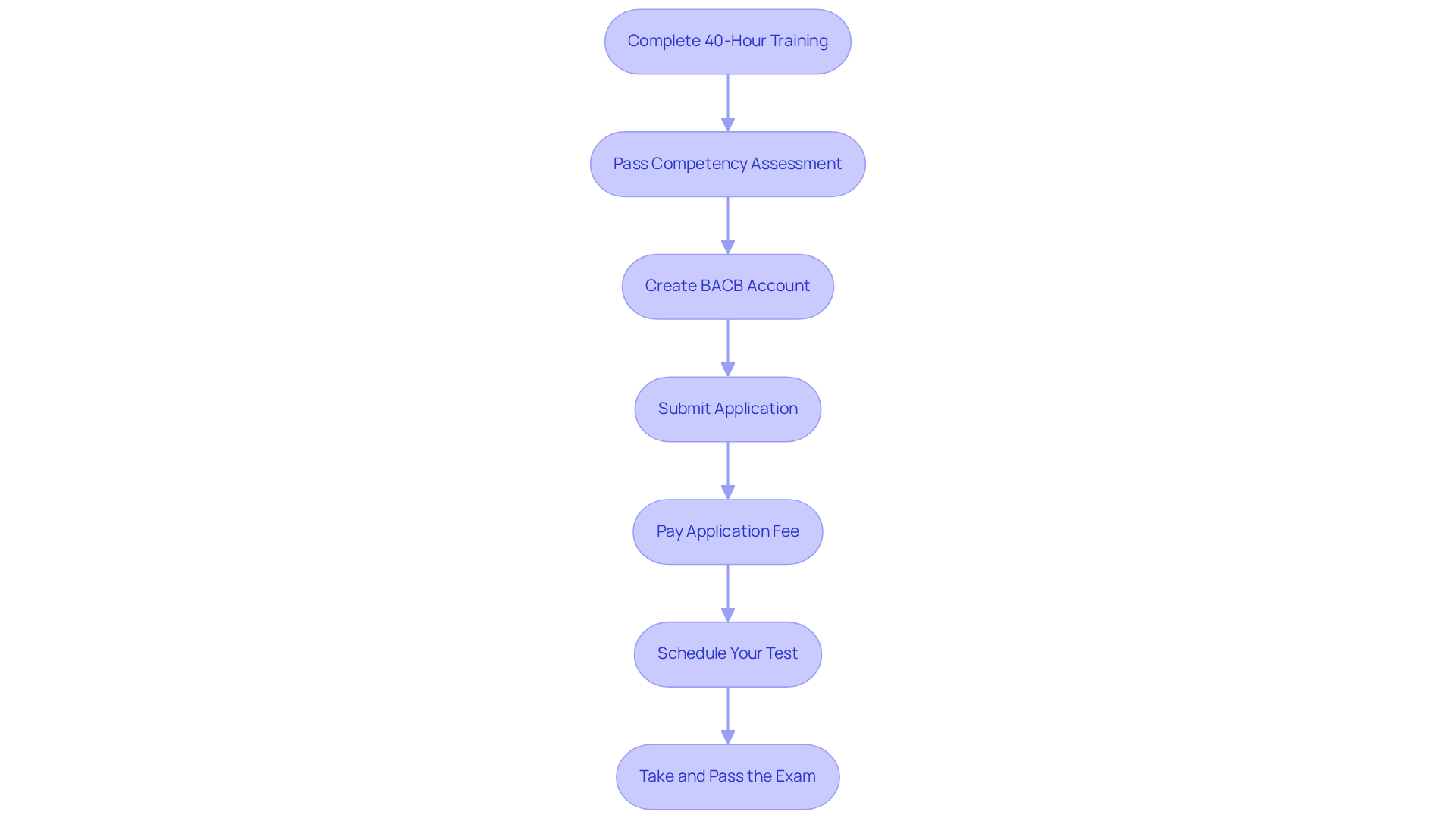
Each box represents a step in the certification journey. Follow the arrows to see how each step connects to the next, leading you toward earning your RBT credential.

Prepare Effectively for the RBT Exam

To prepare effectively for the RBT exam, consider these essential strategies:

  1. Review the RBT Task List: Familiarize yourself with the RBT Task List, which outlines the essential competencies needed for the assessment. Understanding each task and its application in real-world scenarios is crucial for success.

  2. Create a Learning Schedule: Develop a structured plan that allocates time for each subject included in the assessment. Regular review periods prior to the assessment date can greatly improve retention and comprehension.

  3. Utilize Diverse Learning Resources: Leverage a variety of materials, including textbooks, online courses, and practice exams. Resources like Mometrix and Quizlet offer valuable practice questions and assistance that can enhance your preparation. Diversifying your study materials is essential, as expert Fayge Orzel emphasizes that using different resources can deepen your understanding.

  4. Join Study Groups: Working together with classmates who are also preparing for the test can be advantageous. Study groups provide support, motivation, and diverse perspectives on challenging topics, enriching the learning experience.

  5. Take Practice Tests: Simulate the testing experience by taking practice assessments. Engaging with practice tests helps familiarize you with the format and timing, which can reduce anxiety on test day. Candidates who use practice tests often report enhanced confidence and performance. Remember, the RBT assessment consists of 85 multiple-choice questions, including 75 scored and 10 pilot questions. Understanding this structure is vital for effective preparation.

  6. Seek Guidance from a BCBA: If possible, consult with a Board Certified Behavior Analyst (BCBA) for additional insights and tips on exam preparation. Their expertise can provide valuable feedback on your understanding of the material and help clarify complex concepts.

  7. Reduce Distractions: To enhance focus and productivity during learning sessions, it is important to minimize distractions. Establishing a favorable learning environment can significantly improve your capacity to retain information.

By implementing these strategies, you will enhance your readiness for the RBT credential and significantly increase your likelihood of success. Statistics suggest that applicants who engage in comprehensive preparation and employ effective learning techniques have a first-time pass rate of approximately 87.2%, compared to the average pass rate for first-time candidates, which is about 70-80%. This underscores the importance of a well-rounded study approach.

Follow the arrows to see each step you can take to prepare for the RBT exam. Each box represents a strategy that can help you succeed, from reviewing the task list to reducing distractions.

Maintain Your RBT Certification

To maintain your RBT certification, it's essential to follow these guidelines:

  1. Complete Continuing Education Units (CEUs): Starting in 2026, RBTs are required to complete 12 hours of professional development every two years. This includes workshops, online courses, and conferences related to ABA. RBTs must accumulate a total of 20 CEUs during the renewal period, with at least 10 CEUs specifically related to the RBT credential in ABA. This ensures you stay informed about the latest research and best practices in the field.

  2. Engage in Ongoing Supervision: Ongoing supervision from a qualified BCBA is crucial for skill enhancement and ethical practice. Effective supervision practices may include regular feedback sessions, role-playing scenarios, and direct observation of RBTs in action. Experienced BCBAs note that ongoing supervision not only supports skill development but also reinforces ethical standards in practice.

  3. RBT Credential: To maintain your RBT credential, submit your renewal application through your BACB account before it expires. Ensure you have completed the required CEUs and have all necessary documentation ready. Ideally, begin the renewal process six weeks prior to expiration to avoid delays. Neglecting to renew your RBT credential can lead to loss of qualifications, restricting your job prospects and possibly forcing you to seek work beyond your area of expertise.

  4. Stay Informed: Keep up with changes in BACB guidelines and requirements. Frequently visit the BACB website for updates that may influence your credential status, particularly with the forthcoming changes in 2026 that will necessitate adherence to the new 3rd Edition Test Content Outline. Be aware that training certificates issued based on a 2nd edition course will be deemed invalid come January 1st, 2026.

  5. Adhere to Ethical Standards: Maintain compliance with the RBT Ethics Code, which emphasizes integrity and professionalism in all interactions. This commitment to ethical practices not only protects clients but also enhances the credibility of the behavior analysis profession.

By diligently following these maintenance steps, you will ensure that your RBT credential remains active, allowing you to continue providing high-quality services in the field of ABA.

Each box represents a crucial step in keeping your RBT certification active. Follow the arrows to ensure you complete each requirement in the right order.

Conclusion

Becoming a Registered Behavior Technician (RBT) is a pivotal move for anyone aiming to carve out a career in applied behavior analysis. Did you know that the demand for qualified RBTs is skyrocketing? This journey to certification not only involves meeting specific eligibility requirements but also demands a commitment to training, assessment, and continuous professional development. By understanding the comprehensive steps outlined in this guide, aspiring RBTs can confidently navigate the certification process and position themselves for success.

The essential requirements for obtaining the RBT credential are clear:

  1. Candidates must meet age and educational prerequisites.
  2. Complete a 40-hour training course.
  3. Pass a competency assessment.

Effective exam preparation strategies are crucial - utilizing diverse study materials and engaging in practice tests can make a significant difference. Moreover, maintaining the RBT certification requires ongoing education, adherence to ethical standards, and staying updated with the latest from the BACB.

As the need for qualified RBTs continues to rise, investing time and effort into mastering the certification process is more important than ever. By following the outlined steps and committing to lifelong learning, individuals can not only earn their RBT credential but also make a meaningful impact in the field of behavior analysis. Are you ready to embrace this opportunity? Take the next step in advancing your career while positively influencing the lives of others in this rewarding profession.

Frequently Asked Questions

What are the age requirements to become a Registered Behavior Technician (RBT)?

Candidates must be at least 18 years old to be eligible for the RBT credential.

What educational background is necessary for RBT candidates?

A high school diploma or equivalent is required for candidates seeking the RBT credential.

Is a background check required for RBT applicants?

Yes, a criminal background check is mandatory for all applicants.

What training is required to become an RBT?

Candidates must complete a 40-hour training course in applied behavior analysis (ABA) that covers the RBT Task List, which details the essential skills and knowledge for the role.

What is the competency assessment for RBT candidates?

After completing the training, candidates must pass a competency assessment conducted by a qualified Board Certified Behavior Analyst (BCBA).

Why are these requirements important for RBT candidates?

These requirements represent the initial steps toward achieving the RBT credential, and candidates must fulfill them before progressing in the qualification process.

How many newly certified RBTs were there in 2023?

In 2023, there were 67,001 newly certified RBTs who earned their RBT credential.

What does Amy Weil suggest about preparing for the RBT credential?

Amy Weil notes that understanding data on first-time pass rates and learning from previous exam experiences can help aspiring RBTs better prepare for obtaining the credential and a career in applied behavior analysis.