


Thank you! Your submission has been received!
Oops! Something went wrong while submitting the form.
December 3, 2025

Mastering the RBT practice exam is not just a goal; it’s a critical milestone for anyone looking to advance their career in Applied Behavior Analysis (ABA). Did you know that the demand for Board Certified Behavior Analysts (BCBAs) is skyrocketing? With 85 questions to tackle in just 90 minutes, candidates must navigate the exam's structure and core domains effectively to enhance their chances of success.
However, many face challenges such as test anxiety and time management. So, what strategies can you implement to prepare adequately and excel on exam day? This guide delves into essential steps and techniques that can transform your preparation into achievement. By following these strategies, you’ll be ready to conquer the RBT exam with confidence.
The RBT assessment, which is a pivotal step in your , includes the , comprising 75 scored and 10 unscored pilot questions. With only 90 minutes to complete the assessment, mastering becomes essential for success. Are you familiar with the assessment's structure? Understanding the (85 questions):
will enable you to prioritize your study efforts effectively.
Recent updates to the assessment format in 2025 underscore the importance of these areas, ensuring candidates are well-prepared to demonstrate their knowledge and skills. As Daniel Carter notes, excelling in these domains is crucial for passing the assessment and advancing in your . Furthermore, candidates must complete a and achieve a .
Implementing during your preparation can significantly enhance your performance on test day, allowing you to approach the assessment with confidence. Remember, applicants have the opportunity to retake the test up to seven times within a year if necessary. Are you ready to take the next step in your professional journey?

To prepare efficiently for the RBT assessment, it’s crucial to create an organized timetable that allocates specific times for each subject, including the . Did you know that ? Starting early is essential to ensure success.
Incorporate - like creating flashcards, summarizing notes in your own words, and teaching concepts to peers - to reinforce your understanding. Utilize a , including textbooks, online courses, and discussion groups, to enhance your learning experience. Consistently review the , which details the competencies included in the assessment, and practice applying its concepts to real-life situations. This approach will solidify your grasp of the material.
Aim for daily learning sessions of 1-2 hours, and don’t forget to include breaks to prevent burnout. Successful candidates often stress the significance of consistency and adaptability in their study methods. A well-structured strategy can greatly enhance your performance on assessments.
Furthermore, taking the 85 questions can assist in evaluating your knowledge and monitoring your progress. Keep in mind that the generally falls between 70% and 80%. Are you ready to take your preparation to the next level?

Assessing your preparedness is crucial, and taking the is an essential strategy. Start with to familiarize yourself with the question format. Once you feel comfortable, gradually incorporate .
Why is this important? , enabling you to focus your study efforts effectively. Resources such as the and flashcards can provide additional reinforcement, ensuring you’re well-equipped for success.
is another vital step. Set a timer and minimize distractions to replicate test day conditions. This approach not only but also enhances your overall preparedness.
Are you ready to take your ? Embrace these techniques and watch your performance improve.

Candidates preparing for the encounter significant challenges, especially with . Did you know that approximately 80.4% is the median pass rate for RBT training programs? This statistic underscores the importance of 85 questions. To combat anxiety, incorporating - inhale for four counts, hold for two, and exhale for four - can be beneficial both before and during learning sessions. Additionally, dividing learning material into manageable sections and establishing specific objectives for each session enhances focus and retention.
Many successful candidates recommend dedicating 3-6 weeks for preparation. This timeframe allows ample opportunity to cover all content areas thoroughly, aligning with the median pass rate. When faced with challenging concepts, or online forums can provide valuable assistance and enhance comprehension. Engaging with peers alleviates feelings of isolation and fosters a collaborative learning environment.
Moreover, maintaining a healthy lifestyle is crucial. Aim for 7-8 hours of quality sleep each night and a balanced diet to significantly sharpen cognitive function. Real-world examples emphasize the significance of organized learning plans. Candidates who implement a often report improved performance and reduced anxiety. As Dr. Nasiah Cirincione-Ulez emphasizes, identifying can create distance from anxiety-inducing thoughts, reinforcing the mindset needed for success. Remember, "Exams don’t define you - your effort does."
By adopting these strategies, candidates can navigate the challenges of preparing for the with greater confidence and effectiveness. Are you ready to take control of your preparation journey?
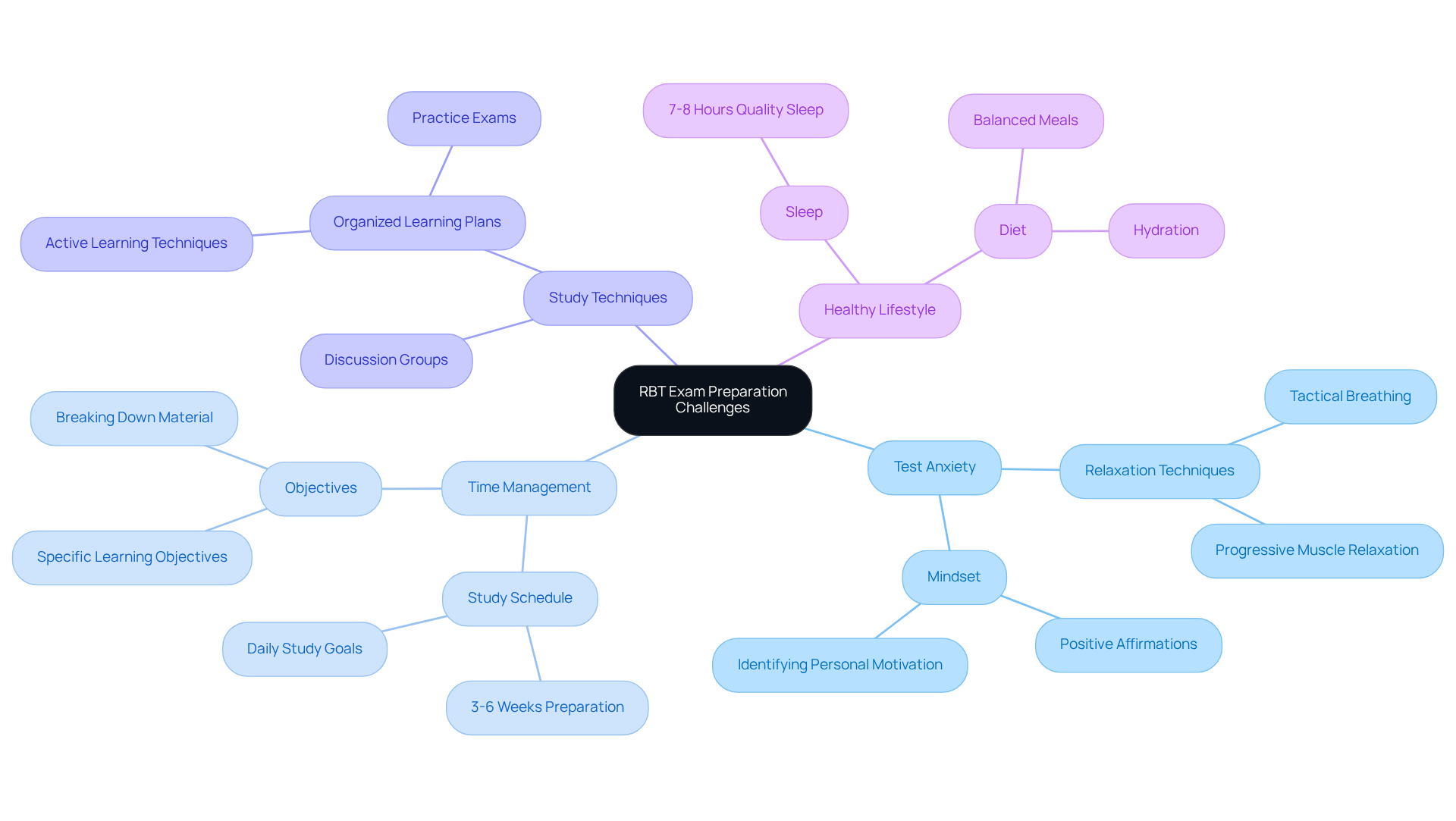
Mastering the RBT practice exam is not just a step; it’s a critical leap toward success in your ABA career. Did you know that the demand for Board Certified Behavior Analysts (BCBAs) is skyrocketing? By understanding the exam's structure and focusing on its core domains, candidates can prioritize their study efforts effectively, ensuring they are well-prepared to demonstrate their knowledge and skills. Time management, efficient study strategies, and practice exams are essential - they collectively enhance exam readiness and boost confidence.
Key strategies such as creating an organized study timetable, utilizing active learning techniques, and simulating the testing environment are vital components of effective preparation. Have you considered how common challenges like test anxiety and maintaining a healthy lifestyle can significantly impact your performance? These insights highlight the necessity for a comprehensive and disciplined approach to studying for the RBT practice exam.
Ultimately, passing the RBT exam is not merely about memorizing facts; it’s about cultivating a mindset geared toward success. By implementing the strategies discussed, candidates can take control of their preparation, transform challenges into opportunities for growth, and approach the exam with unwavering confidence. Embrace these techniques, stay committed, and remember: effort and preparation are the keys to unlocking your potential in the field of ABA.
What is the RBT exam and why is it important?
The RBT exam is a pivotal assessment for individuals pursuing a career in Applied Behavior Analysis (ABA). It evaluates candidates' knowledge and skills necessary for the RBT role.
What is the structure of the RBT practice exam?
The RBT practice exam consists of 85 questions, including 75 scored questions and 10 unscored pilot questions. Candidates have 90 minutes to complete the exam.
What are the core domains covered in the RBT practice exam?
The six core domains are Measurement (12%), Assessment (18%), Skill Acquisition (32%), Behavior Reduction (28%), Documentation and Reporting, and Professional Conduct.
What is the passing score for the RBT exam?
Candidates must achieve a passing score of 200 out of 250 points to pass the RBT exam.
What training is required before taking the RBT exam?
Candidates must complete a 40-hour training course that is approved by the Behavior Analyst Certification Board (BACB) before taking the exam.
How many times can candidates retake the RBT exam if they do not pass?
Candidates have the opportunity to retake the RBT exam up to seven times within a year if necessary.
What tips can help candidates prepare for the RBT exam?
Implementing efficient schedule management techniques during preparation can significantly enhance performance on test day, allowing candidates to approach the exam with confidence.
Our expert recruitment strategies and AI-driven sourcing ensure that you receive top-notch candidates quickly, without compromising on quality. Whether you’re looking for BCBAs, Clinical Directors, or RBTs, we’ve got you covered.


