


Thank you! Your submission has been received!
Oops! Something went wrong while submitting the form.
March 5, 2026

The demand for Board Certified Behavior Analysts (BCBAs) is skyrocketing, making it crucial for healthcare employers to understand the BCBA Task List. This structured framework outlines the essential knowledge and skills needed for effective practice, providing employers with the insights necessary to identify and recruit top talent. But as the field of behavior analysis evolves, are your hiring and training practices keeping up?
Exploring the nuances of the BCBA Task List reveals strategies that can help organizations tackle these challenges head-on. By leveraging the right tools, like Hire ABA, employers can streamline their recruitment process and ensure they attract the best candidates.
Consider this: how confident are you in your current hiring practices? Are you equipped to meet the growing demand for BCBAs? With the right approach, you can not only fill positions but also enhance the quality of care provided to clients.
Don’t let the evolving landscape of behavior analysis leave you behind. Embrace the insights offered by the BCBA Task List and take action today to refine your hiring strategies. With Hire ABA, you can navigate this booming demand with confidence.
This outline serves as a vital framework for the knowledge and skills required for Board Certified Behavior Analysts (BCBAs). Did you know that the demand for BCBAs is skyrocketing? This makes understanding the competencies essential for hiring the right candidates more crucial than ever.
The framework is divided into two main sections: Foundations and Applications. The Foundations section covers the essential principles and concepts of behavior analysis, providing a solid base for understanding the field. Meanwhile, the Applications section focuses on the practical skills necessary for implementing behavior analysis in real-world settings. This dual approach not only equips BCBAs with theoretical knowledge but also prepares them for the challenges they will face in practice.
Employers must recognize the specific competencies they should seek in candidates. By understanding this structure, they can ensure they select individuals who are well-prepared to meet the demands of the role. Are you currently facing challenges in your hiring process? Consider how utilizing Hire ABA can streamline your recruitment efforts and connect you with qualified professionals.
In summary, this comprehensive outline not only highlights the essential skills for BCBAs but also serves as a guide for employers to identify the right talent. By leveraging this framework, you can enhance your hiring strategy and ensure your organization is equipped with the best candidates in the field.

The demand for Board Certified Behavior Analysts (BCBAs) is on the rise, highlighting the critical need for professionals equipped with essential knowledge areas. Understanding these domains is not just beneficial; it’s vital for effective practice in the field of behavior analysis.
Foundational Knowledge: A deep understanding of the principles of behavior analysis is crucial. This foundational knowledge empowers BCBAs to implement effective strategies that truly make a difference.
Behavior Assessment: Skills in assessing behavior and developing tailored intervention plans are essential. BCBAs must ensure that their strategies are data-driven and effective, leading to better outcomes for clients.
Behavior-Change Procedures: This area focuses on techniques for implementing successful behavior change strategies. Mastery of these techniques is crucial for achieving desired outcomes in therapy.
Selecting and Implementing Interventions: Knowledge in this domain involves choosing and applying appropriate interventions based on comprehensive assessment data. This allows for individualized treatment plans that cater to each client's unique needs.
Supervision and Management: Skills in overseeing and mentoring other practitioners are essential for fostering a collaborative and effective work environment. Strong leadership in this area enhances the overall quality of care.
Understanding these content areas equips employers to evaluate candidates' readiness to tackle the challenges they will encounter in practice. Are you ready to enhance the quality of care provided in ABA therapy? Consider how Hire ABA can assist you in finding the right candidates who are prepared to meet these demands.

To effectively master certification responsibilities, employers must recognize the growing demand for Board Certified Behavior Analysts (BCBAs). With the national average first-time pass rate for the BCBA exam hovering around 65%, it’s clear that effective training is crucial for success. Here are several key strategies to enhance your training programs:
Structured Training Programs: Develop comprehensive training programs that align with the task list BCBA content areas. A structured curriculum not only covers necessary competencies systematically but also significantly boosts trainee confidence and competence, preparing them for real-world applications.
Mentorship Opportunities: Pair less experienced BCBAs with seasoned professionals for guidance and support. Mentorship programs can reduce turnover by 2-15%, fostering a positive learning environment that enhances both professional development and job satisfaction.
Regular Evaluations: Conduct regular evaluations to assess personnel knowledge and skills related to the Assignment Overview. This practice identifies areas for improvement while reinforcing learning and accountability among staff.
Study Groups: Encourage the formation of study groups among staff to foster collaborative learning. Engaging in peer discussions deepens understanding and retention of complex concepts, ultimately leading to improved performance on the BCBA exam.
Access to Resources: Provide access to study materials, workshops, and online courses that focus on the Task List. Ensuring behavior analysts have the right resources is crucial for their success, as structured learning environments are linked to higher exam pass rates and better patient care outcomes.
According to the Behavior Analyst Certification Board, a structured curriculum ensures that all content areas are covered systematically, eliminating training gaps that could leave trainees unprepared for both the exam and real-world practice. By applying these strategies, you not only boost staff proficiency but also enhance patient care results, addressing the increasing need for skilled behavior analysts in the field.
Additionally, prospective employers should be aware that the total minimum cost for initial application and examination is $370. This is an important consideration when budgeting for training. Are you ready to invest in your team's success?

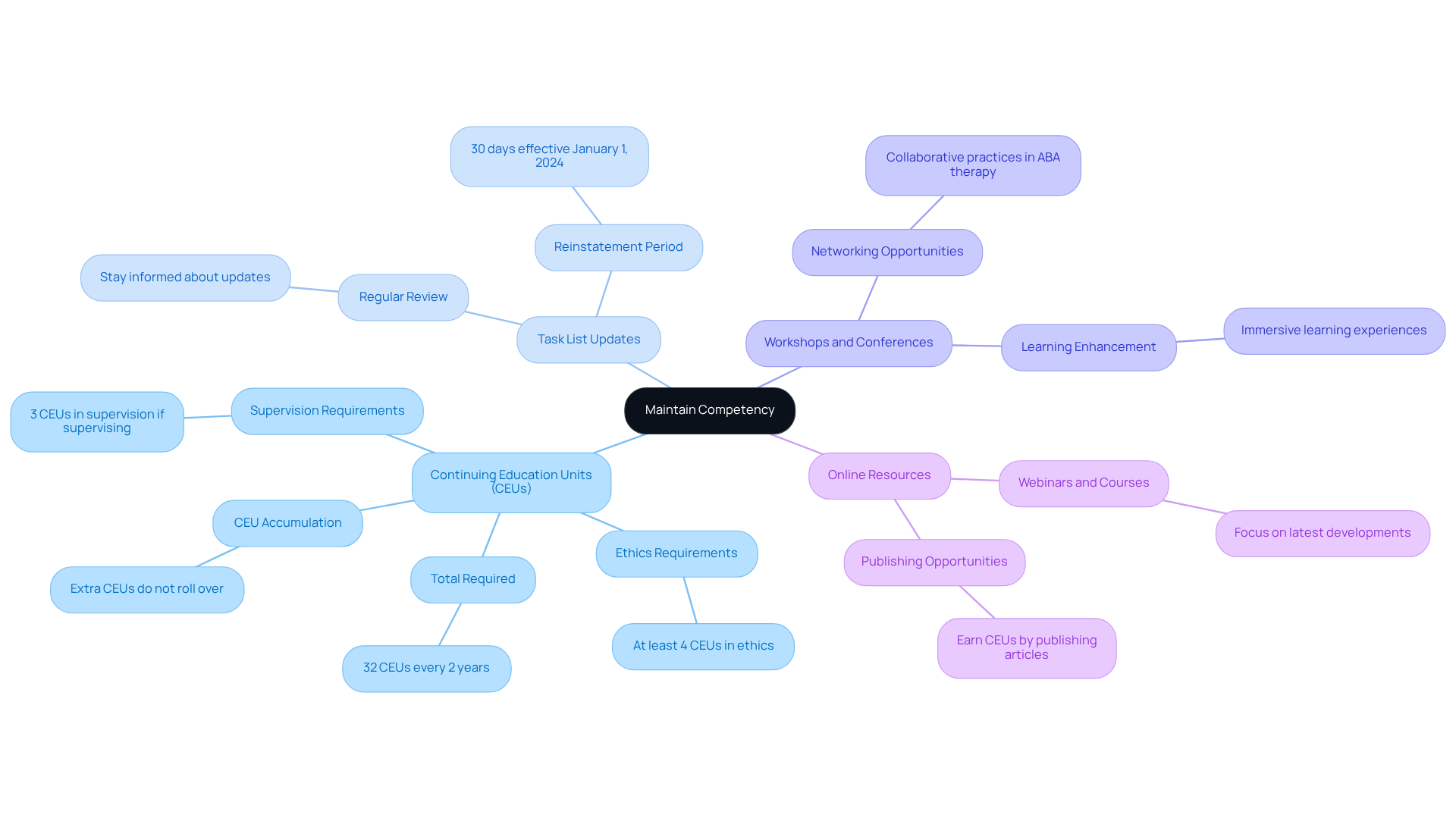
To maintain competency, Board Certified Behavior Analysts (BCBAs) must engage in ongoing professional development. Did you know that the demand for BCBAs is on the rise? This makes it crucial for professionals in the field to stay ahead. Here’s how:
Continuing Education Units (CEUs): BCBAs are required to complete a minimum of 32 CEUs every two years. This includes at least 4 CEUs focused on ethics and 3 CEUs in supervision if they oversee trainees or Registered Behavior Technicians (RBTs). Keep in mind, any extra CEUs beyond the required 32 do not roll over to the next recertification cycle. This structured approach ensures that BCBAs remain informed about the latest research and best practices in behavior analysis.
Staying informed by regularly reviewing updates to the task list BCBA and certification requirements is essential for compliance with evolving standards. As of January 1, 2024, the reinstatement period for BCBA and BCaBA certifications has been reduced to 30 days. This change emphasizes the need for timely completion of CEUs.
Participating in Workshops and Conferences: Attending relevant workshops and conferences not only enhances knowledge and skills but also provides valuable networking opportunities. These connections can lead to collaborative practices in ABA therapy, enriching the professional experience.
Utilizing Online Resources: Online platforms for webinars and courses allow behavior analysts to focus on the latest developments in behavior analysis. This flexibility makes it easier to fulfill CEU requirements. Additionally, BCBAs can earn CEUs by publishing articles in peer-reviewed journals or serving as manuscript reviewers.
By prioritizing continuing education and planning a professional development schedule throughout the recertification cycle, employers can ensure their staff remains competent and capable of delivering high-quality ABA therapy. This commitment ultimately leads to improved patient care outcomes. Are you ready to support your team in achieving these goals?
The demand for Board Certified Behavior Analysts (BCBAs) is skyrocketing, making it crucial for healthcare employers to understand the BCBA Task List. This framework not only delineates the competencies necessary for effective practice but also acts as a strategic guide for recruitment. As the need for qualified BCBAs continues to rise, prioritizing this knowledge is essential for attracting and retaining top talent in the field.
This article explores several key aspects of the BCBA Task List, including its structure, core content areas, and strategies for mastering the associated responsibilities. It underscores the significance of foundational knowledge, behavior assessment, and intervention strategies, while also stressing the importance of ongoing professional development through continuing education. By implementing structured training programs and mentorship opportunities, employers can significantly boost their staff's proficiency and effectiveness in delivering high-quality ABA therapy.
Investing in the understanding and application of the BCBA Task List transcends mere compliance; it reflects a commitment to excellence in patient care. Are you ready to refine your hiring processes and support your teams in continuous learning? By taking actionable steps now, you can not only meet the increasing demands of the profession but also contribute to improved outcomes for those you serve. Don't wait - embrace the opportunity to enhance your recruitment strategy and ensure your organization stands out in this competitive landscape.
What is the purpose of the BCBA Task List?
The BCBA Task List serves as a vital framework outlining the knowledge and skills required for Board Certified Behavior Analysts (BCBAs), helping employers identify the right candidates for hiring.
How is the BCBA Task List structured?
The BCBA Task List is divided into two main sections: Foundations and Applications. The Foundations section covers essential principles and concepts of behavior analysis, while the Applications section focuses on practical skills necessary for implementing behavior analysis in real-world settings.
Why is understanding the BCBA Task List competencies important for employers?
Understanding the competencies outlined in the BCBA Task List helps employers select candidates who are well-prepared to meet the demands of the BCBA role, ensuring they hire qualified professionals.
What challenges might employers face in the hiring process for BCBAs?
Employers may face challenges in identifying candidates who possess the specific competencies required for the BCBA role, making it crucial to utilize structured frameworks like the BCBA Task List.
How can Hire ABA assist employers in their hiring process?
Hire ABA can streamline recruitment efforts by connecting employers with qualified professionals who meet the competencies outlined in the BCBA Task List.
Our expert recruitment strategies and AI-driven sourcing ensure that you receive top-notch candidates quickly, without compromising on quality. Whether you’re looking for BCBAs, Clinical Directors, or RBTs, we’ve got you covered.


