


Thank you! Your submission has been received!
Oops! Something went wrong while submitting the form.
November 20, 2025

The field of occupational therapy is experiencing a significant transformation, with a projected growth of 14% in demand for skilled therapists over the next decade. This surge highlights the vital role occupational therapy plays in enhancing individuals' quality of life. As such, understanding the pathways to a successful career in this profession is essential.
What challenges and opportunities lie ahead for aspiring occupational therapists? Navigating the evolving landscape of healthcare is crucial for making a meaningful impact. Are you prepared to tackle the complexities of this rewarding field? By equipping yourself with the right knowledge and skills, you can position yourself for success in a profession that is not only in demand but also deeply fulfilling.
Occupational therapy (OT) is a client-centered profession dedicated to empowering individuals to engage in meaningful daily activities, such as self-care, work, and leisure. This involvement is crucial for sustaining overall wellness and well-being. Did you know that children receiving OT show a remarkable 65% improvement in fine motor skills and a 58% enhancement in sensory processing within just six months? This statistic underscores the profound impact of effective interventions.
Occupational therapists conduct thorough assessments to identify clients' unique needs and craft personalized interventions aimed at enhancing their ability to perform daily tasks. The significance of OT extends beyond addressing physical limitations; it encompasses emotional and social factors that influence a person's quality of life. By promoting independence and enhancing functional abilities, work-related assistance plays a vital role in rehabilitation and wellness management, emphasizing its crucial position within the healthcare system.
Moreover, specialist views highlight that OT practitioners focus on what truly matters to clients, ensuring that treatment is customized to personal objectives and ambitions. This tailored approach ultimately changes lives and enhances overall well-being. The occupational therapist job outlook is anticipated to expand by 14% from 2024 to 2034, indicating a rising need for rehabilitation services. With 28% of NICU survivors requiring developmental services, the demand for therapeutic intervention, especially in pediatric environments, is more crucial than ever.
Occupational specialists operate in various settings, including hospitals, schools, and outpatient clinics, further demonstrating the profession's wide influence. Data-informed decision-making is essential for maximizing OT's effectiveness, ensuring that practitioners can deliver the best possible care. Are you ready to explore how occupational therapy can transform lives and enhance well-being?

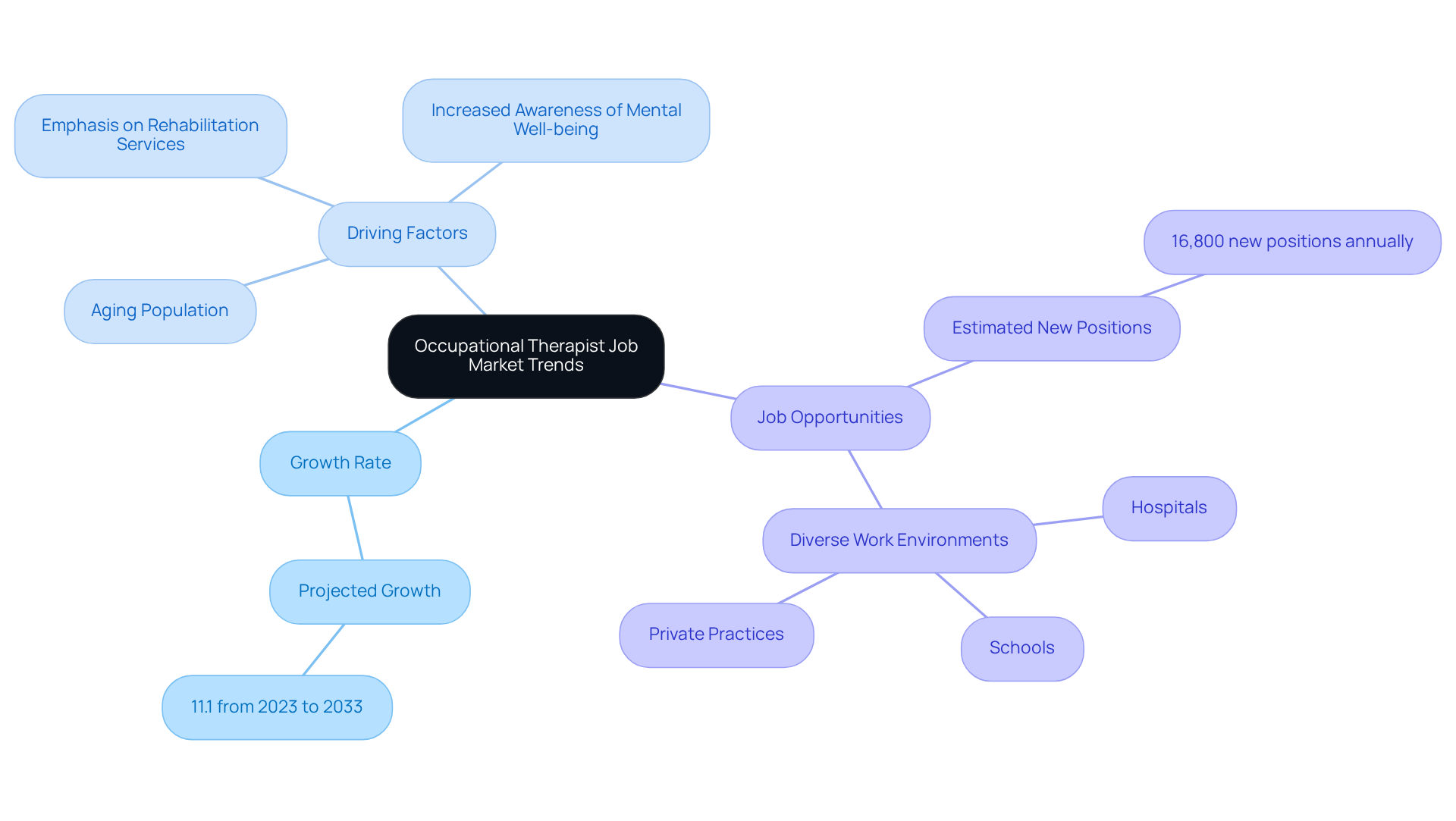
The occupational therapist job outlook for therapy specialists is exceptionally promising. Did you know that the U.S. Bureau of Labor Statistics projects a growth rate of approximately 11.1% from 2023 to 2033? This rate significantly exceeds the average for all professions, underscoring a robust demand for therapy services.
What’s driving this demand? Key factors include:
Rehabilitation specialists are increasingly recognized for their vital role in promoting wellness and preventing disabilities, enhancing their significance across various healthcare settings.
As a result, job opportunities are expected to remain abundant. An estimated 16,800 new positions are anticipated to open each year in diverse environments such as hospitals, schools, and private practices. Healthcare organizations are adapting to this rising demand by expanding their rehabilitation departments and integrating occupational therapists into multidisciplinary teams, which positively affects the occupational therapist job outlook and ensures comprehensive patient care.
Are you ready to meet this demand? Consider how Hire ABA can assist you in navigating the recruitment landscape for therapy specialists. With the right support, you can secure the talent needed to thrive in this evolving field.
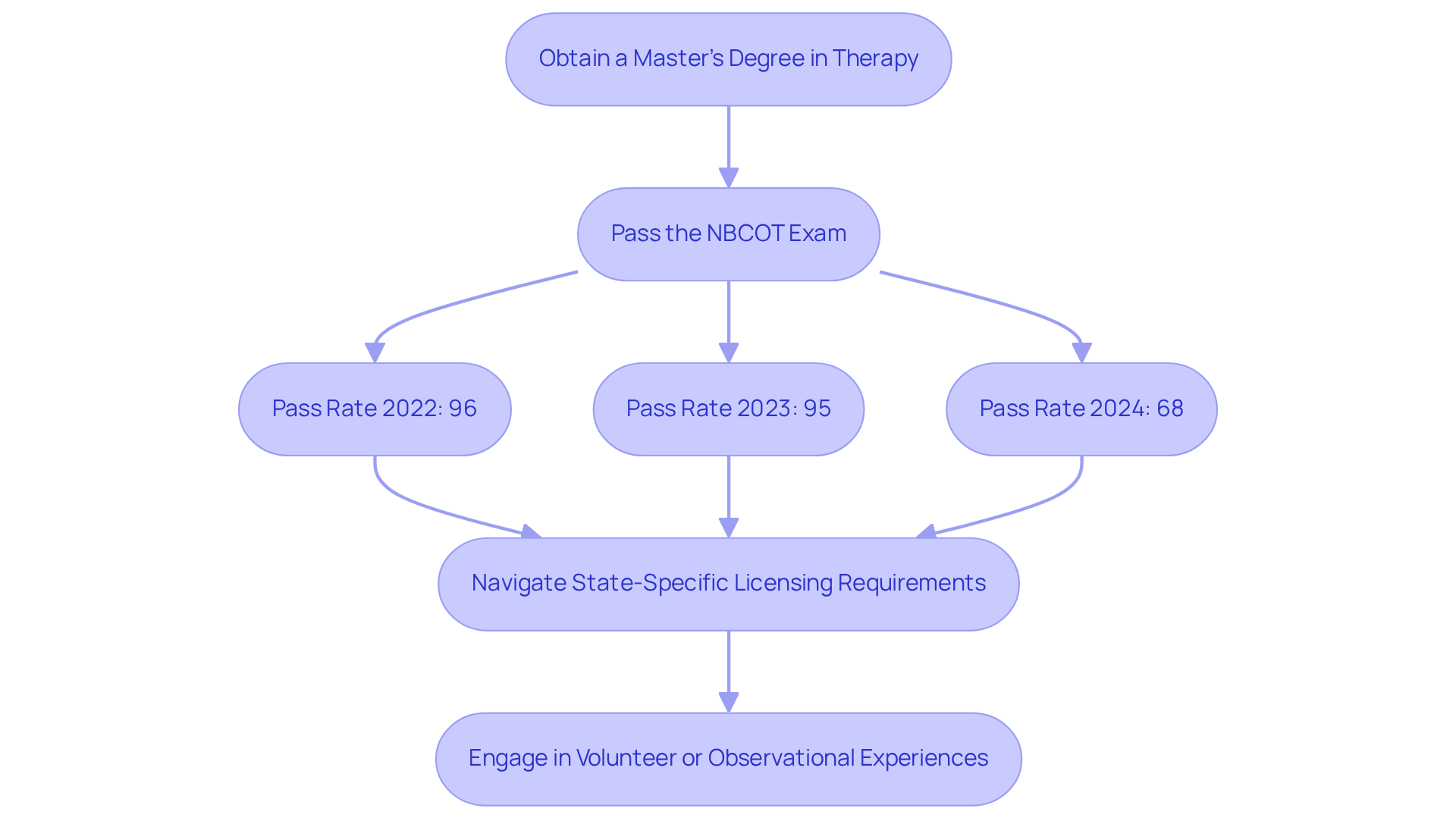
To become a rehabilitation specialist, individuals must first obtain a master's degree in therapy from an accredited program, typically after earning a bachelor's degree in a related area such as health sciences or psychology. This foundational education is crucial in a field where expertise is paramount.
After completing their degree, candidates are required to pass the National Board for Certification in Occupational Therapy (NBCOT) exam. Notably, this exam has seen impressive pass rates:
Such statistics highlight the rigorous standards of the profession and the commitment required from aspiring specialists.
Following certification, candidates must navigate state-specific licensing requirements, which often include additional examinations and continuing education. Most state licensure boards mandate the submission of certification examination results and professional references. It’s essential to recognize that felony convictions or professional misconduct may affect eligibility for state licensure, underscoring the importance of maintaining a clean professional record.
Given the variability in requirements across states, it is crucial for prospective occupational therapists to thoroughly research their state's regulations. Some states may allow temporary licenses while awaiting certification examination results, facilitating job readiness for new graduates. Have you considered how these regulations might impact your career path?
Engaging in volunteer or observational experiences in healthcare settings not only strengthens applications to graduate programs but also provides invaluable insights into the profession. This hands-on experience enhances candidates' readiness for their future roles, making them more competitive in the job market. Are you ready to take the next step in your journey toward becoming a rehabilitation specialist?
Occupational therapy is a vital profession dedicated to enhancing individuals' ability to engage in meaningful daily activities, significantly impacting their overall well-being. Did you know that the demand for occupational therapists is projected to grow by approximately 11.1% from 2023 to 2033? This translates to around 16,800 new positions created annually, driven by an aging population and increased awareness of mental health.
The importance of a well-defined educational pathway and stringent licensing requirements cannot be overstated. These elements underscore the commitment needed to excel in this field. Occupational therapists play a crucial role in diverse healthcare settings, emphasizing personalized care that promotes wellness and rehabilitation.
As the healthcare landscape evolves, the need for skilled occupational therapists will only intensify. Are you prepared to meet this increasing demand for therapy services? Aspiring professionals must stay informed about educational requirements and job market trends to ensure they are ready to embrace the challenges and opportunities within this rewarding profession.
By stepping into this field, individuals can contribute to transforming lives and enhancing the quality of care in their communities. The future of occupational therapy is bright, and now is the time to take action.
What is occupational therapy (OT)?
Occupational therapy (OT) is a client-centered profession focused on empowering individuals to engage in meaningful daily activities, including self-care, work, and leisure, which are essential for overall wellness and well-being.
How effective is occupational therapy for children?
Children receiving occupational therapy show a remarkable 65% improvement in fine motor skills and a 58% enhancement in sensory processing within just six months, highlighting the profound impact of effective interventions.
What do occupational therapists do?
Occupational therapists conduct thorough assessments to identify clients' unique needs and develop personalized interventions aimed at enhancing their ability to perform daily tasks.
What factors does occupational therapy address?
Occupational therapy addresses not only physical limitations but also emotional and social factors that influence a person's quality of life.
Why is occupational therapy important in rehabilitation and wellness management?
Occupational therapy promotes independence and enhances functional abilities, playing a vital role in rehabilitation and wellness management within the healthcare system.
How do occupational therapists customize treatment?
Occupational therapists focus on what truly matters to clients, ensuring that treatment is tailored to their personal objectives and ambitions, which ultimately enhances overall well-being.
What is the job outlook for occupational therapists?
The job outlook for occupational therapists is anticipated to expand by 14% from 2024 to 2034, indicating a rising need for rehabilitation services.
What percentage of NICU survivors require developmental services?
Approximately 28% of NICU survivors require developmental services, emphasizing the crucial demand for therapeutic intervention, especially in pediatric environments.
Where do occupational therapists work?
Occupational therapists operate in various settings, including hospitals, schools, and outpatient clinics, demonstrating the profession's wide influence.
Why is data-informed decision-making important in occupational therapy?
Data-informed decision-making is essential for maximizing the effectiveness of occupational therapy, ensuring that practitioners can deliver the best possible care.
Our expert recruitment strategies and AI-driven sourcing ensure that you receive top-notch candidates quickly, without compromising on quality. Whether you’re looking for BCBAs, Clinical Directors, or RBTs, we’ve got you covered.


