


Thank you! Your submission has been received!
Oops! Something went wrong while submitting the form.
March 6, 2026

The demand for Board Certified Behavior Analysts (BCBAs) is skyrocketing, with a projected growth rate of over 20% in the coming years. This surge highlights the critical need for skilled professionals equipped with advanced training in Applied Behavior Analysis (ABA). ABA doctoral programs are at the forefront of this evolution, providing the expertise necessary to tackle behavioral challenges effectively.
These programs not only enhance individual careers but also play a pivotal role in shaping the future of the field. Graduates emerge with the knowledge and skills to make significant contributions in research, clinical practice, and academia. As healthcare and education increasingly prioritize evidence-based practices, the role of BCBAs becomes more vital than ever.
Consider this: Are you facing challenges in hiring qualified behavior analysts? How can you ensure that your organization is equipped with the best talent? By leveraging the resources offered by Hire ABA, you can streamline your recruitment process and connect with top-tier candidates who are ready to make an impact.
In conclusion, investing in ABA doctoral programs not only benefits individual professionals but also strengthens the entire field. As the landscape of healthcare and education continues to evolve, now is the time to take action. Partner with Hire ABA to secure the future of your organization and the communities you serve.
ABA doctoral programs represent the pinnacle of scholarly achievement in Applied Behavior Analysis, equipping individuals for influential roles in research, academia, and clinical practice. These programs typically culminate in a Doctor of Philosophy (PhD) or a Doctor of Behavioral Health (DBH) degree, focusing on advanced methodologies and behavioral principles. The curriculum encompasses vital topics such as ethics, research design, and specialized areas within ABA, ensuring that graduates are well-prepared to make significant contributions to the field.
As of 2026, the number of ABA PhD Programs across the United States is on the rise, reflecting an increasing recognition of the necessity for advanced training in this essential area of healthcare. Have you considered how this growing demand for Board Certified Behavior Analysts (BCBAs) could impact your hiring strategies? Leaders in the field assert that these programs not only bolster professional credibility but also pave the way for leadership opportunities, significantly influencing career trajectories for BCBAs.
In a landscape where the need for qualified professionals is ever-increasing, investing in advanced education through ABA doctoral programs is not just beneficial - it's essential. Are you ready to elevate your hiring practices and ensure your organization is equipped with the best talent? Embrace the future of Applied Behavior Analysis and consider the profound impact that advanced training can have on your team.
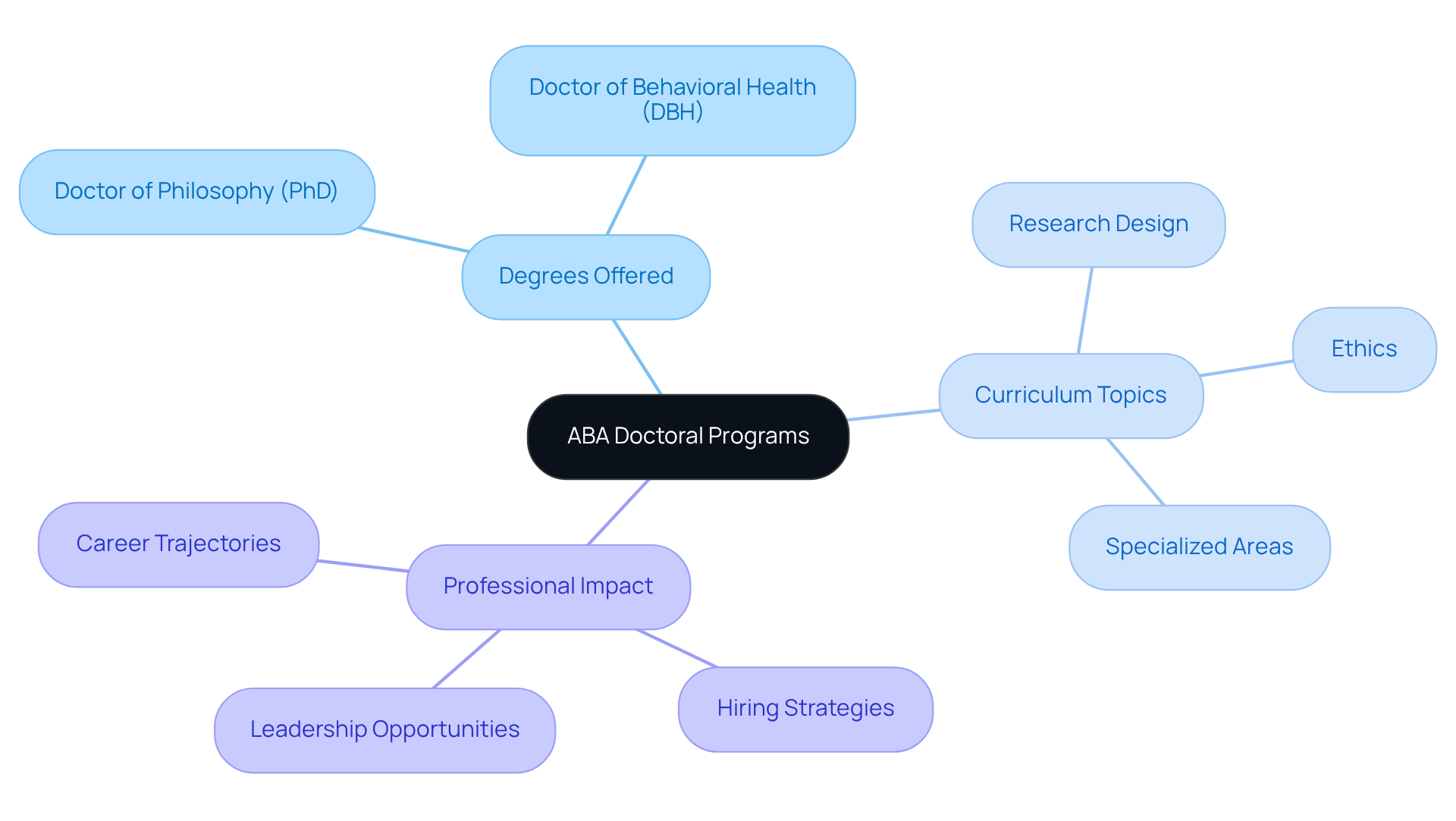
ABA doctoral programs are increasingly recognized as essential for addressing behavioral challenges, particularly in the contexts of autism intervention and education. Did you know that the demand for Board Certified Behavior Analysts (BCBAs) is projected to grow by 22% over the next decade? This statistic underscores the critical need for ABA doctoral programs, which are essential for cultivating the next generation of leaders in the field.
The ABA doctoral programs equip graduates with advanced knowledge and research skills, empowering them to impact healthcare policy, improve clinical methods, and contribute to the wider scientific community. As healthcare and education priorities shift, evidence-based methods are becoming the norm for effective intervention. The role of BCBAs in developing and executing these methods is essential for enhancing outcomes for individuals with autism and other behavioral challenges.
Are you facing challenges in hiring qualified professionals? Staying informed about new opportunities, including leadership and remote roles, can help BCBAs navigate their careers effectively as the market continues to expand. Consider how Hire ABA can assist you in addressing these hiring challenges and securing the talent you need to thrive in this evolving landscape.

ABA doctoral programs are essential for addressing the growing demand for Board Certified Behavior Analysts (BCBAs). These programs offer a robust educational foundation through a blend of core courses, electives, and practical experiences. Typically, students engage in an average of eight core courses covering vital topics such as:
Electives allow for specialization in areas like organizational behavior management or advanced analytical techniques, enabling students to tailor their education to their interests.
A critical component of these programs is the dissertation requirement, which involves original research that contributes to the body of knowledge in Applied Behavior Analysis (ABA). Practical experiences, including internships and supervised clinical practice, are integral to the curriculum, allowing students to apply theoretical knowledge in real-world settings. This hands-on approach not only enhances learning but also prepares graduates to effectively tackle complex behavioral challenges across various contexts.
As Dr. Jessica S. Akers, an Associate Professor and Graduate Program Director, emphasizes, the curriculum is designed to promote social skills and verbal behavior in individuals with autism. This ensures that students are equipped with the necessary skills to make a meaningful impact in the field. The comprehensive framework of ABA doctoral programs ultimately ensures that graduates are well-prepared to navigate the evolving landscape of behavioral health.
Prospective students should note that the estimated tuition for the 2025-2026 academic year is approximately $32.3K, with the application deadline for fall 2026 set for August 1, 2026. Additionally, students will participate in experiential learning courses that fulfill BACB requirements, further enhancing their practical training. Are you ready to take the next step in your career and make a difference in the field of ABA?

The demand for Board Certified Behavior Analysts (BCBAs) is skyrocketing, with many employers actively seeking qualified professionals to fill critical roles. Pursuing ABA doctoral programs opens doors to high-demand positions such as university faculty, clinical directors, and researchers. Graduates of these programs are uniquely positioned to influence the direction of the field, thanks to the advanced training they receive.
This training equips individuals with essential skills to conduct impactful research, develop innovative interventions, and lead teams of practitioners. Moreover, enrolling in ABA doctoral programs significantly enhances job prospects and earning potential. Many employers prioritize candidates with advanced qualifications for leadership roles, making this degree a valuable asset in the competitive job market.
Graduates also play a vital role in advancing evidence-based practices in ABA, ultimately improving outcomes for individuals receiving services. The program fosters a robust network of professionals, offering ongoing support and collaboration opportunities throughout one’s career.
Are you facing challenges in hiring qualified ABA professionals? Consider how the right recruitment platform can streamline your search and connect you with top talent. With the right support, you can ensure that your organization is equipped with the expertise needed to thrive in this evolving field.

Investing in an ABA doctoral program is not just a step; it’s a leap toward excellence in Applied Behavior Analysis. Did you know that the demand for Board Certified Behavior Analysts (BCBAs) is skyrocketing? This surge underscores the critical need for advanced training in the field. ABA doctoral programs equip professionals with the advanced knowledge and research skills necessary to take on influential roles that will shape the future of behavioral healthcare and education.
These programs feature a comprehensive curriculum that dives into essential topics like:
Graduates emerge not only knowledgeable but also prepared to tackle complex behavioral challenges effectively. With a strong emphasis on practical experiences and original research, these professionals are adept at applying their skills in real-world settings.
As healthcare and education landscapes evolve, the significance of ABA doctoral programs becomes increasingly clear. They are vital for cultivating the next generation of leaders in the field, ultimately enhancing outcomes for individuals facing behavioral challenges. Are you facing hiring challenges in your organization? Recognizing the value of advanced qualifications can transform your recruitment strategies.
Embracing the potential of ABA doctoral programs is essential. It’s time to foster a workforce that is not only skilled but also ready to make a meaningful impact in the lives of those they serve. Consider how Hire ABA can help you tap into this talent pool and elevate your organization’s capabilities.
What are ABA doctoral programs?
ABA doctoral programs are advanced educational programs in Applied Behavior Analysis that prepare individuals for influential roles in research, academia, and clinical practice, culminating in a Doctor of Philosophy (PhD) or a Doctor of Behavioral Health (DBH) degree.
What topics are covered in ABA doctoral programs?
The curriculum of ABA doctoral programs includes vital topics such as ethics, research design, and specialized areas within Applied Behavior Analysis, equipping graduates to make significant contributions to the field.
How is the demand for ABA doctoral programs changing?
As of 2026, the number of ABA PhD programs in the United States is increasing, reflecting a growing recognition of the need for advanced training in Applied Behavior Analysis.
What is the significance of Board Certified Behavior Analysts (BCBAs) in relation to ABA doctoral programs?
The growing demand for BCBAs highlights the importance of ABA doctoral programs, as these programs enhance professional credibility and open up leadership opportunities, significantly influencing career trajectories for BCBAs.
Why is investing in ABA doctoral programs considered essential?
Investing in advanced education through ABA doctoral programs is essential due to the increasing need for qualified professionals in the field, ensuring organizations are equipped with the best talent to meet this demand.
Our expert recruitment strategies and AI-driven sourcing ensure that you receive top-notch candidates quickly, without compromising on quality. Whether you’re looking for BCBAs, Clinical Directors, or RBTs, we’ve got you covered.


