


Thank you! Your submission has been received!
Oops! Something went wrong while submitting the form.
October 26, 2025

Antecedent ABA plays a crucial role in modifying the environmental stimuli that precede behaviors, thereby promoting positive actions and preventing negative ones. By identifying and adjusting these antecedents—such as noise levels in classrooms or routines in homes—practitioners can effectively reduce undesirable behaviors. This approach not only enhances learning outcomes for individuals but is particularly beneficial in therapeutic settings.
Consider the implications: when practitioners implement these strategies, they create an environment conducive to learning and growth. The ability to adjust environmental factors empowers educators and therapists to tailor their approaches, ultimately leading to improved outcomes.
In conclusion, the strategic modification of antecedents is a powerful tool in behavior analysis. By focusing on these critical elements, practitioners can foster an atmosphere that supports positive behavior change and academic success.
Understanding the intricacies of behavior is crucial in today's landscape, particularly as the demand for Board Certified Behavior Analysts (BCBAs) continues to rise. Delving into the pivotal role of antecedent ABA—a framework focusing on the stimuli preceding actions—offers a powerful opportunity to modify behaviors and create nurturing environments that encourage positive change, especially for individuals with developmental disabilities.
However, what happens when the very conditions designed to foster growth inadvertently lead to confusion or misinterpretation? Exploring the nuances of antecedent ABA reveals both its potential and the challenges practitioners face in effectively implementing these strategies.
How can we ensure that these frameworks are applied correctly to avoid pitfalls? By addressing these questions, we can better navigate the complexities of behavior modification.
The strategies and techniques utilized to modify actions are encompassed by antecedent ABA, which addresses the events or stimuli that precede an exhibited action. In the field of Applied Behavior Analysis, antecedent ABA are crucial, as they establish the conditions necessary for actions to occur. Understanding prior interventions is vital, as they can prevent negative behaviors and promote positive ones by altering the environment or context in which actions take place. This proactive approach is particularly essential in therapeutic settings for individuals with developmental disabilities, as it fosters supportive environments conducive to learning and growth.
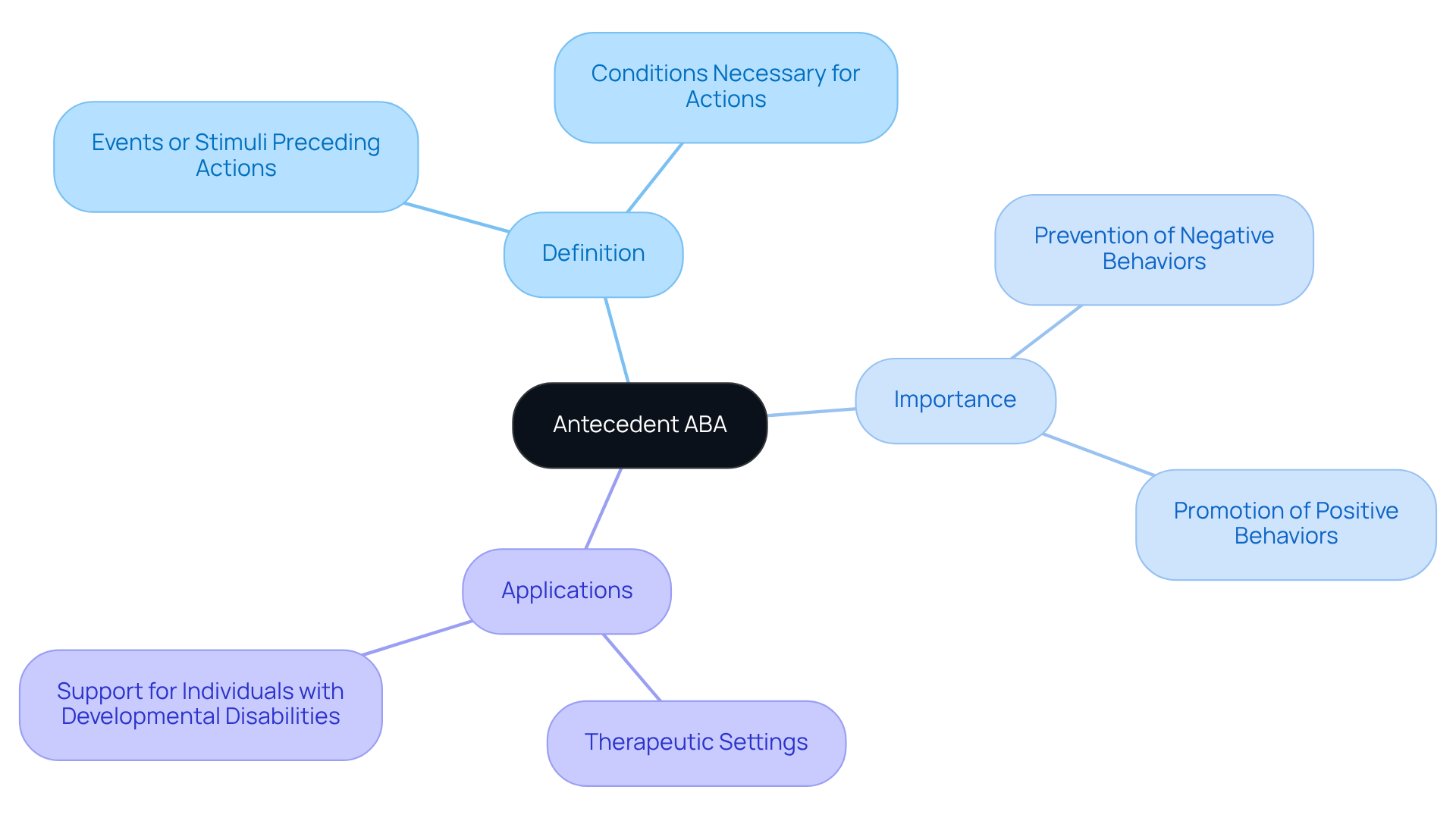
In Applied Behavior Analysis (ABA), the concept of antecedent ABA interventions represents a fundamental component of modification strategies. These interventions are crucial for identifying and modifying environmental factors that elicit specific behaviors. For example, when a child exhibits disruptive behavior in a classroom, an ABA practitioner may investigate the antecedent ABA—such as noise levels or seating arrangements—to pinpoint what triggers these actions. By adjusting these antecedent ABA, practitioners can significantly reduce the occurrence of undesirable behaviors while fostering more appropriate responses.
Research indicates that children learn to adhere to instructions and establish routines through stimulus control, underscoring the necessity of clear cues in behavior management. This proactive approach is vital for developing effective treatment plans tailored to individual needs. As the field evolves, there is a growing focus on integrating natural environment training and structured interventions. Dr. Ivar Lovaas emphasized this by stating, "Regular evaluations ensure that goals are achieved." Such integration ultimately leads to improved outcomes for children within educational frameworks.

Key features of Antecedent ABA include various methods such as:
For example, prompting involves providing cues or hints to encourage preferred actions. In contrast, modifying the environment may entail rearranging furniture to minimize distractions. Furthermore, establishing clear expectations aids individuals in understanding the anticipated actions in specific situations.
These techniques are rooted in behavioral principles and aim to create conditions that foster positive behavior change. By concentrating on antecedent ABA, practitioners can implement strategies that lead to more effective and sustainable outcomes in therapy.

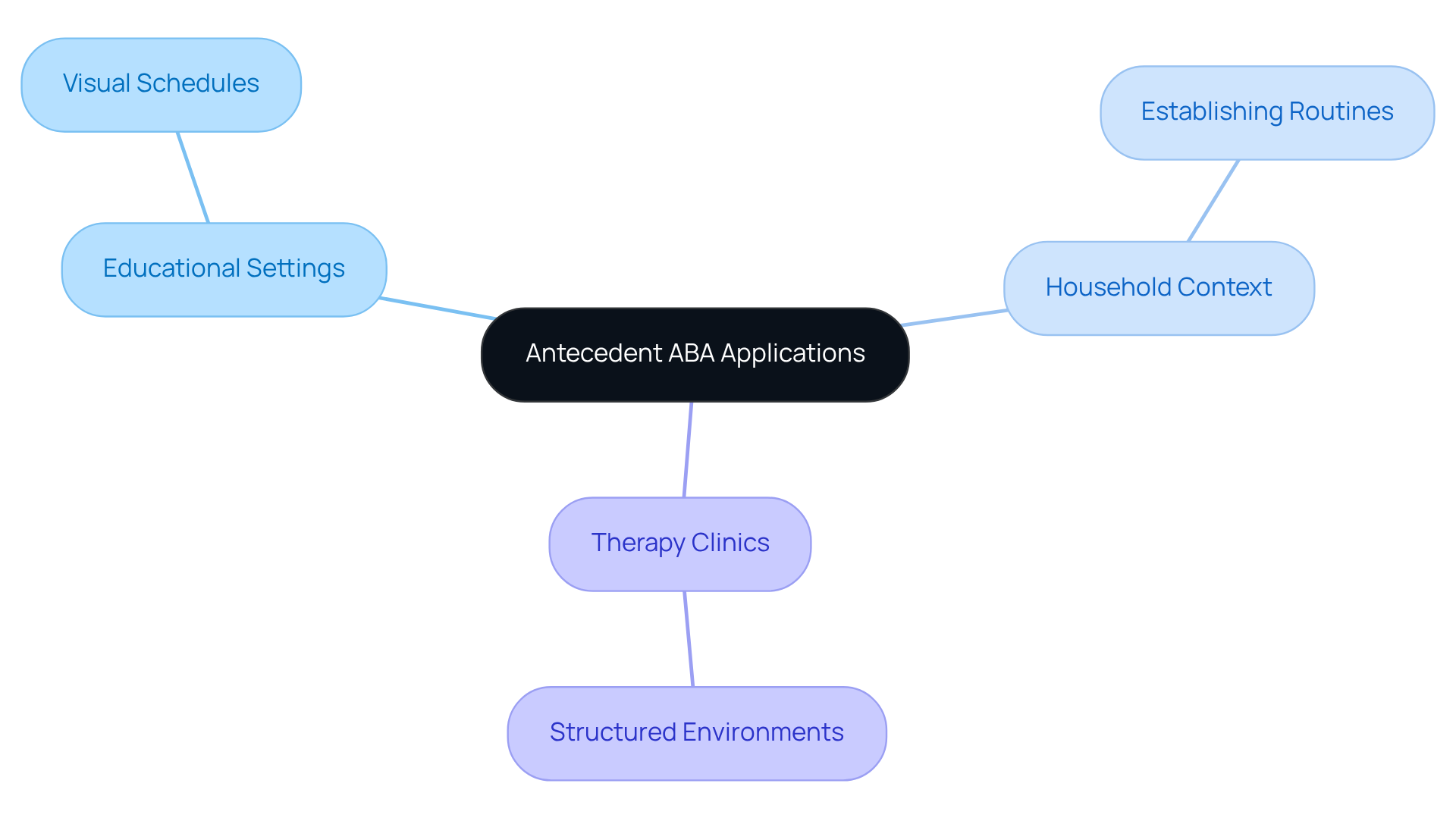
Practical applications of antecedent ABA can be observed in various environments, including schools, homes, and therapy clinics. In educational settings, for instance, instructors can implement visual schedules to help students understand the day's activities. This approach not only decreases anxiety but also minimizes disruptive behaviors. In a household context, parents might adopt proactive strategies by establishing routines that promote positive actions, such as allocating specific times for homework and play. Additionally, in therapy clinics, practitioners can leverage prior interventions to create structured environments that reduce distractions and enhance focus. These examples underscore the effectiveness of antecedent ABA in fostering positive behavior change across diverse contexts.
Antecedent ABA serves as a pivotal framework in behavior modification, focusing on the stimuli that precede actions and their influence on behavior. By understanding and manipulating these antecedents, practitioners can create environments that encourage positive behaviors while mitigating negative ones. This proactive approach is essential for fostering growth and learning, particularly in therapeutic settings for individuals with developmental disabilities.
The article highlights several key aspects of antecedent ABA, including its:
Techniques such as:
are emphasized as effective strategies for behavior management. Additionally, the importance of integrating natural environment training and consistent evaluations is underscored, reinforcing the need for tailored interventions that meet individual needs.
Ultimately, the insights presented in this article emphasize that antecedent ABA is not merely a theoretical concept but a practical approach that can lead to meaningful behavior change. By applying these strategies thoughtfully, educators, parents, and practitioners can cultivate environments that promote positive behaviors, enhance learning experiences, and improve overall outcomes for individuals in diverse settings. Engaging with antecedent ABA can transform the way we approach behavior management, making it an essential consideration for anyone involved in behavioral therapy or education.
What is Antecedent ABA?
Antecedent ABA refers to the strategies and techniques used to modify actions by addressing the events or stimuli that precede an exhibited behavior.
Why is Antecedent ABA important in Applied Behavior Analysis?
Antecedent ABA is crucial in Applied Behavior Analysis because it establishes the conditions necessary for actions to occur, helping to prevent negative behaviors and promote positive ones.
How does Antecedent ABA work to modify behaviors?
Antecedent ABA works by altering the environment or context in which actions take place, thereby creating conditions that support positive behavior and discourage negative behavior.
In what settings is Antecedent ABA particularly essential?
Antecedent ABA is particularly essential in therapeutic settings for individuals with developmental disabilities, as it fosters supportive environments conducive to learning and growth.
Our expert recruitment strategies and AI-driven sourcing ensure that you receive top-notch candidates quickly, without compromising on quality. Whether you’re looking for BCBAs, Clinical Directors, or RBTs, we’ve got you covered.


