


Thank you! Your submission has been received!
Oops! Something went wrong while submitting the form.
September 18, 2025

The escalating demand for Board Certified Behavior Analysts (BCBAs) underscores the essential role of effective supervision in Applied Behavior Analysis (ABA) therapy. Understanding the BCBA supervision requirements is imperative for aspiring analysts, as it equips them to deliver ethical and evidence-based interventions. Yet, navigating these requirements can be intricate.
How can candidates not only meet the standards but also enhance their professional development and client outcomes? Delving into this intersection reveals not only the pathway to certification but also the potential to transform the very landscape of ABA therapy.
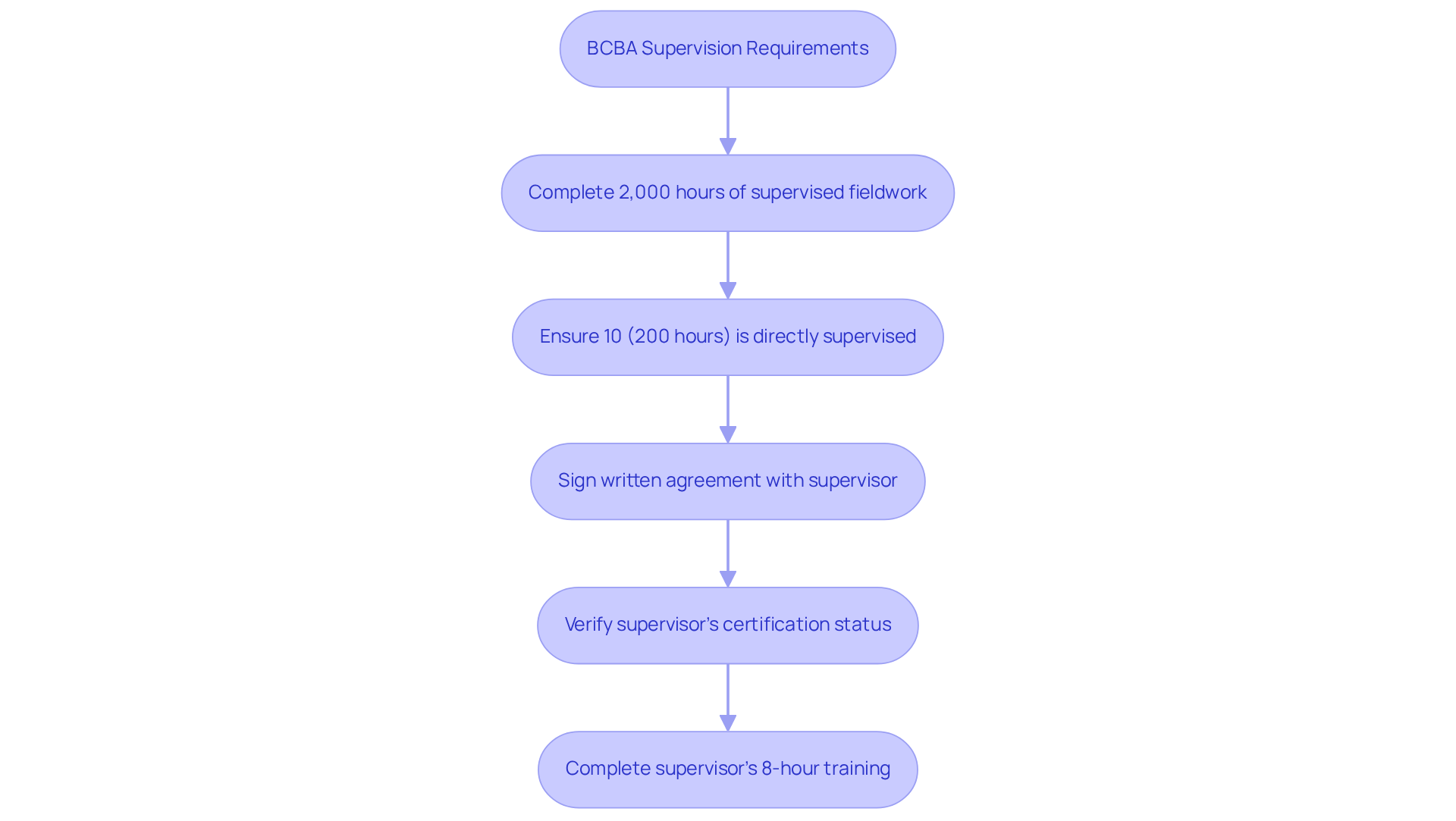
The demand for Board Certified Behavior Analysts (BCBAs) is surging, highlighting the importance of adhering to the set by the Behavior Analyst Certification Board (BACB). To meet the , aspiring BCBAs must complete a minimum of 2,000 hours of , with at least 10%—or 200 hours—directly supervised by a qualified BCBA. Supervisors may include university instructors, clinic or school BCBAs, or private BCBAs providing oversight services. Continuous oversight throughout training is essential to ensure candidates are adept at applying effectively.
A written agreement between the supervisor and trainee is mandatory, detailing responsibilities, objectives, and evaluation procedures. This agreement fosters clarity and accountability in the oversight process. The oversight framework is designed to offer guidance, mentorship, and evaluation, ensuring that aspiring BCBAs meet the . Tracking monitoring hours and is crucial for certification progress, as it helps prevent last-minute complications.
The BACB mandates that supervisors complete an 8-hour training program to ensure they are well-equipped to provide the necessary oversight and support. Candidates should also verify their and adherence to oversight requirements to guarantee they receive appropriate guidance. Notably, some supervisors may offer reduced rates for group guidance or for trainees in underserved regions, presenting additional options for candidates seeking mentorship.
In summary, understanding and fulfilling the is vital for aspiring behavior analysts. This knowledge lays the foundation for a successful career in Applied Behavior Analysis (ABA) therapy, making it imperative for candidates to navigate these prerequisites with diligence.
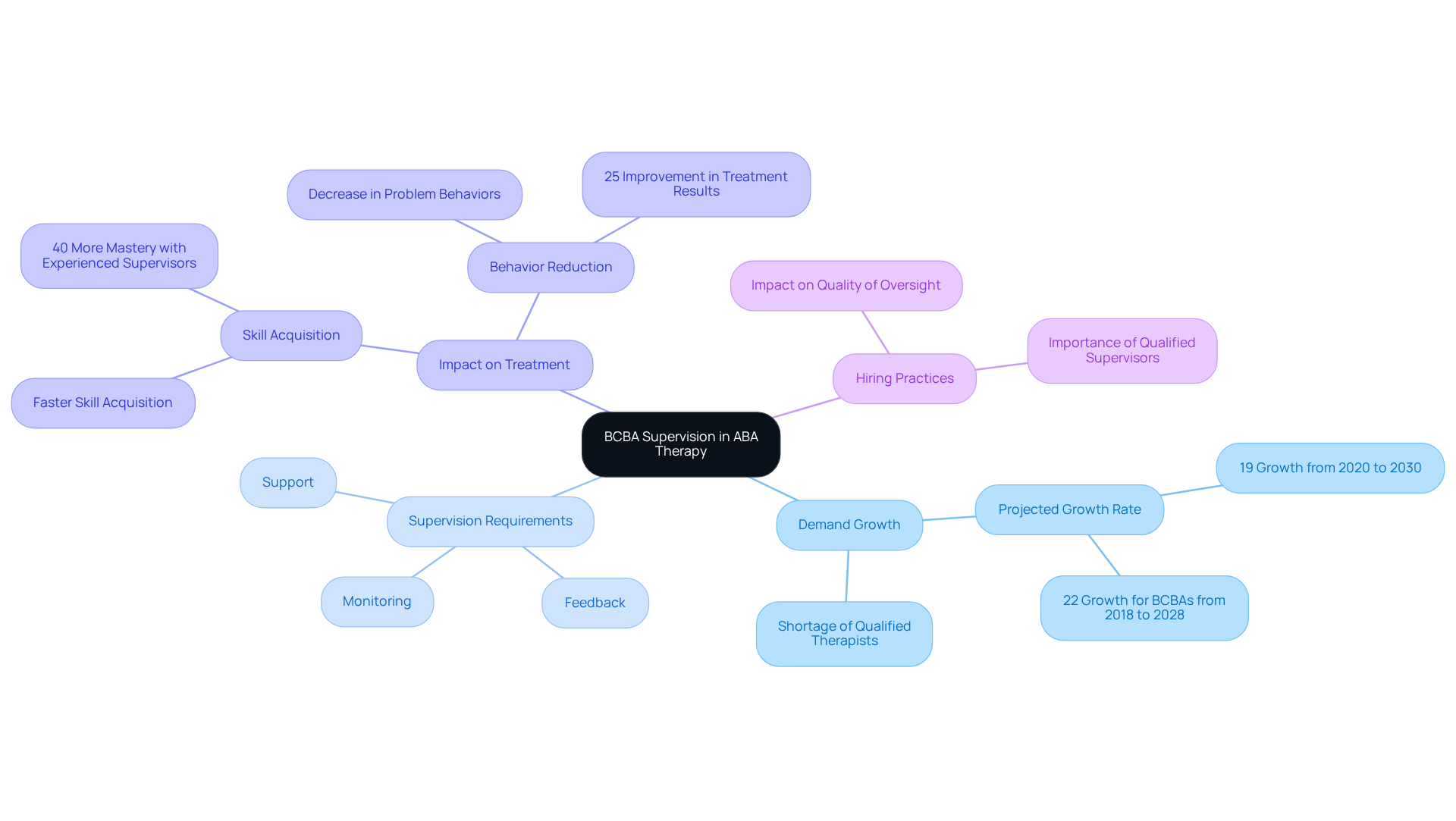
The demand for is on the rise, projected to grow by 19% from 2020 to 2030. This surge underscores the pivotal role of in ensuring the effectiveness of , which aims to enhance specific behaviors through structured interventions. is essential for ensuring that BCBAs adhere to the needed to apply evidence-based practices and uphold ethical standards.
In the realm of ABA therapy, the encompass not only the monitoring of treatment plan execution but also the provision of constructive feedback and support to behavior technicians and other team members. This collaborative framework fosters a culture of ongoing learning and improvement, crucial for achieving optimal outcomes for clients receiving ABA services. Have you considered how your current hiring practices may impact the quality of oversight in your organization?
Research indicates that clients supported by well-managed teams experience quicker skill acquisition and a decrease in problem behaviors, illustrating the direct connection between and . Moreover, organized management models have been shown to produce 25% improved treatment results compared to those lacking systematic oversight. By prioritizing , organizations can enhance the integrity of ABA practices, ensuring that interventions are delivered effectively and ethically.
As the demand for ABA therapy services continues to rise, it becomes increasingly essential to ensure that treatment plans are of each client. Robust oversight not only enhances client results but also prepares BCBAs for emerging leadership positions and adaptable working conditions in this thriving field. How can Hire ABA assist you in overcoming your hiring challenges to ensure the highest standards of oversight in your practice?
Key components of BCBA supervision are essential for aspiring to thrive in their roles. Oversight Time is critical; candidates must complete a , ensuring at least 10% of that time involves direct oversight. This structure ensures that supervisees receive adequate guidance in accordance with the throughout their training. Notably, research indicates that a 10% increase in oversight time leads to only a 3.6% rise in achieved learning objectives, highlighting that while guidance is vital, its impact is limited compared to therapy time.
is another crucial element. At least 50% of monitored hours must consist of individual oversight, which allows for necessary for developing specific competencies. Research shows that personal oversight fosters a deeper understanding of complex cases, while group guidance enhances teamwork and peer education. Hulse & Robert emphasize that organized oversight, including , significantly boosts the effectiveness of the supervisory experience.
Documentation plays a pivotal role in the supervisory process. Supervisors are mandated to maintain comprehensive records of oversight activities, detailing the frequency and nature of each session. This documentation is vital for tracking progress and ensuring accountability in the supervisory relationship. The BACB outlines that mandate supervisors to monitor the number and rate of competencies completed by the supervisee, further clarifying documentation requirements.
are integral to effective oversight. Regular feedback sessions allow managers to assess the supervisee's performance and provide constructive criticism. This ongoing dialogue is essential for professional growth, helping to identify strengths and areas for improvement. Studies confirm that structured feedback significantly enhances the learning experience for supervisees, underscoring the necessity of regular evaluations.
Lastly, adherence to is non-negotiable. Supervisors must follow the BACB's ethical guidelines, ensuring that all practices promote integrity and professionalism in ABA therapy. This commitment to , as outlined in the BACB's Compliance Code 7.0, not only safeguards clients but also bolsters the credibility of the field.
Together, these components create a for aspiring , facilitating their professional development and ensuring they are well-equipped for their roles in ABA therapy.

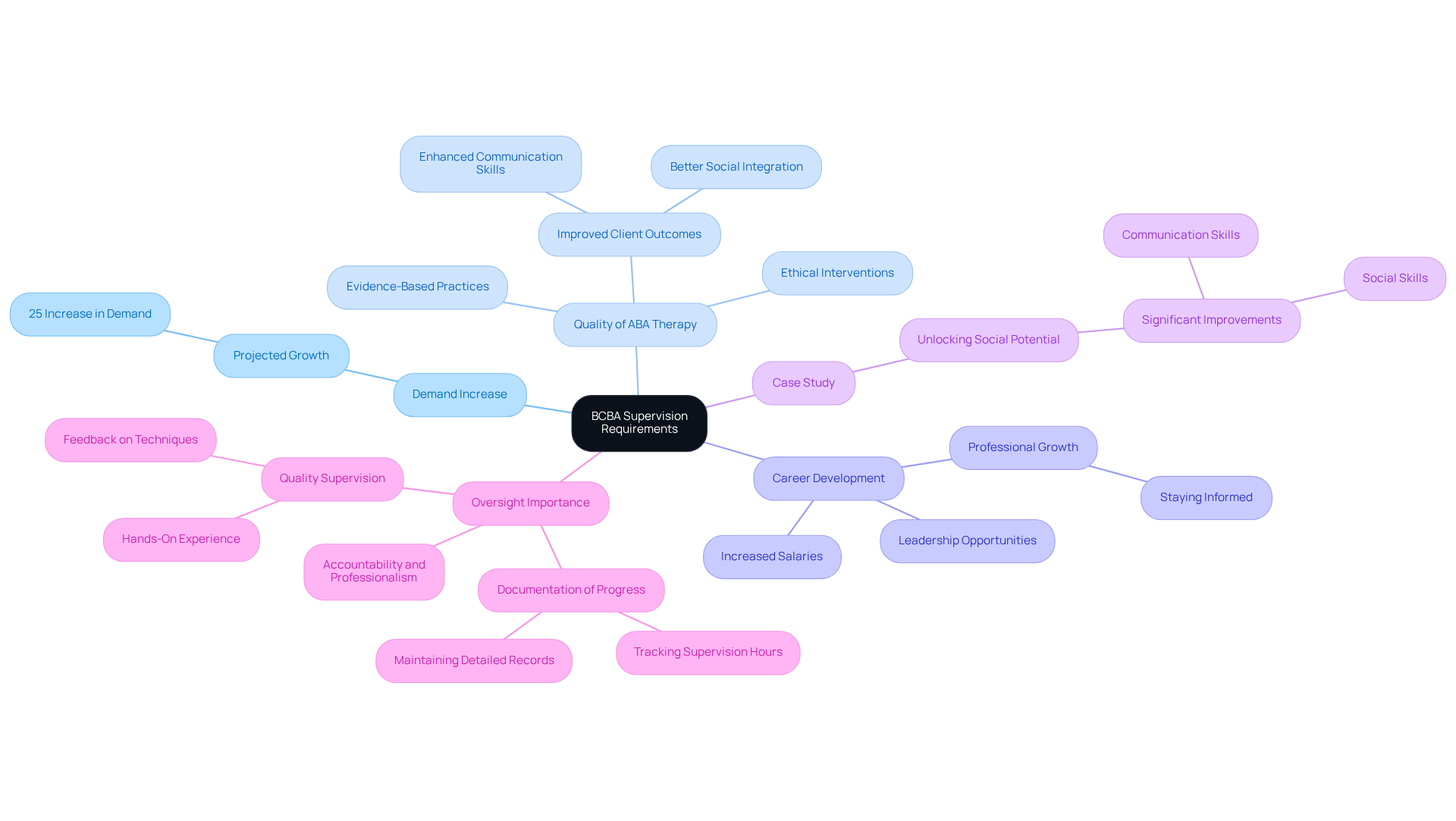
The demand for is projected to increase by 25% over the next five years, underscoring the critical implications of that extend well beyond the certification process. Efficient oversight not only guarantees that are equipped to deliver interventions that are ethical and evidence-based, but it also enhances the quality of provided to clients. As new opportunities emerge, including increased salaries and leadership positions, it is essential for professionals to stay informed about their .
Consider the case study "Unlocking Social Potential: The Power of for Children with Autism." It illustrates how children receiving under well-supervised practitioners show , facilitating better integration into social settings. Furthermore, adhering to the , which entail monitoring at least twice a month and direct observation, fosters a culture of accountability and professionalism within the field, ultimately enhancing the overall reputation of ABA therapy.
As the market for BCBAs continues to expand, the become increasingly vital for robust oversight practices to maintain and ensure the effectiveness of behavioral interventions. Additionally, are essential for tracking growth and ensuring adherence to certification standards. Quality supervision lays a solid foundation for a successful career in behavior analysis, as evidenced by the average of 10.98 supervision hours received per month, which correlates with improved mastery of learning objectives.
Are you prepared to navigate the evolving landscape of behavior analysis? Embrace the opportunities that arise from and ensure that you are at the forefront of this growing field.
The demand for Board Certified Behavior Analysts (BCBAs) is on the rise, making it imperative for aspiring behavior analysts to understand and adhere to BCBA supervision requirements. These requirements not only pave the way to certification but also equip candidates to deliver effective and ethical interventions, significantly enhancing the quality of care provided to clients.
Throughout this article, we have highlighted the structured nature of BCBA supervision. It is essential to complete a minimum of 2,000 hours of supervised fieldwork, ensuring direct oversight and implementing thorough documentation and feedback mechanisms. The implications of robust supervision are profound, leading to improved treatment outcomes and fostering professional integrity within the ABA community. Collectively, these components underscore the critical importance of quality oversight in shaping competent and ethical behavior analysts.
As the landscape of ABA therapy evolves, professionals must prioritize effective oversight practices. Understanding and implementing BCBA supervision requirements is not just about meeting certification standards; it is about making a positive contribution to the field. By embracing the principles of BCBA supervision, you will ultimately enhance client outcomes and build a reputable practice, paving the way for future growth and success in behavior analysis. Are you ready to take the next step in your career and ensure the highest standards of practice?
What are the BCBA supervision requirements for aspiring BCBAs?
Aspiring BCBAs must complete a minimum of 2,000 hours of supervised fieldwork, with at least 10% (200 hours) directly supervised by a qualified BCBA.
Who can serve as a supervisor for BCBA trainees?
Supervisors can include university instructors, clinic or school BCBAs, or private BCBAs providing oversight services.
Why is continuous oversight important during BCBA training?
Continuous oversight is essential to ensure candidates are adept at applying behavior analysis principles effectively.
Is there a requirement for a written agreement between the supervisor and trainee?
Yes, a written agreement is mandatory, detailing responsibilities, objectives, and evaluation procedures to foster clarity and accountability.
What is the purpose of the oversight framework in BCBA supervision?
The oversight framework is designed to offer guidance, mentorship, and evaluation to ensure aspiring BCBAs meet the necessary supervision requirements for certification.
How important is tracking monitoring hours and documentation for BCBA certification?
Tracking monitoring hours and maintaining proper documentation is crucial for certification progress, as it helps prevent last-minute complications.
What training must BCBA supervisors complete?
Supervisors must complete an 8-hour training program to ensure they are well-equipped to provide the necessary oversight and support.
How can candidates verify their supervisor's status and adherence to requirements?
Candidates should verify their supervisor's status and adherence to oversight requirements to ensure they receive appropriate guidance.
Are there any financial options available for BCBA trainees seeking supervision?
Some supervisors may offer reduced rates for group guidance or for trainees in underserved regions, providing additional options for mentorship.
Why is it important for aspiring BCBAs to understand the supervision requirements?
Understanding and fulfilling the BCBA supervision requirements is vital for aspiring behavior analysts, as it lays the foundation for a successful career in Applied Behavior Analysis (ABA) therapy.
Our expert recruitment strategies and AI-driven sourcing ensure that you receive top-notch candidates quickly, without compromising on quality. Whether you’re looking for BCBAs, Clinical Directors, or RBTs, we’ve got you covered.


