


Thank you! Your submission has been received!
Oops! Something went wrong while submitting the form.
December 6, 2025

The landscape of Applied Behavior Analysis (ABA) therapy is rapidly evolving, with a staggering increase in demand for qualified professionals to support individuals with developmental disorders. In fact, the need for Board Certified Behavior Analysts (BCBAs) has surged, highlighting the critical role they play in effective therapeutic interventions. Central to this growth is the Registered Behavior Technician (RBT) certification, which not only validates the skills of those implementing behavior-analytic services but also ensures a standardized level of competency within the field.
As the number of RBTs continues to rise, organizations face a pressing question: how can they effectively navigate the challenges of hiring qualified technicians while maximizing the benefits that certified professionals bring to therapeutic teams? This is where Hire ABA steps in, offering a streamlined recruitment process tailored to meet the unique needs of the ABA community.
Consider the implications of hiring the right professionals. A well-trained RBT can significantly enhance the quality of care provided, leading to better outcomes for clients. With Hire ABA, you gain access to a pool of qualified candidates who are ready to make a difference.
Are you currently struggling with your hiring process? Reflect on the challenges you face and how they impact your team's effectiveness. By partnering with Hire ABA, you can simplify your recruitment efforts and ensure that you have the best talent on your team.
In conclusion, as the demand for ABA services grows, so does the necessity for competent professionals. Don't let hiring challenges hold you back. Choose Hire ABA for reliable recruitment solutions that empower your therapeutic teams and elevate the standard of care.
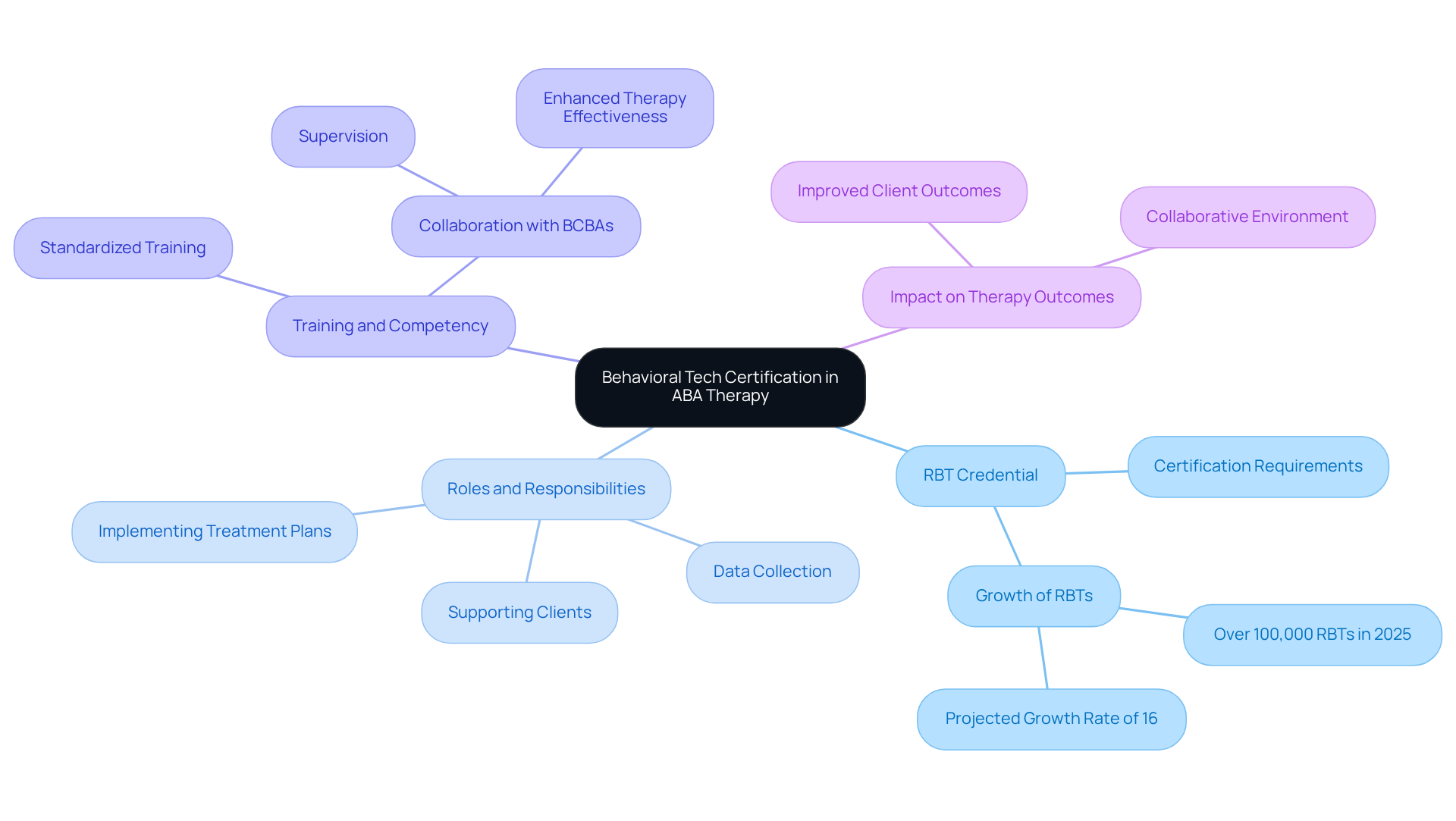
The Registered Behavior Technician (RBT) credential serves as a vital qualification for achieving a behavioral tech certification in Applied Behavior Analysis (ABA). This behavioral tech certification is designed for individuals who implement behavior-analytic services under the supervision of a Board Certified Behavior Analyst (BCBA), ensuring that RBTs possess the essential skills and knowledge to effectively assist in delivering ABA therapy, particularly for individuals with autism and other developmental disorders. With over 100,000 certified behavior technicians in the United States as of 2025, the workforce dedicated to this crucial area of therapy has seen significant growth.
RBTs are trained to meticulously follow treatment plans, collect data, and support clients in achieving their behavioral goals. Their role is instrumental in the successful implementation of ABA strategies, providing direct support to clients and facilitating the application of techniques developed by BCBAs. Industry leaders emphasize that RBTs with behavioral tech certification are essential in enhancing the effectiveness of ABA therapy, particularly in autism treatment programs, where their contributions can lead to improved outcomes for clients.
The significance of behavioral tech certification is immense and cannot be overstated. The behavioral tech certification guarantees a standardized level of training and competency among technicians, promoting a collaborative environment where RBTs and BCBAs work together to enhance therapeutic interventions. This partnership is crucial for the progress of ABA therapy, establishing RBT credentials as a fundamental component of the behavioral tech certification in the ABA workforce.
Are you facing challenges in hiring qualified professionals for your ABA programs? Consider how Hire ABA can streamline your recruitment process and connect you with top-tier talent. With the , ensuring you have the right team in place is more important than ever. RBTs not only enhance the effectiveness of therapy but also contribute to a collaborative and successful treatment environment.
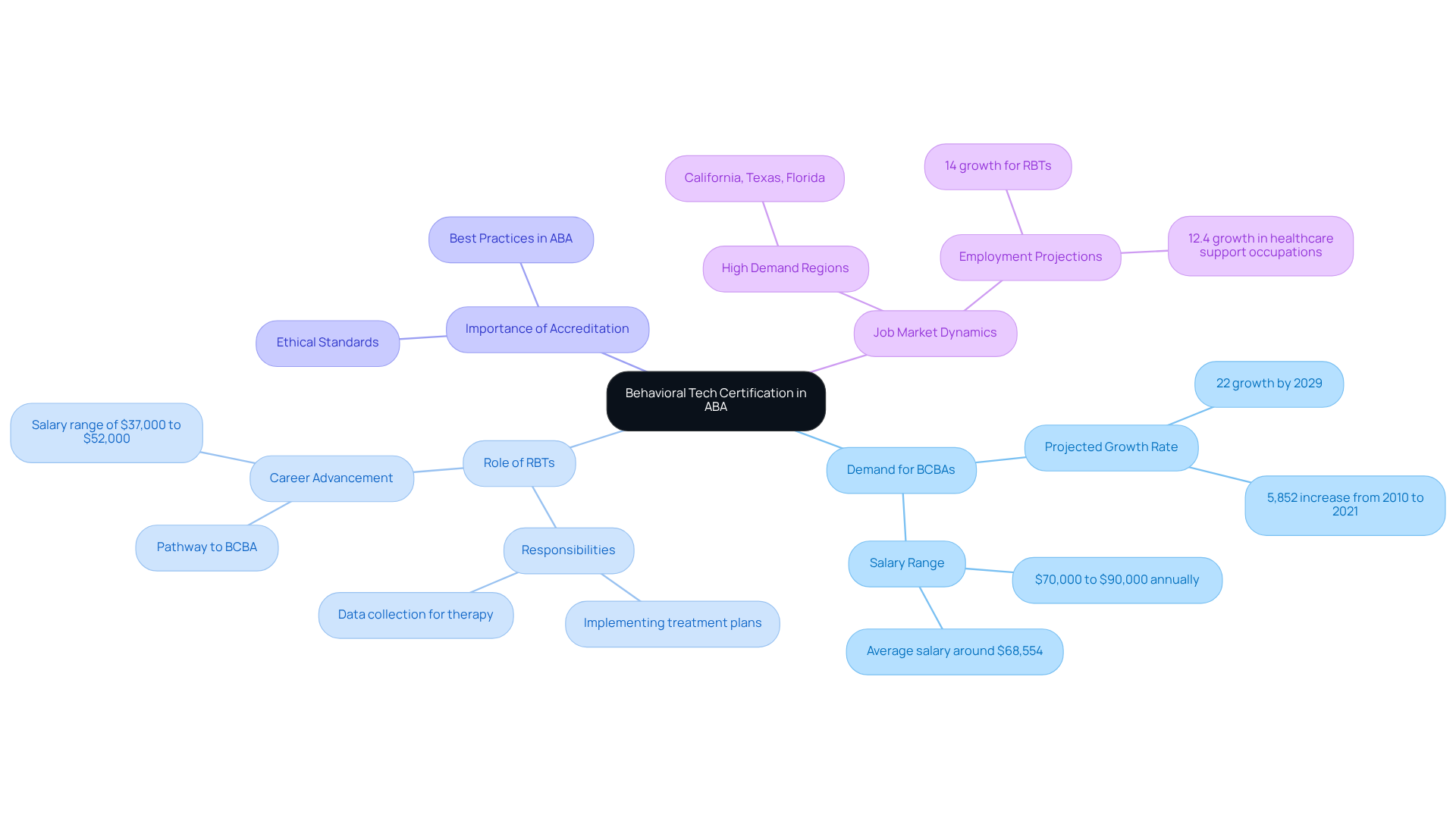
The demand for Board Certified Behavior Analysts (BCBAs) is skyrocketing, with projections indicating a growth rate of 12 to 22 percent over the next decade. This surge highlights the in the ABA therapy landscape. Registered Behavior Technicians (RBTs) are essential team members, responsible for implementing treatment plans and collecting data that inform ongoing therapeutic strategies.
Accreditation for RBTs is not just a formality; it confirms their training and upholds ethical standards and best practices in behavior analysis. The behavioral tech certification is vital for maintaining the integrity of ABA services, ensuring a workforce that is both knowledgeable and skilled in evidence-based interventions. For instance, RBTs often enhance treatment plans by tailoring interventions to meet individual client needs, significantly improving outcomes.
As the job market for RBTs continues to expand, their role in supporting BCBAs and contributing to effective treatment teams becomes increasingly significant. Have you considered the challenges you face in hiring qualified professionals? Hire ABA offers personalized resume assessments and advanced job fit scoring, helping BCBAs find roles that align with their expertise and career goals.
This streamlined job matching process, combined with comprehensive support, underscores the necessity of RBTs in treatment teams. Their contributions are crucial to the overall success of ABA therapy. Don't miss out on the opportunity to enhance your team with qualified RBTs - explore how Hire ABA can assist you today.
The behavioral tech certification known as the Registered Behavior Technician (RBT) designation was established by the Behavior Analyst Certification Board (BACB) to meet the growing demand for qualified professionals in Applied Behavior Analysis (ABA). Since the early 2000s, as the need for behavior analysis services surged - particularly for individuals with autism spectrum disorder (ASD) - the formal credentialing process took shape. The introduction of the in 2014 exemplifies the BACB's proactive approach to standardizing qualifications for those directly engaging with clients, particularly in the realm of behavioral tech certification.
Over the years, the RBT credential has evolved significantly, incorporating rigorous training requirements, competency assessments, and ongoing education. Initially, the BACB set a minimum training duration of 40 hours, reflecting its commitment to ensuring that registered behavior technicians are well-equipped to provide effective services. This evolution aligns with broader trends in healthcare and education, where evidence-based practices and accountability are increasingly prioritized.
Experts emphasize the importance of this evolution, noting that the RBT credential has adapted to the dynamic needs of the industry. As the field of ABA continues to expand, the BACB stresses the necessity for registered behavior technicians to pursue behavioral tech certification to stay updated with best practices, ultimately enhancing the quality of care provided to clients. The growth of RBT accreditation since its inception underscores the expanding role of behavior technicians in delivering ABA services, ensuring they can address the diverse needs of the populations they serve. Notably, the number of RBTs skyrocketed from 328 in 2014 to over 100,000 by 2021, showcasing the credential's significant impact on the field.
Furthermore, the release of the RBT Ethics Code (2.0) in July 2021, implemented on January 1, 2022, illustrates a continuous commitment to ethical practices within the credentialing process. However, the rapid increase in newly certified behavior analysts has also introduced challenges in supervision, highlighting the urgent need for experienced practitioners to mentor less experienced colleagues.

To obtain the , candidates must meet several key requirements. First and foremost, they need to be at least 18 years old and possess a high school diploma or equivalent. Additionally, completing a 40-hour training course that covers the [principles of Applied Behavior Analysis (ABA)](https://ambitionsaba.com/resources/aba-therapist-statistics-demographics) is essential.
But that’s not all. Candidates must also pass a competency assessment conducted by a qualified Board Certified Behavior Analyst (BCBA) or Board Certified Assistant Behavior Analyst (BCaBA). Following this, they are required to pass the RBT examination. Once certified, registered behavior technicians must adhere to ethical guidelines and complete ongoing supervision and continuing education to maintain their certification.
These requirements ensure that RBTs, who hold a behavioral tech certification, are well-equipped to provide high-quality behavioral services and contribute effectively to treatment teams. Are you facing challenges in hiring qualified professionals? Consider how [Hire ABA](https://hireaba.today) can streamline your recruitment process and connect you with the best candidates in the field.

The demand for qualified professionals in ABA therapy is skyrocketing, making Behavioral Tech Certification more crucial than ever. This certification is not just a credential; it’s a commitment to delivering effective and ethical treatment. The Registered Behavior Technician (RBT) credential signifies that technicians are equipped with the skills necessary to implement behavior-analytic services under the guidance of Board Certified Behavior Analysts (BCBAs). This ensures a collaborative environment that promotes the best outcomes for clients, especially those with autism and developmental disorders.
Key points throughout the article highlight the rigorous training and ethical guidelines required for obtaining the RBT credential. The evolution of this certification reflects the increasing need for qualified professionals in the field, evidenced by the significant rise in certified technicians over the years. RBTs are essential in executing treatment plans and collecting data, making their contributions vital for the success of ABA therapy. Moreover, ongoing education and competency assessments keep RBTs updated on best practices, ultimately enhancing the quality of care provided.
As the landscape of ABA therapy continues to expand, the significance of Behavioral Tech Certification becomes even more pronounced. With the rising need for qualified professionals, organizations must prioritize the recruitment of certified RBTs to build effective treatment teams. By emphasizing the importance of this certification, we not only strengthen the support provided to clients but also elevate the standards of practice within the field.
Are you facing challenges in hiring qualified RBTs? Consider how Hire ABA can streamline your recruitment process. Embracing these standards is crucial for fostering a skilled workforce that meets the diverse needs of individuals seeking behavioral therapy.
What is the Registered Behavior Technician (RBT) credential?
The RBT credential is a vital qualification for achieving a behavioral tech certification in Applied Behavior Analysis (ABA), specifically for individuals who implement behavior-analytic services under the supervision of a Board Certified Behavior Analyst (BCBA).
What role do RBTs play in ABA therapy?
RBTs are trained to follow treatment plans, collect data, and support clients in achieving their behavioral goals. They provide direct support to clients and facilitate the application of ABA strategies developed by BCBAs.
Why is behavioral tech certification important in ABA therapy?
Behavioral tech certification ensures a standardized level of training and competency among technicians, promoting collaboration between RBTs and BCBAs, which is crucial for enhancing therapeutic interventions and improving client outcomes.
How many certified behavior technicians are there in the United States as of 2025?
As of 2025, there are over 100,000 certified behavior technicians in the United States.
What impact do RBTs have on autism treatment programs?
RBTs significantly enhance the effectiveness of ABA therapy in autism treatment programs, leading to improved outcomes for clients through their contributions and support.
How can organizations address challenges in hiring qualified professionals for ABA programs?
Organizations can consider using services like Hire ABA to streamline the recruitment process and connect with top-tier talent, ensuring they have the right team in place to meet the growing demand for BCBAs and RBTs.
Our expert recruitment strategies and AI-driven sourcing ensure that you receive top-notch candidates quickly, without compromising on quality. Whether you’re looking for BCBAs, Clinical Directors, or RBTs, we’ve got you covered.


