


Thank you! Your submission has been received!
Oops! Something went wrong while submitting the form.
September 18, 2025

Conditional discrimination in Applied Behavior Analysis (ABA) represents a pivotal concept that underpins effective therapy strategies for individuals with developmental disabilities. This skill enables individuals to differentiate responses based on contextual cues, enhancing communication and fostering adaptive behaviors crucial for navigating social interactions. Yet, the journey to mastering conditional discrimination is fraught with challenges.
How can practitioners effectively teach this nuanced skill to ensure meaningful progress in their clients' lives? Addressing this question is essential for advancing therapeutic practices and improving client outcomes.
refers to the capacity to distinguish between stimuli based on specific contextual cues or conditions. This ability involves selecting a response that is appropriate only when certain stimuli are present. For example, a child may learn to greet someone with 'hello' in the morning but refrain from doing so in the evening. This nuanced form of bias is crucial for developing , allowing individuals to respond appropriately to a variety of situations and instructions.
In contrast to basic bias, which focuses on a single attribute of a stimulus, requires an understanding of the situation in which a reaction is suitable. Research indicates that mastering situational differentiation is vital for and academic success, particularly for individuals with . This skill aids their ability to navigate diverse social and educational environments effectively.
Moreover, studies reveal that individuals with often encounter difficulties in learning compared to visual ones, underscoring the necessity for . Essential skills, such as mand and tact repertoires, play a critical role in successful learning within this domain. As noted by Grow and LeBlanc, can significantly enhance procedural integrity in education, thereby improving outcomes for learners.

plays a crucial role in by promoting . This approach teaches individuals to respond differently based on contextual cues, enabling them to and improve decision-making abilities.
For instance, children with autism frequently encounter difficulties in ; through specific training techniques, they can enhance their comprehension of these signals, resulting in better social interactions. Studies suggest that 90% of children undergoing the advised hours of , especially with engaged caregiver participation, demonstrate in their abilities.
Moreover, mastering situational discernment serves as a foundation for , including language understanding and problem-solving, highlighting its critical significance in that employ . Case studies show that two preschoolers with autism learned seven and four new relational skills without direct instruction, showcasing the potential of this method to enhance crucial abilities for practical application in daily life.
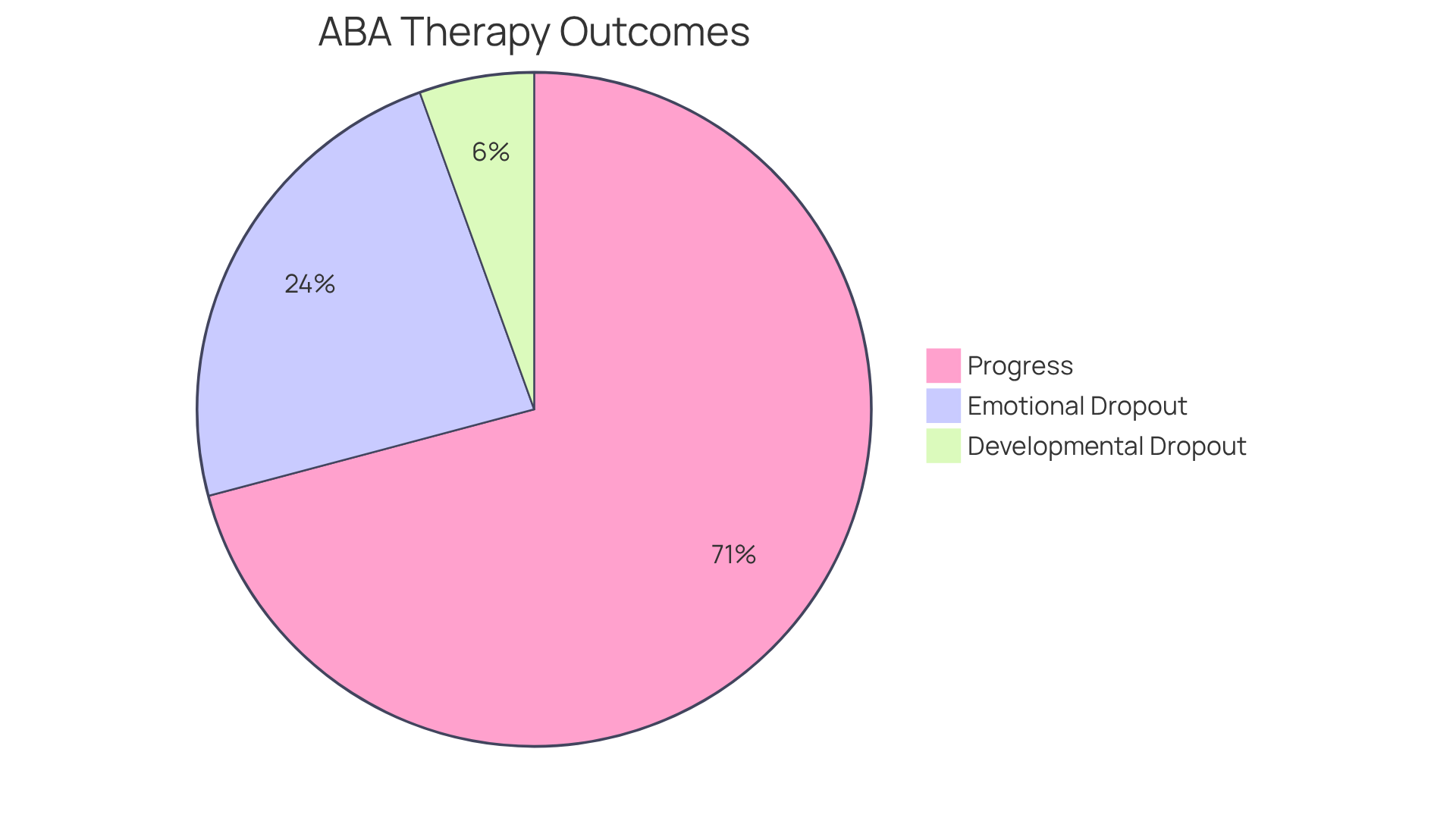
Furthermore, the dropout rate for students facing emotional challenges is 30%, while only 7% applies to those with developmental disorders, emphasizing the necessity for such as selective learning methods. Dennis needed 63, 117, and 153 attempts to master the , underscoring the difficulties associated with the learning process.
As Rori Care states, 'Change begins with awareness; let's educate ourselves about ableism,' emphasizing the importance of understanding and addressing the unique needs of individuals with autism.
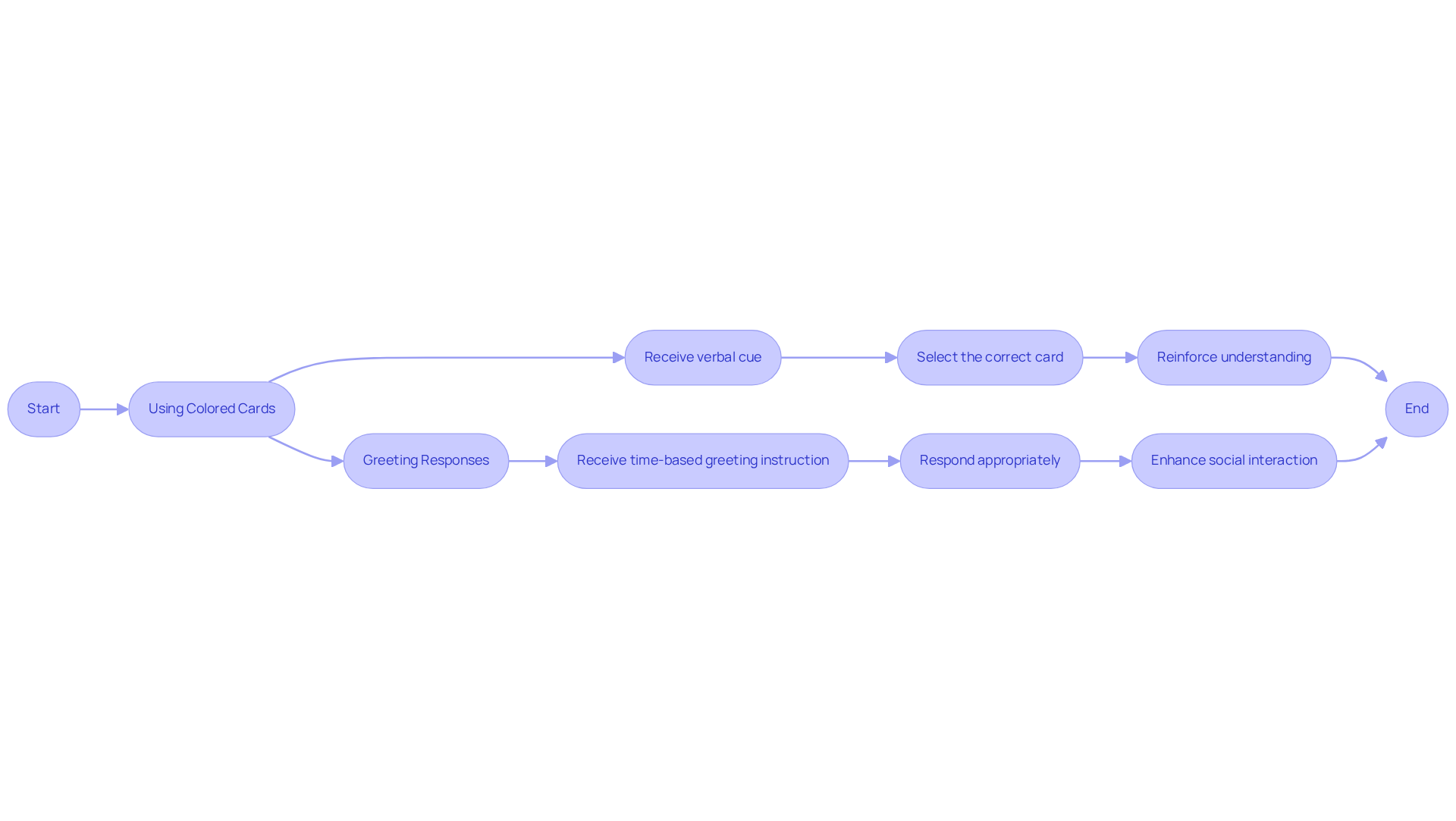
reveals significant applications in various therapeutic environments, greatly enhancing and . For example, a therapist may employ colored cards to guide a child in selecting the based on . When instructed to 'pick the red card when I say 'go',' the child learns to associate the command with the specific context, thereby reinforcing their ability to .
Another compelling example involves teaching children to respond appropriately to greetings according to the time of day. They might learn to say 'good morning' in the morning and 'good evening' later in the day. This type of instruction not only improves their but also in daily life.
The success rates for targeted training in therapeutic settings are impressively high, with many children mastering these skills through consistent practice and reinforcement. Results indicate that all participants achieved across conditions, demonstrating significant competency in learning . This structured approach not only facilitates but also prepares individuals for real-world interactions, ultimately enhancing their quality of life. As Tara Karen states, 'This essential concept enables individuals to navigate their environments with confidence, understanding, and independence.
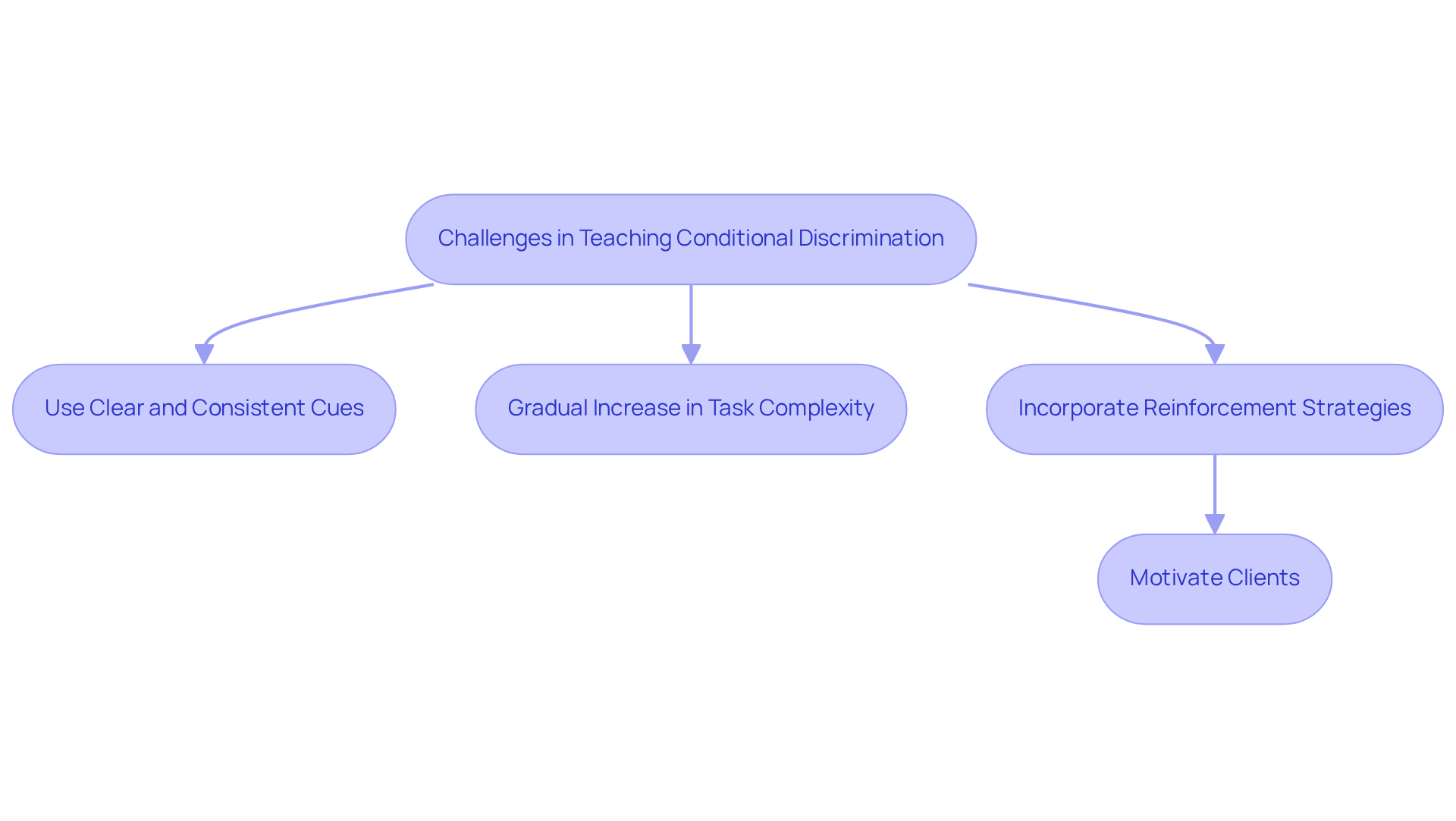
Instructing on situational distinctions in therapy presents notable challenges, particularly for individuals with . The generalization of learned behaviors across various contexts often proves difficult, compounded by confusion from multiple stimuli. Research underscores the significance of , revealing that children who master this ability tend to exhibit enhanced confidence and adaptability in daily life.
To confront these challenges effectively, therapists must implement . This approach encompasses:
Moreover, involving in the learning process is essential; they can facilitate practice opportunities beyond therapy sessions and reinforce learned behaviors. By acknowledging these challenges and employing targeted strategies, practitioners can significantly elevate the effectiveness of , ultimately leading to for their clients.
Conditional discrimination in ABA therapy is a vital concept that significantly enhances the ability of individuals, particularly those with developmental disabilities, to navigate their environments effectively. By understanding how to respond to varying stimuli based on contextual cues, individuals can develop essential social and communication skills, ultimately fostering greater independence and adaptability in their daily lives.
Key insights have emerged throughout the exploration of this topic, including:
Real-life applications, such as using colored cards for instruction and teaching contextually appropriate greetings, illustrate the practical benefits of this approach. Moreover, the challenges faced in teaching these skills underscore the need for systematic methods and reinforcement to ensure success.
Reflecting on the broader implications, it becomes clear that understanding and implementing conditional discrimination in ABA therapy is not merely an academic exercise but a crucial step toward empowering individuals with the skills necessary for meaningful social interactions and improved quality of life. As awareness grows around the unique needs of individuals with autism and other developmental disorders, embracing effective teaching strategies can lead to transformative outcomes. The call to action is to prioritize education on conditional discrimination, ensuring that therapists, caregivers, and communities work together to support and uplift those on their journey toward independence.
What is conditional discrimination in ABA?
Conditional discrimination in ABA refers to the ability to distinguish between stimuli based on specific contextual cues or conditions, allowing for appropriate responses only when certain stimuli are present.
Can you provide an example of conditional discrimination?
An example of conditional discrimination is a child learning to greet someone with 'hello' in the morning but not doing so in the evening, demonstrating an understanding of context.
How does conditional discrimination differ from basic bias?
Conditional discrimination involves context-dependent differentiation, requiring an understanding of the situation in which a response is suitable, whereas basic bias focuses on a single attribute of a stimulus.
Why is mastering situational differentiation important?
Mastering situational differentiation is vital for social interactions and academic success, especially for individuals with developmental disabilities, as it helps them navigate diverse social and educational environments effectively.
What challenges do individuals with developmental disabilities face regarding conditional discrimination?
Individuals with developmental disabilities often have difficulties learning auditory conditional discrimination compared to visual ones, highlighting the need for targeted instructional strategies.
What are some essential skills related to conditional discrimination?
Essential skills related to conditional discrimination include mand and tact repertoires, which are critical for successful learning in this area.
How can structured data sheets improve educational outcomes in conditional discrimination?
Structured data sheets can enhance procedural integrity in education, thereby improving outcomes for learners by providing clear guidelines and tracking progress effectively.
Our expert recruitment strategies and AI-driven sourcing ensure that you receive top-notch candidates quickly, without compromising on quality. Whether you’re looking for BCBAs, Clinical Directors, or RBTs, we’ve got you covered.


