


Thank you! Your submission has been received!
Oops! Something went wrong while submitting the form.
December 28, 2025

Differential Reinforcement of Low Rates (DRL) is a pivotal strategy in Applied Behavior Analysis, specifically crafted to manage behaviors that, while acceptable, occur too frequently. This approach focuses on reinforcing lower rates of these actions, promoting healthier habits and fostering a more conducive learning environment. But here’s the question: how can educators and practitioners effectively implement this nuanced approach to achieve the desired behavioral outcomes?
Exploring the intricacies of DRL reveals its potential to transform behavior management strategies and enhance classroom dynamics. By understanding and applying DRL, educators can not only address frequent behaviors but also create a more effective learning atmosphere. Are you ready to delve into the transformative power of DRL and elevate your behavior management techniques?
The strategy known as , or DRL in ABA, is a powerful within . It reinforces an action only when it occurs at a lower frequency than a predetermined criterion. This technique proves particularly effective for , such as hand-washing or classroom questioning. The primary goal of DRL isn’t to eliminate these behaviors entirely but to reduce their frequency to a socially acceptable level. For example, if a child typically washes their hands ten times before lunch, a DRL approach would reward them for washing only five times, promoting healthier habits without completely removing the action.
Recent studies reveal that DRL can significantly reduce problematic behaviors in children, with when implemented correctly. This method effectively addresses actions that occur too frequently, like repetitive questioning in educational settings. By providing reinforcement for lower rates of these behaviors, practitioners can foster more appropriate interactions and enhance overall .
The effectiveness of is underscored by its ability to create a to associate positive outcomes with reduced occurrences of specific actions. A practical application of DRL might involve reinforcing a student for asking three or fewer questions during a 30-minute period. This not only curbs excessive questioning but also encourages more thoughtful participation in class discussions. This approach aligns with the principles of operant conditioning, highlighting that behaviors are shaped by their consequences, thereby nurturing a supportive learning atmosphere.
Are you ready to explore how DRL can transform your approach to s? Consider implementing this strategy to enhance your practice and support your students effectively.

In behavior modification, an essential strategy is (), which complements techniques like (DRA) and Differential Reinforcement of Other Responses (DRO). While focuses on reinforcing a desirable alternative action and DRO rewards any response other than the undesired one, DRL specifically targets the reduction of a response that, although acceptable, occurs too frequently. This is particularly relevant in , where behaviors such as raising hands or asking questions can become excessive.
Consider a classroom scenario: a teacher implements a strategy of to manage students' requests for attention. By setting a limit on the number of allowable requests within a specific timeframe, educators can encourage students to . Research indicates that this approach not only but also fosters greater independence among students. For instance, one study revealed that the application of DRL led to a significant drop in attention-seeking requests, with Elin's baseline rate decreasing from 0.45 to 0.15 responses per minute during DRL, showcasing improved focus on tasks.
The advantages of employing DRL in ABA within educational settings are numerous. It cultivates a more conducive learning atmosphere by minimizing disruptions, enhances students' self-regulation skills, and . Recent studies affirm the effectiveness of DRL in ABA, suggesting that consistent implementation can lead to and improved classroom dynamics. Notably, the teacher's adherence to the DRL protocol was reported at 100%, with both the teacher and participants expressing positive feedback about the DRL procedure, highlighting its practical application and acceptance in classroom management.
As educators continue to refine their , DRL in ABA emerges as a valuable tool for encouraging appropriate actions while sustaining a supportive learning environment. Are you ready to explore how DRL can transform your classroom dynamics?

(DRL) is a pivotal concept in the realm of behavior analysis, initiated by B.F. Skinner and his associates in the mid-20th century. This foundational understanding of has profoundly influenced how we perceive and modify actions. In 1957, Ferster and Skinner defined DRL as a schedule where for a specified duration. Since then, over 75 studies have validated DRL's effectiveness across various environments, including .
Have you ever wondered how to effectively while promoting more adaptive responses? Research consistently demonstrates that DRL can achieve just that. As Dr. B.F. Skinner wisely noted, ", while those that are not reinforced wane." This insight underscores the significance of as a , showcasing how is versatile in tackling a wide range of behavioral challenges.
The ongoing exploration of DRL in ABA continues to affirm its relevance in contemporary . Numerous studies reinforce the efficacy of DRL in ABA, making it an essential tool for practitioners. Are you ready to leverage the power of DRL in your practice? Embrace this technique to enhance your approach to and witness the positive impact it can have on your clients.

, also known as DRL in ABA, is a powerful strategy in , designed to shape behavior effectively. At its core, DRL establishes a specific time interval during which the target action must not occur to receive reinforcement. This interval is not static; it can be adjusted based on the individual's progress and the desired outcome, making it a flexible tool in practice.
DRL manifests in two primary forms:
In , reinforcement is granted if the behavior occurs fewer times than a predetermined criterion throughout an entire session. On the other hand, reinforces the behavior only if it occurs after a specified time has elapsed since the last occurrence. These components are essential for effectively applying DRL, as they empower practitioners to tailor interventions to meet the unique needs of each individual.
Are you facing challenges in implementing ? can significantly . By mastering these techniques, you can ensure that your interventions are not only effective but also adaptable to the needs of those you serve.
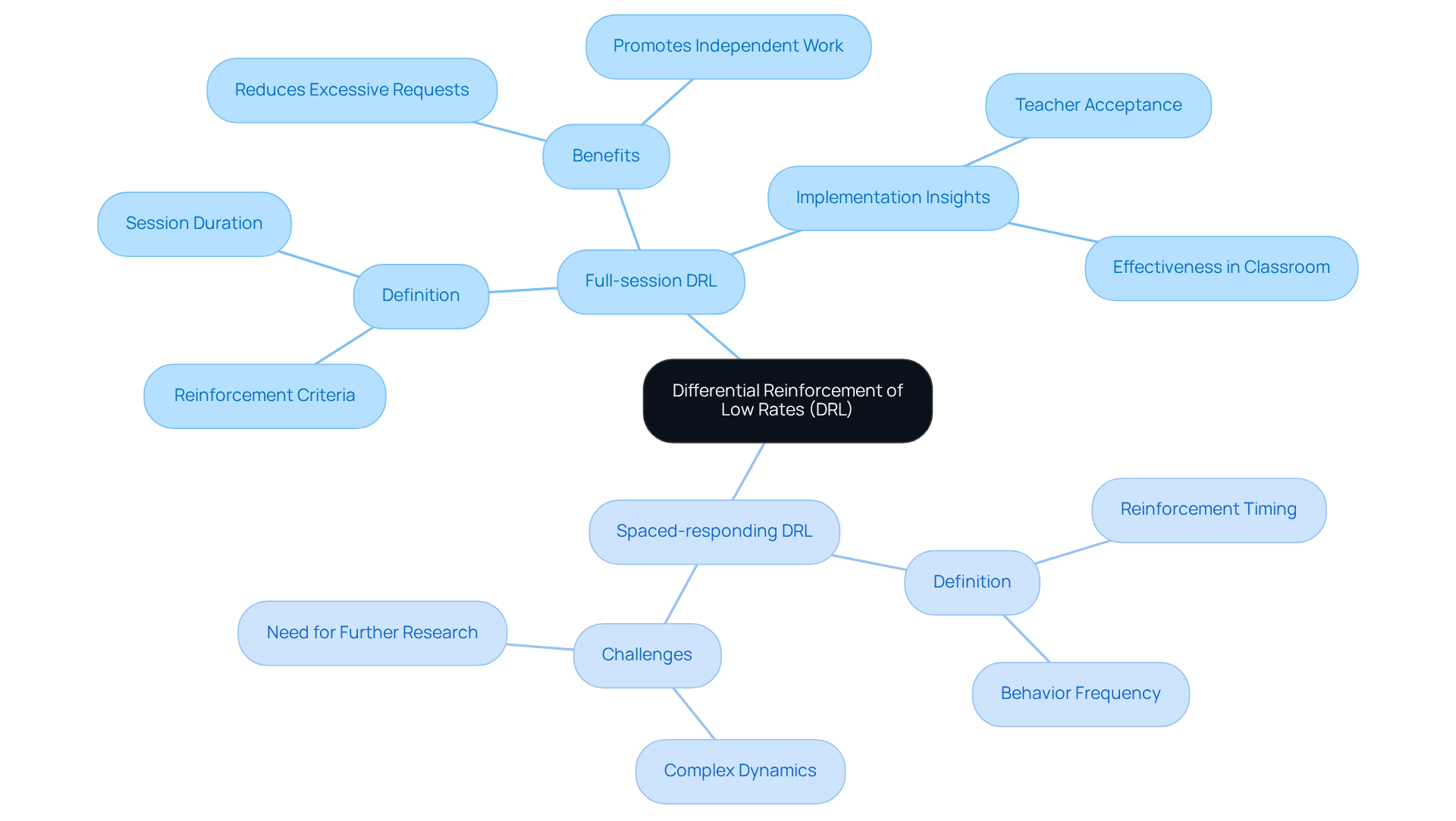
Differential Reinforcement of Low Rates (DRL) is a pivotal strategy in Applied Behavior Analysis, designed to manage behaviors that, while acceptable, occur too frequently. By focusing on reducing these actions to socially acceptable levels rather than eliminating them entirely, DRL fosters a balanced approach to behavior modification. This method not only enhances individual behavior but also contributes to a more conducive learning environment.
Consider the impact of DRL in educational settings. Research shows that it can significantly reduce excessive behaviors like hand-raising or questioning, promoting self-regulation and thoughtful participation among students. The structured environment created by DRL encourages positive interactions, making it an invaluable tool for educators and practitioners alike.
Implementing DRL offers a transformative pathway for behavioral interventions, enabling practitioners to support individuals more effectively. By embracing this strategy, educators can cultivate a classroom atmosphere that encourages appropriate actions while minimizing disruptions. The insights shared here serve as a powerful reminder of the potential impact of DRL in shaping behavior and enhancing the learning experience.
Are you ready to integrate DRL into your practice? Embrace this strategy to foster a more effective learning environment.
What is Differential Reinforcement of Low Rates (DRL)?
DRL is a behavioral intervention within Applied Behavior Analysis (ABA) that reinforces an action only when it occurs at a lower frequency than a predetermined criterion, aiming to reduce excessive yet acceptable behaviors to socially acceptable levels.
What types of behaviors is DRL effective for managing?
DRL is particularly effective for managing excessive behaviors that are still acceptable, such as hand-washing or questioning in a classroom setting.
What is the primary goal of DRL?
The primary goal of DRL is not to eliminate behaviors entirely but to reduce their frequency to a level that is socially acceptable.
Can you give an example of how DRL is applied?
For instance, if a child typically washes their hands ten times before lunch, a DRL approach would reward them for washing only five times, promoting healthier habits while not completely removing the action.
How effective is DRL in reducing problematic behaviors?
Recent studies indicate that DRL can significantly reduce problematic behaviors in children, with success rates often exceeding 70% when implemented correctly.
How does DRL help in educational settings?
DRL addresses actions that occur too frequently, such as repetitive questioning, by providing reinforcement for lower rates of these behaviors, which fosters more appropriate interactions and enhances classroom dynamics.
How does DRL relate to operant conditioning?
DRL aligns with the principles of operant conditioning by demonstrating that behaviors are shaped by their consequences, creating a structured environment where children learn to associate positive outcomes with reduced occurrences of specific actions.
What is a practical application of DRL in the classroom?
A practical application of DRL might involve reinforcing a student for asking three or fewer questions during a 30-minute period, which helps curb excessive questioning and encourages more thoughtful participation in class discussions.
Our expert recruitment strategies and AI-driven sourcing ensure that you receive top-notch candidates quickly, without compromising on quality. Whether you’re looking for BCBAs, Clinical Directors, or RBTs, we’ve got you covered.


