


Thank you! Your submission has been received!
Oops! Something went wrong while submitting the form.
November 22, 2025

The demand for Board Certified Behavior Analysts (BCBAs) is skyrocketing, highlighting a critical need for skilled professionals in the field of Applied Behavior Analysis (ABA) therapy. Operant conditioning stands as a cornerstone of ABA, fundamentally shaping how behaviors are learned and modified through consequences. Understanding these principles is not just beneficial; it empowers BCBAs to create effective interventions that can significantly impact clients' lives.
As the landscape of behavioral therapy evolves, the challenge remains: how can organizations attract and retain talent well-versed in these essential behavioral techniques? Reflect on your current hiring strategies. Are they effectively addressing the growing demand for qualified BCBAs?
Utilizing platforms like Hire ABA can streamline your recruitment process, ensuring you connect with the right candidates who possess the expertise needed in operant conditioning and ABA therapy. By leveraging such resources, you can enhance your team's capabilities and ultimately improve client outcomes.
In this competitive market, it’s crucial to act decisively. Explore how Hire ABA can transform your hiring approach and help you build a robust team of BCBAs ready to meet the challenges of today’s behavioral health landscape.
Operant conditioning is a pivotal learning process that modifies actions based on their consequences. In the context of [operant conditioning ABA](https://hireaba.today/how-we-work), this concept is essential for therapy. It involves applying incentives and penalties to either enhance or diminish specific behaviors.
Consider this: Positive reinforcement encourages the repetition of desired actions by offering rewards. On the other hand, negative reinforcement involves removing an unpleasant stimulus to promote certain conduct. But what about punishment? Its role is to reduce unwanted behaviors by introducing negative consequences or taking away positive ones.
This foundational concept is crucial for Board Certified Behavior Analysts (BCBAs) as they design tailored interventions to meet individual needs. Are you facing challenges in hiring qualified BCBAs? Understanding operant conditioning ABA can significantly impact your recruitment strategy.
By leveraging the principles of operant conditioning ABA, you can create a more that attracts the right talent. Explore how Hire ABA can assist you in finding the best candidates who are well-versed in these essential behavioral strategies. Don't miss out on the opportunity to enhance your team with skilled professionals.
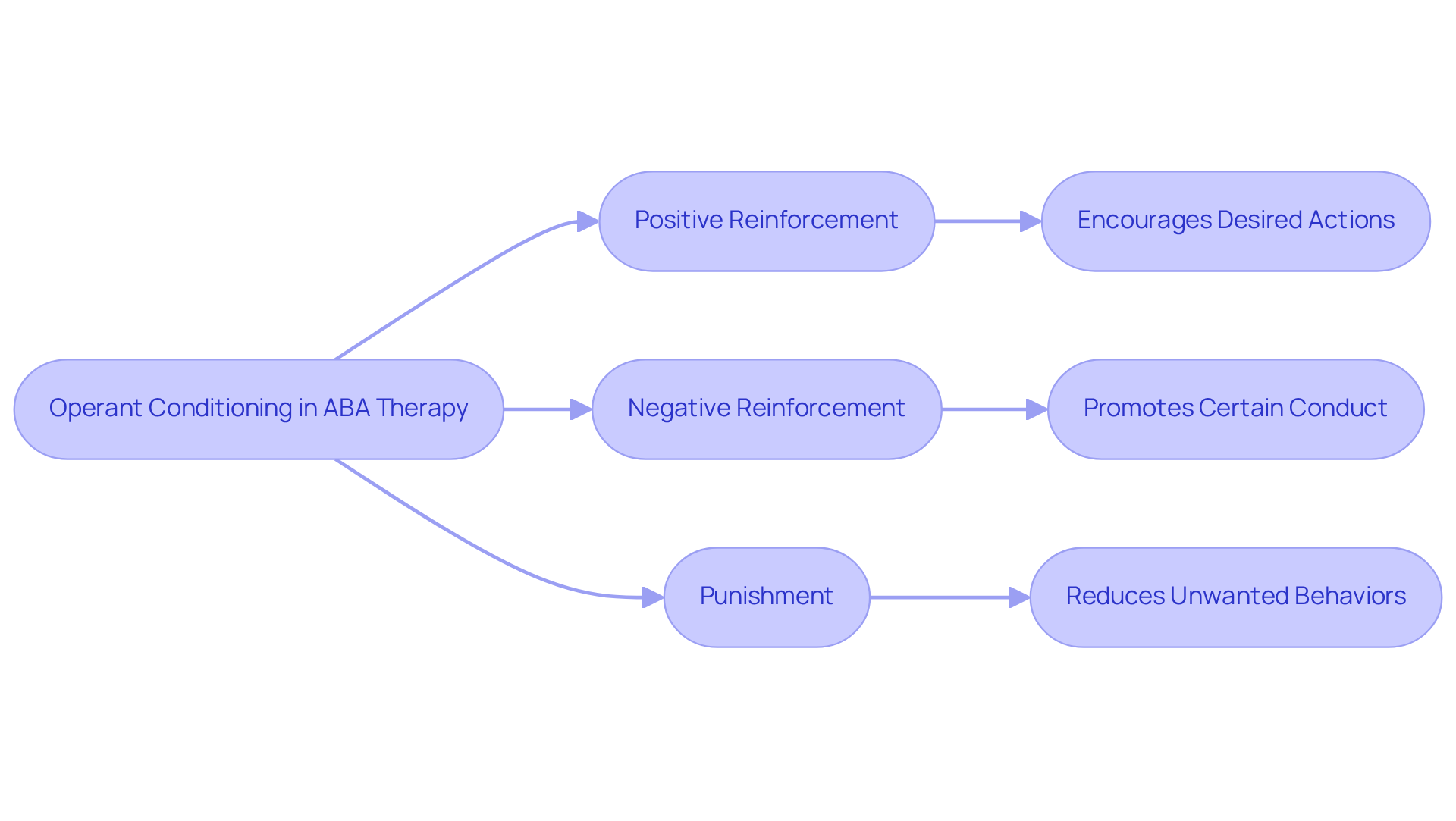
The roots of operant learning are foundational in the field of behavioral therapy, tracing back to the early 20th century with Edward Thorndike's groundbreaking 'Law of Effect.' This principle asserts that actions followed by positive outcomes are more likely to be repeated. Building on this, B.F. Skinner advanced the concept in the 1930s, coining the term 'operant learning' to describe how behaviors are influenced by their consequences.
Skinner's experiments, particularly those conducted in the famous Skinner box, demonstrated the powerful impact of reward schedules on behavior modification. These insights have not only shaped our understanding of learning but have also become integral to behavioral therapy practices, especially in [operant conditioning ABA](https://hireaba.today/blog-posts/understanding-operant-extinction-in-aba-therapy-definition-and-context). In operant conditioning ABA, techniques are employed to effectively modify behaviors in individuals with autism and other developmental disorders.
As the demand for Board Certified Behavior Analysts (BCBAs) continues to rise, understanding the principles of operant learning becomes crucial for effective recruitment and training. Are you facing challenges in hiring qualified professionals? Consider how platforms like [Hire ABA](https://hireaba.today) can , ensuring you find the right talent to meet your needs.
In summary, operant conditioning ABA is not just a theoretical concept; it serves as a practical tool that has transformed behavioral therapy. By leveraging these principles, you can enhance your hiring strategies and ultimately improve outcomes for those you serve.
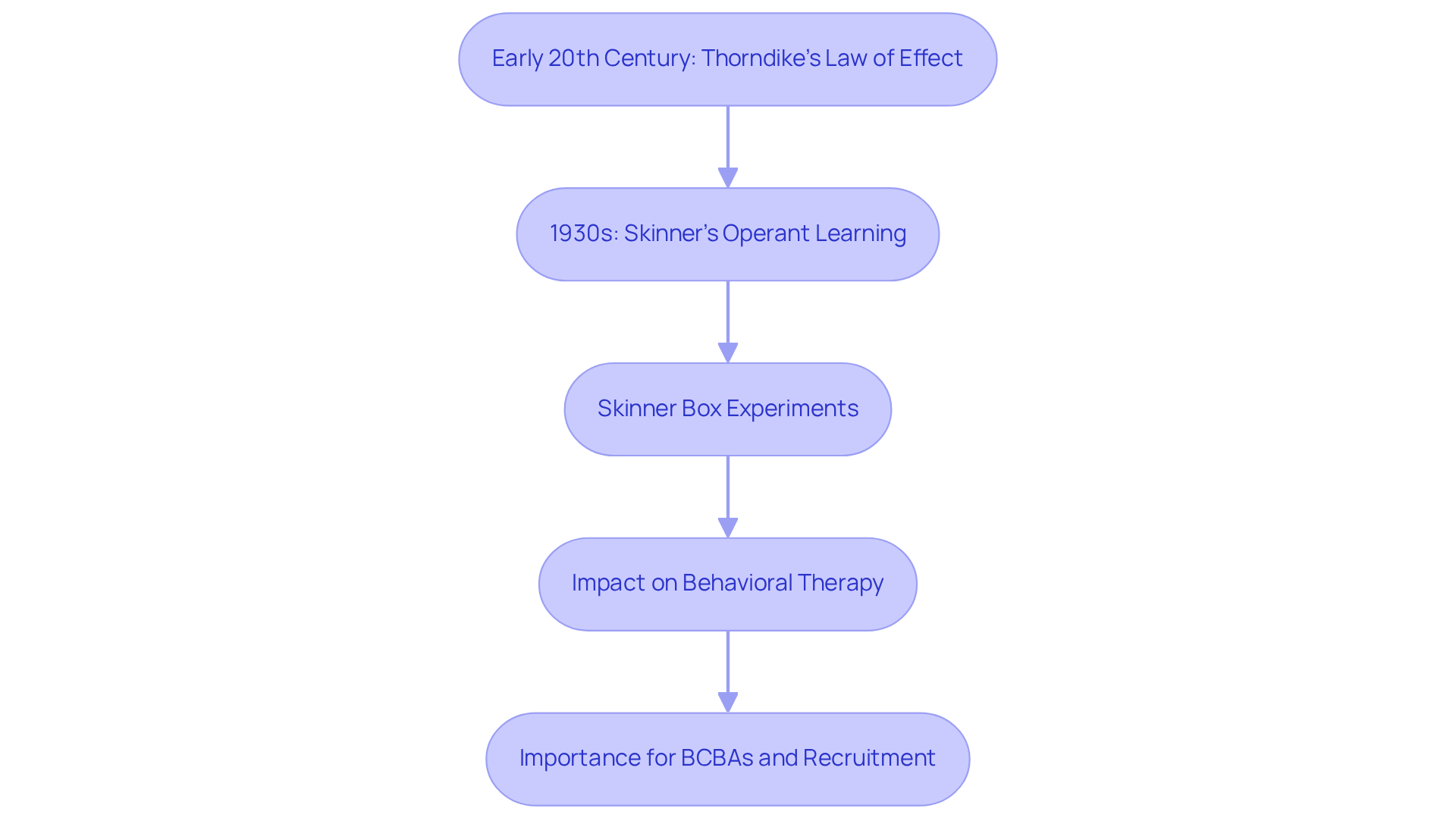
Understanding the key is essential for Board Certified Behavior Analysts (BCBAs) aiming to foster effective behavior change. Did you know that the demand for BCBAs is on the rise? This makes it crucial to grasp how rewards and punishments can shape behavior.
Operant conditioning revolves around two main components: reinforcement and punishment, each with positive and negative aspects.
Conversely, punishment serves to decrease undesirable behaviors.
By comprehending these elements, BCBAs can tailor interventions effectively, promoting beneficial behavior change. Are you facing challenges in hiring qualified BCBAs? Consider how Hire ABA can streamline your recruitment process and connect you with top talent in the field.
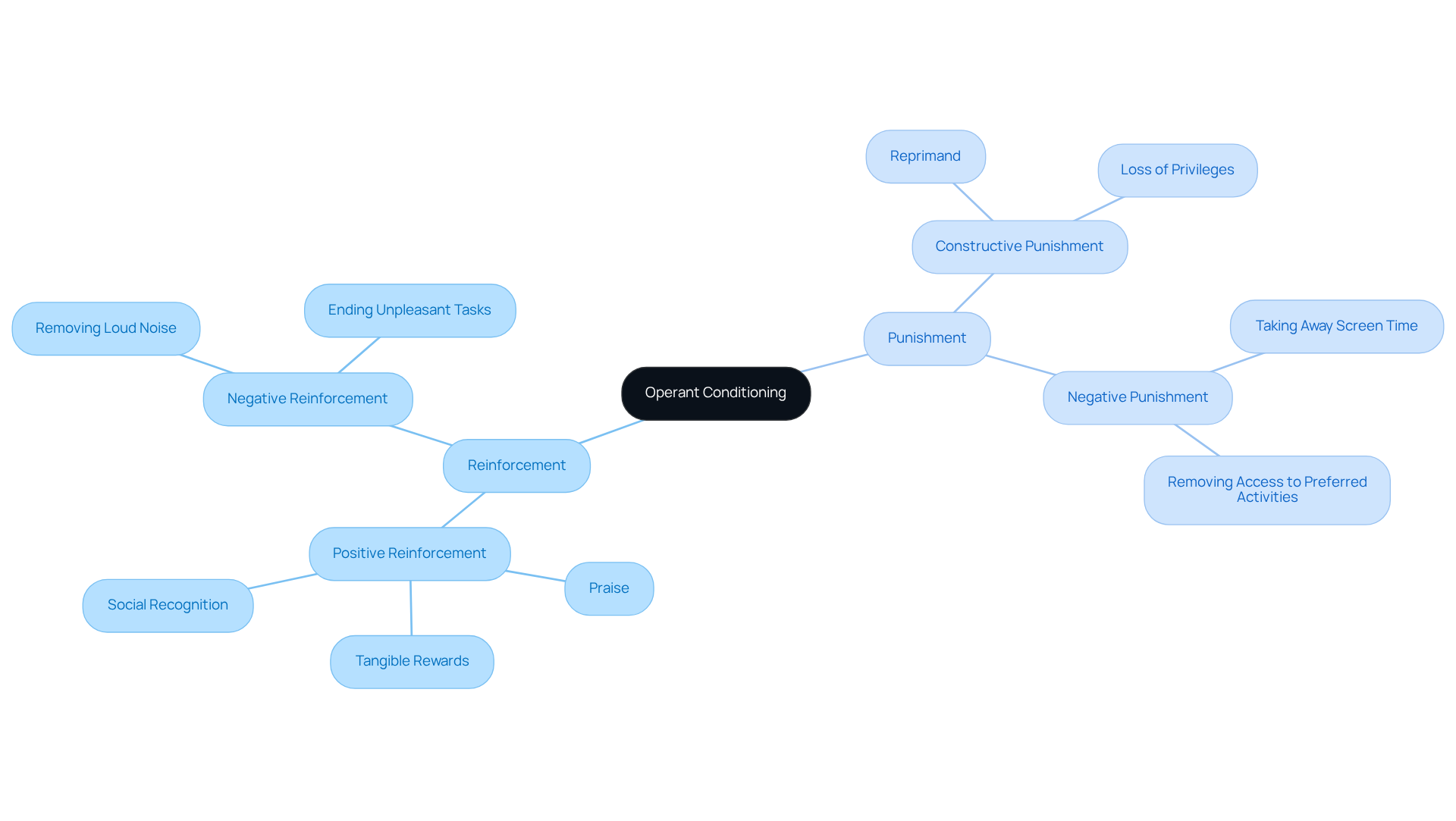
Operant conditioning ABA is essential in ABA therapy, effectively addressing a range of behavioral challenges. Did you know that therapists frequently utilize encouraging reinforcement to enhance communication skills in children with autism? By rewarding verbal expressions over gestures, this approach not only promotes language development but also instills a sense of achievement in young learners.
Moreover, operant training plays a pivotal role in reducing maladaptive behaviors, such as tantrums. Through a structured system of consequences, it while discouraging negative ones. One effective technique is the implementation of token economies, where individuals earn tokens for demonstrating desired behaviors, which can later be exchanged for rewards. This method exemplifies the practical application of operant conditioning, significantly enhancing learning outcomes and fostering a supportive environment that nurtures behavioral growth.
Research consistently shows that children receiving intensive ABA therapy often exhibit substantial improvements in communication, social skills, and overall behavior. This underscores the effectiveness of these strategies in promoting positive change. Are you ready to explore how these proven techniques can transform your approach to behavioral therapy?

As the demand for Board Certified Behavior Analysts (BCBAs) skyrockets, understanding the principles of operant conditioning becomes more crucial than ever. This foundational framework within ABA therapy not only shapes behaviors through strategic consequences but also equips practitioners with the tools they need to make a real difference in their clients' lives.
Imagine the impact of mastering positive and negative reinforcement, alongside the role of punishment. These key concepts are essential components of operant conditioning, and their historical evolution - from Thorndike's 'Law of Effect' to Skinner's groundbreaking experiments - highlights their significance in behavioral therapy. The practical applications of these principles, especially in addressing challenges faced by individuals with autism, showcase their effectiveness in fostering communication skills and reducing maladaptive behaviors.
But how can you ensure that your team is equipped with this vital knowledge? Integrating operant conditioning principles into your recruitment and training strategies is essential. By embracing these methodologies, you not only enhance therapeutic practices but also streamline your hiring process, ultimately leading to better support for those in need.
Engaging with the concepts of operant conditioning can transform your approach to behavioral therapy. Are you ready to leverage these insights for meaningful change? Consider how Hire ABA can help you navigate the complexities of hiring skilled BCBAs, ensuring your organization is prepared to meet the growing demand for effective behavioral support.
What is operant conditioning in ABA therapy?
Operant conditioning is a learning process that modifies actions based on their consequences, and it is essential in ABA therapy. It involves applying incentives and penalties to enhance or diminish specific behaviors.
What is positive reinforcement?
Positive reinforcement encourages the repetition of desired actions by offering rewards.
What is negative reinforcement?
Negative reinforcement involves removing an unpleasant stimulus to promote certain behaviors.
How does punishment function in operant conditioning?
Punishment aims to reduce unwanted behaviors by introducing negative consequences or taking away positive ones.
Why is operant conditioning important for Board Certified Behavior Analysts (BCBAs)?
Operant conditioning is crucial for BCBAs as they design tailored interventions to meet individual needs based on the principles of this learning process.
How can understanding operant conditioning impact hiring qualified BCBAs?
Understanding operant conditioning can significantly enhance recruitment strategies by helping to attract candidates who are well-versed in these essential behavioral strategies.
How can Hire ABA assist in the hiring process?
Hire ABA can help find the best candidates who are knowledgeable about operant conditioning and other behavioral strategies, improving the effectiveness of your hiring process.
Our expert recruitment strategies and AI-driven sourcing ensure that you receive top-notch candidates quickly, without compromising on quality. Whether you’re looking for BCBAs, Clinical Directors, or RBTs, we’ve got you covered.


