Introduction
Understanding the dynamics of Registered Behavior Technicians (RBTs) is crucial in the rapidly evolving landscape of Applied Behavior Analysis (ABA) therapy. With the demand for these professionals skyrocketing, it’s vital to grasp the factors that influence their salaries and career trajectories. Did you know that the need for Board Certified Behavior Analysts (BCBAs) is projected to grow significantly in the coming years? This statistic underscores the importance of RBTs in the field and highlights the potential for career advancement.
This article delves into the intricacies of RBT therapist salaries, examining how experience, education, geographic location, and career advancement opportunities shape earning potential. As RBTs navigate their careers, they must consider how these factors can impact their success and income. What strategies can RBTs employ to maximize their earning potential in this competitive environment?
By understanding these dynamics, RBTs can position themselves for success and take advantage of the opportunities that arise in this growing field. Explore how you can leverage your skills and knowledge to enhance your career trajectory and income potential.
Define the Role of Registered Behavior Technicians in ABA Therapy
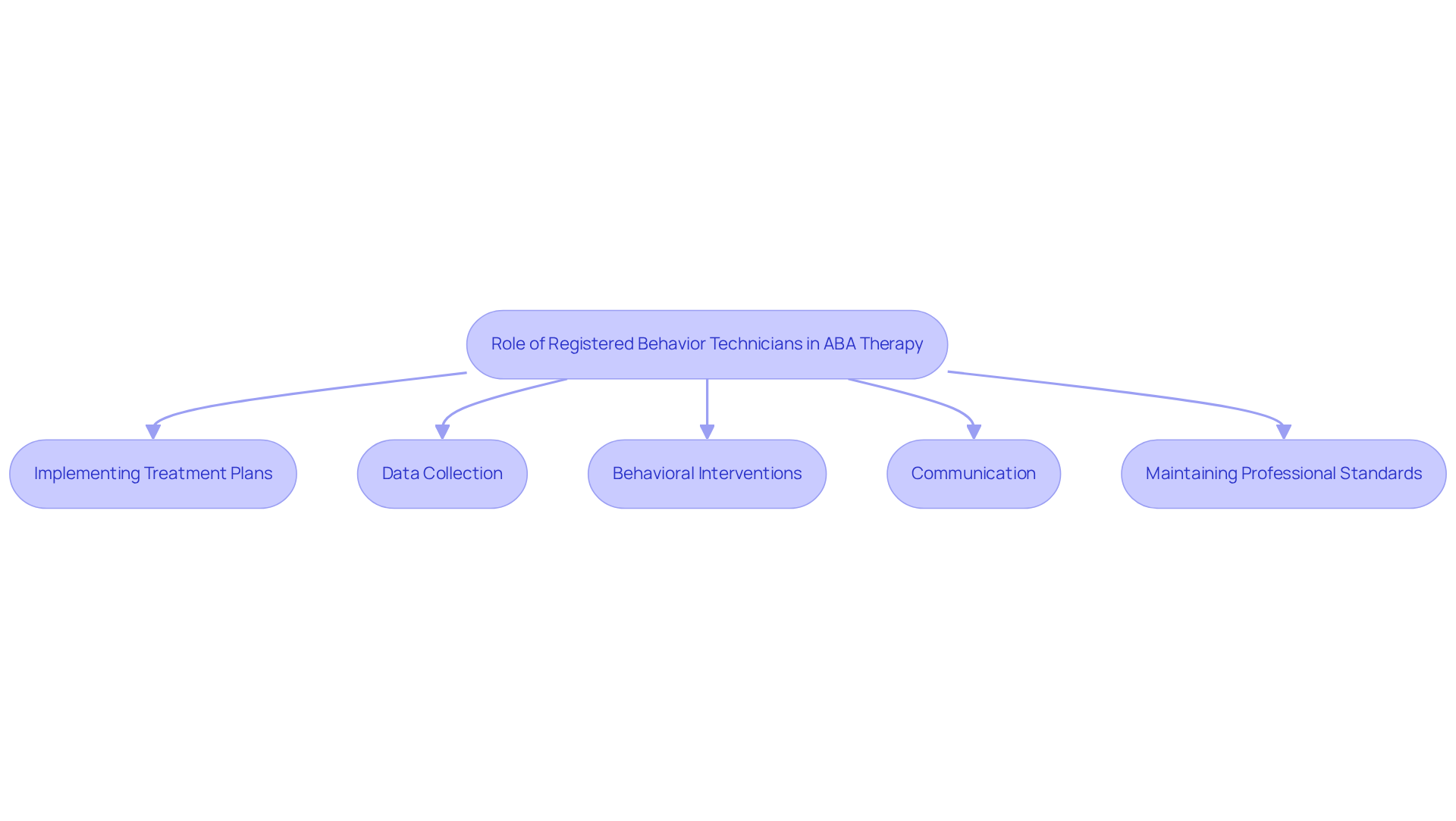
The demand for Registered Behavior Technicians (RBTs) is on the rise, reflecting the growing need for effective . who under the supervision of , playing a crucial role in enhancing the quality of life for .
- Implementing Treatment Plans: RBTs carry out designed by BCBAs. They focus on improving specific behaviors and skills in clients, addressing the unique needs of each individual. This tailored approach is essential for effective therapy.
- Data Collection: RBTs are responsible for collecting data on client progress. This data is vital for evaluating the effectiveness of treatment strategies and making necessary adjustments. Without , it’s challenging to measure success.
- Behavioral Interventions: Utilizing various behavioral techniques, RBTs teach new skills and reduce challenging behaviors. Their consistency and effectiveness in implementing these interventions are key to achieving positive outcomes.
- Communication: Regular communication with BCBAs, parents, and other stakeholders is a fundamental part of an RBT's role. They provide updates on client progress and discuss any necessary adjustments to treatment plans, ensuring everyone is aligned.
- Maintaining Professional Standards: RBTs must adhere to ethical guidelines and best practices in ABA therapy. This commitment to high-quality care is what sets them apart in the field.
The successful execution of ABA therapy by RBTs significantly impacts client outcomes, fostering skill development and enhancing the quality of life for individuals with ASD. Their foundational role is instrumental in the overall effectiveness of ABA interventions. As the demand for RBTs continues to grow, consider how Hire ABA can support your recruitment needs. Are you facing challenges in finding qualified professionals? Let Hire ABA connect you with the talent you need to make a difference.
Explore Factors Influencing RBT Salaries
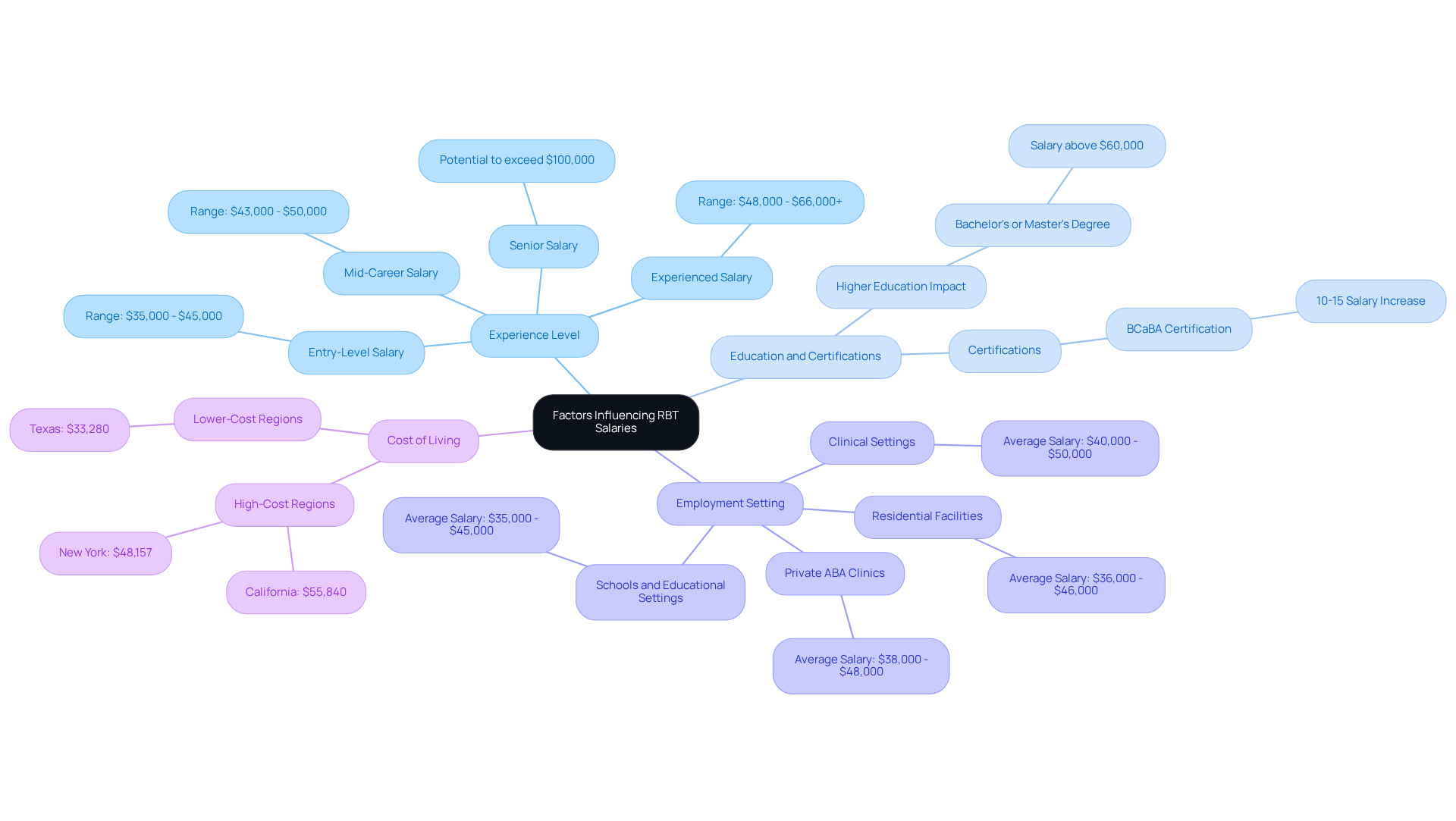
The demand for is on the rise, with an anticipated growth of 12 to 22 percent over the next decade. This surge highlights the importance of understanding the factors that significantly influence .
- Experience Level: is typically higher for those with more years of experience. Entry-level positions may start around $35,000 to $45,000 annually, while seasoned professionals can earn upwards of $66,000, reflecting the . Some professionals in the field see their surpass this amount after over a decade, potentially reaching six figures depending on their qualifications and certifications.
- Education and Certifications: , can lead to increased earning potential. Furthermore, can result in pay raises of 10 to 15 percent. Salaries above $60,000, such as the , are often reserved for candidates with advanced degrees.
- Employment Setting: The [RBT therapist salary](https://astroaba.com/blog/average-registered-behavior-technician-rbt-salary) for , schools, or private practices may vary based on the funding and resources available in those environments. For instance, the averages between $40,000 and $50,000, while in residential facilities, the salary may range from $36,000 to $46,000. In private ABA clinics, the RBT therapist salary generally falls between $38,000 and $48,000.
Areas with a high demand for often provide better compensation, reflected in the RBT therapist salary, to attract qualified professionals. The anticipated increase for RBTs is considerably higher than the typical growth across all professions, which is approximately 5 percent. This signifies a strong job market that can impact the RBT therapist salary.
- Cost of Living: Geographic location plays a significant role; RBTs in high-cost regions, like California, which has the highest typical earnings for psychiatric technicians at $55,840, or New York, where the figure is $48,157, generally earn more to offset elevated living expenses. In contrast, states such as Texas indicate lower typical earnings, approximately $33,280, illustrating regional economic circumstances.
Are you facing challenges in hiring qualified RBTs? Understanding these factors can help you in this growing field.
Analyze Geographic Variations in RBT Salaries
based on geographic location, influenced by factors such as cost of living and demand for services. Consider these key observations:
- : in the United States typically earn between $35,000 and $45,000 annually, establishing a baseline for understanding salary differences. States like Hawaii, California, and Massachusetts consistently report the , with the in Hawaii averaging around $54,222 per year.
- Regional Differences: The Northeast generally offers , reflecting both living costs and demand for . For example, the averages $48,157 annually.
- Urban vs. Rural Areas: Urban regions tend to provide greater compensation due to increased demand for and a higher cost of living. Conversely, rural areas may offer lower pay but often face less competition for available positions. Many professionals in urban settings believe that the .
- Compensation Trends: Recent data indicates that RBTs in urban areas might earn up to 10% more than their counterparts in less populated regions, underscoring the importance of location in salary negotiations. Furthermore, the is projected to grow by 3-5% annually over the next five years, signaling a positive outlook for the profession. Independent Contractor RBTs typically earn between $25 and $35 per hour, providing additional insights into compensation options. For those advancing in their careers, Lead or Senior RBTs can expect to earn between $45,000 and $55,000 each year.

Discuss Career Advancement Opportunities for RBTs
Career advancement opportunities for are not just promising; they are essential for those looking to elevate their careers in the field of . Did you know that the demand for is skyrocketing? This trend highlights the and certification.
- : Many RBTs take the initiative to further their education and become BCBAs. This transition significantly boosts earning potential and expands job responsibilities, making it a worthwhile investment in your career, particularly in relation to the .
- Specialization: RBTs have the option to specialize in various fields, such as severe behavior, early intervention, or educational environments. Specializing can lead to a greater and unique job roles that align with personal interests and strengths.
- Leadership Roles: There are ample opportunities for RBTs to step into supervisory or leadership positions, such as . These roles often come with increased pay, such as , and responsibilities, allowing for professional growth and influence within the organization.
- : Engaging in ongoing professional development and obtaining additional certifications can significantly enhance an RBT's qualifications and marketability. This proactive approach leads to better job prospects and can significantly enhance the , making it a smart career move.
- Networking and Professional Organizations: Joining professional organizations and actively networking within the ABA community can open doors to new job opportunities and career advancement. Are you leveraging these resources to their fullest potential?
In conclusion, the path to career advancement as an RBT is clear and filled with opportunities. By taking proactive steps, such as pursuing further education, specializing, and networking, you can position yourself for success in this growing field. Don't wait-start exploring your options today!
Conclusion
The role of Registered Behavior Technicians (RBTs) is increasingly recognized as vital in the field of Applied Behavior Analysis (ABA) therapy. Did you know that the demand for RBTs is skyrocketing? As this demand continues to grow, understanding the factors influencing their salaries and career trajectories becomes essential for aspiring professionals in this field. RBTs not only implement treatment plans and collect crucial data but also foster communication among stakeholders, ensuring the effectiveness of therapy for individuals with autism spectrum disorder (ASD).
Key factors affecting RBT salaries include:
- Experience level
- Education
- Employment settings
- Geographic variations
RBTs with advanced degrees and certifications can command higher salaries, while those working in high-demand areas or urban settings often enjoy greater financial rewards. The potential for career advancement - such as transitioning to Board Certified Behavior Analysts (BCBAs) or pursuing leadership roles - presents an exciting pathway for RBTs seeking to enhance their professional standing and earning potential.
In summary, the career landscape for RBTs is not only promising but also ripe with opportunities for growth and development. By investing in education, specializing in niche areas, and actively networking within the ABA community, RBTs can significantly enhance their career prospects. The journey to becoming a highly skilled professional in this field is within reach. Are you ready to take proactive steps today that can lead to a fulfilling and financially rewarding future in behavior analysis?
Frequently Asked Questions
What is the role of Registered Behavior Technicians (RBTs) in ABA therapy?
RBTs are paraprofessionals who implement Applied Behavior Analysis (ABA) therapy under the supervision of Board Certified Behavior Analysts (BCBAs), focusing on enhancing the quality of life for individuals with autism spectrum disorder (ASD).
What are the main responsibilities of RBTs?
RBTs are responsible for implementing individualized treatment plans designed by BCBAs, collecting data on client progress, utilizing behavioral interventions, maintaining communication with stakeholders, and adhering to professional standards.
How do RBTs implement treatment plans?
RBTs carry out tailored treatment plans that focus on improving specific behaviors and skills in clients, addressing their unique needs to ensure effective therapy.
Why is data collection important for RBTs?
Data collection is vital for evaluating the effectiveness of treatment strategies and making necessary adjustments. Accurate data helps measure client progress and overall success in therapy.
What types of interventions do RBTs use?
RBTs utilize various behavioral techniques to teach new skills and reduce challenging behaviors, ensuring consistency and effectiveness in their interventions.
How do RBTs communicate with others involved in the therapy process?
RBTs maintain regular communication with BCBAs, parents, and other stakeholders to provide updates on client progress and discuss any adjustments needed in treatment plans.
What standards must RBTs adhere to in their practice?
RBTs must adhere to ethical guidelines and best practices in ABA therapy to ensure high-quality care and effective treatment for their clients.
What impact do RBTs have on client outcomes?
The successful execution of ABA therapy by RBTs significantly impacts client outcomes by fostering skill development and enhancing the quality of life for individuals with ASD.
List of Sources
- Define the Role of Registered Behavior Technicians in ABA Therapy
- 81 ABA Therapy Statistics You Need to Know - apricott ABA (https://apricott.com/resources/aba-therapy-statistics)
- Best ABA Quotes (https://testpreptech.com/post/best-aba-quotes)
- Inspirational ABA and Autism Quotes - Mrs. Moe's Modifications (https://mrsmoesmodifications.com/inspirational-aba-and-autism-quotes)
- goldenstepsaba.com (https://goldenstepsaba.com/resources/aba-therapist-statistics)
- Autism Quotes | Intellistars - ABA Therapy (https://intellistarsaba.com/blog/autism-quotes)
- Explore Factors Influencing RBT Salaries
- Average Registered Behavior Technician (RBT) Salary (https://kidsclubaba.com/average-registered-behavior-technician-rbt-salary)
- RBT Salary Guide & Average Pay Outlook | Divine Steps ABA (https://divinestepstherapy.com/blog/rbt-salary)
- How RBT Salary Impacts ABA Therapy Career | Level Ahead ABA (https://levelaheadaba.com/rbt-salary)
- Registered Behavior Technician Salary | RBT Salaries (https://appliedbehavioranalysisedu.org/registered-behavior-technician-salary)
- Average Registered Behavior Technician (RBT) Salary (https://astroaba.com/blog/average-registered-behavior-technician-rbt-salary)
- Analyze Geographic Variations in RBT Salaries
- Average RBT Salary (By State & Country) | Discovery ABA (https://discoveryaba.com/aba-therapy/average-rbt-salary)
- RBT Salary Guide & Average Pay Outlook | Divine Steps ABA (https://divinestepstherapy.com/blog/rbt-salary)
- Average Registered Behavior Technician (RBT) Salary (https://kidsclubaba.com/average-registered-behavior-technician-rbt-salary)
- RBT Salary Trend Across the US | Steady Strides ABA (https://steadystridesaba.com/blog/rbt-salary)
- childbuildersaba.com (https://childbuildersaba.com/blog/average-registered-behavior-technician-rbt-salary-087f9)
- Discuss Career Advancement Opportunities for RBTs
- RBT Career Path | beacna.com (https://beacna.com/rbt-career-path)
- alumacare.com (https://alumacare.com/blog/best-rbt-career-path)
- Can An RBT Become A BCBA? (https://kidsclubaba.com/can-an-rbt-become-a-bcba)
- Charting the Best RBT Career Paths | Above and Beyond Therapy (https://abtaba.com/blog/best-rbt-career-path)
- stepaheadaba.com (https://stepaheadaba.com/blog/average-registered-behavior-technician-rbt-salary)


