


Thank you! Your submission has been received!
Oops! Something went wrong while submitting the form.
February 22, 2026

Understanding the complexities of behavior modification in Applied Behavior Analysis (ABA) therapy is crucial, especially when considering the demand for Board Certified Behavior Analysts (BCBAs). Did you know that the need for qualified professionals in this field is skyrocketing? This highlights the importance of effective strategies in therapy, particularly the role of reinforcement schedules.
Reinforcement schedules - Fixed Ratio, Fixed Interval, Variable Ratio, and Variable Interval - are not merely theoretical constructs; they are vital tools that practitioners utilize to shape and sustain desired behaviors in clients. Each schedule offers unique benefits that can significantly enhance therapeutic outcomes. However, how do these different schedules impact the effectiveness of interventions? What challenges do therapists encounter when implementing them?
Exploring these questions reveals the profound influence of reinforcement strategies on behavioral outcomes. It underscores their critical role in improving therapeutic practices. As the demand for BCBAs continues to rise, it’s essential to equip yourself with the knowledge and tools necessary to navigate these challenges effectively. Embrace the opportunity to enhance your practice and ensure the best outcomes for your clients.
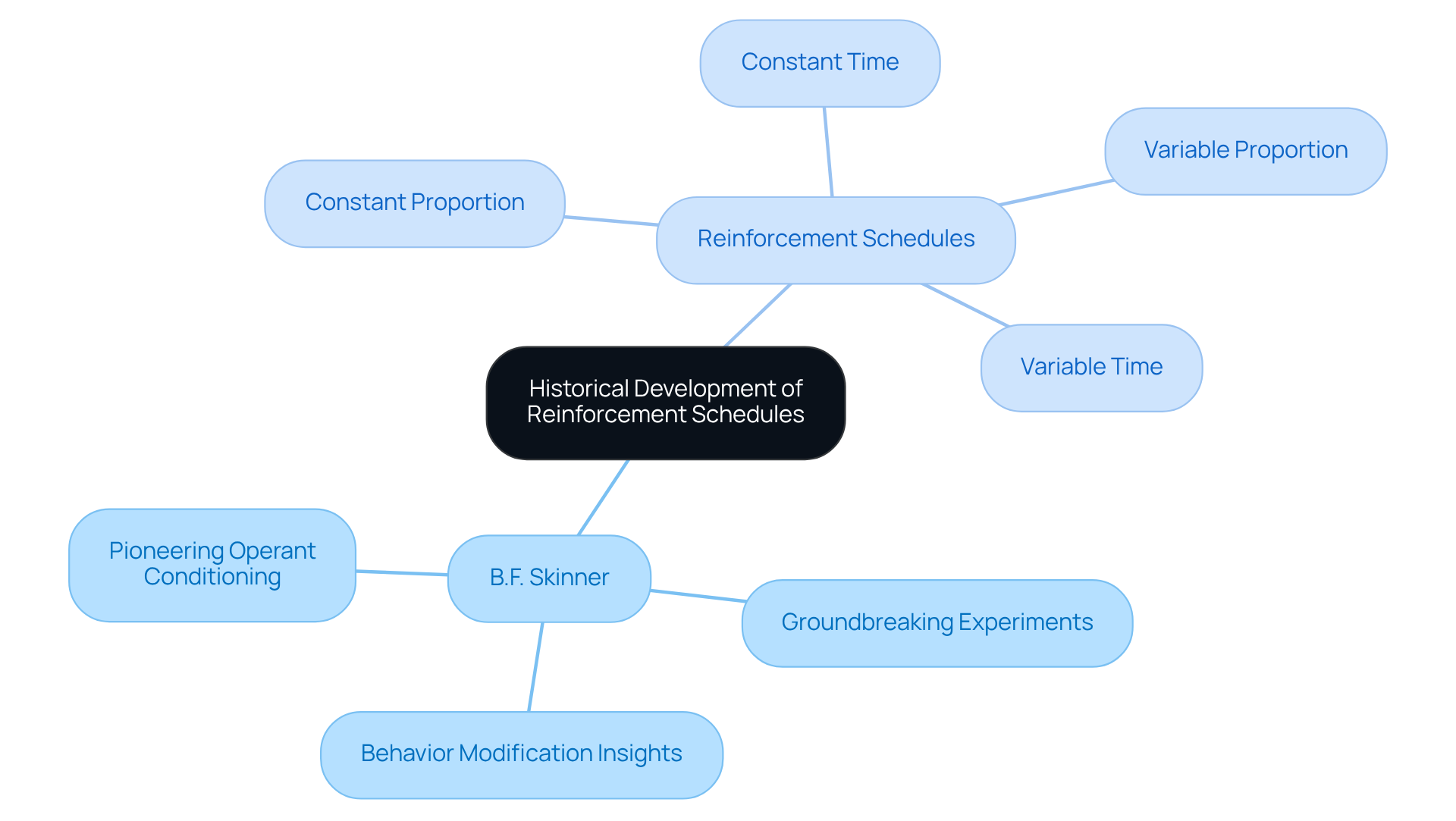
The in therapy consist of Constant Proportion (FR), Constant Interval (FI), Variable Proportion (VR), and (VI). Each schedule dictates how and when reinforcement is delivered following a desired behavior:

The implementation of ABA therapy relies heavily on the , which guide how behaviors are developed and sustained. These plans are not mere theoretical constructs; they serve as practical tools that therapists use to foster desired behaviors in clients. The power of the lies in their ability to influence the frequency and persistence of behaviors.
For instance, employing a can lead to high response rates and greater resistance to extinction, making it particularly effective in therapeutic settings. Understanding these timelines allows practitioners to tailor interventions that meet the unique needs of each client, ultimately enhancing the effectiveness of ABA therapy.
Are you currently facing challenges in your ? Consider how a robust can not only improve client outcomes but also . By leveraging the right strategies, you can ensure that your practice thrives in delivering quality care.

The exploration of reward systems began with B.F. Skinner in the early 20th century, a pivotal moment in behavioral science. His groundbreaking experiments in laid the groundwork for understanding how different time arrangements can shape behavior. Skinner's research revealed that behavior could be modified through structured rewards, which led to the identification of the :
Over the decades, the implications of Skinner's findings have been further examined, delving into the intricacies of each framework and their practical applications across various fields, including education and therapy. This historical context is crucial for grasping the methodologies currently employed in .
As we reflect on these developments, consider how this foundational knowledge can inform your approach to hiring in the field. Are you facing challenges in finding the right candidates? Understanding these principles can enhance your , ensuring you attract the best talent in .
Each of the four possesses unique characteristics that significantly influence behavior:

In practice, are evident across various settings:
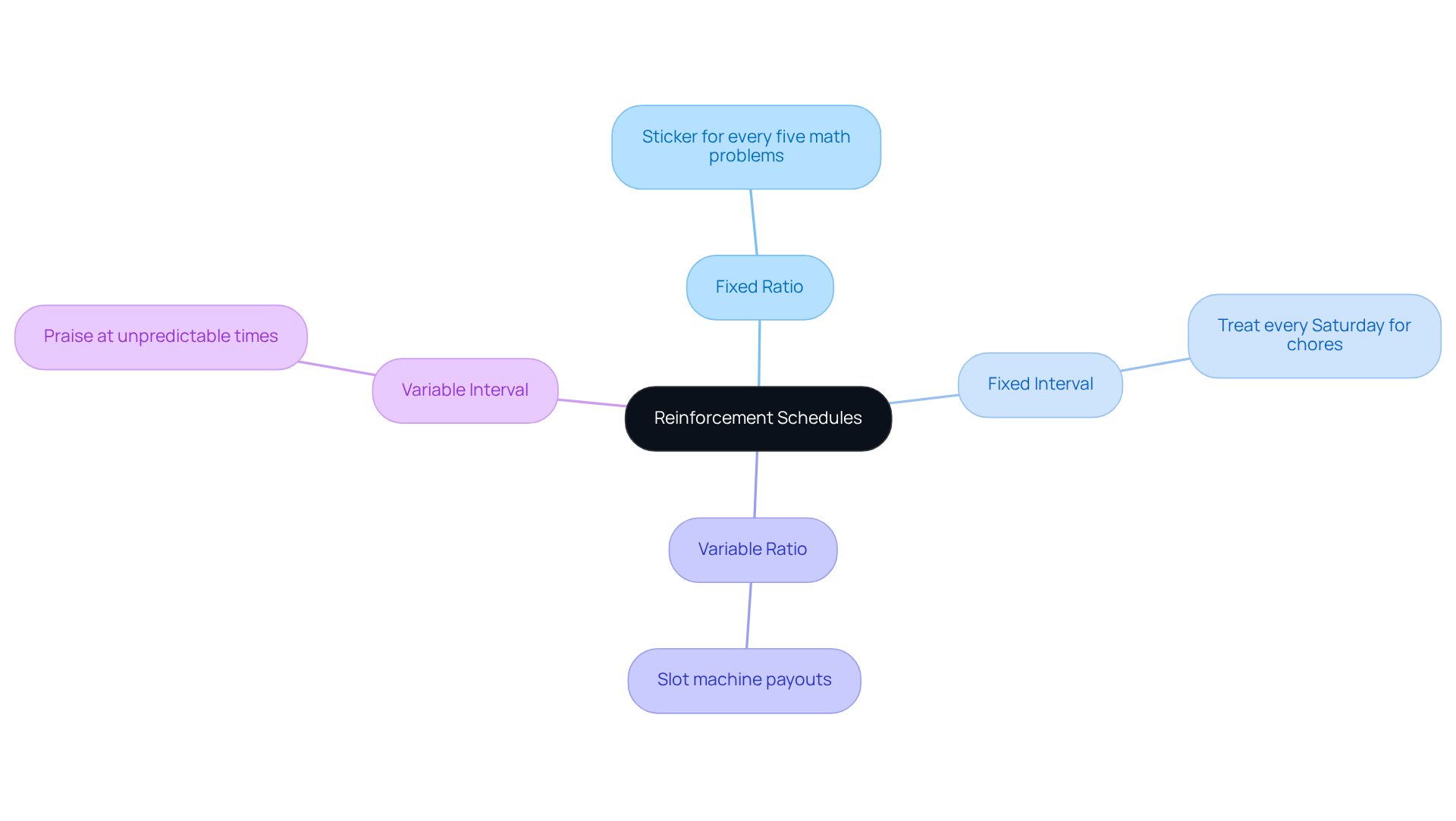
Understanding the four schedules of reinforcement in ABA therapy is essential for promoting desired behaviors and enhancing therapeutic outcomes. These schedules - Fixed Ratio, Fixed Interval, Variable Ratio, and Variable Interval - are foundational tools for behavior modification, guiding practitioners in their reinforcement strategies and behavior shaping.
Have you considered how these schedules can transform your practice? Fixed Ratio schedules encourage high response rates with specific rewards, while Fixed Interval schedules reinforce behaviors after set time periods. In contrast, Variable Ratio schedules maintain engagement through unpredictability, and Variable Interval schedules foster consistent behavior over time. Each schedule not only influences how often a behavior is exhibited but also affects the persistence of that behavior in the long run.
By grasping the significance of these reinforcement schedules, practitioners can tailor their strategies to meet the unique needs of their clients. This tailored approach ultimately improves the effectiveness of ABA therapy. As the field continues to evolve, embracing these principles will enhance therapeutic practices and support the recruitment of qualified professionals who understand the importance of structured reinforcement in behavior analysis.
Engaging with these concepts can lead to more effective interventions and better outcomes for clients. Understanding reinforcement schedules is not just beneficial; it’s an invaluable asset in the realm of Applied Behavior Analysis. Are you ready to elevate your practice and ensure the best outcomes for your clients?
What are the four schedules of reinforcement in ABA therapy?
The four schedules of reinforcement in Applied Behavior Analysis (ABA) therapy are Fixed Ratio (FR), Fixed Interval (FI), Variable Ratio (VR), and Variable Interval (VI).
How does Fixed Ratio (FR) reinforcement work?
Fixed Ratio (FR) reinforcement provides rewards after a specific number of responses. For example, a child may receive a reward after completing five math problems.
What is Fixed Interval (FI) reinforcement?
Fixed Interval (FI) reinforcement occurs when reinforcement is given after a set amount of time has passed, regardless of the number of responses. An example is receiving a paycheck every two weeks.
Can you explain Variable Ratio (VR) reinforcement?
Variable Ratio (VR) reinforcement happens after an unpredictable number of responses, creating a high and steady rate of responding. A classic example is gambling, where a player wins after an unknown number of bets.
What does Variable Interval (VI) reinforcement entail?
Variable Interval (VI) reinforcement provides rewards after varying amounts of time, encouraging consistent behavior over time. An example is checking your email, where messages arrive at unpredictable intervals.
Why are the schedules of reinforcement important in ABA therapy?
The schedules of reinforcement are crucial in ABA therapy as they guide how behaviors are developed and sustained. They serve as practical tools that therapists use to foster desired behaviors in clients.
How does a Variable Ratio (VR) plan impact behavior in therapy?
A Variable Ratio (VR) plan can lead to high response rates and greater resistance to extinction, making it particularly effective in therapeutic settings.
How can understanding reinforcement schedules enhance ABA therapy?
Understanding these reinforcement schedules allows practitioners to tailor interventions to meet the unique needs of each client, ultimately enhancing the effectiveness of ABA therapy.
Our expert recruitment strategies and AI-driven sourcing ensure that you receive top-notch candidates quickly, without compromising on quality. Whether you’re looking for BCBAs, Clinical Directors, or RBTs, we’ve got you covered.


