


Thank you! Your submission has been received!
Oops! Something went wrong while submitting the form.
March 7, 2026

The surging demand for Board Certified Behavior Analysts (BCBAs) highlights the critical importance of obtaining an ABA bachelor's degree. This qualification serves as a crucial entry point into a rapidly expanding field, equipping students with essential skills in behavioral analysis. Not only does this degree prepare graduates for diverse career paths in education and healthcare, but it also positions them to thrive in a competitive job market.
As the landscape of behavioral analysis evolves, aspiring professionals must ask themselves: Are you ready to meet the growing expectations and challenges of this dynamic industry? With the right preparation, you can ensure that you stand out in a crowded field.
Consider the benefits of utilizing Hire ABA for your recruitment needs. This platform not only connects you with qualified candidates but also streamlines the hiring process, making it easier to find the right fit for your organization. By leveraging Hire ABA, you can address your current hiring challenges effectively and efficiently.
In a world where the demand for BCBAs continues to rise, investing in an ABA bachelor's degree is more than just a step forward - it's a strategic move toward a fulfilling career. Don't miss out on the opportunity to be part of this growing field. Take action today and explore how Hire ABA can support your journey.
Did you know that the is skyrocketing? An , also known as a Bachelor of Arts/Science in Applied Behavior Analysis, serves as your gateway to this growing field. This undergraduate program equips students with the essential knowledge and skills to understand and apply effectively.
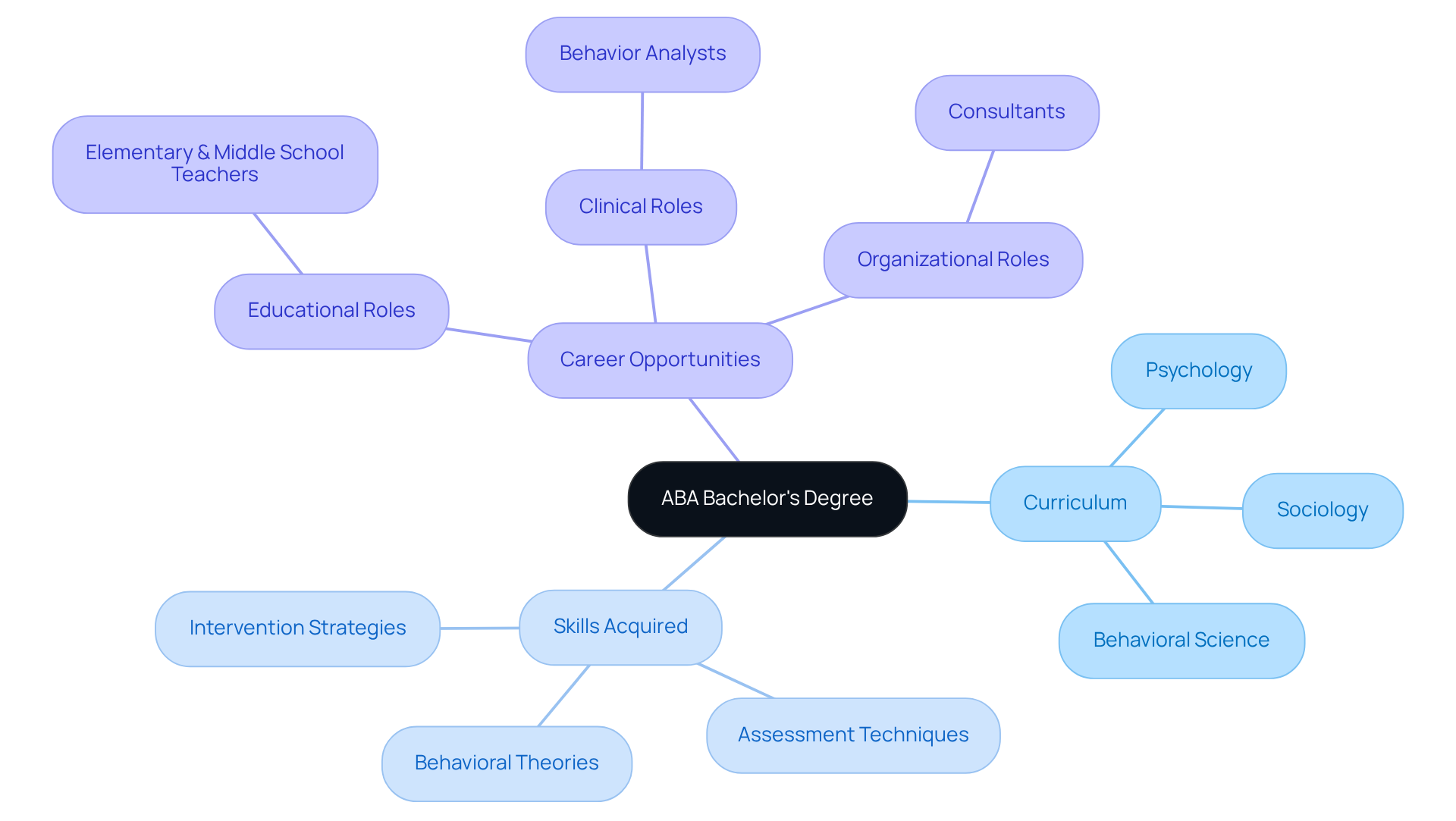
The , focusing on the systematic study of behavior and its modification. Students delve into various behavioral theories, assessment techniques, and intervention strategies, preparing them for .
This is not merely an academic credential; it acts as a or pursue advanced education in behavioral analysis. Are you facing challenges in hiring qualified professionals in this field? Consider , connecting you with top talent ready to make a difference.
With the right education and support, you can be part of this vital profession. Don't miss out on the opportunity to enhance your team with skilled analysts. Discover the possibilities that come with an today!
The has become increasingly essential in today’s job market. Did you know that the U.S. Bureau of Labor Statistics forecasts a remarkable ? This surge is driven by the and various challenges.
Those who hold an are uniquely qualified to meet this rising demand. They possess the essential knowledge and skills to implement , significantly boosting their employability. This degree opens pathways to diverse , healthcare, and organizational management, making it an invaluable asset for those looking to create a positive impact in their communities.
At , we understand the challenges you face in . Our advanced job fit scoring system streamlines the , evaluating candidates’ skills and preferences. This ensures that graduates are connected with roles that align with their expertise and career goals.
Are you ready to ? Let us guide you effectively from application to negotiation, ensuring you find the right fit for your organization.

The evolution of s can be traced back to the early 20th century, when behaviorism emerged as a dominant psychological paradigm. Pioneers like John B. Watson and B.F. Skinner laid the groundwork for understanding actions through empirical research and experimentation. As psychology expanded, so did the application of behavioral analysis in diverse contexts, particularly in education and therapy.
By the late 20th century, the establishment of formal training programs and certification processes for analysts led to the creation of , including the , in . Today, the is recognized as an essential credential for aspiring analysts, reflecting the growing importance of in addressing across various populations.
Are you facing difficulties in finding qualified ? Consider how can streamline your recruitment process. With the , having the right talent is crucial for effective intervention and support.
not only connects you with but also ensures that you have access to professionals who are well-versed in the . This platform is designed to meet your hiring needs efficiently, allowing you to focus on what truly matters - providing quality care and support to those in need.

Did you know that the demand for is projected to grow by approximately 22% in the coming years? This surge highlights the critical need for well-trained professionals in the field of . An is meticulously designed to merge theoretical knowledge with practical application, equipping students for effective real-world analysis of conduct.
Core subjects encompass:
This ensures a well-rounded educational experience. A significant component of the program involves , where students can apply their learning in clinical or educational environments. Research indicates that these practical experiences are crucial; studies show that graduates who engage in intensive fieldwork report higher success rates in their careers, often exceeding 89%.
Key characteristics of the program include:
Graduates emerge with a comprehensive understanding of and modification, making them adept at addressing the diverse needs of individuals in various settings, such as schools, healthcare facilities, and community organizations.
This robust educational foundation prepares them for roles that require both analytical skills and compassionate intervention, ultimately enhancing the quality of care and support provided to those they serve. Additionally, an typically requires around 120 credits and takes four years of full-time study, which aligns perfectly with the projected growth rate of ABA service demand.
Are you facing challenges in hiring qualified BCBAs? Consider how the right educational background can make a difference. With a solid foundation in ABA, graduates are ready to meet the for skilled professionals in the field.

The demand for Board Certified Behavior Analysts (BCBAs) is skyrocketing, with a projected 25% growth in employment opportunities. An ABA bachelor's degree is not just a qualification; it’s a strategic investment in your future. This degree equips you with essential knowledge and skills, positioning you to meet the increasing need for qualified professionals in a field renowned for its effectiveness in tackling behavioral challenges.
The curriculum offers a comprehensive blend of theoretical and practical components, covering behavioral assessment, intervention strategies, and ethics. With a strong emphasis on fieldwork, graduates emerge not only knowledgeable but also ready to apply their learning in real-world settings. This hands-on experience is crucial for making a meaningful impact in education, healthcare, and beyond.
But the significance of an ABA bachelor's degree goes beyond personal career advancement. It plays a vital role in addressing the broader needs of communities and organizations. As the demand for skilled analysts continues to rise, investing in this educational pathway can lead to transformative outcomes for both professionals and the populations they serve.
Are you facing challenges in hiring qualified analysts? Consider how pursuing an ABA bachelor's degree can enhance your career prospects and contribute positively to society. Embrace this opportunity today and take the first step towards a rewarding career that makes a difference.
What is an ABA Bachelor's Degree?
An ABA Bachelor's Degree, also known as a Bachelor of Arts/Science in Applied Behavior Analysis, is an undergraduate program that provides essential knowledge and skills to understand and apply behavioral analysis principles.
What does the curriculum of an ABA Bachelor's Degree typically include?
The curriculum usually blends psychology, sociology, and behavioral science, focusing on the systematic study of behavior and its modification, including various behavioral theories, assessment techniques, and intervention strategies.
What career opportunities does an ABA Bachelor's Degree prepare students for?
This degree prepares students for impactful roles in educational, clinical, and organizational environments, and serves as a foundational step for those aspiring to become Board Certified Behavior Analysts (BCBAs) or pursue advanced education in behavioral analysis.
Why is there a growing demand for Board Certified Behavior Analysts (BCBAs)?
The demand for BCBAs is increasing due to the rising need for qualified professionals in the field of behavioral analysis, which is essential in various settings.
How can Hire ABA assist in the recruitment process for ABA professionals?
Hire ABA can streamline the recruitment process by connecting organizations with top talent ready to make a difference in the field of applied behavior analysis.
Our expert recruitment strategies and AI-driven sourcing ensure that you receive top-notch candidates quickly, without compromising on quality. Whether you’re looking for BCBAs, Clinical Directors, or RBTs, we’ve got you covered.


