


Thank you! Your submission has been received!
Oops! Something went wrong while submitting the form.
February 17, 2026

The rising demand for Board Certified Behavior Analysts (BCBAs) underscores a pressing need for qualified professionals in Applied Behavior Analysis (ABA). With the behavioral health landscape evolving rapidly, obtaining a behavioral specialist degree is now essential for those eager to make a significant impact in this field. This article explores the importance of this degree, detailing its curriculum, the skills it imparts, and the promising career opportunities it opens up.
How can aspiring BCBAs leverage this educational pathway to enhance their professional prospects and contribute to the well-being of individuals facing behavioral challenges?
Consider this: the demand for BCBAs has surged, reflecting a critical shortage of skilled practitioners. This is where Hire ABA comes into play. By utilizing our platform, you can connect with top-tier candidates who are ready to make a difference.
The benefits of hiring through Hire ABA are clear. Not only do you gain access to a pool of qualified professionals, but you also ensure that your organization is equipped to meet the growing needs of clients. With a focus on quality and reliability, Hire ABA stands out as a trusted resource in the recruitment process.
Reflect on your current hiring challenges. Are you struggling to find the right talent? Let Hire ABA help you navigate these obstacles and secure the best candidates for your team.
The demand for Board Certified Behavior Analysts (BCBAs) is projected to surge by 25% by 2026. This statistic underscores the critical need for qualified professionals in the field of Applied Behavior Analysis (ABA). The degree in behavioral specialist is a crucial academic credential that equips individuals with the essential knowledge and skills necessary for effective practice in ABA.
This qualification offers a comprehensive curriculum that covers the principles of behavior analysis, intervention strategies, and ethical considerations. Graduates emerge well-prepared to assess and modify behaviors in various settings, including educational institutions, healthcare facilities, and community organizations. Not only does the behavioral specialist degree serve as a foundational step for those aspiring to become BCBAs, but it also significantly enhances career prospects.
As Dr. Doreen Granpeesheh aptly states, "ABA is a science-based method for autism treatment that aims to comprehend actions and teach new skills while enhancing independence." Graduates of this program acquire essential skills such as data collection, behavior assessment, and the development of personalized intervention plans. These competencies ultimately contribute to improving the quality of life for individuals facing behavioral challenges.
Moreover, the increasing number of universities offering this qualification reflects its growing importance in the field. This trend ensures that more professionals are equipped to meet the . Are you facing challenges in hiring qualified ABA professionals? Consider how Hire ABA can streamline your recruitment process and connect you with the right talent. Don't miss out on the opportunity to enhance your team with skilled individuals ready to make a difference.

The demand for Board Certified Behavior Analysts (BCBAs) is skyrocketing, with job opportunities projected to increase by 22% by 2029. This surge highlights the , which serves as a vital entry point for those looking to forge a meaningful and impactful career in Applied Behavior Analysis (ABA).
Graduates of this program are equipped with the skills to implement evidence-based interventions, emphasizing ethical practices and cultural competence essential for working with diverse populations. As ABA therapy gains recognition for its effectiveness in addressing behavioral challenges, the behavioral specialist degree becomes foundational in cultivating skilled professionals crucial to the field's growth and advancement.
Are you facing challenges in hiring qualified BCBAs? Hire ABA offers a streamlined job matching process that connects BCBAs with roles tailored to their expertise, goals, and work-life balance. This innovative process includes advanced job fit scoring and personalized guidance, ensuring graduates can navigate their careers effectively.
Success stories abound, showcasing BCBAs who have leveraged this qualification to excel in various roles, from clinical practice to leadership positions. These examples underscore the qualification's significance in the evolving job market for practitioners. Current industry trends indicate a promising future for BCBAs, with average salaries ranging from $72,450 to over $90,000, further emphasizing the value of this educational pathway.
Take action today-consider how Hire ABA can help you find the right talent to meet your needs and contribute to the success of your organization.

The demand for Board Certified Behavior Analysts (BCBAs) is projected to soar, with job growth rates exceeding 20% by 2029. This surge underscores the significance of the [behavioral specialist degree](https://early-childhood-education-degrees.com/therapies/aba-certification-standards), which is rooted in the early advancements of analysis as a scientific discipline. Initially grounded in psychology and education, the program has evolved to provide a structured approach to training professionals in Applied Behavior Analysis (ABA).
As the field of behavior analysis has expanded, the educational requirements for practitioners, such as obtaining a behavioral specialist degree, have also increased. Certification boards, such as the Behavior Analyst Certification Board (BACB), have been instrumental in shaping the curriculum and standards associated with the behavioral specialist degree. These organizations have introduced updated educational requirements that emphasize evidence-based practices and ethical considerations in ABA. Candidates are now required to complete BACB-approved coursework and supervised fieldwork hours, ensuring they possess the necessary skills and knowledge to excel in their roles.
Moreover, the curriculum for the behavioral specialist degree has evolved to include a comprehensive understanding of behavioral principles, assessment techniques, and intervention strategies. This evolution is supported by case studies that demonstrate the positive impact of certification boards on educational frameworks, leading to better-prepared graduates who can effectively address the needs of diverse populations in modern ABA practice.
Consequently, the commitment to high standards and quality care in the analysis of conduct is exemplified by the behavioral specialist degree. With the reaching around $120,946, the degree's relevance in the job market is increasingly significant. The upcoming 2026 updates to certification standards further highlight the evolving landscape of ABA education, ensuring that graduates remain competitive and well-prepared for future challenges.
Are you facing hiring challenges in this growing field? Consider how [Hire ABA](https://hireaba.today) can help you find the right talent to meet your needs.

The demand for Board Certified Behavior Analysts (BCBAs) is skyrocketing, making a behavioral specialist degree an invaluable asset for aspiring professionals in psychology. This curriculum seamlessly blends theoretical knowledge with practical application, featuring essential courses in:
Students gain hands-on experience through supervised fieldwork, allowing them to implement their learning in real-world environments. This practical training not only enhances their skills but also prepares them to tackle the challenges they will face in the field. Moreover, the program emphasizes cultural competence and ethical decision-making, equipping graduates to work effectively with diverse populations.
Programs like the one at St. Cloud State University stand out with a remarkable 100% pass rate for BCBA certification, underscoring the effectiveness of their training. By merging these elements, the degree in Behavioral Specialist empowers students to evaluate, design, and implement customized intervention plans that address individual needs.
Typically requiring around , the behavioral specialist degree provides a comprehensive foundation for future careers in applied behavior analysis. Are you ready to take the next step in your career? Consider how this degree can position you for success in a growing field.
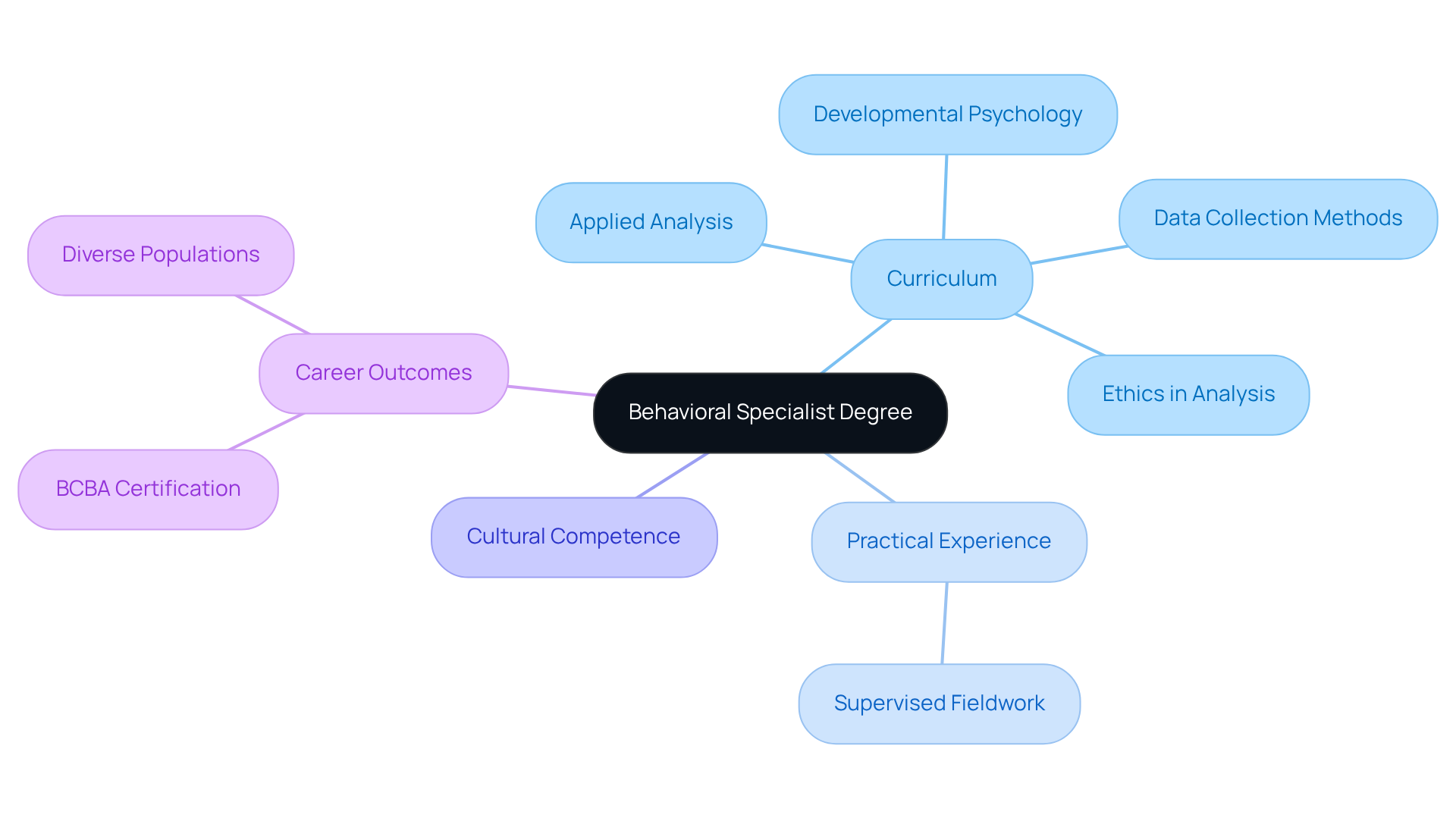
The demand for Board Certified Behavior Analysts (BCBAs) is skyrocketing, making the behavioral specialist degree a crucial qualification for those looking to make a significant impact in Applied Behavior Analysis (ABA). This degree not only imparts essential theoretical knowledge but also equips graduates with the practical skills needed to tackle behavioral challenges across various settings. As the need for qualified professionals in this field continues to grow, the importance of this degree stands out as a vital entry point into a rewarding career.
Key insights throughout this article have highlighted the curriculum, the evolution of the degree, and the increasing job opportunities available. The comprehensive training offered through this program covers critical areas such as ethics, data collection, and intervention strategies, ensuring that graduates are well-prepared to meet the diverse needs of the populations they serve. Success stories of BCBAs underscore the transformative potential of this degree, reinforcing its value in the job market.
Pursuing a behavioral specialist degree is not merely about personal career advancement; it’s about contributing to the broader mission of improving lives through effective behavioral interventions. As the field of ABA evolves, embracing this educational pathway presents a unique opportunity to enhance professional skills and make a meaningful difference in the lives of individuals facing behavioral challenges.
Are you ready to take action? Investing in this degree can lead to a fulfilling career while addressing the pressing need for qualified professionals in the ABA community. Don’t miss out on the chance to be part of this impactful field.
What is a Behavioral Specialist Degree?
A Behavioral Specialist Degree is an academic credential that prepares individuals with the knowledge and skills necessary for effective practice in Applied Behavior Analysis (ABA), covering principles of behavior analysis, intervention strategies, and ethical considerations.
What is the projected job demand for Board Certified Behavior Analysts (BCBAs)?
The demand for Board Certified Behavior Analysts (BCBAs) is projected to surge by 25% by 2026, highlighting the critical need for qualified professionals in the field.
What competencies do graduates of the Behavioral Specialist Degree program acquire?
Graduates acquire essential skills such as data collection, behavior assessment, and the development of personalized intervention plans, which contribute to improving the quality of life for individuals facing behavioral challenges.
In which settings can professionals with a Behavioral Specialist Degree work?
Professionals can work in various settings, including educational institutions, healthcare facilities, and community organizations.
How does the Behavioral Specialist Degree benefit career prospects?
The degree serves as a foundational step for those aspiring to become BCBAs and significantly enhances career prospects in the field of ABA.
Why is the Behavioral Specialist Degree increasingly important?
The increasing number of universities offering this qualification reflects its growing importance, ensuring that more professionals are equipped to meet the rising demand for BCBAs.
What is the significance of Applied Behavior Analysis (ABA)?
ABA is a science-based method for autism treatment that aims to understand actions and teach new skills while enhancing independence, making it essential in addressing behavioral challenges.
Our expert recruitment strategies and AI-driven sourcing ensure that you receive top-notch candidates quickly, without compromising on quality. Whether you’re looking for BCBAs, Clinical Directors, or RBTs, we’ve got you covered.


