


Thank you! Your submission has been received!
Oops! Something went wrong while submitting the form.
February 18, 2026

The surge in demand for Board Certified Behavior Analysts (BCBAs) is nothing short of remarkable. In just over a decade, job opportunities have skyrocketed from just over a thousand to more than 65,000. This explosive growth highlights the crucial role BCBAs play in enhancing the lives of individuals facing behavioral challenges, especially those with Autism Spectrum Disorder.
But what do these skilled professionals actually do? How do their contributions shape the effectiveness of Applied Behavior Analysis (ABA) therapy? By exploring the multifaceted responsibilities of BCBAs, we can see not only their significant impact on client outcomes but also the exciting career opportunities that lie ahead in this thriving field.
Are you facing challenges in hiring qualified BCBAs? Consider how Hire ABA can help you navigate this growing landscape. With a reliable platform dedicated to connecting employers with top talent, you can ensure that your organization is equipped with the expertise needed to make a difference. Don't miss out on the chance to enhance your team and improve client outcomes.
The demand for Board Certified Behavior Analysts (BCBAs) is skyrocketing, with job postings surging from just 1,144 in 2010 to over 65,300 in 2023. This remarkable growth highlights the urgent need for skilled professionals in the field of Applied Behavior Analysis (ABA). Are you ready to take advantage of this booming job market?
A BCBA is a highly trained expert dedicated to using analysis principles to enhance the lives of individuals facing behavioral challenges, which raises the question of what do BCBAs do. To understand what do BCBAs do, these professionals conduct thorough evaluations of behavior patterns, develop tailored treatment plans, and implement evidence-based interventions. Often, they work independently or as part of multidisciplinary teams, supervising Registered Behavior Technicians (RBTs) and other support staff to ensure seamless service delivery.
In various settings - schools, clinics, and homes - behavior analysts play a crucial role in addressing the unique needs of individuals, particularly those diagnosed with Autism Spectrum Disorder (ASD). Their responsibilities extend beyond initial assessments; they continuously monitor client progress, making necessary adjustments to treatment plans to maximize effectiveness.
To navigate this expanding job market effectively, behavior analysts can turn to Hire ABA for personalized resume evaluations. By submitting their resumes, they receive tailored assessments that align their experience and career aspirations with the best job opportunities available. This process includes a detailed review of qualifications and constructive feedback on enhancing resumes, ensuring they are well-prepared for the competitive job market.
Utilizing advanced job fit scoring, Hire ABA matches behavior analysts with roles that suit their skills, preferences, and desired locations. This targeted approach not only streamlines the job search but also increases the likelihood of finding fulfilling positions.
To understand what do BCBAs do, it's important to recognize their pivotal role in implementing successful interventions that promote independence and enhance social skills among children with ASD. Case studies have demonstrated that ABA techniques empower children to take initiative, leading to greater engagement in various activities. As the field evolves, behavior analysts remain at the forefront, shaping the future of behavioral therapy and advocating for their clients' needs.
The Bureau of Labor Statistics projects a job growth rate of 22% for BCBAs over the next decade, reflecting strong market confidence in this essential profession. Don’t miss out on the opportunity to advance your career in this thriving field. Connect with Hire ABA today and take the first step toward securing your future!

The demand for Board Certified Behavior Analysts (BCBAs) is skyrocketing, with a projected growth rate of 22% over the next decade. This surge highlights what BCBAs do in Applied Behavior Analysis therapy, particularly in addressing the behavioral needs of individuals with developmental disorders. To understand what BCBAs do, it's important to note that they utilize evidence-based strategies to support clients, ensuring that treatment plans are both ethical and effective. Their expertise is essential in fostering positive behavioral changes, enhancing communication skills, and promoting independence among clients.
As healthcare systems evolve, BCBAs are becoming key players in multidisciplinary teams. They collaborate with educators, therapists, and families to create comprehensive support systems. This collaboration is increasingly recognized as vital for delivering high-quality care, particularly in educational and healthcare settings where the complexity of behavioral challenges demands a coordinated approach. The rising prevalence of autism spectrum disorder and other developmental conditions further underscores the necessity for behavior analysts, highlighting what BCBAs do in designing and overseeing tailored behavior intervention programs.
Are you facing challenges in hiring qualified behavior analysts? Hire ABA offers customized resume evaluations that assess the skills and preferences of BCBAs, matching them with top job opportunities in the field. This thorough review of experience and career goals ensures a tailored match that benefits both employers and candidates. As ABA therapy continues to expand, staying informed about new roles can lead to higher salaries, leadership positions, and flexible working conditions. The contributions of BCBAs not only improve patient outcomes but also enhance the overall effectiveness of treatment strategies within multidisciplinary frameworks.

Did you know that the demand for Board Certified Behavior Analysts (BCBAs) is skyrocketing? As the need for effective ABA therapy grows, so does the importance of skilled professionals in this field. To understand what do BCBAs do, it is important to recognize their crucial role in the success of ABA therapy and the range of responsibilities they undertake that directly impact the lives of individuals with autism.
Every year, behavior analysts conduct thousands of behavioral evaluations. These evaluations are essential for identifying the specific needs of individuals, guiding the development of personalized treatment plans tailored to each person's unique circumstances. Data gathering is another vital aspect of what do BCBAs do, enabling them to track progress and make necessary adjustments to interventions.
In addition to their direct work with clients, BCBAs oversee Registered Behavior Technicians (RBTs) to ensure that interventions are implemented correctly and efficiently, which highlights what do BCBAs do. They collaborate with families and other professionals to discuss treatment goals and strategies, fostering a team approach to care. Training sessions for staff and ongoing professional development are also part of their responsibilities, keeping them updated on best practices in the field.
As Dr. Doreen Granpeesheh emphasizes, ABA is a science-based approach aimed at understanding and teaching new skills to individuals with autism. This multifaceted role requires strong analytical skills, effective communication, and a deep understanding of behavioral principles. BCBAs must adapt interventions as needed, ultimately enhancing the quality of life for their clients.
Are you facing challenges in hiring qualified BCBAs? Consider how Hire ABA can streamline your recruitment process and connect you with top talent in the field. With our platform, you can ensure that your organization is equipped with the expertise needed to provide exceptional care.

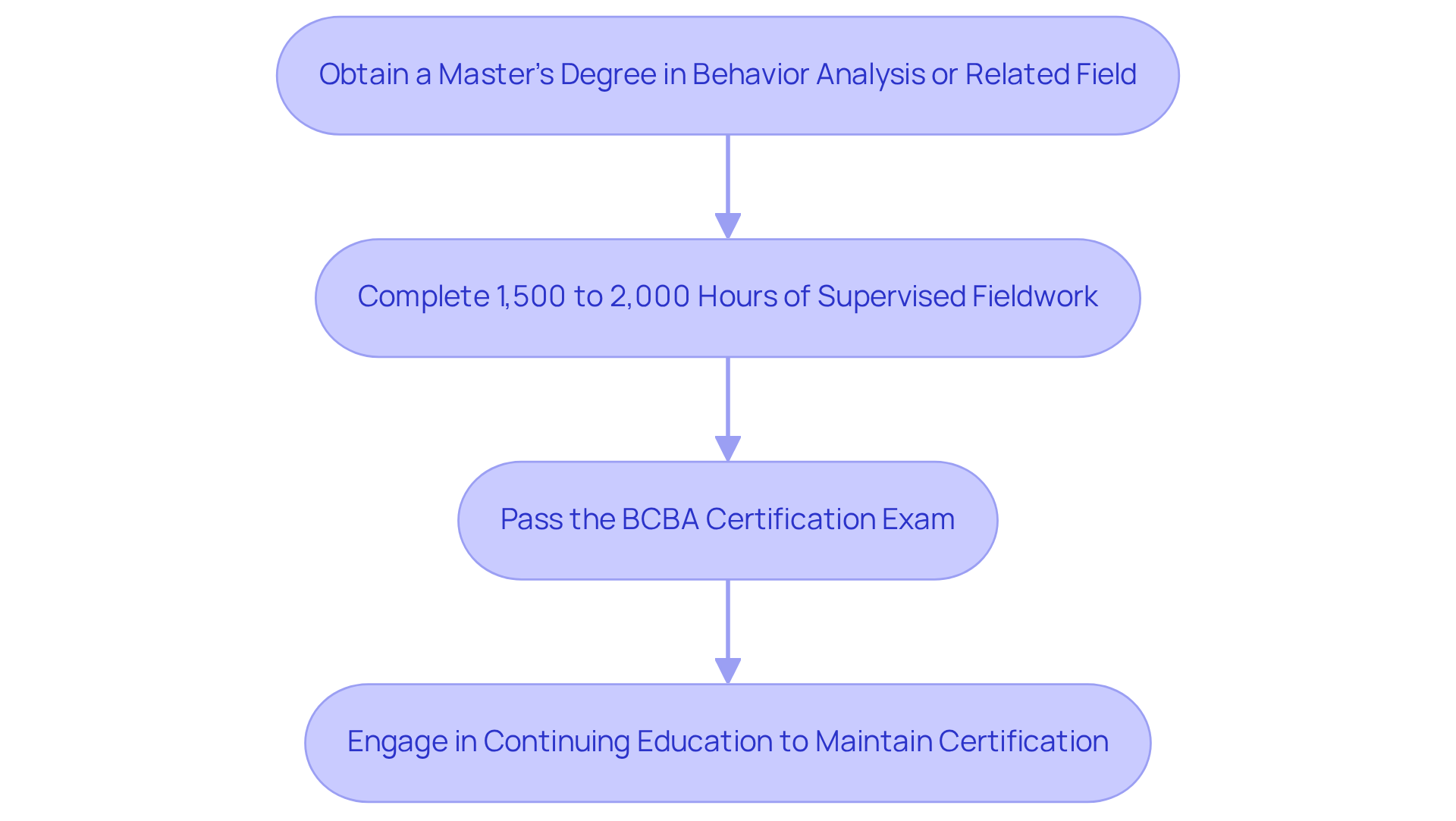
Did you know that understanding what do BCBAs do is important as the demand for Board Certified Behavior Analysts is on the rise? As organizations seek qualified professionals in Applied Behavior Analysis (ABA), understanding the certification process is crucial. To become a BCBA, candidates must navigate a well-defined certification pathway that includes specific educational and experiential prerequisites. Typically, this journey begins with obtaining a master's degree in behavior analysis, psychology, or a related field. After their academic training, candidates are required to complete between 1,500 and 2,000 hours of supervised fieldwork, gaining essential hands-on experience in applying behavior analysis principles in real-world settings. Once these prerequisites are fulfilled, candidates must successfully pass the BCBA certification exam conducted by the Analyst Certification Board (BACB).
Continuing education is vital for sustaining certification, as board-certified behavior analysts are expected to stay informed about the latest research and ethical standards in the field. This rigorous training pathway not only equips behavior analysts to deliver high-quality services but also reflects the growing demand for qualified professionals in ABA. As of 2023, the average salary for behavior analysts in the United States is approximately $85,571, with top earners reaching up to $151,000. In North Carolina, Board Certified Behavior Analysts generally earn between $70,000 and $90,000 each year, highlighting the competitive nature of this profession.
The structured approach to BCBA certification ensures that practitioners are well-equipped to meet the diverse needs of their clients. Furthermore, demographic data indicates that 75% of BCBA certificants identify as White, showcasing ongoing shifts towards greater inclusion in the field. The increasing number of job postings for behavior analysts further emphasizes what do BCBAs do and the rising demand for their services. Are you facing challenges in hiring qualified behavior analysts? Consider how Hire ABA can help you connect with the right talent. This is a promising career path, and with the right support, you can ensure your organization is staffed with the best professionals in the field.
The demand for Board Certified Behavior Analysts (BCBAs) is skyrocketing, and their role in Applied Behavior Analysis (ABA) therapy is more crucial than ever. As professionals in this field, BCBAs are at the forefront of designing and implementing tailored interventions that profoundly impact the lives of individuals facing behavioral challenges, especially those with Autism Spectrum Disorder (ASD).
Have you considered the multifaceted responsibilities that BCBAs undertake? They:
Their collaboration with families and interdisciplinary teams is vital for achieving effective treatment outcomes. This teamwork not only fosters positive behavioral changes but also enhances client independence.
With the increasing demand for BCBAs, there lies a significant opportunity for professionals in the field. As the landscape of ABA therapy evolves, the need for qualified behavior analysts will only continue to grow. Engaging with resources like Hire ABA can streamline the job search process for both BCBAs and employers. This platform ensures that skilled professionals are matched with fulfilling roles, ultimately enhancing individual careers.
So, are you ready to embrace this opportunity? By utilizing Hire ABA, you not only advance your career but also contribute to the broader mission of improving the quality of life for those in need of behavioral support. Don't miss out on the chance to make a difference - take action today!
What is the role of a Board Certified Behavior Analyst (BCBA)?
A BCBA is a highly trained expert who uses principles of Applied Behavior Analysis (ABA) to enhance the lives of individuals facing behavioral challenges. They conduct evaluations, develop treatment plans, and implement evidence-based interventions.
What are the responsibilities of a BCBA?
BCBAs are responsible for conducting thorough evaluations of behavior patterns, creating tailored treatment plans, supervising Registered Behavior Technicians (RBTs), monitoring client progress, and adjusting treatment plans as needed.
In what settings do BCBAs typically work?
BCBAs work in various settings, including schools, clinics, and homes, addressing the unique needs of individuals, particularly those diagnosed with Autism Spectrum Disorder (ASD).
How has the demand for BCBAs changed over the years?
The demand for BCBAs has significantly increased, with job postings rising from 1,144 in 2010 to over 65,300 in 2023, indicating a strong need for skilled professionals in the field.
How can BCBAs enhance their job search?
BCBAs can enhance their job search by utilizing services like Hire ABA, which offers personalized resume evaluations and job fit scoring to match them with suitable roles based on their skills and preferences.
What is the projected job growth rate for BCBAs?
The Bureau of Labor Statistics projects a job growth rate of 22% for BCBAs over the next decade, reflecting strong market confidence in this essential profession.
How do BCBAs contribute to the development of children with ASD?
BCBAs implement successful interventions that promote independence and enhance social skills among children with ASD, empowering them to take initiative and engage more in various activities.
Our expert recruitment strategies and AI-driven sourcing ensure that you receive top-notch candidates quickly, without compromising on quality. Whether you’re looking for BCBAs, Clinical Directors, or RBTs, we’ve got you covered.


