


Thank you! Your submission has been received!
Oops! Something went wrong while submitting the form.
November 25, 2025

The demand for Board Certified Behavior Analysts (BCBAs) is skyrocketing, with organizations across various sectors struggling to find qualified professionals. This surge highlights the critical need for skilled individuals, particularly those with a PhD in Applied Behavior Analysis (ABA). An advanced degree in this specialized field not only signifies a profound understanding of behavioral science but also equips graduates with the necessary tools to drive innovation and enhance outcomes in areas ranging from education to mental health.
So, what does pursuing a PhD in Applied Behavior Analysis truly entail? This journey involves rigorous training and research, preparing graduates to tackle complex behavioral challenges. As the job market evolves, those with a PhD in ABA are uniquely positioned to transform their career trajectories, stepping into roles that demand expertise and leadership.
Are you facing challenges in hiring qualified BCBAs? Consider how Hire ABA can streamline your recruitment process. With a focus on connecting organizations with top-tier talent, this platform offers a reliable solution to meet your staffing needs. Don't miss out on the opportunity to elevate your team with skilled professionals who can make a significant impact.
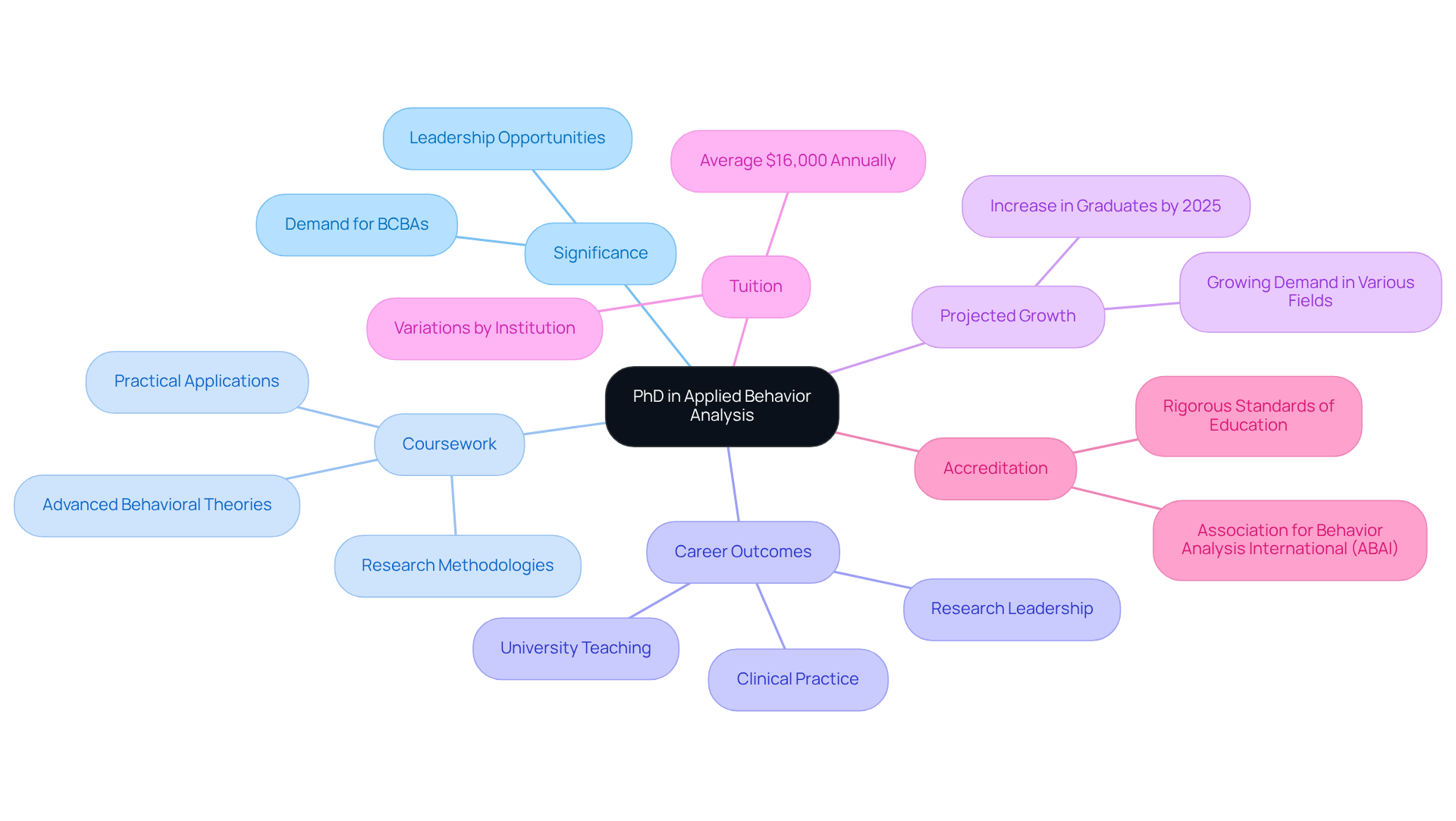
A PhD in Applied Behavior Analysis (ABA) signifies the pinnacle of academic achievement, concentrating on the scientific study of behavior and the application of behavioral principles to improve individual and societal outcomes. Did you know that the demand for Board Certified Behavior Analysts (BCBAs) is on the rise? This advanced degree typically encompasses comprehensive coursework in research methodologies, advanced behavioral theories, and practical applications of ABA techniques.
Graduates emerge as leaders in the field, ready to conduct impactful research, teach at the university level, and lead clinical practices. The projected growth in the field underscores the increasing need for such expertise, with the number of graduates holding a PhD in applied behavior analysis expected to rise significantly by 2025. According to the National Center for Education Statistics (NCES), tuition for these courses averages around $16,000 annually.
Employers gain a competitive edge by hiring these highly trained professionals, who bring a wealth of knowledge and skills that can drive innovation and enhance service delivery across various settings, including developmental services, special education, and mental health. As Bernard Grant highlights, obtaining a Ph.D. in applied behavior analysis can pave the way to leadership positions, underscoring the significance of this degree in promoting a more effective and evidence-based approach to behavior analysis.
Furthermore, leading programs offering a PhD in applied behavior analysis are accredited by the Association for Behavior Analysis International (ABAI), ensuring that graduates meet rigorous standards of education and training. Are you facing challenges in hiring qualified professionals? Consider how Hire ABA can help you connect with the right talent to meet your needs.
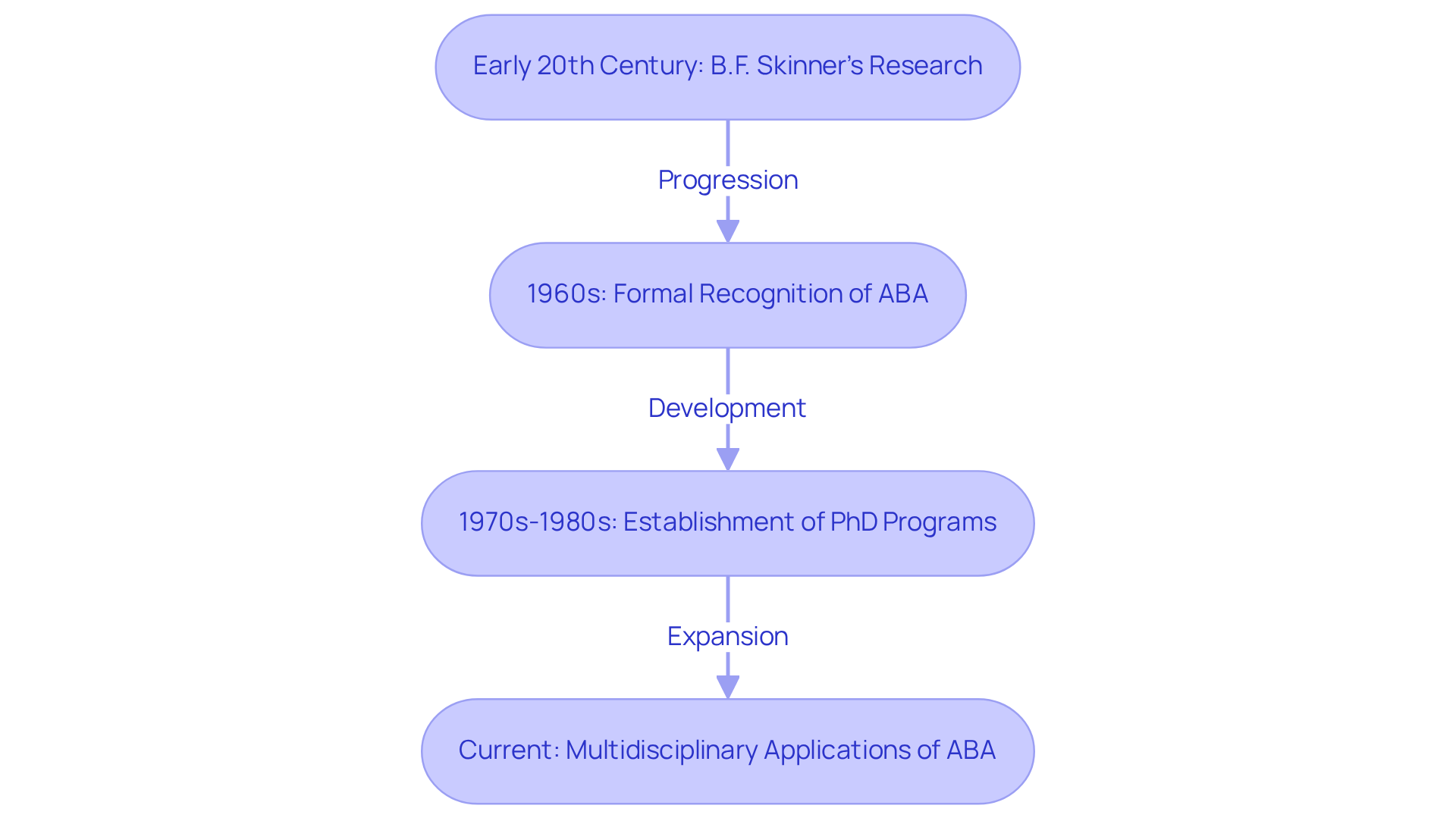
The origins of Applied Behavior Analysis (ABA) date back to the early 20th century, significantly shaped by the groundbreaking work of B.F. Skinner. His research laid the groundwork for effective modification techniques that are still in use today. By the 1960s, ABA gained formal recognition as a distinct field, leading to the establishment of doctoral programs, including a PhD in applied behavior analysis, in the 1970s and 1980s aimed at cultivating skilled researchers and practitioners. These initiatives were pivotal in advancing the science of conduct analysis, equipping experts with the knowledge to implement effective interventions.
As the field has evolved, the PhD in applied behavior analysis has broadened its reach, now including various applications in education, healthcare, and organizational practices. This growth reflects a broader acknowledgment of ABA's effectiveness in tackling behavioral challenges across diverse contexts. In today’s multidisciplinary landscape, the relevance of ABA is more pronounced than ever.
Are you facing challenges in hiring qualified Board Certified Behavior Analysts (BCBAs)? Consider how the expertise of Hire ABA can streamline your recruitment process. With a focus on connecting you with top talent in the field, Hire ABA offers a reliable platform for your hiring needs. Don't miss the opportunity to enhance your team with skilled professionals who can make a difference.
A typical PhD in applied behavior analysis is designed to meet the growing demand for Board Certified Behavior Analysts (BCBAs). With a robust curriculum that includes core coursework in advanced behavior analysis, research design, ethics, and statistics, students in a PhD in applied behavior analysis are well-prepared for the challenges of the field.
Moreover, students enrolled in a PhD in applied behavior analysis are often required to complete a dissertation that contributes original research to the discipline, showcasing their expertise and commitment to advancing knowledge. Practical experiences, such as supervised clinical practice and teaching assistantships, are essential components of the PhD in applied behavior analysis program. These opportunities allow students to apply their theoretical knowledge in real-world environments, bridging the gap between academia and practice.
Programs may also emphasize interdisciplinary collaboration, equipping graduates to thrive in diverse settings. This focus not only enhances their skill set but also prepares them to tackle the multifaceted challenges they will encounter in their careers.
Are you facing difficulties in finding qualified candidates for your organization? Consider how Hire ABA can streamline your recruitment process and connect you with top talent in the field.

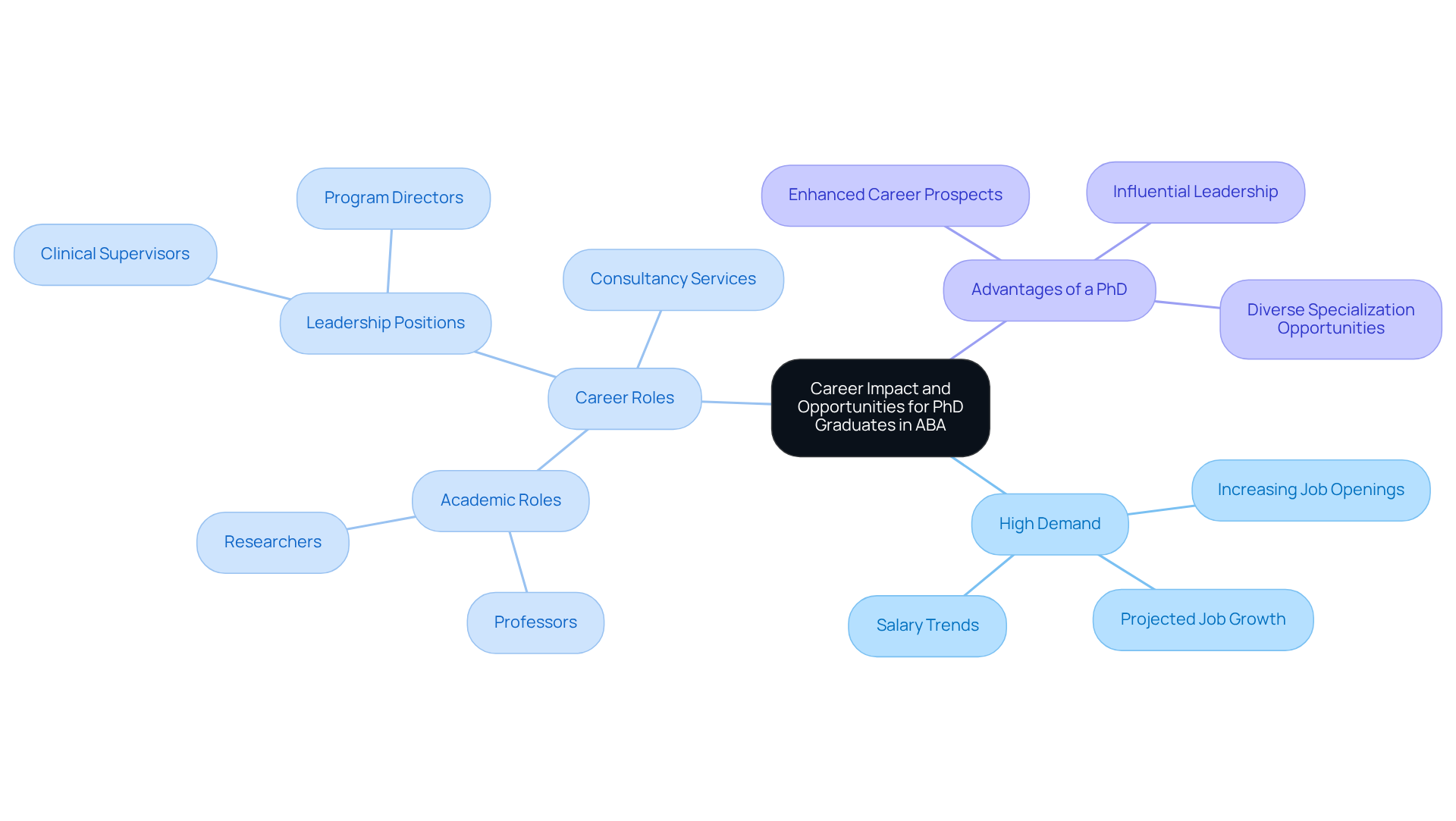
PhD graduates in Applied Behavior Analysis (ABA) are in high demand, and job growth for those with a PhD in applied behavior analysis is projected to continue as the field expands into technology and organizational behavior. This robust demand opens a wide array of career opportunities for these professionals.
Many PhD holders secure academic roles as professors or researchers, contributing significantly to the evolution of ABA through teaching and scholarly research. They play a crucial role in shaping the future of the discipline. Additionally, numerous graduates ascend to leadership positions within clinical environments, where they oversee ABA programs or provide consultancy services to organizations.
The advantages of obtaining a PhD in applied behavior analysis are substantial. Not only does it enhance career prospects, but it also establishes graduates as influential leaders within the discipline. Are you facing challenges in hiring qualified professionals for your organization? Consider how partnering with Hire ABA can streamline your recruitment process and connect you with top talent in the field.
In summary, the demand for qualified ABA professionals remains strong, and a PhD in applied behavior analysis can significantly elevate one's career trajectory. Take action today to ensure your organization is equipped with the best talent in Applied Behavior Analysis.
The demand for Board Certified Behavior Analysts (BCBAs) is skyrocketing, making a PhD in Applied Behavior Analysis an invaluable asset. This advanced degree not only equips graduates with a robust skill set but also positions them as leaders in a rapidly expanding field. As organizations increasingly seek qualified professionals, the significance of this academic achievement cannot be overstated.
Throughout this article, we explored key insights, including:
The evolution of the PhD in ABA reflects its growing relevance across various sectors, from education to healthcare. Experts in this field play a critical role in addressing behavioral challenges, and employers stand to gain significantly by hiring individuals with this expertise. They bring innovative solutions and a commitment to evidence-based practices.
As the demand for Board Certified Behavior Analysts continues to rise, investing in this advanced education not only enhances career prospects for individuals but also strengthens the organizations that employ them. Are you facing challenges in finding qualified candidates? Embracing this opportunity is essential for those looking to make a meaningful impact in the field of behavior analysis.
Consider how Hire ABA can address your hiring needs. With a focus on connecting you with top talent in the field, this platform is your reliable partner in recruitment. Don't miss out on the chance to elevate your organization with the expertise of PhD graduates in Applied Behavior Analysis.
What is a PhD in Applied Behavior Analysis (ABA)?
A PhD in Applied Behavior Analysis signifies the highest level of academic achievement focused on the scientific study of behavior and the application of behavioral principles to enhance individual and societal outcomes.
What is the demand for Board Certified Behavior Analysts (BCBAs)?
The demand for Board Certified Behavior Analysts (BCBAs) is increasing, with a significant rise in the number of graduates expected by 2025.
What does the coursework for a PhD in ABA typically include?
The coursework for a PhD in ABA typically includes research methodologies, advanced behavioral theories, and practical applications of ABA techniques.
What career opportunities are available for graduates with a PhD in ABA?
Graduates with a PhD in ABA can pursue leadership roles in research, university teaching, and clinical practices.
What is the average tuition cost for a PhD in Applied Behavior Analysis?
The average tuition for a PhD in Applied Behavior Analysis is around $16,000 annually.
How do employers benefit from hiring professionals with a PhD in ABA?
Employers gain a competitive edge by hiring highly trained professionals with a wealth of knowledge and skills that can drive innovation and improve service delivery in various settings, including developmental services, special education, and mental health.
What accreditation should leading programs offering a PhD in ABA have?
Leading programs offering a PhD in ABA should be accredited by the Association for Behavior Analysis International (ABAI) to ensure graduates meet rigorous educational and training standards.
How can organizations overcome challenges in hiring qualified ABA professionals?
Organizations facing challenges in hiring qualified professionals can consider using services like Hire ABA to connect with the right talent to meet their needs.
Our expert recruitment strategies and AI-driven sourcing ensure that you receive top-notch candidates quickly, without compromising on quality. Whether you’re looking for BCBAs, Clinical Directors, or RBTs, we’ve got you covered.


