


Thank you! Your submission has been received!
Oops! Something went wrong while submitting the form.
March 4, 2026

In the dynamic field of Applied Behavior Analysis (ABA), the demand for Board Certified Behavior Analysts (BCBAs) is on the rise. With a significant majority of BCBAs utilizing Behavior Reduction Plans (BRPs), these essential tools are crucial for effectively managing challenging behaviors. But here’s the pressing question: when should a behavior reduction plan be implemented to ensure tailored and effective interventions?
Understanding the triggers and characteristics of successful BRPs is vital for practitioners. By honing in on these elements, professionals can significantly enhance the quality of life for individuals facing behavioral challenges. Are you ready to explore how to elevate your practice and make a meaningful impact?
In Applied Behavior Analysis (ABA) therapy, at what point should a behavior reduction plan be considered to effectively address and reduce challenging behaviors exhibited by individuals? Did you know that approximately 66% of Board Certified Behavior Analysts (BCBAs) utilize BRPs in their practice? This statistic underscores the critical role these plans play in effective behavioral strategies.
The BRP delineates specific strategies and interventions aimed at minimizing undesirable behaviors while fostering positive alternatives. Key components of an effective BRP include:
For instance, a BRP may incorporate reinforcement strategies to encourage desired behaviors, alongside techniques for managing challenging conduct such as aggression or self-injury. Research indicates that ABA therapy boasts a success rate exceeding 89% in treating children with autism, highlighting the efficacy of these methodologies.
The importance of Functional Behavior Assessments (FBAs) lies in understanding at what point should a behavior reduction plan be considered when developing behavioral response plans. FBAs provide crucial insights into the antecedents and consequences of behaviors, enabling tailored approaches. BCBAs emphasize that effective behavior change plans are grounded in data-driven decision-making, raising the question of at what point should a behavior reduction plan be considered to ensure that strategies are responsive to the unique needs and circumstances of each individual. This personalized approach not only enhances the effectiveness of the therapeutic process but also promotes long-term behavioral improvements.
With the anticipated growth rate of ABA service demand projected at around 22% in the coming years, the significance of behavior support professionals in this field is increasingly paramount. Family engagement and personalized evaluations are also vital for maximizing the effectiveness of behavioral response plans, as they ensure that interventions align with the specific context and needs of the individual. Are you facing challenges in hiring qualified professionals for your ABA services? Consider how Hire ABA can streamline your recruitment process and connect you with the right talent.

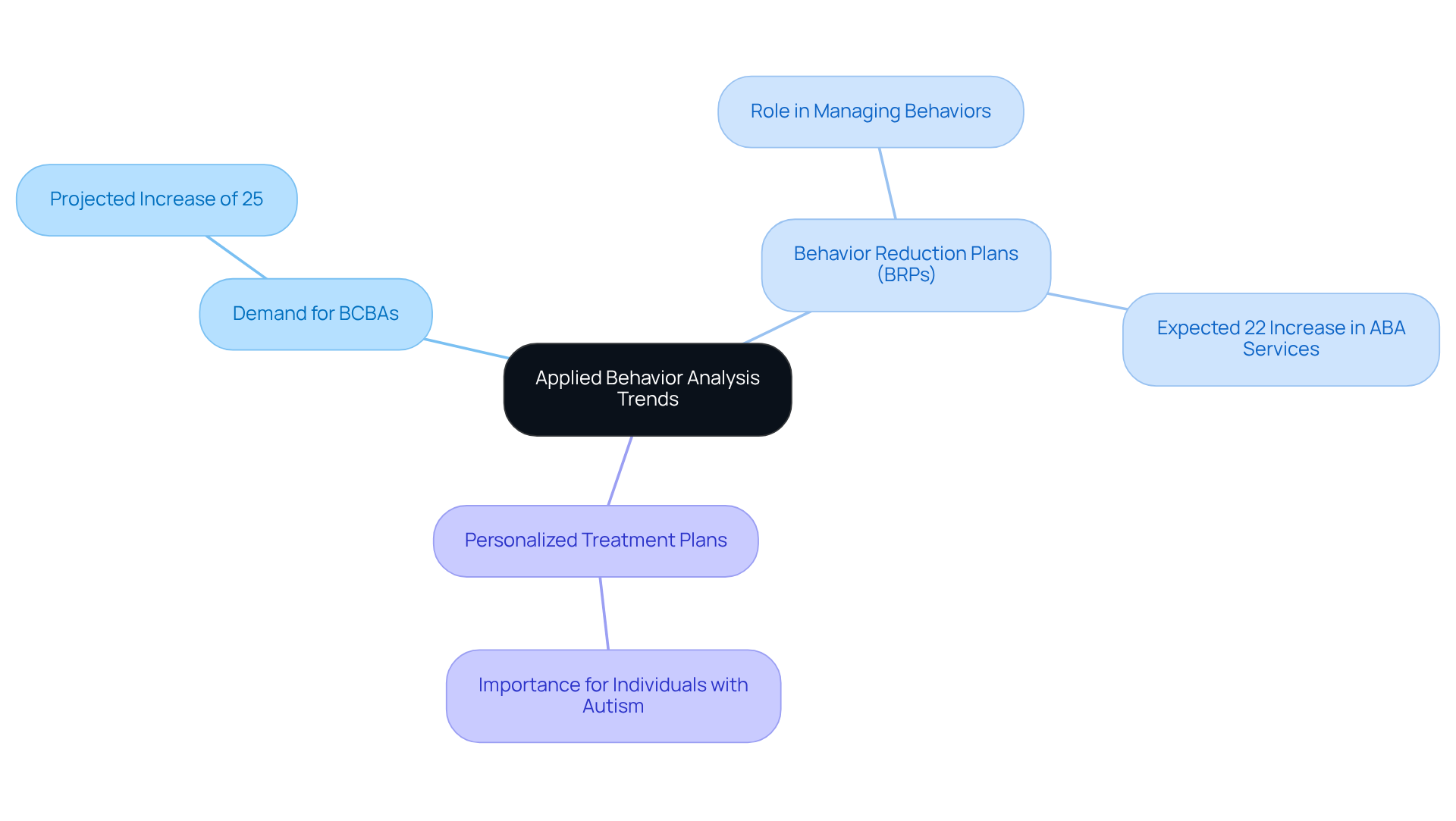
In the realm of Applied Behavior Analysis (ABA), the demand for Board Certified Behavior Analysts (BCBAs) is projected to rise by an impressive 25% over the next five years. This surge highlights the critical role of reduction plans (BRPs) in effectively managing and modifying behaviors that hinder learning and social interaction, raising the question of at what point should a behavior reduction plan be considered?
Grounded in behaviorism, ABA focuses on observable actions and the environmental factors influencing them. The development of a BRP begins with identifying specific behaviors that need support, ensuring that the strategies employed are evidence-based and tailored to the unique needs of each individual. As the need for ABA services grows - expected to increase by around 22% - the importance of BRPs becomes even more pronounced. They enable practitioners to systematically address challenging behaviors, fostering a more supportive learning environment and enhancing the overall quality of life for those receiving therapy.
Ralph Moller emphasizes, "Personalized treatment plans are essential for individuals with autism as they address their unique needs and challenges." This approach not only improves behavioral outcomes but also aligns with current trends in ABA, underscoring the significance of individualized, data-driven interventions.
Are you facing challenges in hiring qualified BCBAs? Consider how Hire ABA can streamline your recruitment process. As the market for ABA therapy continues to expand, staying informed about these opportunities ensures that professionals are well-positioned to advance their careers while making a significant impact. Don't miss out on the chance to enhance your team with the right talent - take action today!
Triggers for implementing a Behavior Reduction Plan (BRP) often lead us to ask, at what point should a behavior reduction plan be considered, especially when persistent actions disrupt daily functioning, such as aggression, self-injury, or severe tantrums. Did you know that around 60% of children with autism display aggression towards caregivers? This statistic underscores the urgency of addressing such actions (Kanne & Mazurek). These challenging behaviors may arise from various factors, including environmental stressors, communication difficulties, or unmet sensory needs. For instance, children exhibiting self-injurious behaviors (SIB) often endure significant distress, with prevalence rates averaging 42% among those diagnosed with autism spectrum disorder (ASD).
It is essential to recognize these triggers at what point should a behavior reduction plan be considered? It enables practitioners to create focused interventions that tackle the underlying causes of the actions rather than merely managing their symptoms. If a child exhibits aggressive behavior when faced with challenging tasks, the BRP may include strategies to modify task demands or provide additional support to facilitate success. By identifying these triggers, we ensure that the BRP is both relevant and effective in promoting positive behavioral change. Ultimately, this approach improves the quality of life for both the child and their caregivers.

Effective Behavior Reduction Plans (BRPs) stand out due to several critical characteristics that significantly enhance their success. Did you know that students show a 40% greater improvement in behavior when specific, measurable objectives are established? This compelling statistic underscores the importance of including clear, measurable goals that precisely define the desired outcomes of any initiative. Research also reveals that 63% to 88% of cases report positive results from ABA therapy for autism, further highlighting the significance of measurable objectives in achieving effective solutions. Moreover, responsible parties must be guided by data gathered from functional evaluations, ensuring that the strategies employed are evidence-based and tailored to the individual's needs.
Incorporating a variety of support strategies is essential for effective BRPs. These plans utilize antecedent modifications, teach replacement behaviors, and apply reinforcement techniques to foster positive behavior changes. For example, a measurable goal could involve increasing the number of spontaneous words or phrases a child uses during structured playtime, which can be tracked through the number of spontaneous utterances per session. Collaboration among caregivers, educators, and therapists is crucial, as it promotes consistency in implementing the plan across different settings-an essential factor for achieving long-term success. Research indicates that programs with 80% or higher fidelity are three times more likely to be effective, emphasizing the importance of this collaboration.
Ongoing monitoring and evaluation of the plan's effectiveness are imperative. Regular assessments enable timely adjustments, ensuring that interventions remain relevant and impactful. Experts stress that ongoing data gathering and examination are vital for enhancing business response plans, with teams that employ data collection achieving favorable outcomes 85% more quickly than those relying on personal perceptions. By focusing on these key characteristics, BRPs can effectively address challenging behaviors and enhance the quality of life for those they serve. Are you ready to implement these strategies and see the difference they can make?

In the field of Applied Behavior Analysis (ABA), the demand for Board Certified Behavior Analysts (BCBAs) is skyrocketing. Understanding when to implement a Behavior Reduction Plan (BRP) is crucial for effectively addressing challenging behaviors. These plans are structured frameworks designed to minimize undesirable actions while promoting positive alternatives. They emphasize the need for personalized, data-driven strategies tailored to each individual's unique circumstances.
The significance of BRPs cannot be overstated. Functional Behavior Assessments (FBAs) play a critical role in identifying the triggers for challenging behaviors, while clear, measurable objectives enhance the effectiveness of interventions. Moreover, the growing demand for qualified professionals in this field reinforces the necessity for well-developed behavior reduction plans to ensure successful outcomes for individuals with autism and other behavioral challenges.
Implementing effective behavior reduction plans not only improves behavioral outcomes but also enhances the overall quality of life for individuals and their families. As the landscape of ABA continues to evolve, it is imperative for practitioners and stakeholders to stay informed about best practices. Are you facing challenges in hiring qualified professionals? Consider how Hire ABA can support your recruitment needs.
By actively engaging in the development of tailored interventions, practitioners can foster meaningful behavioral changes that support learning and social interaction. This proactive approach makes a lasting impact on the lives of those they serve. Don't miss the opportunity to enhance your practice - partner with Hire ABA today to ensure you have the right talent to drive success.
What is a Behavior Reduction Plan (BRP) in Applied Behavior Analysis (ABA) therapy?
A Behavior Reduction Plan (BRP) is a structured approach in ABA therapy that outlines specific strategies and interventions aimed at minimizing undesirable behaviors while promoting positive alternatives.
When should a Behavior Reduction Plan be considered?
A Behavior Reduction Plan should be considered when addressing and reducing challenging behaviors exhibited by individuals, particularly after conducting a Functional Behavior Assessment (FBA) to understand the antecedents and consequences of those behaviors.
What are the key components of an effective Behavior Reduction Plan?
Key components of an effective BRP include clear definitions of target behaviors, measurable objectives, and data collection methods to track progress.
How do reinforcement strategies fit into a Behavior Reduction Plan?
Reinforcement strategies are incorporated into a BRP to encourage desired behaviors while also including techniques for managing challenging conduct such as aggression or self-injury.
What is the success rate of ABA therapy in treating children with autism?
Research indicates that ABA therapy has a success rate exceeding 89% in treating children with autism.
Why are Functional Behavior Assessments (FBAs) important in developing a Behavior Reduction Plan?
FBAs are important because they provide crucial insights into the antecedents and consequences of behaviors, enabling tailored approaches that enhance the effectiveness of behavior change plans.
How does data-driven decision-making impact Behavior Reduction Plans?
Data-driven decision-making ensures that strategies in a Behavior Reduction Plan are responsive to the unique needs and circumstances of each individual, promoting long-term behavioral improvements.
What is the projected growth rate of ABA service demand in the coming years?
The projected growth rate of ABA service demand is around 22% in the coming years.
Why is family engagement important in the context of Behavior Reduction Plans?
Family engagement is vital because it maximizes the effectiveness of behavioral response plans by ensuring that interventions align with the specific context and needs of the individual.
How can Hire ABA assist in the recruitment of qualified professionals for ABA services?
Hire ABA can streamline the recruitment process and connect organizations with qualified professionals needed for providing effective ABA services.
Our expert recruitment strategies and AI-driven sourcing ensure that you receive top-notch candidates quickly, without compromising on quality. Whether you’re looking for BCBAs, Clinical Directors, or RBTs, we’ve got you covered.


